Microsoft today announced Windows 11, the next major version of Windows 11. Microsoft also confirmed that Windows 11 will be available as a free upgrade for eligible Windows 10 PCs. To install or upgrade to Windows 11, your PC must meet the following requirements.
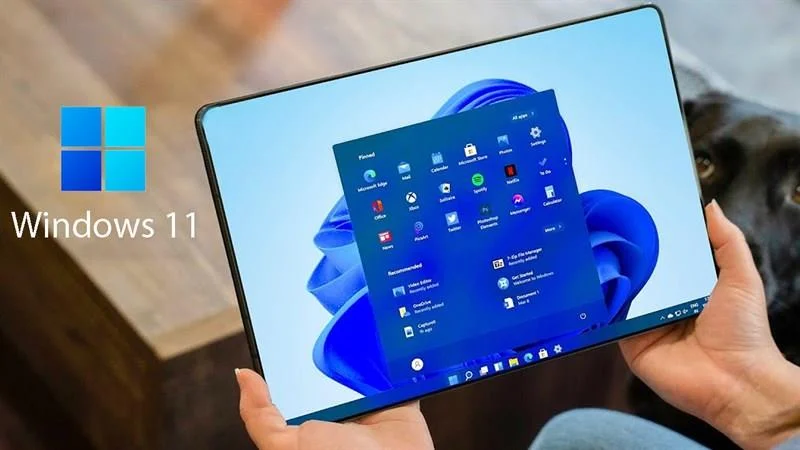
Hardware requirements to be able to install Windows 11:
- Processor: 1 gigahertz (GHz) or faster with two or more cores on a compatible 64-bit system on chip (SoC) processor or system .
- RAM: 4 gigabytes (GB) or more.
- Memory: 64 GB* or more of available memory is required to install Windows 11.
- Additional memory space may be required to download updates and activate specific features.
- Graphics card: Compatible with DirectX 12 or later, with WDDM 2.0 driver.
- System Software: UEFI, Secure Boot Capable.
- TPM: Trusted Platform Module (TPM) version 2.0.
- Display: High definition HD (720p), 9-inch or larger, 8-bit per color channel.
- Internet connection: An Internet connection is required to perform updates and downloads and use some features.
- Windows 11 Home Edition requires an Internet connection and a Microsoft Account to complete device setup on first use.
Some features in Windows 11 have increased requirements beyond those listed above in the minimum requirements section. Here are some additional details regarding the requirements for key features:
- 5G support requires a 5G-capable modem.
- HDR automatically requires an HDR display.
- Bit Locker to Go requires a USB flash drive (available in versions of Windows Pro and above).
- Client Hyper-V requires a processor with second level address translation (SLAT) capabilities (available in versions of Windows Pro and later).
- Cortana requires a microphone and speakers and is currently available on Windows 11 for Australia, Brazil, Canada, China, France, Germany, India, Italy, Japan, Mexico, Spain, United Kingdom, and the United States.
- DirectStorage requires a 1 TB or more NVMe SSD to store and run games that use the “Standard NVM Express Controller” drivers and the DirectX 12 Ultimate GPU.
- DirectX 12 Ultimate is available with supported games and graphics chips.
- Presence requires a sensor that can detect a person's distance from the device or intent to interact with the device.
- Intelligent Video Conferencing : requires video camera, microphone and speakers (audio output).
- Multiple Voice Assistant (MVA) requires a microphone and speakers.
- Snap requires a screen width of 1920 effective pixels or more.
- Mute/Unmute from the Taskbar requires a video camera, microphone, and speakers (audio output). App must be compatible with global unmute/unmute feature.
- Spatial audio requires hardware and software support.
- Teams requires a video camera, microphone, and speakers (audio output).
- Touch requires a monitor or display that supports multi-touch.
- Two-factor authentication requires the use of a PIN, biometrics (fingerprint reader or illuminated infrared camera), or Wi-Fi or Bluetooth capable phone.
- Voice input requires a PC with a microphone.
- Voice wake-up requires a microphone and source model in Modern Standby.
- Wi-Fi 6E requires new WLAN IHV hardware and drivers, and a router/AP that supports Wi-Fi 6E.
- Windows Hello requires a camera configured to capture near-infrared (IR) images or a fingerprint reader for biometric authentication. Devices without biometric sensors can use Windows Hello with a PIN or a Microsoft-compatible mobile security key.
- Windows Projection requires a display adapter that supports Windows Display Driver Model (WDDM) 2.0 and a Wi-Fi adapter that supports Wi-Fi Direct.
- Xbox (app) requires an Xbox Live account, which is not available in all regions.
You can confirm if your existing Windows 10 PC is eligible for a free upgrade or install to Windows 11 using the PC Health Check app . Microsoft is working with its retail partners to ensure the Windows 10 PC you buy today is ready for the upgrade to Windows 11.
Explore more:









