Keep Writer Revisions Visible When Exporting to DOCX
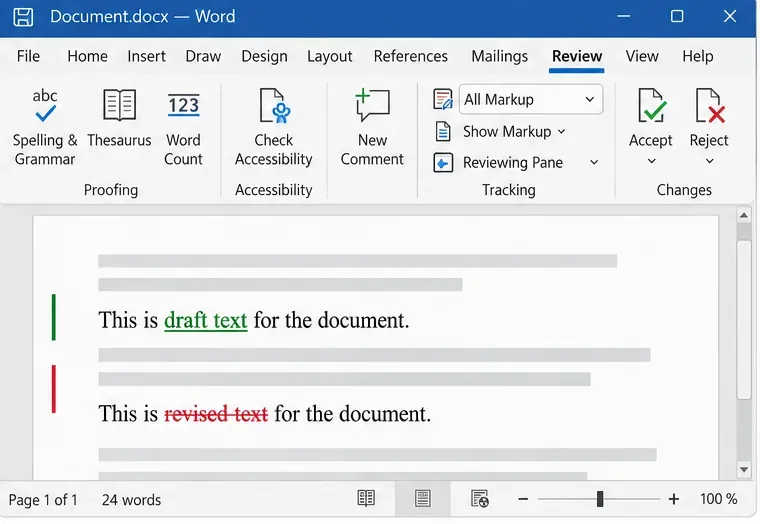
Track edits in Writer, preserve an editable ODT source, and check the exported DOCX in Word before sharing it.
Currently Internet providers in Vietnam are blocking websites related to economy, politics and even culture, especially black websites, adult websites, etc. This method of blocking web pages is applied quite simultaneously, sometimes making users extremely angry. Therefore, the use of solutions to access blocked websites is extremely necessary.
Download the 1.1.1.1 application for iOS Download the 1.1.1.1 application for Android
One of the solutions to the problem of blocked websites is to use DNS changing applications to create virtual IP addresses , that is, you can get any IP range of the country for the device you are using. via the VPN software . Besides, the privacy of users is also guaranteed to be safe and secure, no one can snoop on you when using the Internet. Below we will guide you to access websites blocked by 1.1.1.1 application on iOS and Android devices very easily.
Step 1:
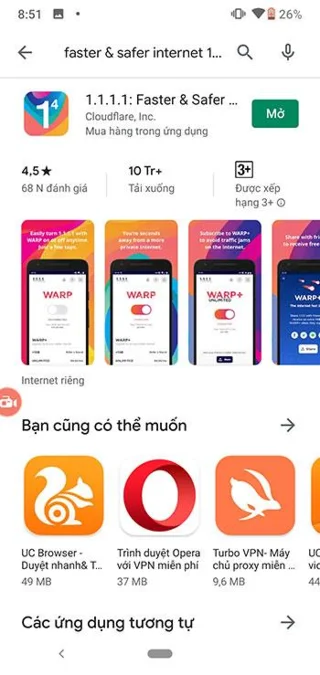
Download and install the 1.1.1.1 application under the download link above or go directly to Google Play or the App Store to search for keywords 1.1.1.1 to install.
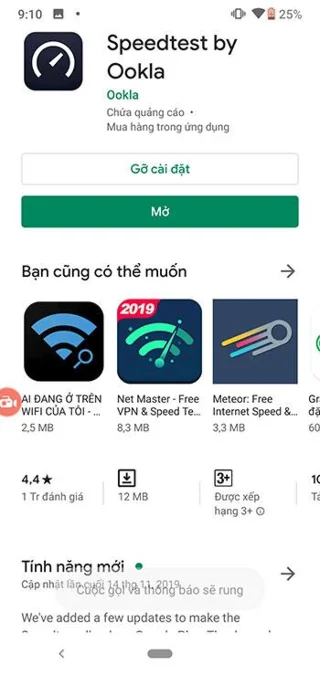
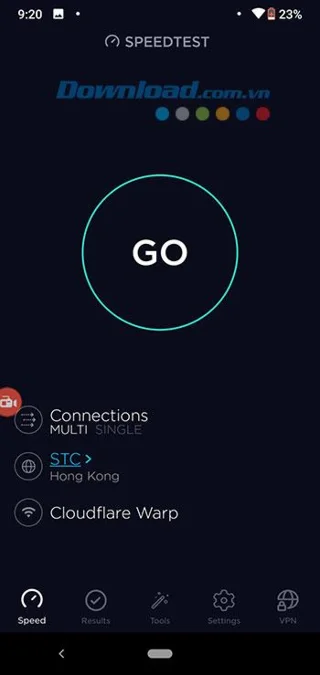
In addition to checking the IP range of your area, you can install the Speedtest app as well as check the network speed of the device.
Download the Speedtest app for iOS Download the Speedtest app for Android
Step 2:
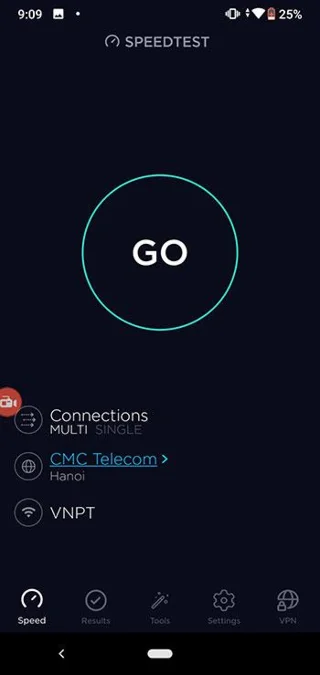
After checking which area your IP range is on the Speedtest application, we will start using 1.1.1.1 application to change the IP address.
Step 3:
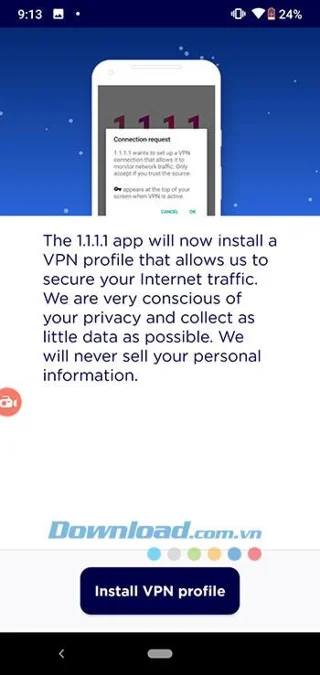
If this is the first time using the application you will need to select Accept to agree with the settings required by 1.1.1.1.
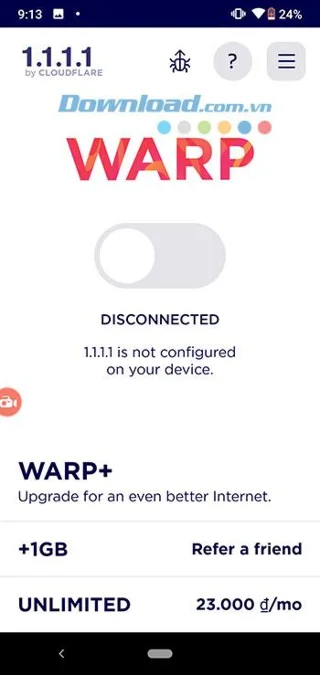
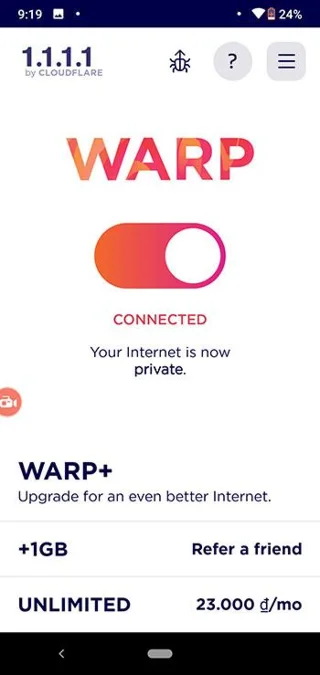
In the main interface of the application 1.1.1.1 please turn on Warp by dragging from left to right.
Step 4:
Next the application will ask the user to set information
Soon 1.1.1.1 will quickly create a virtual IP address.
To be sure, you can revisit the Speedtest application to check again to confirm changes compared to the time before the 1.1.1.1 application was operational.
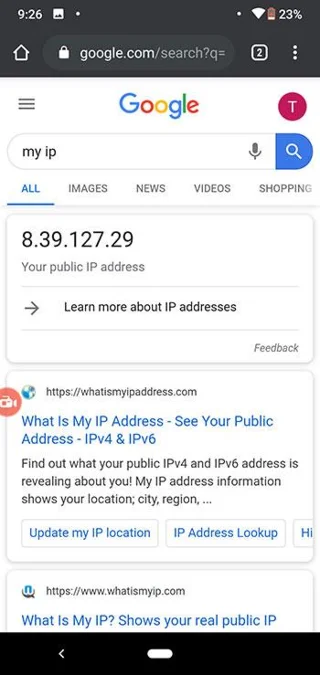
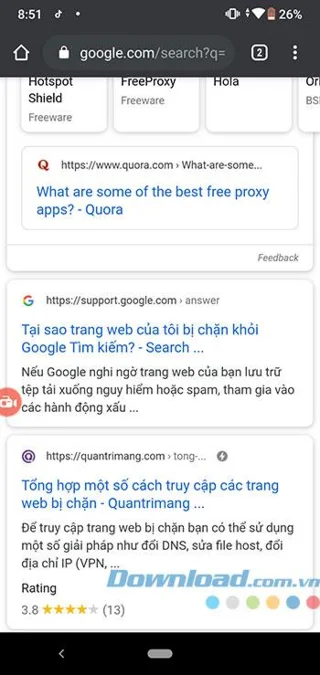
We can also check our IP address by going to Google to search for the keyword My IP to double check your IP address.
Above we have shown you how to access the web with 1.1.1.1 application very easily. Hopefully, with the above article, you will quickly solve related issues.
Track edits in Writer, preserve an editable ODT source, and check the exported DOCX in Word before sharing it.
Follow SUSE’s SP7 procedure to enable FIPS mode, reboot safely, verify the active policy, and check whether your compliance requirement calls for validated modules.
Compare YaST and cryptsetup for a new encrypted SLES data volume, choose LUKS1 or LUKS2, and verify unlock and mount behavior safely.
Create, refine, and verify a least-privilege AppArmor profile on SLES 15 SP7, with a clear note on SLES 16’s SELinux default.
Set up RMT on SLES 15, mirror entitled repositories, and verify HTTPS registration and package access from a test client.
Connect SLES 15 to AD with YaST’s SSSD-based logon management, then verify directory lookup, domain login, and Kerberos tickets.
Set up the right Live Patching path for SLES 16.0 or 15 SP7, apply eligible kernel fixes, and confirm what is active without confusing it with a reboot-required kernel update.
Load a custom SLES 15 kernel module without disabling Secure Boot. Match the running kernel, sign the .ko file, enroll a MOK key, and verify loading.
SLES 15 SP5 can migrate online to SP6, but each node must reboot. Use a tested rolling upgrade or blue-green cutover to keep workloads reachable.
Use SUSE’s supported STIG profile to scan SLES 15, test remediation, review remaining findings, and retain assessment evidence.








