Do you find forms on Google Forms looking boring? So add photos to Google Forms to make it look more vivid!
Google Forms is a professional online form creation application
Google Forms allows users to create forms such as online surveys, quizzes or questionnaires by adding photos. You have a few ways to work with images in Google Forms. Here's how to add a photo to a Google Forms question and answer .
How to add photos to questions on Google Forms
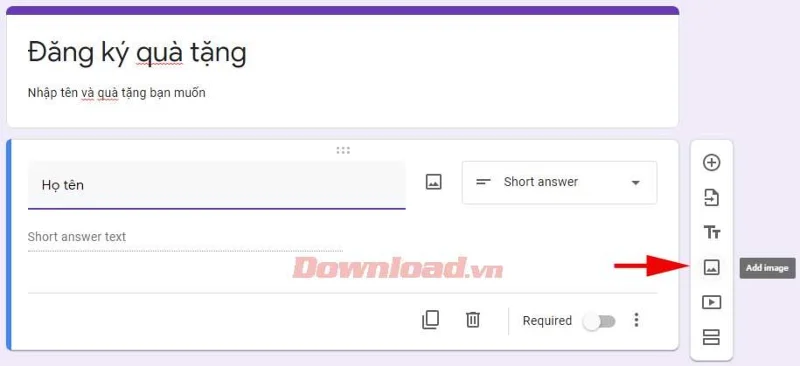
First, open Google Forms, create a new form, and enter a question. After filling in all the questions, select one of them and click the Add Image icon on the right.
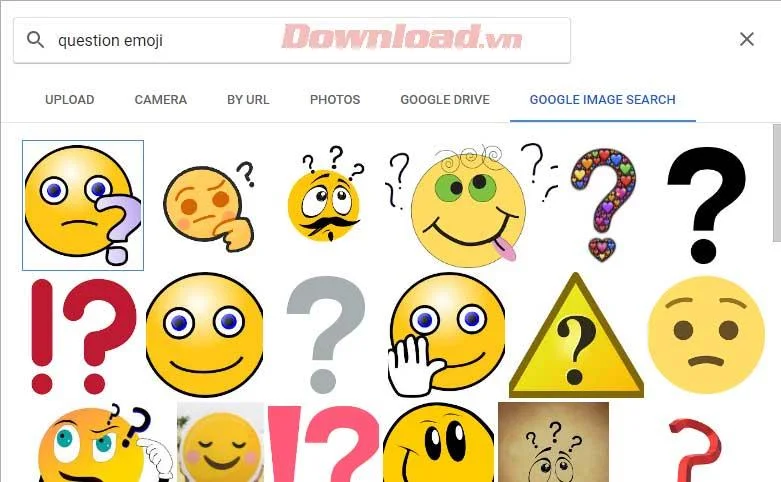
Here, you have 6 different options: Upload, Camera, By URL, Photos, Google Drive and Google Image Search . Click the option that best matches the photo you want. Here is an example:
Select Google Image Search to download photos. Just type keywords into the photo category you want, related results will appear on the screen.

Select one of them, then click Insert on the right-hand side below. It's done. Photos have now been added to questions on Google Forms.
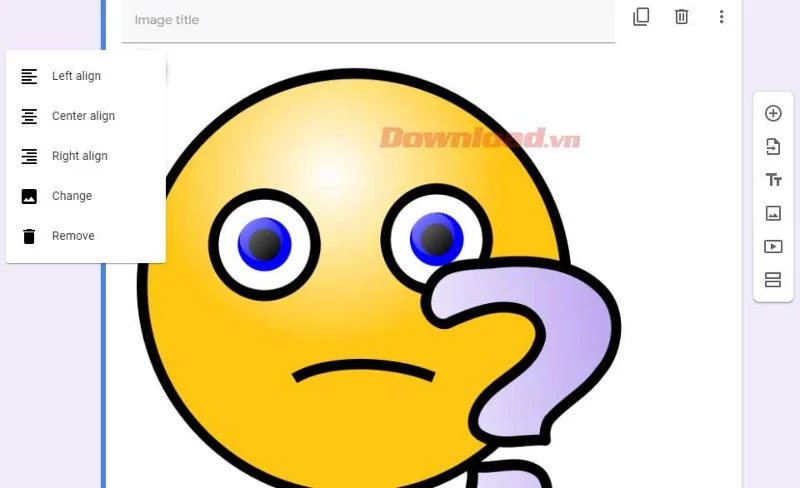
After inserting a photo, you will see a 3-dot menu in the left-hand corner. This menu will give you the option to align, change or delete the photo as well as add a caption to it. You can make any desired changes.

How to add photos to answers on Google Forms
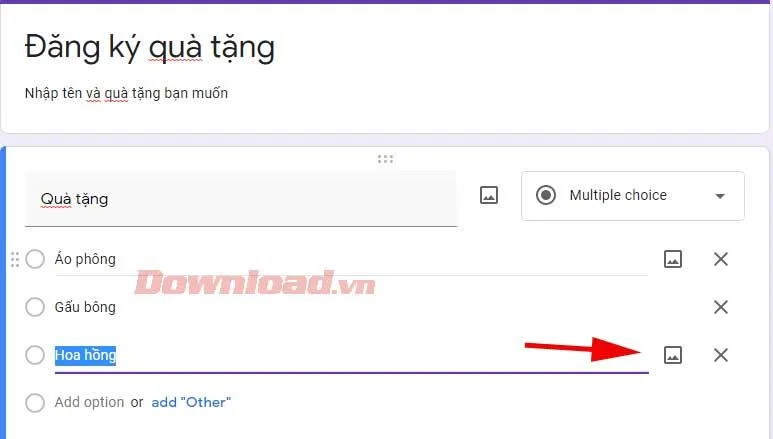
First, make sure you have entered the question and answer. Then, point to the answer you want to add a photo to, then click the photo icon that appears on the right.

Next, the process is similar to adding a photo to a question in a Google Forms form. Click one of the options you want to insert an image into your answer.
When the photo appears on the answer, it will have a small x in the upper right corner. You can use this icon to delete the photo when you no longer want it to display.

Repeat the steps above for any subsequent answers.
As you can see, adding images to questions and answers in forms on Google Forms is not too difficult, right? Hope the article is useful to you.