Apply the SLES 15 STIG Safely with OpenSCAP

Use SUSE’s supported STIG profile to scan SLES 15, test remediation, review remaining findings, and retain assessment evidence.
To get a standard and correct size presentation slide as required, PowerPoint has different sizes and ratios for you to choose from. Each different size and ratio of PowerPoint slide will be suitable for a different special presentation device. Below are instructions for adjusting the ratio and size of PowerPoint slides.
Instructions for adjusting PowerPoint slide ratio
Step 1:
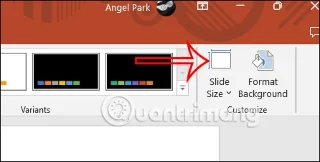
At the PowerPoint interface, users click on the Design tab and select Slide Size to adjust the slide ratio.
Step 2:
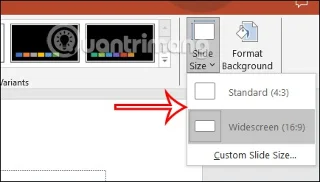
Now you will see there are 2 ratios for us to choose from:
Step 3:
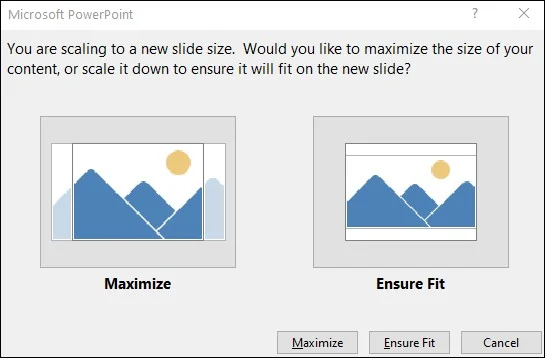
Once you've selected the aspect ratio, or if PowerPoint can't scale the slide to fit the content on the slide, you'll see two options:
Instructions for customizing PowerPoint slide size
Step 1:
On the PowerPoint slide interface, we select Design and click Slide Size . Then click Custom Slide Size below.
Step 2:
In the new interface that appears, click on Slides sized for and then select the available slide sizes from the list displayed below.
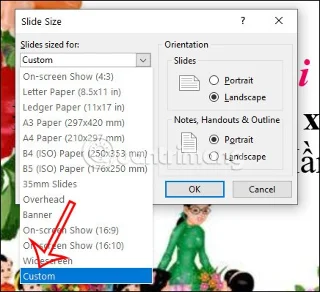
Step 3:
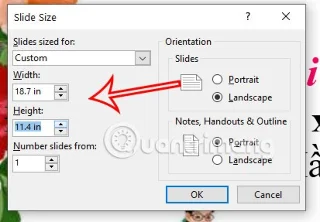
If you do not want to use the suggested size, we can enter Width and Height in the interface . We enter the size within the slide size range of about 1 inch/ 2.54 cm/ 120 pixels to 56 inches/ 142.24 cm/ 720 pixels. After entering the size, click Ok to save.
Use SUSE’s supported STIG profile to scan SLES 15, test remediation, review remaining findings, and retain assessment evidence.
Trace a failed Cockpit connection through DNS, port 9090, the systemd socket, firewalld, TLS, and login settings using current SUSE guidance.
Create a redundant Ethernet connection on SLES 15 with YaST and Wicked, configure active-backup bonding, and verify both ports and failover.
Turn an existing SLES 15 system into a reviewed AutoYaST profile, validate it, and use it to deploy a test server with fewer manual steps.
Install the SLES 15 KVM and libvirt tools, enable the right host service, and configure selected virtual machines to start after a reboot.
Use systemd jobs and the previous boot journal to locate a slow service, mount, or storage dependency, then correct it without masking the cause.
Use firewall-cmd to inspect the active zone, allow HTTP safely, preserve SSH access, and verify that the rule survives a reload on SLES 15.
Trace a PAM failure to its service, account policy, or identity provider, then repair the right SLES configuration while preserving a working admin session.
Trace a failed kernel module at SLES startup, correct an obsolete boot entry or repair the required driver, and verify the next boot.
Prepare SCSI SAN paths, enable multipathd, inspect SUSE’s hardware defaults, and verify stable device maps without guessing array settings.








