How to Wash Suede Safely: What to Do Instead of Soaking It

Learn how to clean suede safely without machine washing or soaking it, including brushing, stain removal, air-drying, and suede protection.
A garbage disposal can sound normal and still smell stale, or it can look grimy around the sink opening even though food seems to grind normally. Ice can help with some of those problems, but it is not a universal fix. The most useful way to approach “how to clean a garbage disposal with ice” is to match the method to the problem and, importantly, to the instructions for your disposer.
Manufacturer guidance is not identical. Whirlpool and KitchenAid describe periodic cleaning with ice while using cold water, while GE Appliances documents an ice-and-cleaning-agent method in which water is not used during the ice-grinding portion. InSinkErator’s odor-removal guidance focuses more directly on cleaning the baffle and upper grind-chamber area when food buildup is the likely source of smell. That means the right method depends on whether you are doing routine maintenance, chasing an odor, or troubleshooting a mechanical problem. Manufacturer guidance cited in this article was checked in September 2026.
| What you notice | Best starting option | Main trade-off |
|---|---|---|
| Normal operation, but you want routine maintenance | Plain ice using your manufacturer’s operating instructions | Simple and low-cost, but it does not manually clean the underside of the splash baffle |
| Light odor after food use | Ice plus an odor-control method your manufacturer specifically permits, such as citrus or baking soda | Can freshen and loosen residue, but may not reach greasy film above the grinding chamber |
| Persistent sour or rotten smell | Power-off cleaning of the baffle/splash guard and upper chamber, followed by the maker’s approved rinse or deodorizing method | Takes more effort but targets a common place where food residue accumulates |
| Humming, jamming, slow draining, leaking, or repeated reset trips | Troubleshooting or service—not an ice-cleaning cycle | Ice is a cleaning aid, not a repair procedure |
For comparison, Whirlpool says a continuous-feed disposer can be cleaned monthly by grinding a handful of ice cubes with a few citrus peels, and it instructs users to operate the disposer with cold water. See Whirlpool’s continuous-feed disposer guidance. GE Appliances, however, says its cleaning and deodorizing method can use roughly a dozen ice cubes with baking soda or household scouring powder and specifically says not to use water while grinding the ice. See GE Appliances’ disposer cleaning and deodorizing instructions.
Switch the disposer off. If you are going to lift a removable splash guard, wipe inside the upper opening, or remove visible debris, disconnect power according to the owner’s manual—typically by unplugging the unit or switching off the appropriate breaker. Never put your hand into the grinding chamber.
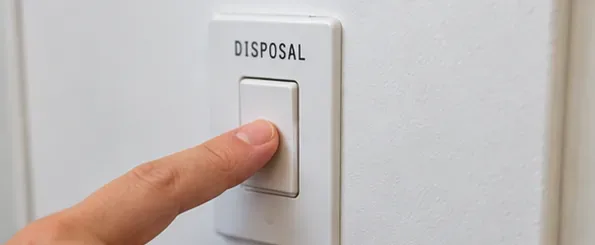
If the unit is jammed or humming rather than running normally, stop here. InSinkErator’s jam guidance directs users to disconnect power, inspect with a flashlight, and use tools such as tongs or pliers rather than reaching into the disposer. See InSinkErator’s jam troubleshooting instructions.
If the disposer runs normally and you are doing maintenance, plain ice is the cleanest decision point. It gives the grinding components a hard, temporary material to process and can help knock loose residue in the chamber. Use the amount specified by your model or manufacturer rather than assuming that every disposer needs the same volume.
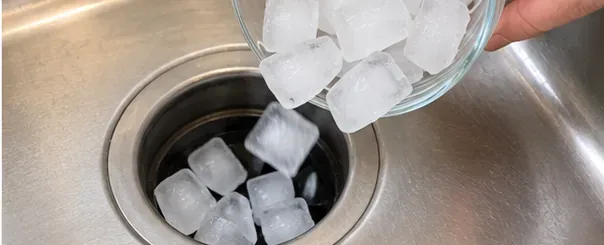
Whirlpool uses the phrase “a handful of ice cubes” in its routine-maintenance guidance, while GE describes “a dozen or so” in its cleaning procedure. Those are useful examples, but your product manual should take priority if it gives a different amount or procedure.
You will often see recipes that pair ice with coarse salt. The official manufacturer sources reviewed for this article do not provide one consistent salt-based instruction across brands. GE explicitly mentions baking soda or regular household scouring powder in one cleaning method, while Whirlpool emphasizes ice with citrus peels for monthly maintenance. Because an abrasive that is acceptable for one design is not automatically approved for another, the conservative choice is to use plain ice unless your manual names an additive.
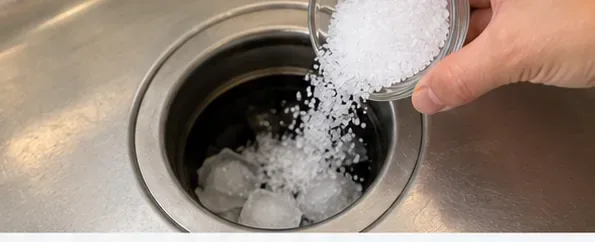
This is a good example of the trade-off between “more scrubbing action” and “fewer assumptions about compatibility.” If your goal is routine cleaning and the manual is silent, plain ice avoids adding a material the maker has not specified.
This is the biggest point where generic advice can become misleading. Whirlpool and KitchenAid tell users to operate disposers with cold water and describe ice cleaning in that operating context. GE’s specific cleaning-and-deodorizing page, by contrast, says not to use water while grinding its ice-and-cleaning-agent mixture.
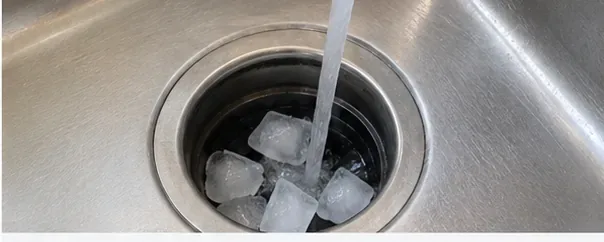
So there is no responsible one-line rule that applies to every disposer. If your manual says to run cold water, do that. If your maker publishes a special ice-cleaning procedure that temporarily omits water, follow that procedure exactly. Do not substitute hot water during normal grinding simply because hot water feels more “cleaning oriented”; Whirlpool’s operating guidance specifically favors cold water while food is being ground.
Restore power only after any inspection or manual cleaning is complete. Start the disposer using the sequence in your owner’s manual. The sound will change as the ice is broken down. A normal cleaning cycle should progress rather than leave the motor humming in place.
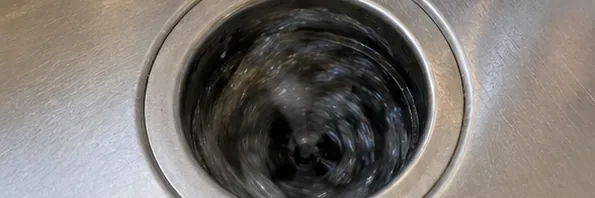
If the unit stalls, hums without grinding, repeatedly trips its overload protector, or makes a new metallic impact sound, turn it off instead of feeding it more ice. Those symptoms belong in a jam or service workflow, not a cleaning workflow.
Citrus is optional, not the core cleaning agent. Whirlpool and KitchenAid both describe citrus peelings as an odor-freshening option. If your manufacturer allows them, small amounts of peel can be useful after routine food use. The trade-off is that a fresh citrus smell can make a disposer seem clean even when greasy food residue remains on the splash baffle.
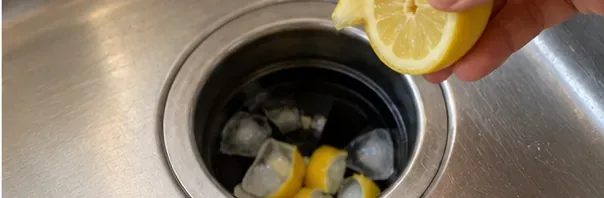
That matters because InSinkErator says disposer odor is usually associated with food buildup and recommends cleaning the underside of the baffle and the inside upper lip of the grind chamber with the power disconnected. Its documented odor-cleaning method then uses warm sink water mixed with 1/4 cup of baking soda and flushes the loosened material through the disposer. See InSinkErator’s odor-removal instructions.
Once the ice portion is complete, give loosened particles a way out. For manufacturers that call for cold-water operation, continue the cold-water flush for the interval specified in the manual. Whirlpool says to continue cold water after grinding is complete so debris moves through the drain line.
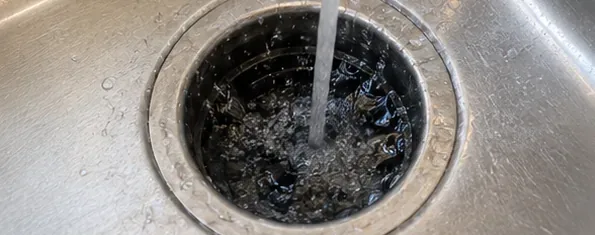
If you followed a brand-specific procedure that intentionally omitted water during the ice-grinding phase, complete the rinse exactly as that procedure directs. The key is not to splice together half of one manufacturer’s method with half of another’s.
Turn the disposer off and evaluate what changed. You are looking for a reduction in loose residue, a cleaner-smelling opening, and normal, smooth operation. Do not judge success only by fragrance. If the smell remains strong, inspect the splash baffle area with power disconnected because that is a documented buildup location. If the sink drains slowly, the problem may be in the plumbing rather than on the disposer’s grinding surfaces.
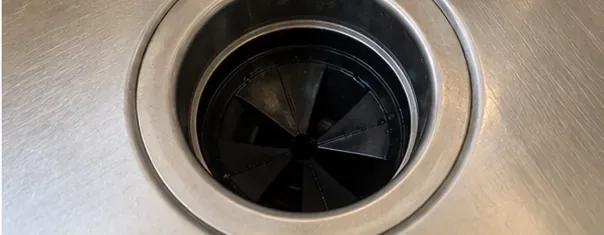
Repeating ice cycles makes sense only when the manufacturer permits it and the unit is operating normally. Repeated grinding is not a substitute for removing a lodged object, clearing a downstream clog, repairing a leak, or servicing a failing disposer.
There is no single “best” option because these methods solve different problems. Ice is attractive because it is cheap, easy to rinse away, and supported by several major disposer manufacturers for periodic cleaning. Baking soda appears in official odor-cleaning guidance from InSinkErator and in GE’s ice-cleaning guidance, but the procedure and quantity are manufacturer-specific. Citrus is mainly useful for odor control where the maker allows it. Manual cleaning of the splash baffle is the better choice when residue is physically stuck to a surface that ice does not contact well.
A cleaning session should not become an excuse to experiment with harsh chemicals. GE says not to use lye or drain cleaners in a disposer because they may corrode metal parts. KitchenAid also advises avoiding harsh chemical drain cleaners in disposer care. Grease and fat are poor choices as well; major manufacturers repeatedly advise keeping them out of the disposer and drain.
Also avoid forcing your hand or tools through a running splash guard. If debris must be removed manually, disconnect power first and use the method specified for your model.
Use these checks after the sink is quiet and the disposer is off:
If those checks pass, the ice method did what a routine cleaning method should do. If odor persists, move to baffle cleaning or the manufacturer’s deeper deodorizing procedure. If operation is abnormal, stop cleaning and troubleshoot the mechanical or plumbing issue instead.
Cleaning a garbage disposal with ice is a useful maintenance option, but the details are model-dependent. The clearest trade-off is between simplicity and depth: plain ice is easy and well suited to routine chamber cleaning, while persistent odor usually calls for cleaning the splash baffle or following a deeper manufacturer-approved method. The other important trade-off is procedural: some manufacturers tell you to run cold water with the disposer, while GE documents a specific ice-cleaning procedure that omits water during the grinding portion. Your owner’s manual should settle that choice for your unit.
Learn how to clean suede safely without machine washing or soaking it, including brushing, stain removal, air-drying, and suede protection.
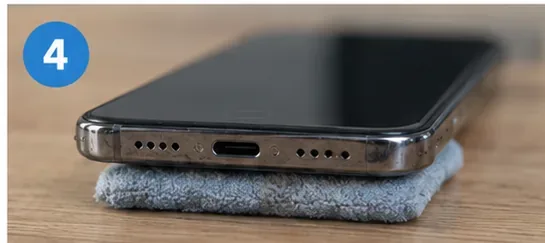
Learn how to dry a wet phone charger port safely, compare air-drying, wireless charging, emergency overrides, and service, and avoid heat, rice, and objects.
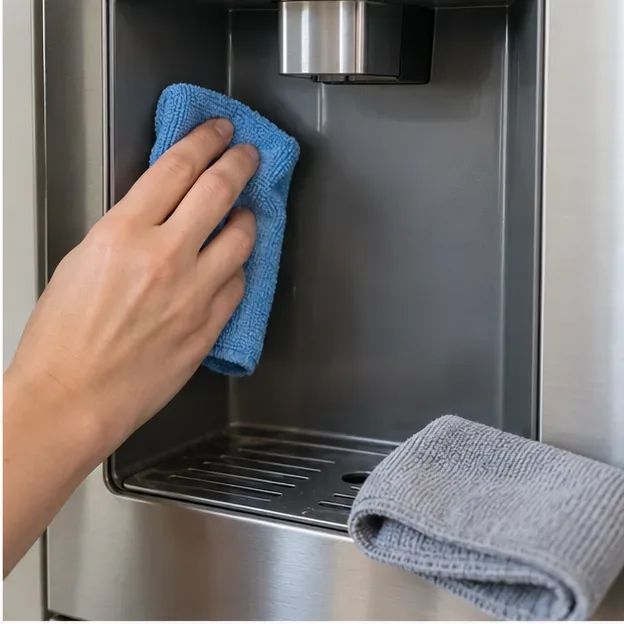
Clean a refrigerator water dispenser safely with mild soap, careful nozzle cleaning, mineral-scale removal, drying, and filter checks.
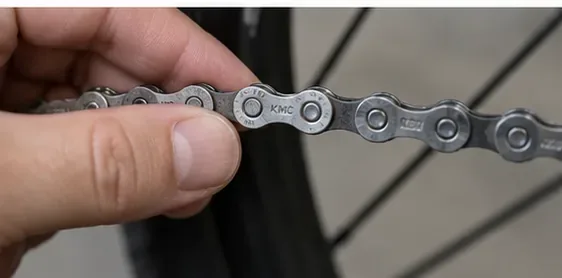
Learn how to take a bike chain off safely, whether it uses a quick link or rivet, plus which tools to use and when a connector must be replaced.
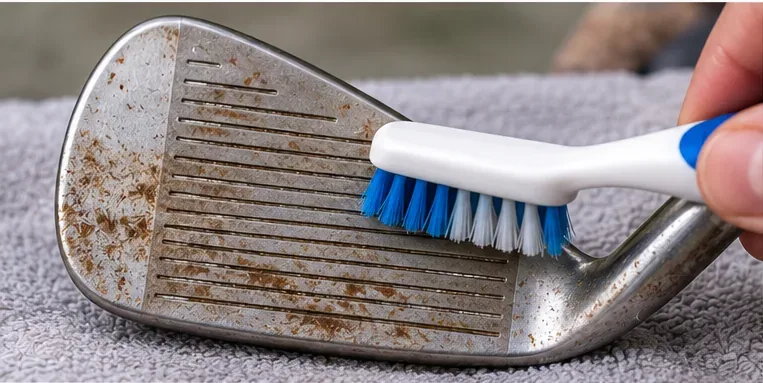
Learn how to remove rust from golf clubs safely, starting with soap and a soft brush, when to stop, and how raw wedges differ from plated irons.
How to Use Google Lens on Chromebook lets you scan objects, translate text, and solve problems directly from your device. Follow these steps to get started quickly.
Clean a BUNN coffee maker with vinegar safely using the verified Heat N Brew method, plus model checks, sprayhead care, flushing steps, and mistakes to avoid.
Learn how to clean a garbage disposal with ice, compare cold-water, citrus, and deeper-clean options, and know when ice is not enough.
Learn how to remove school glue, super glue, hot glue, and adhesive residue from clothes safely, with fabric-specific steps and solvent cautions.
Learn how to wash a wool coat safely by following its care label, choosing a wool-safe detergent, washing gently, and drying without shrinking or distortion.