How to Use Google Lens on Chromebook

How to Use Google Lens on Chromebook lets you scan objects, translate text, and solve problems directly from your device. Follow these steps to get started quickly.
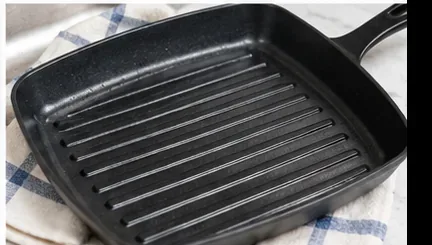
A grill pan looks simple until cleanup starts. Grease settles into the channels, browned bits weld themselves to the sides of the ridges, and a pan that made perfect grill marks can suddenly feel harder to clean than a flat skillet. The most important question is not which cleaner is strongest. It is what material your grill pan is made from.
That one detail changes the whole method. Seasoned bare cast iron should be washed, dried, and lightly oiled rather than soaked. Enameled cast iron can tolerate a warm soapy soak for stubborn residue but should not be attacked with metal pads or abrupt temperature changes. Nonstick grill pans need gentler tools because scratches and overheating can permanently reduce release performance.
The instructions below were checked against current manufacturer care guidance on September 12, 2026. If your own pan's manual conflicts with any general advice here, follow the manufacturer's instructions for that exact model.
Look at the product page, packaging, bottom stamp, or care booklet if you still have it. If that is unavailable, these clues can help, but they are not substitutes for the model-specific instructions.
| Pan type | Typical clue | Cleaning priority |
|---|---|---|
| Seasoned bare cast iron | Heavy, dark iron surface with no glassy enamel coating; may develop or need seasoning | Wash promptly, dry completely, apply a very thin coat of oil, and do not soak |
| Enameled cast iron | Heavy cast-iron body with a colored or black enamel surface; no seasoning required on the enamel | Cool first, wash with warm soapy water and soft tools; brief soaking can help stubborn residue |
| Nonstick aluminum or steel | Lighter pan with a manufactured nonstick coating | Cool fully, hand wash gently, avoid metal scrubbers and abrasive cleaners |
Lodge's current guidance for seasoned cast iron uses a simple “wash, dry, oil” routine and specifically says not to soak cast iron because prolonged water exposure can lead to rust. See the official Lodge cast iron cleaning instructions.
For enameled cast iron, Le Creuset says to let the cookware cool to room temperature, use warm soapy water with a soft nonabrasive sponge or brush, allow stubborn residue to soften in warm soapy water if needed, rinse thoroughly, and dry completely. See the official Le Creuset care and use guidance.
For nonstick cookware, current All-Clad guidance recommends cooling the pan completely before washing, hand washing with warm soapy water, and using a soft sponge or nylon scrubber rather than steel wool or abrasive cleaners. See the official All-Clad cookware care FAQ.
Usually, yes—but the way you use water matters. Modern mild dish soap is acceptable for seasoned Lodge cast iron, and both enameled and nonstick cookware are routinely cleaned with warm soapy water. The bigger difference is whether the pan can sit in water and what you do after washing.
For seasoned bare cast iron, do not leave the pan soaking in the sink. Lodge says soaking can promote rust and advises hand washing followed by complete drying and oiling. For enameled cast iron, Le Creuset allows warm soapy soaking when residue needs softening. For nonstick, a short warm-soapy soak may be acceptable for many products, but model-specific instructions should control because coatings differ.
Yes. Let the pan cool until it is safe to handle. This is especially important for enamel and nonstick cookware because sudden temperature changes can cause thermal shock, warping, or other damage. Le Creuset explicitly says not to plunge a hot enameled pan into cold water, and All-Clad tells users to let nonstick cookware cool completely before cleaning.
You do not need to leave a greasy pan overnight. Once it is cool enough for the manufacturer's normal washing method, start cleaning before the residue hardens further.
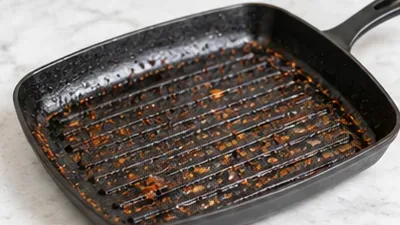
Start with warm water, mild dish soap, and a tool that can reach the channels without damaging the surface. A soft-bristled dish brush works well because the bristles bend around the raised ribs. A nylon scrubber or soft sponge is another option when the manufacturer permits it.
Work in the same direction as the grill ridges, then cross them to reach the corners. Grease often collects where each ridge meets the flat channel, so concentrate on those junctions instead of scrubbing the entire pan harder.
For seasoned cast iron, Lodge says warm soapy water and a stiff-bristled brush or scrubbing pad are acceptable. For enameled cast iron, use a soft nonabrasive sponge or brush. For nonstick, stay with soft sponges or nonmetal nylon tools and avoid steel wool or metallic pads.
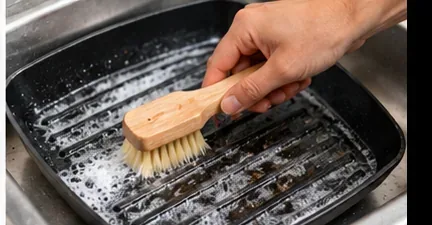
Move from the gentlest method to the stronger one that is appropriate for your pan.
Do not respond by soaking it for an hour. Lodge recommends a nylon scrubbing brush or pan scraper for stuck-on food and specifically advises against soaking. A small amount of soap is acceptable. If the issue is rust rather than food, Lodge treats that as a separate restoration problem and allows more aggressive abrasion for rust removal followed by reseasoning.
After the pan has cooled, fill it with warm soapy water and let the residue soften before using a nonabrasive sponge or brush. Lodge's enameled cast iron instructions also provide a stronger manufacturer-approved option for stubborn baked-on food: boiling 2 cups of water with 4 tablespoons of baking soda for a few minutes, then using a pan scraper. See the official Lodge enameled cast iron care instructions.
Avoid the urge to use a metal scraper or abrasive scouring pad. All-Clad's current support guidance says light hand washing with mild detergent and a soft sponge should handle normal cleanup, while a baking-soda-and-water mixture can help with residual food. Some specific All-Clad nonstick lines also give stronger, product-specific methods for severe burned-on residue. That is a good reason to check the exact product page before escalating.
If the coating is blistered, peeling, deeply scratched, or otherwise physically damaged, cleaning will not restore it. Stop treating the problem as residue and check the manufacturer's replacement or warranty guidance.
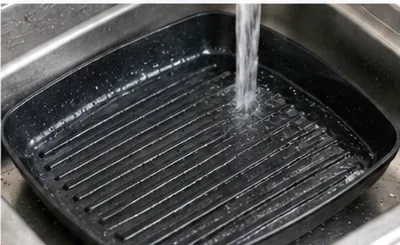
Rinse until you no longer see soap foam, loosened grease, or food particles in the channels. Run clean water across the ridges and inspect the lowest points of the pan, where detergent and residue tend to collect.
This step matters most after a heavier cleaning treatment. A grill pan can look clean from above while retaining a thin film between the ridges. Tilt the pan under good light and inspect each channel before moving on.
Every grill pan should be dried thoroughly. Only some should be oiled as part of routine care.
Seasoned bare cast iron needs the full wash-dry-oil cycle. Lodge instructs users to dry cast iron completely and then add a thin layer of oil over the surface. Use only enough oil to leave a very light film rather than a sticky coating.
Enameled cast iron does not need seasoning on its enamel cooking surface. Le Creuset says to rinse and dry completely, particularly to avoid moisture sitting around exposed rims. Nonstick cookware also should be dried thoroughly, but routine cast-iron seasoning is not the normal care method unless the manufacturer specifically instructs otherwise.
The safe answer depends on the material and brand.
If preserving the finish is your priority, gentle hand washing is the safest general choice when the manufacturer allows it.
Do not treat these as universal grill-pan cleaners. Their suitability depends on the surface and the manufacturer's instructions.
Baking soda appears in some manufacturer-approved cleaning methods. Lodge gives a baking-soda-and-water boil for stubborn residue on enameled cast iron, and All-Clad gives baking-soda-based methods for some nonstick products. That does not mean every coated pan should receive the same formula.
Acidic cleaners deserve extra caution. Lodge tells owners of enameled cast iron to avoid citrus-based cleaners because they can dull the enamel's exterior gloss. All-Clad provides a white-vinegar-and-water boil for severe residue on certain hard-anodized nonstick cookware, but that instruction is specific to those products. Use model-specific guidance rather than assuming vinegar or lemon is always safe.
Use three checks before putting it away.
First, inspect the channels. The valleys between the ridges should be free of visible burnt food, sticky grease, and soap residue. Run a clean damp cloth along several channels; it should not pick up a brown greasy film.
Second, check the surface feel. Enameled and nonstick pans should not feel tacky from old oil or cleaner. Seasoned cast iron may have a very light oiled finish after care, but it should not feel wet or gummy.
Third, check dryness. Look around corners, handles, rims, and the underside. Seasoned cast iron should be completely dry before oiling and storage. Enameled and coated cookware should also be dry before stacking or putting it in a cabinet.
Clean it after each use rather than allowing multiple layers of grease to bake onto the ridges. Routine cleaning is usually much easier than a periodic aggressive scrub, especially on coated cookware.
If you cook fatty meat, sugary marinades, or cheese, inspect the channels as soon as the pan has cooled enough for safe cleaning. Those residues harden quickly. If you use a grill pan mostly for vegetables with a small amount of oil, a normal warm-soapy wash may be all you need.
If you remember only one thing, make it this: identify the pan before you attack the mess. A seasoned cast-iron grill pan is designed to be washed, dried, and lightly oiled. An enameled grill pan can benefit from gentle soaking but should be protected from metal abrasion and thermal shock. A nonstick pan needs the softest tools and extra attention to the coating.
Start with warm water, mild soap, and a suitable brush or sponge. Escalate only when stuck-on residue remains, and use a manufacturer-approved treatment for that material. When the channels are clean, the pan feels free of greasy buildup, and every surface is fully dry, the job is done.
Manufacturer care guidance was checked on September 12, 2026. Cookware formulations and care instructions can change, so verify the product page or manual for your exact grill pan before using a stronger cleaner, prolonged soak, dishwasher, or restoration method.
How to Use Google Lens on Chromebook lets you scan objects, translate text, and solve problems directly from your device. Follow these steps to get started quickly.
Learn how to clean a dehumidifier filter safely, when to use water or soap, how long to dry it, and when model-specific instructions matter.
Learn when cast iron grill grates need seasoning, how to clean, oil, heat, and maintain them, and when porcelain-coated grates should not be seasoned.
Learn how to clean a down or synthetic puffer jacket, restore loft, avoid heat damage, check the result, and know when professional care is safer.
Learn how to clean a grill pan without damaging it. This guide explains the safest method for seasoned cast iron, enameled cast iron, and nonstick pans, including stubborn burnt-on residue.
Clean purse linings safely by identifying the material, removing debris, spot-cleaning carefully, drying fully, and knowing when to stop.
Learn how to clean a GE dishwasher filter, identify removable filter types, avoid damaging the mesh, and know when to check your model manual.
Learn how to clean oven trays safely, from fresh grease to burnt-on residue, with separate guidance for natural aluminum and nonstick bakeware.
Learn how to clean a retainer case with mild soap and lukewarm water, when to avoid the dishwasher, how to dry it, and when an old case should be replaced.
Let nail glue dry, lift off the excess, then use acetone only on compatible, colorfast fabric. Learn safer alternatives, washing steps, and when to stop.