How to Wash Suede Safely: What to Do Instead of Soaking It
Learn how to clean suede safely without machine washing or soaking it, including brushing, stain removal, air-drying, and suede protection.
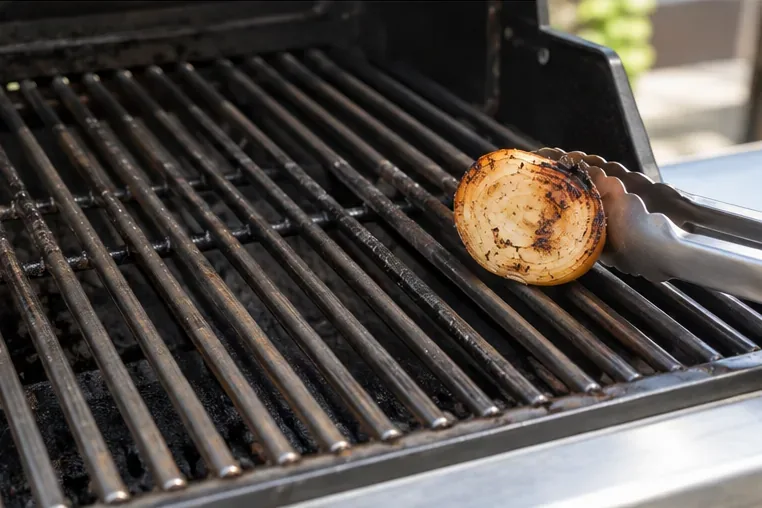
Using half an onion to clean a grill is a simple, bristle-free way to wipe loosened food residue from hot cooking grates. The useful part of the trick is mostly mechanical: a firm onion half gives you a broad, slightly moist surface that can be pushed along the bars while the heat has softened or carbonized stuck-on debris. What is not established is the popular claim that an onion reliably “sanitizes” a grill.
That distinction matters. Grill manufacturers such as Weber emphasize preheating because heat makes old food residue easier to remove, then recommend cleaning the grates with an appropriate grill-cleaning tool. The USDA also advises cleaning grills and warns that loose wire-brush bristles can be accidentally ingested. An onion can be a practical alternative for light, routine wiping, but it should not be treated as a proven disinfectant or as a substitute for periodic deep cleaning.
Use an onion that is large enough to grip securely with tongs. Yellow, white, or red onions can all provide the same basic scrubbing surface; there is no strong evidence that one common culinary onion type is meaningfully better for this task.
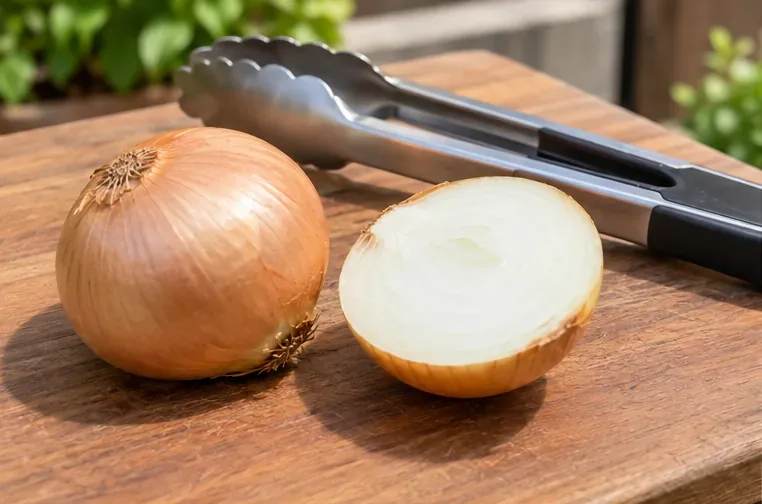
Preheat according to the instructions for your specific grill. Weber’s current guidance commonly calls for preheating on high for roughly 10 to 15 minutes before cleaning the grates. The exact setting and procedure can vary by grill design, so your owner’s manual should take priority.
What is verified: Heat helps loosen and carbonize stuck-on food, which makes mechanical cleaning easier. What to do: Let the grates get hot before trying the onion rather than rubbing a cold, greasy grate.
Weber’s grill-cleaning guidance explains why preheating helps remove residue.
Cut the onion crosswise or lengthwise to expose a wide, flat cut face. Leaving the root end attached can help the layers stay together. Do not peel away so many outer layers that the onion becomes slippery or fragile.
What is situational: Some people push a fork into the onion as a handle. That can work, but it puts your hand closer to the heat and gives less control than long tongs. What to do: Grip the onion half firmly with long-handled tongs instead.
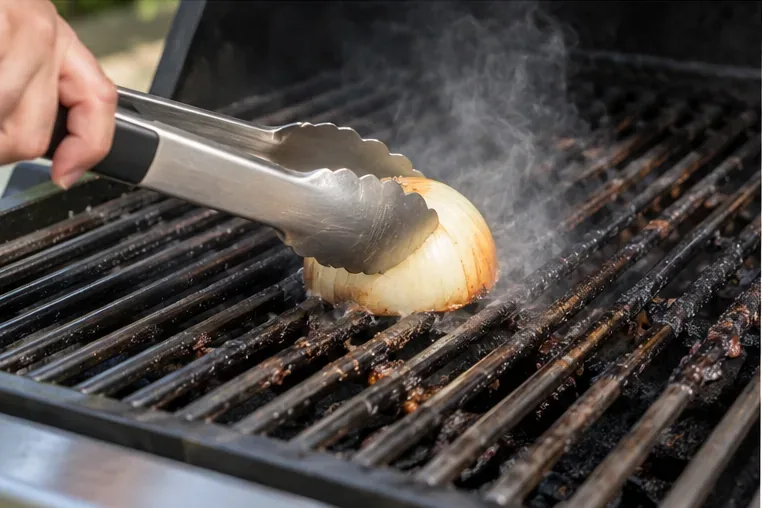
Once the grates are hot, open the lid. On a gas grill, reduce the burners or turn them off temporarily if that is consistent with your grill’s operating instructions. On a charcoal grill, work over a less intense area rather than reaching directly over strong flames. Hold the onion with tongs, cut side down, and rub it back and forth along the grate bars.
Use steady pressure, but do not force the onion so hard that it breaks apart. You should see the cut surface darken as it picks up char and residue. If the onion becomes soft, shredded, or too small to hold safely, replace it with the other half.
What is verified: Physical rubbing on a hot grate removes loose and carbonized debris. What is not verified: There is no established household-grill protocol showing that a few passes with raw onion consistently disinfect a grate to a defined microbiological standard. What to do: Judge the onion by visible cleaning performance, not by an assumed sanitizing effect.
Stop when the major food fragments and loose carbon have lifted. Look closely across the full cooking area. If onion layers tear off, pick them up with tongs. For small loose particles, a folded damp paper towel held in tongs can be used only when flare-up risk is controlled and you can do so safely.
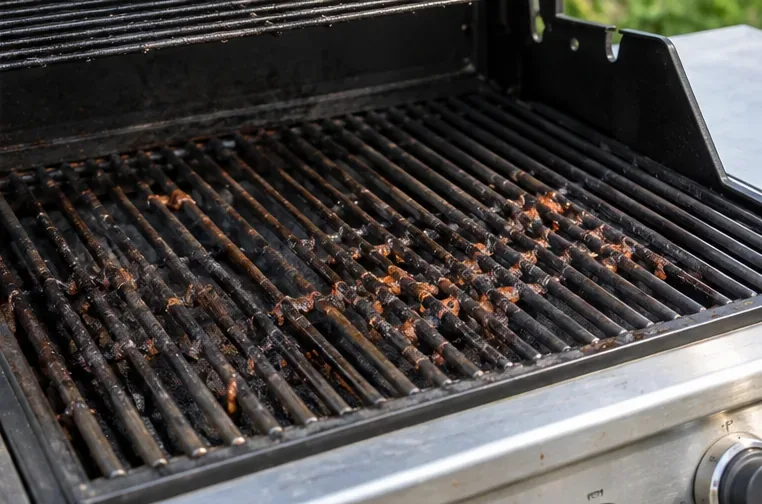
What is situational: The onion method works best for routine residue. Thick grease deposits, rust, baked-on carbon in corners, blocked burners, dirty heat shields, or a full grease tray require a deeper cleaning process after the grill is completely cool. What to do: If the grate still feels crusted or uneven after two or three passes, stop relying on the onion and follow the manufacturer’s deep-cleaning procedure.
After cleaning, make sure no loose onion fragments remain. If you turned the burners down or off, return the grill to the cooking temperature required for your recipe. Do not eat the onion that was used for cleaning; discard or compost it once cool.
The USDA recommends keeping grills and utensils clean as part of safe outdoor food preparation. Cleaning the grate does not replace basic food-safety practices such as separating raw and cooked foods and cooking meat to safe internal temperatures.
USDA guidance on grilling food safely covers clean utensils, cross-contamination, and safe cooking temperatures.
Not in any way you should rely on for food safety. Laboratory studies have reported antimicrobial activity from onion-derived compounds or onion extracts under controlled conditions. For example, a published study indexed by the U.S. National Library of Medicine found inhibitory activity from onion extracts against Listeria monocytogenes. But that experiment used prepared extracts and laboratory testing conditions, not half an onion rubbed briefly across hot grill bars.
That means the evidence does not justify turning “onions contain antimicrobial compounds” into “an onion sanitizes your grill.” The chemistry may be real while the practical household claim remains unproven.
What to do: Treat the onion as a disposable scrubber. Rely on proper heat, visible soil removal, manufacturer-recommended maintenance, and normal food-safety controls for the safety of your cookout.
Original research indexed by PubMed on antimicrobial activity of onion extracts.
It avoids one specific hazard: it has no metal bristles to shed. The USDA Food Safety and Inspection Service notes reported injuries from accidentally ingesting wire grill-brush bristles and advises users of wire brushes to inspect the cooking surface carefully for loose bristles or consider other cleaning methods.
That does not make an onion universally “safer” in every respect. You are still working near a hot grill, and poor tong control can cause burns. An onion also may not clean stubborn deposits as effectively as a purpose-designed tool that your grill manufacturer approves.
What to do: If loose bristles are a concern, a halved onion is reasonable for light cleaning, or choose another bristle-free tool compatible with your grate material. Whatever tool you use, inspect the surface before food goes on it.
USDA FSIS guidance on wire grill-brush bristle injuries.
| Situation | What the evidence supports | Best action |
|---|---|---|
| Light food residue on hot grates | Heat plus mechanical wiping can remove loosened debris. | Use the onion with long tongs and inspect the grate afterward. |
| Concern about loose wire bristles | An onion contains no metal bristles, while USDA documents the ingestion hazard from loose brush bristles. | Use a bristle-free method and inspect the cooking surface before grilling. |
| Heavy grease, rust, thick carbon, clogged components | An onion is not a complete deep-cleaning system. | Cool the grill and follow the manufacturer’s maintenance instructions. |
| “Natural disinfecting” claim | Onion compounds can show antimicrobial activity in laboratory studies, but real-world grill sanitizing with a raw onion has not been established. | Do not treat the onion as a validated sanitizer. |
A soft onion is far less abrasive than a metal scraper, so ordinary rubbing is unlikely to scratch a sound grate surface. Still, grate coatings and maintenance requirements vary. Weber, for example, publishes specific care instructions for porcelain-enameled cast-iron and stainless-steel cooking grates, including preheating and approved cleaning methods.
What to do: Check the manual for your exact grill before substituting any cleaning technique. If the grate is chipped, rusting through, or otherwise damaged, cleaning tricks will not repair the underlying problem.
Weber’s care guidance for cast-iron cooking grates.
Cleaning a grill with an onion is worth trying when your goal is to remove light, cooked-on residue without using a wire-bristle brush. Preheat the grill, hold a firm onion half with long tongs, rub the cut side along the grate bars, and inspect carefully before cooking.
The most important correction to the viral version of this trick is that the onion should not be credited with a disinfecting power that has not been demonstrated on household grills. Use it as a scrubber, not as a sanitizer. If the grates remain heavily coated, greasy, rusty, or damaged, move to the deeper cleaning and maintenance procedure specified by your grill manufacturer.
Learn how to clean suede safely without machine washing or soaking it, including brushing, stain removal, air-drying, and suede protection.
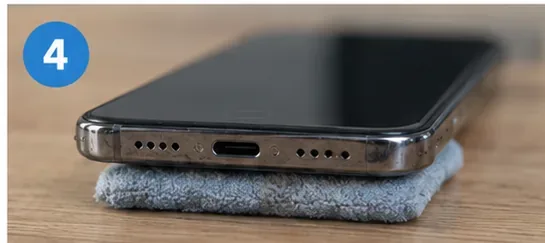
Learn how to dry a wet phone charger port safely, compare air-drying, wireless charging, emergency overrides, and service, and avoid heat, rice, and objects.
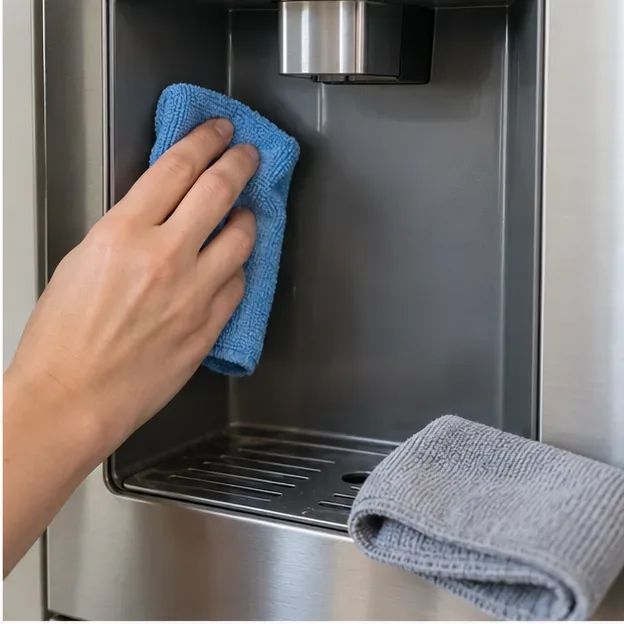
Clean a refrigerator water dispenser safely with mild soap, careful nozzle cleaning, mineral-scale removal, drying, and filter checks.
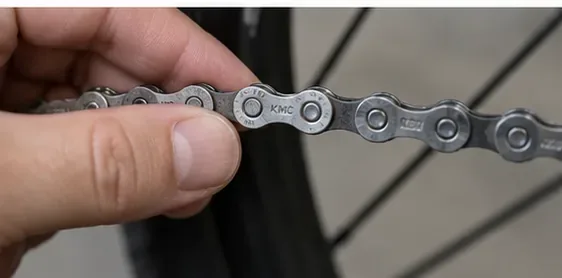
Learn how to take a bike chain off safely, whether it uses a quick link or rivet, plus which tools to use and when a connector must be replaced.
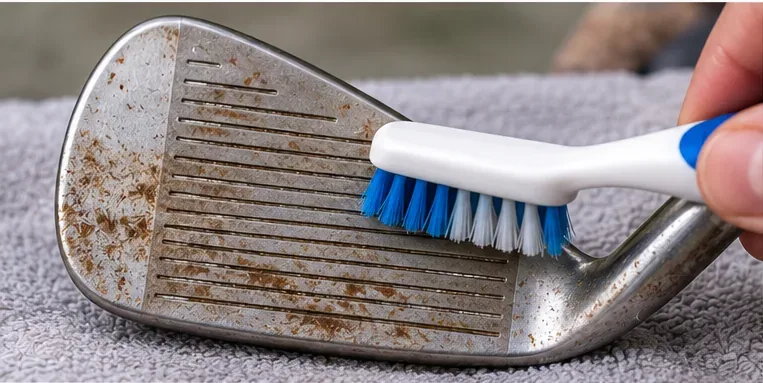
Learn how to remove rust from golf clubs safely, starting with soap and a soft brush, when to stop, and how raw wedges differ from plated irons.
How to Use Google Lens on Chromebook lets you scan objects, translate text, and solve problems directly from your device. Follow these steps to get started quickly.
Clean a BUNN coffee maker with vinegar safely using the verified Heat N Brew method, plus model checks, sprayhead care, flushing steps, and mistakes to avoid.
Learn how to clean a garbage disposal with ice, compare cold-water, citrus, and deeper-clean options, and know when ice is not enough.
Learn how to remove school glue, super glue, hot glue, and adhesive residue from clothes safely, with fabric-specific steps and solvent cautions.
Learn how to wash a wool coat safely by following its care label, choosing a wool-safe detergent, washing gently, and drying without shrinking or distortion.