Home
» How to
»
How to Clean a Hairbrush After Lice: A Safe, Practical Method
How to Clean a Hairbrush After Lice: A Safe, Practical Method
If a hairbrush was used by someone with head lice, you usually do not need to throw it away. The U.S. Centers for Disease Control and Prevention (CDC) recommends soaking combs and brushes used by an infested person in hot water at at least 130°F (about 54°C) for 5 to 10 minutes. That is the key decontamination step for a washable brush.
The method is simple, but there are two important limits: the brush must be able to tolerate hot-water immersion, and cleaning the brush does not replace treating the person who has head lice. This practical reference explains both.
Quick answer: what should you do with the brush?
Situation
Recommended approach
What matters most
Washable plastic or metal brush
Remove trapped hair, then soak in water at least 130°F for 5–10 minutes
Meet both the temperature and time recommended by the CDC
Nit comb or regular comb
Use the same hot-water soak
Clean away visible hair and debris before or after soaking
Brush that should not be submerged
Follow its care instructions; if hot-water soaking is not safe, consider isolating it for two weeks or replacing it
Do not damage an electric, glued, padded, wooden, or otherwise heat-sensitive item just to force the standard soak
Unused brush belonging to someone else
No special treatment is generally needed if it was not shared with the infested person
Focus on brushes and combs actually used by the person with lice
The CDC's current public head-lice treatment guidance, updated November 12, 2024, specifically says to soak combs and brushes in hot water at least 130°F for 5–10 minutes.
How to clean a hairbrush after lice in four steps
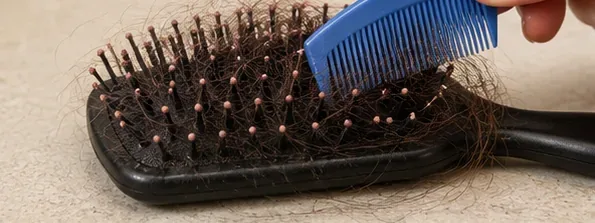
1. Remove trapped hair and visible debris
Pull out as much hair as you can from the bristles, pins, and base of the brush. A clean comb, brush-cleaning tool, or tweezers can help. Removing the hair is mainly a practical cleaning step: it lets the hot water reach the brush surfaces more evenly and makes it easier to inspect the brush afterward.
If you use another comb or tool to remove the trapped hair, clean that tool too. Avoid shaking loose hair around the room; place removed hair directly into the trash.
Trapped hair is removed from a paddle brush before the hot-water soak so the bristle bed is easier to clean.
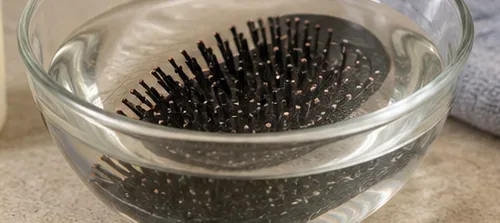
2. Soak a washable brush in hot water for 5 to 10 minutes
Place the brush in a heat-safe container with enough hot water to contact the bristles and the parts that touched hair. The CDC specifies at least 130°F (about 54°C) for 5 to 10 minutes. A kitchen thermometer can help you verify the temperature instead of guessing.
Do not put your hands into very hot water. Use a heat-safe container and handle the brush with tongs or by the dry end of the handle when practical. The 130°F recommendation applies to the brush or comb; it is not a recommendation to use water that hot on a person's scalp.
A washable paddle brush is submerged in a bowl during the hot-water decontamination step; the CDC specifies at least 130°F for 5–10 minutes.
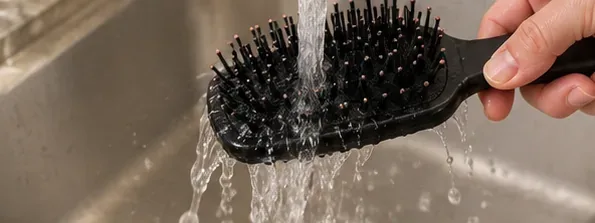
3. Rinse away loosened residue
After the timed soak, rinse the washable brush under clean running water if its care instructions allow it. This helps remove loosened hair product, skin oils, and debris. Ordinary soap may be useful for routine cleaning on compatible brushes, but soap, vinegar, or another household cleaner should not be treated as a substitute for the CDC's hot-water time-and-temperature step.
Inspect the bristle base and edges. If hair remains wrapped around the pins, remove it and clean any tool you use to do so.
The soaked brush is rinsed under running water to remove loosened residue after the timed hot-water treatment.
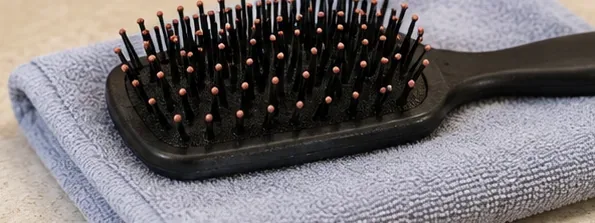
4. Let the brush dry completely and keep it separate
Shake off excess water and place the brush on a clean towel in a well-ventilated area until it is completely dry. Keep it separate from other people's brushes while the household is managing the infestation, and do not share brushes, combs, towels, hats, or similar personal items.
Once dry, a brush that has been cleaned appropriately can go back into normal use. There is no CDC recommendation that every washable brush exposed to head lice must be discarded.
The cleaned paddle brush rests on a clean towel to dry fully before it is returned to use.
What if the brush cannot be soaked?
Some brushes have care restrictions that make full immersion or high heat a bad idea. Examples can include powered styling brushes and some brushes with wood, padding, glued components, or delicate finishes. Check the manufacturer's cleaning instructions first rather than assuming every brush can be placed in 130°F water.
The CDC says items that cannot be washed or dry-cleaned can be sealed in a plastic bag for two weeks. That recommendation is written broadly for nonwashable items used around the time of treatment. For a non-soakable brush, isolating it for two weeks is a conservative option if you want to keep it and its manufacturer does not provide another lice-compatible cleaning method. Replacing an inexpensive brush is also reasonable if its construction makes reliable cleaning difficult.
Do not improvise by putting an electric brush in water, placing a plastic brush in an oven, microwaving it, or exposing it to temperatures its manufacturer does not permit.
Do you need bleach, rubbing alcohol, vinegar, or lice spray?
No additional chemical is required by the CDC for routine decontamination of combs and brushes. The agency's published instruction is the hot-water soak. It also advises against fumigant sprays and fogs for head lice because they are unnecessary and can be toxic if inhaled or absorbed through the skin.
That means there is usually no reason to saturate a brush with household insecticide, mix disinfectants, or use harsh chemicals simply because lice were present. If a specific brush manufacturer recommends a normal cleaning product for residue removal, you can follow that care guidance, but do not confuse cosmetic cleaning with the lice-control step.
Can head lice actually live on a hairbrush?
They can end up on a brush, and the CDC notes that sharing infested combs or brushes is a possible route of spread. However, head-to-head hair contact is the main way head lice spread. Adult lice that fall off a person generally die within two days because they cannot feed, and nits usually do not remain viable away from scalp-like temperatures.
This is why environmental cleaning should be targeted rather than extreme. Clean the brushes and combs the infested person used, manage recently used bedding and clothing as recommended, and avoid sharing personal hair items. You do not need to disinfect every object in the home.
After discovering an active infestation: clean brushes and combs used by the affected person as part of the initial control measures.
After a nit-combing session: remove visible lice, nits, and hair from the comb or brush and clean it before it is shared or stored with other people's items.
Before another person uses it: do not share a brush that has recently been used by someone with active head lice until it has been appropriately cleaned.
You do not need to repeatedly soak a brush all day. The more important household task is to treat the active infestation correctly and prevent sharing or head-to-head transfer.
Does cleaning the brush get rid of the infestation?
No. A cleaned brush reduces a potential route of reinfestation, but it does not kill lice or nits that remain on the scalp. The CDC recommends treating people who have an active infestation with an appropriate over-the-counter or prescription product and following that product's directions carefully. Depending on the medication, retreatment may be needed because some products kill live lice but not unhatched eggs.
If treatment does not appear to work, do not keep applying extra doses or combine lice medicines on your own. The CDC's clinical-care guidance warns against misuse and overuse of lice medications. For young children, uncertain diagnosis, treatment failure, pregnancy, or questions about a prescription product, ask a healthcare professional or pharmacist.
Practical checklist
Confirm the brush can safely tolerate hot-water immersion.
Remove trapped hair before soaking.
Use water at least 130°F (about 54°C).
Keep the brush in the hot water for 5–10 minutes.
Rinse if the brush's care instructions permit.
Dry the brush completely on a clean surface.
Do not share brushes or combs while lice are being managed.
Do not rely on fumigant sprays, foggers, vinegar, or improvised chemical mixtures.
Remember that brush cleaning supports treatment; it does not replace treatment of the scalp.
Sources and guidance date
This article was checked against official U.S. guidance available on September 13, 2026. The main environmental-cleaning recommendation comes from the CDC's Treatment of Head Lice page (dated November 12, 2024). The CDC's About Head Lice page (dated June 4, 2024) provides supporting information on spread, survival away from the scalp, and prevention.