Home
» How to
»
How to Clean a Leather Jacket Safely: An 8-Step Guide
How to Clean a Leather Jacket Safely: An 8-Step Guide
Cleaning a leather jacket safely is mostly about restraint. Smooth, finished leather can often handle light at-home cleaning, but suede, nubuck, waxed leather, mixed-material motorcycle gear, and jackets with specialist-only labels may need a different process. The safest starting point is the jacket itself: identify the material, read the care label, and use the manufacturer’s instructions when they conflict with general advice.
Current manufacturer guidance is remarkably consistent. Schott NYC says cleaning and conditioning methods vary by material and recommends testing products on a hidden area before treating the jacket. Belstaff advises dry brushing first, spot cleaning with neutral soap and cold water when appropriate, and drying away from heat and direct sun. Dainese likewise warns against solvents and heat. This guide turns those durable principles into an eight-step home routine for smooth leather.
Before You Start: Is Your Jacket Safe to Clean at Home?
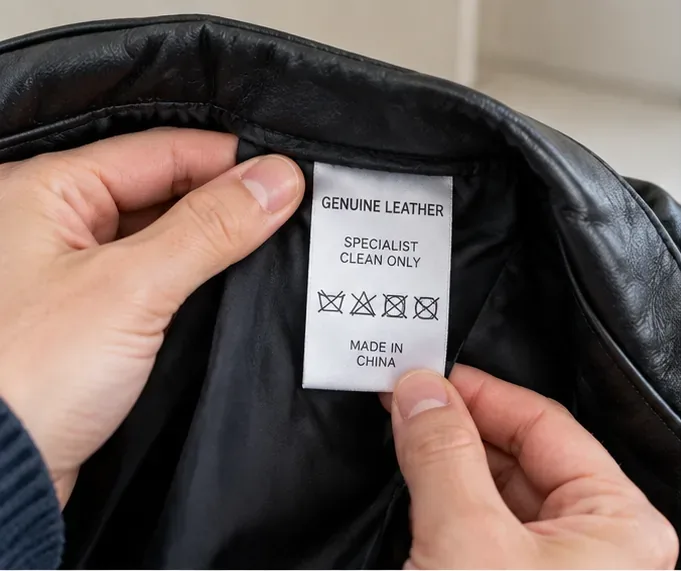
Do not assume every leather jacket should be cleaned the same way. If the label says “specialist clean only,” follow that instruction. If the jacket is suede or nubuck, skip the damp-cloth method below: Harley-Davidson’s leather-care guidance recommends specialized suede tools rather than conventional water-based cleaning. Belstaff also notes that waxed leather has a finish that calls for specialist reconditioning rather than ordinary conditioner.
Color lifts, finish changes, stain spreads, or leather becomes tacky
Suede or nubuck
Suede brush/eraser and product-specific care
Oil, dye, water rings, or large stains
Waxed, vintage, painted, or specialty finish
Follow the maker’s exact instructions
If the finish is unfamiliar or easily changes color
Specialist-clean-only or valuable vintage jacket
Professional leather cleaner
Do not begin wet cleaning at home
What You Need
Two or three clean, soft microfiber or lint-free cloths
Cold or lukewarm water
A small amount of neutral soap, or a leather cleaner approved for your jacket’s finish
A wide, sturdy hanger
Leather conditioner only if the maker recommends it for that leather
Avoid bleach, ammonia, harsh stain removers, strong solvents, abrasive scrubbers, and direct heat. Do not put a leather jacket in the washing machine unless its manufacturer explicitly says the garment is machine washable; mainstream leather-jacket makers generally advise against it.
How to Clean a Leather Jacket in 8 Steps
1. Read the care label and identify the leather
Start with the care label so the jacket’s own instructions take priority over generic cleaning advice.
Check the inside label for material, lining, and cleaning instructions. If you know the model, look up the maker’s product-care page too. A smooth cowhide motorcycle jacket, a soft lambskin fashion jacket, and a waxed heritage jacket can react differently to the same cleaner. If you cannot confidently identify the finish, use only dry dusting and consult a leather specialist.
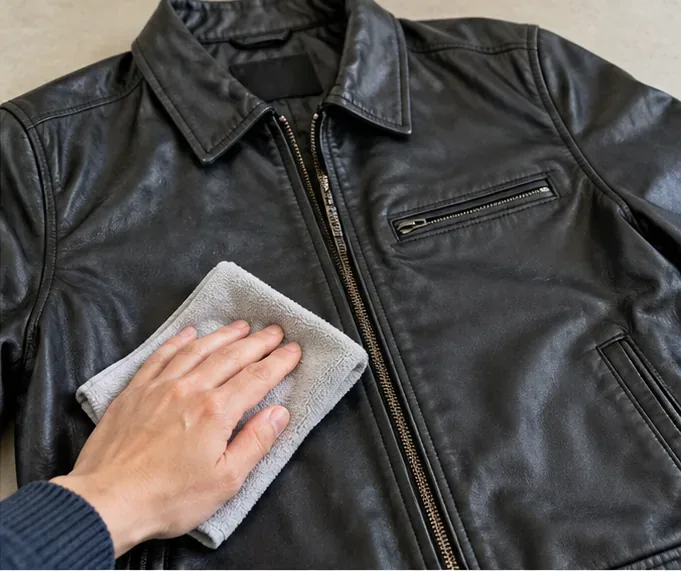
2. Remove dry dust and loose grit
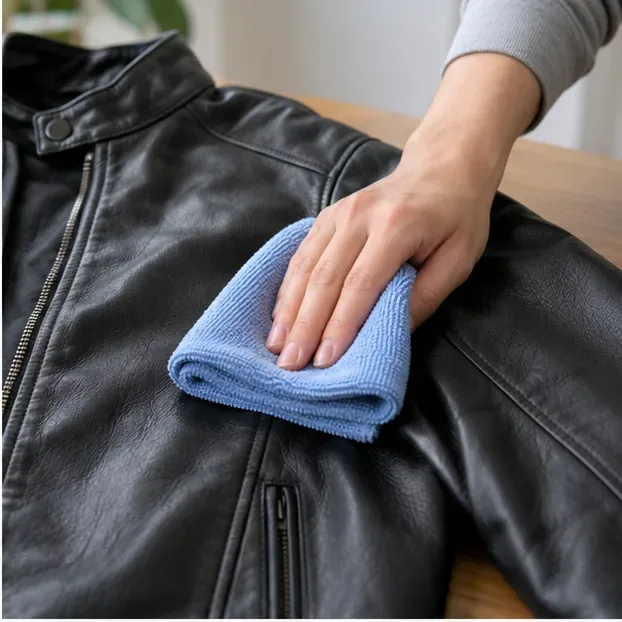
Wipe away loose dust first so grit is not dragged across the finish during damp cleaning.
Lay the jacket flat or place it on a supportive hanger. With a dry microfiber cloth, gently wipe the collar, shoulders, front panels, sleeves, cuffs, pocket edges, and seams. Work with light pressure. This simple pass may be all a lightly worn jacket needs.
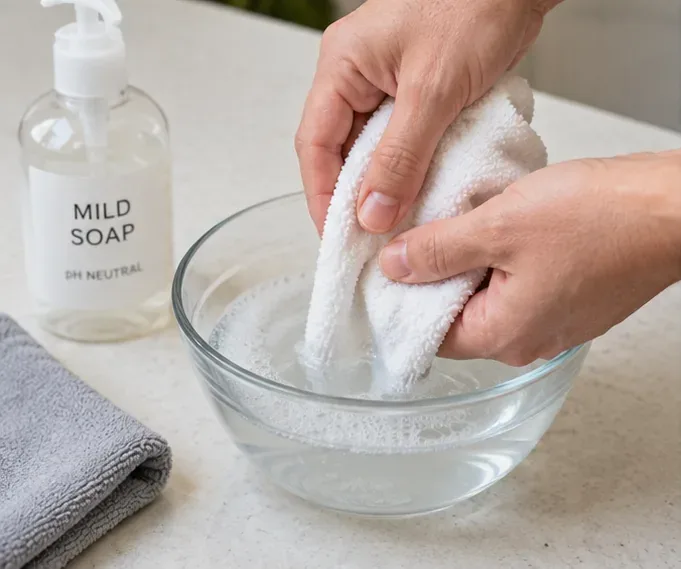
3. Prepare a very mild cleaning solution
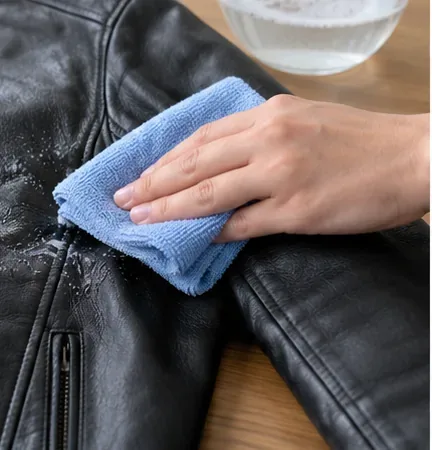
Use only a small amount of neutral soap, then wring the cloth thoroughly so it is damp rather than wet.
If the label allows damp cleaning, add a small amount of neutral soap to cold or lukewarm water. Wet the cloth, then wring it thoroughly. The goal is controlled moisture, not saturation. Belstaff specifies neutral soap with cold water for spot cleaning, while Dainese recommends cold water with a little neutral soap when its dedicated cleaning kit is not available.
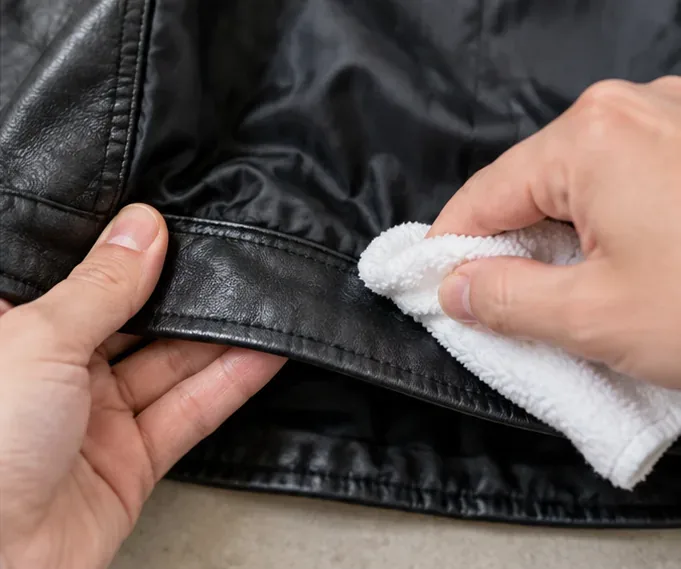
4. Patch-test a hidden area
Test cleaner on a concealed hem or inside edge before treating visible panels.
Choose an inconspicuous area such as the underside of the hem, an inside facing, or a hidden edge. Apply a tiny amount, then let it dry fully. Schott NYC specifically advises testing cleaning and conditioning products on a hidden area and allowing 24 hours to observe possible color or texture changes. If the test area darkens permanently, becomes sticky, loses dye, or changes sheen, stop and use a professional cleaner.
5. Spot-clean dirty areas with minimal moisture
Work on a small area at a time with a lightly damp cloth; avoid soaking the leather.
Start with the dirtiest high-contact areas: collar, cuffs, elbows, pocket openings, and the front near the zipper. Wipe gently rather than scrubbing. For a localized mark, blot or make small controlled passes instead of spreading moisture over a large panel. If the stain is ink, dye transfer, heavy grease, mold that has penetrated the finish, or an unknown chemical stain, stop before experimenting with aggressive home remedies.
6. Remove soap residue with a clean damp cloth
Follow the cleaning pass with a separate clean, barely damp cloth to remove residual soap.
Rinse a second cloth in clean water and wring it almost dry. Lightly wipe the areas you cleaned so soap does not remain on the surface. Then blot any obvious moisture with a dry cloth. Do not rinse the jacket under a faucet and do not immerse it in water.
7. Air-dry naturally on a supportive hanger
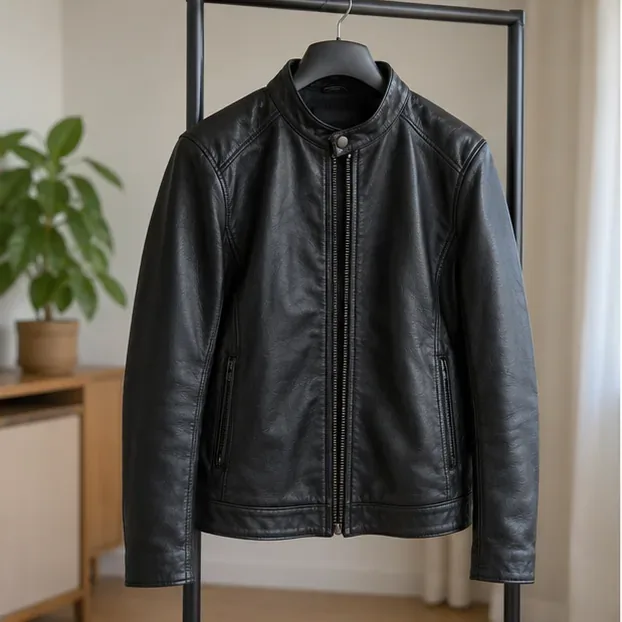
Let the jacket air-dry in a ventilated room away from radiators, hair dryers, and direct sunlight.
Hang the jacket on a wide hanger in a well-ventilated room. Keep it away from radiators, space heaters, hair dryers, fireplaces, and strong direct sun. Dainese and Belstaff both warn against direct heat; Belstaff’s product-care instructions call for drying leather in ventilation away from heat and sunlight. Let the jacket dry completely before conditioning or storing it.
8. Condition only when appropriate
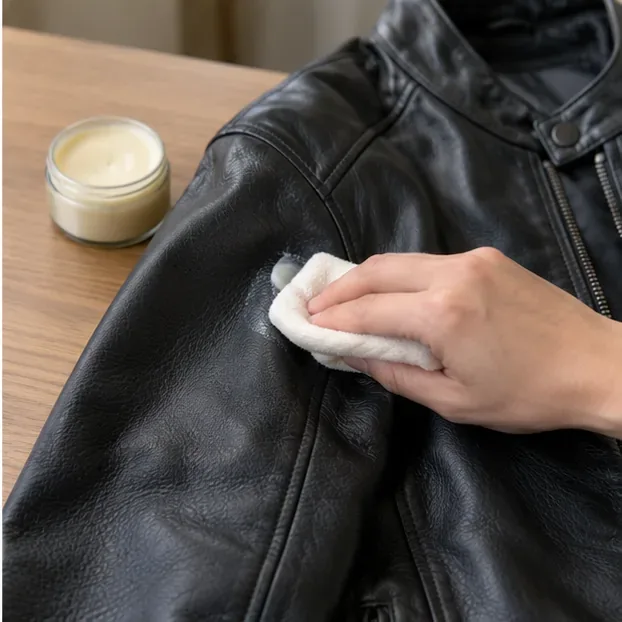
On compatible smooth leather, apply a small amount of conditioner only after the jacket is fully dry.
If the maker recommends conditioner for your jacket, patch-test it first just as you did the cleaner. Apply a small amount to a soft cloth and spread a thin, even layer. More is not better: excess conditioner can change color, alter sheen, or leave a greasy surface. Do not use ordinary smooth-leather conditioner on suede, nubuck, or a specialty waxed finish unless the manufacturer specifically approves it.
How to Clean the Lining Without Soaking the Leather
Turn the jacket inside out as far as the construction allows. Check whether any removable liner has its own wash label. For a fixed fabric lining, use a barely damp cloth with a very small amount of mild detergent or neutral soap on high-contact areas such as the underarms, neck, and cuffs. Keep moisture from soaking through to the leather shell. Then wipe with a clean damp cloth and allow the jacket to dry fully inside out before returning it to storage.
For technical motorcycle jackets, removable armor, membranes, mixed fabrics, and detachable thermal liners can have separate care rules. Dainese explicitly tells owners of mixed-material garments to follow the garment label. Treat each component as its own material rather than applying one cleaning method to the entire jacket.
What About Common Stains?
Fresh water: blot, reshape, and air-dry away from heat. Avoid rubbing a water spot aggressively.
Light surface dirt: use the mild, minimal-moisture process above after a hidden-area test.
Grease or oil: blot immediately. If the mark is large or has soaked into absorbent leather, professional cleaning is safer than repeated wet treatment.
Ink, paint, dye transfer, adhesive, or mystery stains: do not reach automatically for alcohol or solvent. Those chemicals can strip or discolor the finish.
Mold: isolate the jacket from other clothing and consider a leather specialist, especially if growth is extensive, recurring, or accompanied by a strong musty odor.
How Often Should You Clean a Leather Jacket?
There is no universal calendar that fits every jacket. A motorcycle jacket exposed to road grime may need surface cleaning more often than a fashion jacket worn occasionally indoors. The better rule is condition-based: remove loose dirt promptly, spot-clean when needed, and perform a deeper wipe only when the surface actually requires it. Condition only as the leather and manufacturer call for it rather than on an arbitrary monthly schedule.
How to Store It After Cleaning
Once completely dry, hang the jacket on a broad hanger in a cool, dry place with room around it. Avoid folding it for long periods. Belstaff recommends hanging leather on a strong wooden or padded hanger and storing it away from sunlight, while Harley-Davidson advises a breathable garment bag rather than an airtight plastic cover. Good storage reduces the amount of corrective cleaning the jacket will need later.
When a Professional Leather Cleaner Is the Better Choice
Choose professional care when the label requires it, when the jacket is expensive or historically valuable, when the finish is specialty or unknown, or when stains cover a large area. Also stop DIY cleaning if dye transfers to your cloth, the finish becomes sticky, the leather wrinkles or stiffens unusually, or a stain grows as you work. Schott NYC recommends professional leather-care services for general cleaning and reconditioning, and Belstaff likewise recommends periodic professional leather cleaning for appropriate garments.
Bottom Line
The safest way to clean a leather jacket is to identify the leather first, remove dry dirt, use the least moisture and mildest compatible cleaner that will do the job, patch-test before treating visible areas, air-dry away from heat, and condition only when the finish calls for it. The most damaging mistake is treating every leather jacket as if it were the same material. When in doubt, preserving the finish is more important than forcing a stain out at home.