Home
» How to
»
How to Clean a Memory Foam Mattress Topper Without Soaking or Damaging the Foam
How to Clean a Memory Foam Mattress Topper Without Soaking or Damaging the Foam
Memory foam is not a fabric you can treat like a comforter. Current care guidance from several major manufacturers points in the same direction: clean the foam with as little moisture as possible, spot-clean rather than soak it, and let it dry completely before putting bedding back on. What varies from product to product is the cover. Some topper covers are removable and washable; others are not meant to come off at all.
That difference matters. Tempur-Pedic says the covers on its toppers can be removed and washed, while its TEMPUR material itself should never be washed or soaked. Casper's current Comfy Mattress Topper instructions say not to remove the cover and to spot-clean with mild detergent instead. Zinus likewise advises spot-cleaning its toppers with mild soap and a clean towel and specifically says not to drench the foam. Saatva's Graphite Memory Foam Mattress Topper calls for spot cleaning with a mild cleaning solution.
Action: before doing anything wet, read the sewn-in care label or the current instructions for your exact topper. The steps below are deliberately conservative and should be narrowed further if your manufacturer gives stricter directions.
Myth 1: You can wash the memory foam core if you use a gentle cycle
Verified: that is not supported by the current care instructions checked for this guide. Tempur-Pedic says never to wash TEMPUR material, Casper says its memory foam topper is not washable, and Zinus recommends spot cleaning without drenching the foam. A washing machine introduces both substantial water and mechanical agitation.
What depends on the product: a removable cover may be washable even when the foam core is not. Tempur-Pedic recommends cold washing with little to no detergent for its removable topper covers, while Casper says the cover on its current Comfy Mattress Topper should not be removed.
Action: separate “cleaning the cover” from “cleaning the foam” in your plan. Never assume the care instructions for one apply to the other.
What you need
A vacuum with a clean upholstery attachment, if your care instructions do not prohibit vacuuming
Clean white or colorfast towels
A soft microfiber cloth
Cool or lukewarm water
A small amount of mild detergent or mild cleaning solution
A bowl for mixing a very dilute spot-cleaning solution
A fan to increase airflow during drying
Optional baking soda for odor control only when your product instructions do not prohibit it
Avoid starting with bleach, harsh stain removers, steam, or a saturated spray. Tempur-Pedic specifically warns against chlorine products and harsh stain removers on its topper covers, while multiple manufacturers warn against excess moisture in the foam itself.
How to clean a memory foam mattress topper step by step
1. Remove the cover only if it is designed to come off
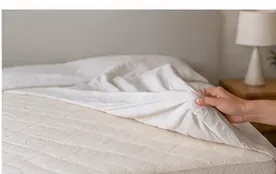
Strip the bed and check whether the topper has a removable, washable cover. If the label says the cover can be removed, unzip it carefully and clean it according to the label. Tempur-Pedic currently recommends cold water and little to no detergent for its topper covers, with flat drying or low-heat tumble drying. If the label says “do not remove,” leave it in place and spot-clean through the cover as directed.
A removable topper cover being taken off before cleaning; only remove the cover when the product instructions say it is designed to come off.
Action: photograph the care label before washing the cover so the temperature and drying instructions stay handy.
2. Remove loose dust and debris before adding moisture
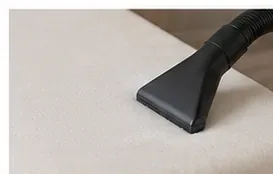
If the surface is dry and sturdy, lightly vacuum it with a clean upholstery attachment. Casper's current general topper-cleaning guidance includes vacuuming as a way to remove surface debris. Keep suction moderate and avoid dragging a hard nozzle across soft foam or a delicate knit cover.
Light vacuuming removes hair, dust, and crumbs before any spot-cleaning solution is introduced.
Action: if the foam is torn, crumbling, or exposed through a damaged cover, skip aggressive vacuuming and consult the manufacturer about repair or replacement.
3. Mix a mild spot-cleaning solution
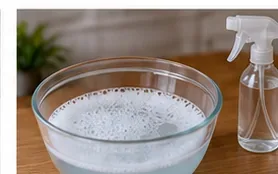
For products that permit damp spot cleaning, mix a small amount of mild detergent with cool or lukewarm water. The objective is not to create a deep-clean bath. You need only enough solution to dampen a cloth. Saatva's current graphite memory foam topper care instructions call for spot cleaning with a mild cleaning solution, while Casper specifies mild detergent for its topper.
A dilute mild cleaning solution prepared for local spot treatment rather than soaking the foam.
Action: test the solution on a small, inconspicuous area first, especially when the topper has a colored or specialty cover.
4. Blot stains instead of rubbing or flooding them
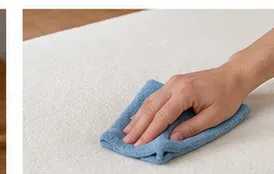
Dampen the microfiber cloth and wring it out thoroughly. Blot the stained area from the outside toward the center. If the problem is a fresh liquid spill, start with a dry towel and absorb as much liquid as possible before using any cleaning solution. Tempur-Pedic's spill guidance specifically tells owners to blot excess liquid and avoid rubbing because rubbing can spread moisture farther into the material.
A barely damp microfiber cloth blots a localized stain without saturating the topper.
Action: stop adding moisture as soon as the stain begins to transfer to the cloth. Repeated light blotting is safer than trying to flush the foam with water.
Myth 2: More water makes memory foam cleaner
Verified: several manufacturer instructions point the other way. Zinus says not to drench the foam. Tempur-Pedic states that TEMPUR material should never become wet and recommends absorbing excess moisture and using airflow to dry it. Casper also warns against oversaturating foam in its cleaning guidance.
What is unknown without the exact product: there is no universal safe volume of water for every memory foam formulation, thickness, cover construction, or adhesive system.
Action: use the minimum moisture needed for a local stain. If the topper is deeply saturated from flooding or a major spill, contact the manufacturer rather than adding more cleaning liquid.
5. Treat odor conservatively
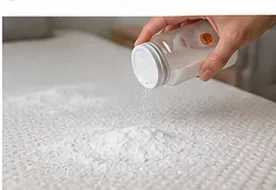
Baking soda is frequently suggested for mattress toppers, but it is not a universal manufacturer requirement. Casper's current general cleaning guide includes sprinkling baking soda on a foam topper and vacuuming it away later. Tempur-Pedic's topper care pages, by contrast, focus on removable-cover washing, blotting spills, airflow, and avoiding wetting the foam.
A light layer of baking soda can be used for odor control only when the topper's care instructions do not prohibit it.
Action: use baking soda only as an optional dry treatment when your topper's care instructions allow it. Do not mix it into a wet paste or use it as a substitute for removing the source of a spill.
6. Vacuum away all dry residue
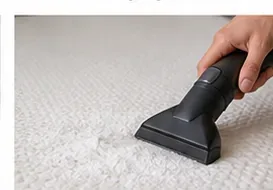
If you used baking soda, wait until both the topper surface and the powder are completely dry, then vacuum thoroughly with the upholstery attachment. Work slowly so powder does not remain trapped in seams or textured channels.
Dry deodorizing residue being removed with a clean upholstery attachment before the topper is returned to service.
Action: inspect the surface from several angles under good light. If powder remains in perforations or grooves, remove it gently before reinstalling the cover.
7. Air-dry the topper completely
Drying is not an optional finishing touch. Tempur-Pedic recommends air drying and says a fan can speed the process after a spill. Casper's product instructions say to air dry away from direct sunlight or heat. The exact drying time cannot be predicted from a generic guide because it depends on how much moisture entered the topper, foam thickness, room humidity, temperature, and airflow.
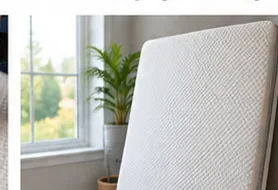
The topper positioned for airflow while drying; avoid direct heat and do not cover the foam until it is fully dry.
Action: use a fan and good room ventilation. Do not put sheets, a protector, or a cover back on while any cleaned area still feels cool, damp, or noticeably different from the surrounding foam.
Myth 3: A hair dryer or strong sunlight is the fastest safe way to dry it
Verified: high heat is not a universal safe shortcut. Casper's current topper page says to air dry away from direct sunlight or heat. Tempur-Pedic also describes its foam as temperature-sensitive and recommends airflow rather than aggressive heat for drying after a spill.
Action: choose moving room-temperature air instead of a hair dryer, space heater, or other concentrated heat source unless the manufacturer explicitly approves one.
8. Replace the cover and bedding only after everything is dry
Once the foam is completely dry, reinstall the removable cover if your topper has one. Add a clean mattress protector if you use one, then remake the bed. A protector is useful because it reduces the chance that sweat or future spills reach the foam; Zinus specifically recommends using a mattress protector to prevent liquids from penetrating its toppers.
The bed remade only after the topper and any washable cover are completely dry.
Action: before adding fitted sheets, press a dry towel firmly on the previously cleaned area. If the towel picks up moisture, keep drying.
What should you do with a fresh spill?
Move quickly but do not panic-clean. Remove bedding, use dry absorbent towels to blot the liquid, and press gently to draw moisture out. Tempur-Pedic explicitly recommends absorbing as much liquid as possible and notes that wet foam may not release every stain or odor completely. Once excess liquid is removed, increase airflow with a fan.
Action: blot first, clean only the affected surface as the care instructions permit, and prioritize drying over repeated wet treatments.
Can you use vinegar on memory foam?
Not universally verified: some general cleaning articles use diluted vinegar, but the current product-care pages reviewed here do not establish vinegar as a safe universal treatment for every memory foam topper. Foam chemistry, cover dyes, adhesives, fire barriers, and warranty terms vary by model.
Action: do not introduce vinegar simply because a generic recipe recommends it. Use the cleaner named by your manufacturer or a mild detergent/solution only when the care instructions permit it.
Can the topper cover go in the washing machine?
Sometimes. This is one of the clearest examples of why brand-specific care matters. Tempur-Pedic says its topper covers are removable and washable in cold water. Casper says not to remove the cover from its current Comfy Mattress Topper. A zipper alone is not proof that a cover should be machine washed.
Action: treat the sewn-in label as the authority for that cover. If the label conflicts with a generic cleaning guide, follow the label.
When home cleaning may not be enough
Stop and contact the manufacturer or a professional if the foam has been deeply saturated, has a persistent odor after complete drying, is crumbling or tearing, or shows a widespread stain that cannot be treated without soaking the material. Generic web advice cannot determine whether a heavily contaminated topper can be restored without seeing the product, the spill, and the manufacturer's construction details.
Action: if you cannot get the topper fully dry or the damage extends through a large portion of the foam, ask the manufacturer whether replacement is safer than repeated wet cleaning.
A simple maintenance routine
Use a washable mattress protector above the topper when compatible with your sleep setup.
Vacuum loose debris periodically if the cover and care label allow it.
Address spills immediately with dry towels before they penetrate deeply.
Spot-clean rather than soaking the foam.
Keep the topper uncovered until any damp area is fully dry.
Follow the topper's own care label for removable covers, detergents, wash temperature, and drying.