Home
» How to
»
How to Clean a Patagonia Down Sweater Without Flattening the Down
How to Clean a Patagonia Down Sweater Without Flattening the Down
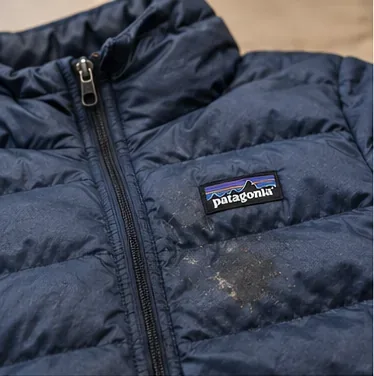
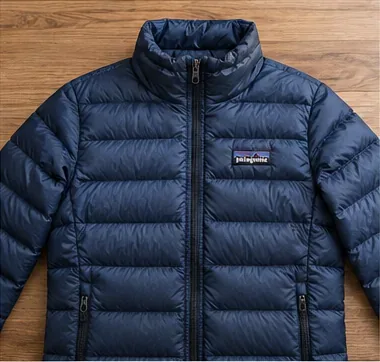
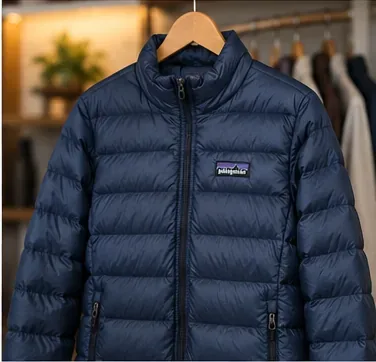
A Patagonia Down Sweater can look alarming when it gets dirty—or even more alarming when it comes out of the washer flat, lumpy, and much smaller-looking than before. That temporary collapse is usually caused by wet down clusters sticking together. The goal is not simply to make the shell look clean; it is to remove soil and detergent residue while restoring the down's loft, or its ability to expand and trap insulating air.
The safest starting point is the garment's own care label. Patagonia's current Down Sweater care instructions, checked in September 2026, say to machine wash cold, do not bleach, tumble dry low, do not iron or steam, and for best results dry with two tennis balls. Patagonia's broader down-care guidance also recommends a cleaner made specifically for down and prefers a front-loading washer. If the label inside your particular jacket differs from the current product page, follow the label on your garment.
What You Need Before You Start
A down-specific detergent or cleaner, used at the amount stated on its label
A front-loading washing machine if available
A dryer that can run reliably on low heat
Two clean tennis balls, matching Patagonia's current Down Sweater care recommendation
A clean towel and a little extra time for repeated drying cycles
Avoid bleach and fabric softener. Patagonia's product-care guidance warns that conventional detergents can strip natural oils from down and interfere with loft, while fabric softener can leave unwanted residue. Also avoid assuming that more detergent means a cleaner jacket: excess cleaner can be difficult to rinse from the clusters.
Step 1: Inspect the Jacket Before Washing
Start by checking the shell, cuffs, collar, pockets, zippers, and seams so you know whether the jacket needs spot cleaning, a full wash, or a repair first.
Empty every pocket and look for tears, open seams, or leaking down. A small hole is worth repairing before a machine wash because agitation can enlarge damage and allow more insulation to escape. Patagonia's 2026 repair guide advises pushing protruding down back inside rather than pulling feathers out, then patching small holes with appropriate repair tape.
Close the main zipper and pocket zippers so loose hardware is less likely to catch on the thin shell fabric. If the jacket is only dusty or has one small mark, you may not need a full wash.
Step 2: Start With the Least Aggressive Cleaning That Works
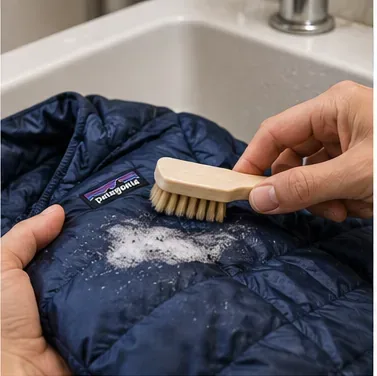
For localized grime, work gently on the affected area rather than scrubbing the lightweight shell aggressively. Use only a cleaner that is compatible with down and rinse the area thoroughly.
For a small dirty cuff or collar, begin with localized cleaning. Patagonia's official Worn Wear down-care guide says especially dirty spots can be treated before washing. Keep the treatment light: apply a small amount of suitable cleaner, work it in gently, and avoid hard scrubbing that can abrade the shell or damage its durable water repellent finish.
If the jacket smells throughout, has widespread body oil around the neck and cuffs, or the down has lost loft from repeated wear, move on to a complete wash.
Step 3: Use a Front-Loading Washer When Possible
A front-loading washer is Patagonia's preferred machine type for down because it avoids the central agitator found in many traditional top-loaders.
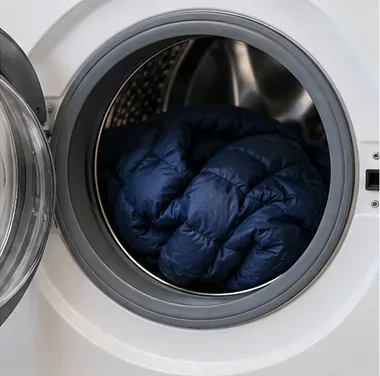
Place the jacket loosely in a clean front-loading washer. Patagonia says a top-loading machine can be used on a hand-wash or delicate setting, but its detailed Worn Wear guidance prefers a front-loader because agitator-style machines can snag or stress lightweight down garments.
Choose cold water and a gentle or delicate cycle. Do not add other heavy clothing, towels, jeans, or anything with exposed hooks or abrasive hardware. The jacket needs room to move and rinse without being ground against heavier laundry.
Step 4: Use Down-Specific Detergent—and Measure It
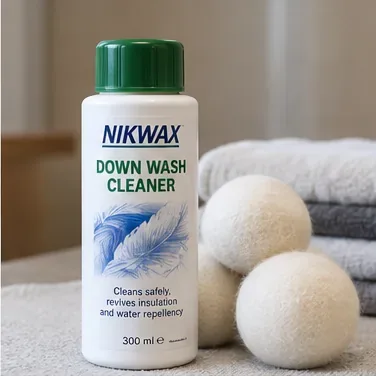
Use a cleaner formulated for down and follow its dosing directions. The exact brand is less important than choosing a product intended for down-filled garments and rinsing it out completely.
Add the amount of down-specific cleaner stated on the bottle. Patagonia's current product-care page specifically recommends down detergent because standard detergents can reduce loft and performance. Do not add fabric softener or bleach.
If your washer has detergent residue from ordinary laundry products, an empty rinse before washing the jacket is a reasonable precaution. The aim is a clean drum and a clean rinse, not a high concentration of soap.
Step 5: Wash Cold, Then Rinse Thoroughly
After the cold gentle wash, handle the wet jacket with both hands because waterlogged down is heavy and the fabric is under more stress than when dry.
Run the cold gentle cycle. When it ends, the down will probably look clumped and the jacket may appear nearly flat. That alone is not a sign of damage. Wet down sticks together and cannot loft until moisture is removed.
If the jacket still feels soapy, looks sudsy, or the shell feels unusually slick, run another rinse without adding detergent. Patagonia's detailed down-care guide recommends an additional soap-free wash or rinse when needed to remove residual cleaner. Clean rinsing matters because leftover detergent can keep down from lofting completely.
Lift the wet jacket instead of yanking it by one sleeve or the collar. Waterlogged insulation adds weight, so supporting the body of the garment reduces stress on seams and baffles.
Step 6: Tumble Dry on Low Heat With Two Clean Tennis Balls
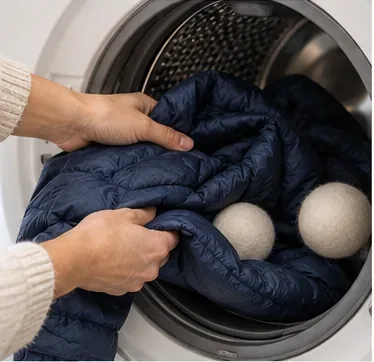
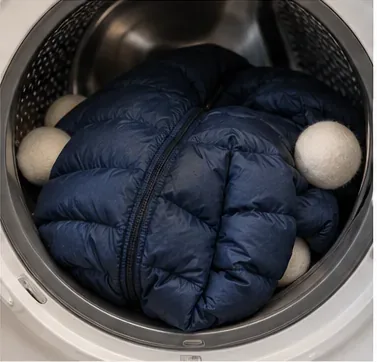
Dry on low heat and use two clean tennis balls as specified by Patagonia for the current Down Sweater; their movement helps separate wet down clusters as the jacket tumbles.
This is the step that restores the jacket's insulating shape. Patagonia's current Down Sweater product page says to tumble dry low and, for best results, use two tennis balls. The balls help knock apart clusters while the dryer removes moisture.
Low heat is important. High heat can damage lightweight synthetic shell fabric and finishes. If you are using an unfamiliar laundromat dryer, be especially cautious: Patagonia's Worn Wear guidance notes that commercial dryers can run very hot even when set low.
Expect drying to take more than one cycle. Stop periodically, take the jacket out, and feel the baffles. Gently massage stubborn clumps with your fingers, then return the jacket to the dryer on low.
Step 7: Keep Drying Until the Down Is Fully Lofted, Not Merely Warm
A properly dried jacket should regain even loft across the baffles, without dense wet clumps hiding in corners or along seams.
Down can feel dry on the surface before the centers of the clusters are actually dry. Check several areas, especially thick baffles, the shoulders, collar, and lower hem. Pinch the insulation gently. A dense cool lump can indicate retained moisture.
If clumps remain, continue low-heat drying in short cycles and break them up between cycles. Do not store the jacket damp. Patagonia warns that wet down stored compressed can develop mildew, odor, and persistent loss of loft.
What should success look like? The baffles should look consistently puffy, the jacket should feel light rather than heavy or clammy, and there should be no damp smell. Some variation in how individual down clusters distribute is normal, but broad flat zones after complete drying are a reason to keep working the clumps apart.
Step 8: Let It Cool, Recheck It, and Store It Uncompressed
After the jacket is fully dry and cool, check its loft and odor again before storing it in a dry place without long-term compression.
Let the jacket cool completely before the final check. Warm fabric can hide remaining dampness. Once cool, inspect the baffles again, smell the collar and cuffs, and confirm that no area feels noticeably heavier or colder than the rest.
For normal storage, keep the jacket clean, dry, and uncompressed. Hanging it or placing it loosely on a shelf preserves loft better than leaving it tightly stuffed for long periods.
What If the Jacket Still Looks Flat After Washing?
The most common cause is incomplete drying rather than permanent damage. Return it to the dryer on low with two clean tennis balls, pause periodically, and gently separate clumps by hand. If the jacket is fully dry but remains unusually flat across large areas, check whether detergent residue is present. A soap-free rinse followed by another careful low-heat dry can help when too much cleaner was used.
If feathers are escaping from a tear, stop repeated washing and repair the shell. If the fabric is delaminating, a seam has opened, or the damage is beyond a small patch, use Patagonia's repair service or seek professional garment repair rather than continuing to wash it.
Common Mistakes to Avoid
Using high heat: It may speed drying but can damage the shell and finishes.
Using too much detergent: Residue can suppress loft and require extra rinsing.
Adding fabric softener or bleach: Patagonia specifically advises against both in down care.
Stopping the dryer too soon: Surface dryness does not prove the down clusters are dry inside.
Storing the jacket compressed while damp: This raises the risk of odor and mildew.
Ignoring a hole before washing: Small tears can grow and release more down during agitation.
Following generic down advice over your garment label: Patagonia models and care instructions can change; the sewn-in label on your jacket is the final reference for that specific item.
Final Self-Check: Is Your Patagonia Down Sweater Actually Clean?
Check
Good result
If it fails
Shell
Visible grime and oily marks are substantially reduced
Spot-treat remaining marks gently rather than immediately repeating a full wash
Rinse
No suds, slippery residue, or strong detergent smell
Run an additional rinse with no detergent
Loft
Baffles are puffy and reasonably even
Dry longer on low and separate clumps by hand
Moisture
No cool, dense, damp-feeling sections
Continue low-heat drying
Odor
No damp or musty smell after cooling
Do not store; make sure the insulation is completely dry