How to Use Google Lens on Chromebook

How to Use Google Lens on Chromebook lets you scan objects, translate text, and solve problems directly from your device. Follow these steps to get started quickly.
A retainer can be freshly cleaned and still end up back in a case that smells stale, feels slimy, or has dried residue in the corners. That matters because the case is the storage surface your retainer touches every day. The American Association of Orthodontists (AAO) specifically warns that an old or dirty retainer case can harbor bacteria, and it recommends replacing a case when it is cracked, still smells after cleaning, or has been used for a few months.
The good news is that the case usually does not need an aggressive “disinfection hack.” For a typical plastic retainer case, the safest starting point is simple hand washing with lukewarm water, a small amount of mild dish soap, thorough rinsing, and complete air-drying. As of September 2026, Invisalign’s current case-care guidance also says its aligner cases should be hand-washed and are not designed for dishwasher cleaning.
Because case materials and closures vary, always follow the instructions that came with your specific case if they differ from this general routine. The steps below are designed for ordinary hard-plastic retainer or aligner cases, not electronic UV cases or specialty devices with batteries, magnets, or removable electronics.
For a standard plastic case, keep the supplies simple:
A soft brush is useful because residue often collects around the hinge, ventilation holes, lid groove, and corners where fingers cannot reach easily. You do not need to scrub aggressively; the goal is to loosen film and debris without scratching the plastic.
If your case is made by Invisalign, the manufacturer currently recommends handwashing and warns that the case may be damaged in a dishwasher. You can confirm the current guidance on the official Invisalign aligner case page.
Yes. Cleaning the retainer but ignoring the case leaves one half of the storage routine unfinished. A case can collect saliva droplets, moisture, dust, and debris from pockets, bags, counters, or hands. The AAO notes that a dirty case can harbor bacteria and undermine your cleaning efforts.
That does not mean the case needs to be sterilized after every use. It means it should be visibly clean, free of odor, and allowed to dry rather than staying damp for long periods. The retainer itself still needs its own cleaning routine, which is not identical to cleaning the case. The AAO’s current retainer-care guidance recommends regular cleaning of removable retainers and cautions against harsh chemicals such as bleach or alcohol-based mouthwash on the appliance.
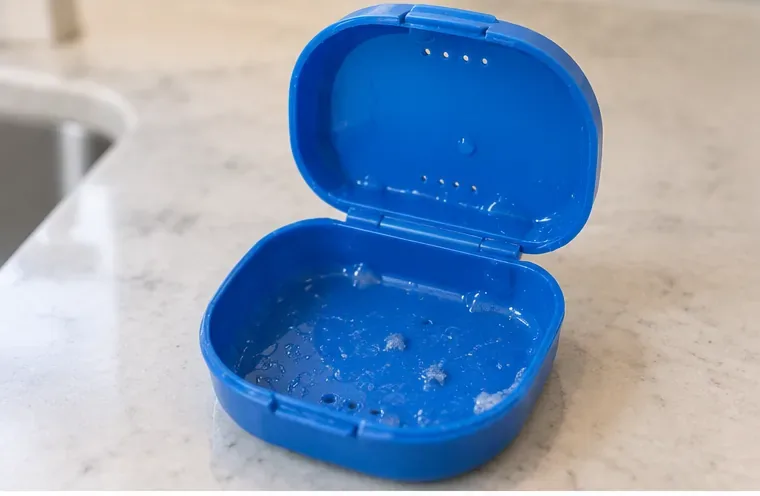
Remove the retainer and any loose accessories. Open the case fully and look at the base, lid, hinge, ventilation holes, and edges. If you see crumbs, dried saliva residue, lint, or visible film, rinse away loose debris before scrubbing.
This quick inspection also tells you whether cleaning is still worthwhile. A case with a broken latch, deep crack, badly distorted hinge, or persistent odor may be better replaced than repeatedly scrubbed. The AAO says visible cracks or wear and odor that remains after cleaning are signs it is time for a new case.
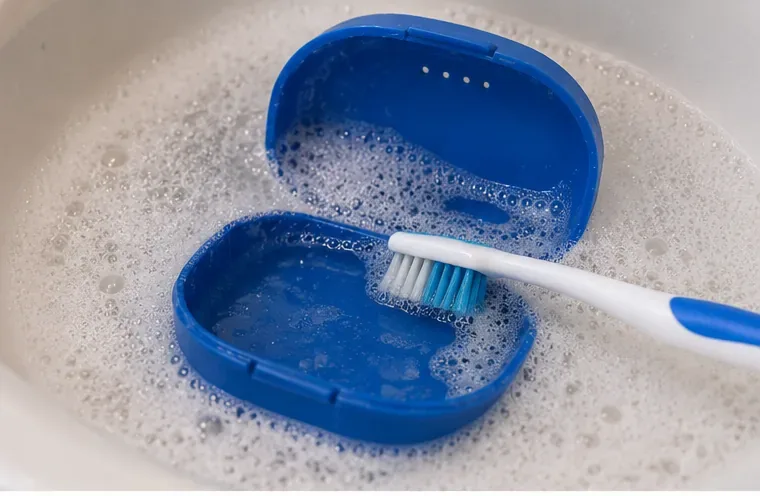
Wet the case with lukewarm water and add a small amount of mild dish soap. Use clean fingers or a soft brush to work the soapy water over the inside and outside surfaces. Pay extra attention to the corners, lid channel, latch area, hinge, and ventilation holes.
Use enough pressure to remove film, but do not turn the job into heavy scouring. A heavily scratched interior can become harder to inspect and may trap debris in damaged areas. If a soft brush and ordinary soap cannot remove a stubborn deposit, repeated harsh scrubbing is not always the best answer; replacement may be more practical for an inexpensive case.
Do not assume that you can. Some people use the dishwasher because it is convenient, but heat, detergent, and the wash cycle can damage certain plastics, closures, coatings, or magnets. Invisalign explicitly says its current aligner cases are not designed for dishwasher use and recommends handwashing instead.
If your case comes from another manufacturer, check its instructions. Only use a dishwasher when the maker specifically identifies the case as dishwasher safe. If you cannot verify that, hand washing is the lower-risk choice and only takes a minute or two.
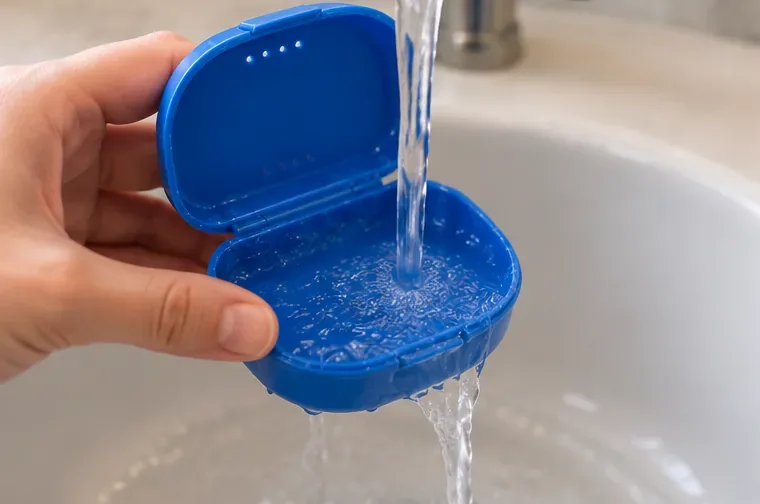
Hold the open case under clean running water and rinse the inside and outside thoroughly. Open and close the lid once or twice while rinsing so water reaches the hinge and grooves. When you finish, there should be no visible foam and the plastic should not feel slippery with soap.
This is especially important because the retainer will later sit inside the case. Leaving concentrated cleaner behind is unnecessary and can transfer residue back to the appliance. A complete rinse is more useful than adding stronger chemicals to the routine.
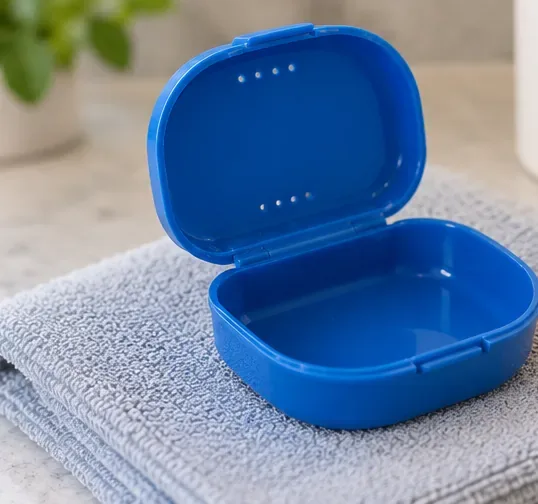
Shake off excess water, then place the case open on a clean towel or drying surface. Let both halves dry before putting a clean retainer back inside. Drying the case open improves airflow and makes it easier to see whether moisture is still trapped in the hinge or corners.
If your case has ventilation holes, do not block them with tissue or tape. If it has no ventilation, complete drying before closure becomes even more important. Avoid putting the freshly washed case straight into a closed bag while it is still wet.
There is no single manufacturer-independent schedule that fits every case, and official sources do not set one universal interval. A practical approach is to clean the case regularly and sooner whenever it looks dirty, feels tacky, gets wet or contaminated, or develops an odor.
If you want an easy habit, pair case cleaning with a regular retainer-cleaning session so you do not return a clean appliance to a dirty container. People who carry a case in a backpack, purse, gym bag, or pocket may need to clean it more often than someone whose case stays on a clean bathroom shelf.
Do not confuse cleaning frequency with replacement frequency. The AAO’s current FAQ says it is time to replace a case if it has visible cracks or wear, smells even after cleaning, or has been used for a few months. See the AAO retainer-case replacement guidance.
For routine cleaning of a typical plastic retainer case, there is usually no reason to start with strong chemicals. Case plastics vary, and products that are harmless to one material may discolor, weaken, or leave residue on another. Unless your case manufacturer gives specific compatibility instructions, mild soap and water is the more conservative default.
Bleach and alcohol deserve extra caution around orthodontic appliances. The AAO specifically advises against bleach and alcohol-containing products on retainers because they can damage retainer materials. That guidance is about the appliance itself rather than every possible case plastic, but it is a good reason not to improvise with harsh chemicals in a container that directly stores the appliance.
Likewise, do not pour boiling water over a plastic case unless the manufacturer expressly allows it. Heat can distort many plastics, and high heat is already a known problem for retainers themselves. Lukewarm water is sufficient for ordinary hand washing.
First, wash it again carefully, focusing on the hinge, ventilation holes, and lid groove, then rinse and let it dry fully while open. A case that is closed while damp can continue to smell even if the flat surfaces look clean.
If the odor remains after a thorough wash and complete drying, replacement is the better choice. This is directly consistent with AAO guidance. Persistent odor can also be a prompt to inspect the retainer itself. If the retainer smells, has visible buildup, appears damaged, or no longer fits correctly, follow the appliance-cleaning directions from your orthodontist and contact the office if the issue persists.
Do not simply wipe the visible spot and immediately put the retainer back inside. Empty the case, wash it thoroughly, rinse it, and let it dry completely. If staining or growth remains in scratches, seams, or inaccessible areas, replacing the case is a sensible low-cost solution.
If the retainer itself has visible growth or contamination, clean it according to the instructions for that retainer type rather than copying the case-cleaning method automatically. Clear plastic retainers, Hawley retainers, and other appliances can have different material limits. The AAO recommends contacting an orthodontist when odor, discoloration, damage, or fit problems persist despite cleaning.
The same basic method works: hand-wash, rinse well, and dry completely. The bigger challenge is contamination from the environment. A travel case can pick up lint, makeup, crumbs, or dust inside a bag, so keep it closed when not in use and avoid placing the clean interior directly on public counters.
The AAO recommends carrying a sturdy, ventilated retainer case when traveling. It also emphasizes storing the retainer in its protective case instead of wrapping it in a napkin or leaving it loose, where it is easier to lose, crush, or expose to pets.
Replace the case rather than continuing to clean it when:
A replacement case is inexpensive compared with replacing a lost or damaged retainer, so there is little value in keeping a case that no longer protects the appliance well.
Before putting the retainer back, do a quick self-check. The case should look free of visible residue, feel clean rather than slippery, have no soap suds in the hinge or grooves, and smell neutral once dry. The lid should close normally, the hinge should move without debris, and no cracks should be collecting moisture.
Most importantly, the interior should be dry. If the case passes those checks, place the already-clean retainer inside. If it still smells, looks damaged, or has residue you cannot remove, replace it instead of escalating to stronger household chemicals.
The routine is simple because it does not need to be more complicated: empty the case, hand-wash it with mild soap and lukewarm water, rinse thoroughly, dry it open, and replace it when wear or persistent odor says cleaning is no longer enough.
How to Use Google Lens on Chromebook lets you scan objects, translate text, and solve problems directly from your device. Follow these steps to get started quickly.
Learn how to clean a dehumidifier filter safely, when to use water or soap, how long to dry it, and when model-specific instructions matter.
Learn when cast iron grill grates need seasoning, how to clean, oil, heat, and maintain them, and when porcelain-coated grates should not be seasoned.
Learn how to clean a down or synthetic puffer jacket, restore loft, avoid heat damage, check the result, and know when professional care is safer.
Learn how to clean a grill pan without damaging it. This guide explains the safest method for seasoned cast iron, enameled cast iron, and nonstick pans, including stubborn burnt-on residue.
Clean purse linings safely by identifying the material, removing debris, spot-cleaning carefully, drying fully, and knowing when to stop.
Learn how to clean a GE dishwasher filter, identify removable filter types, avoid damaging the mesh, and know when to check your model manual.
Learn how to clean oven trays safely, from fresh grease to burnt-on residue, with separate guidance for natural aluminum and nonstick bakeware.
Learn how to clean a retainer case with mild soap and lukewarm water, when to avoid the dishwasher, how to dry it, and when an old case should be replaced.
Let nail glue dry, lift off the excess, then use acetone only on compatible, colorfast fabric. Learn safer alternatives, washing steps, and when to stop.