Home
» How to
»
How to Clean a Shower Head Without Vinegar: Safe Options for Mineral Buildup
How to Clean a Shower Head Without Vinegar: Safe Options for Mineral Buildup
If you want to clean a shower head without vinegar, start with the least aggressive method: remove loose scale from flexible nozzles mechanically, flush screens and passages with clean water, and only move to a mild citric-acid cleaner if your shower-head manufacturer says that chemistry is safe for the model and finish.
That order matters. “No vinegar” does not automatically mean baking soda, bleach, strong bathroom cleaner, or another acid is safer. Different manufacturers approve different products. Delta, for example, says its Touch-Clean rubber spray holes can often be cleared simply by wiping the nozzles with a finger, while hansgrohe recommends gentle citric-acid-based cleaners for compatible products and specifically warns against acetic acid, the acid in vinegar. Waterpik also instructs users of many models to rub flexible nozzles and clean the inlet filter screen by flushing it with water.
What kind of buildup are you trying to remove?
Before choosing a cleaner, look at the symptom. White or chalky crust around the spray holes is usually mineral scale associated with hard water. A weak or uneven spray can also come from debris trapped in the inlet screen rather than scale on the face. Soap film on the exterior is a different problem again.
A good cleaning result is not simply a shinier shower head. You should see a more even spray pattern, open nozzle holes, less visible scale, and no cleaning residue left on the fixture. If flow is still weak after the nozzles and filter screen are clear, the restriction may be deeper in the shower head, hose, valve, or plumbing.
Can you clean a shower head without removing it?
Often, yes. If your shower head has flexible silicone or rubber nozzles and only light mineral buildup, you may be able to clean it in place by rubbing the nozzles with your fingers while the water runs. Delta's Touch-Clean shower heads and hansgrohe QuickClean models are specifically designed around this idea.
Remove the shower head when you need to reach an inlet screen, flush the inside more thoroughly, or follow a model-specific descaling procedure. If the connection is tight, protect the finish before using a wrench or pliers, and follow the installation manual so you do not damage the swivel or threads.
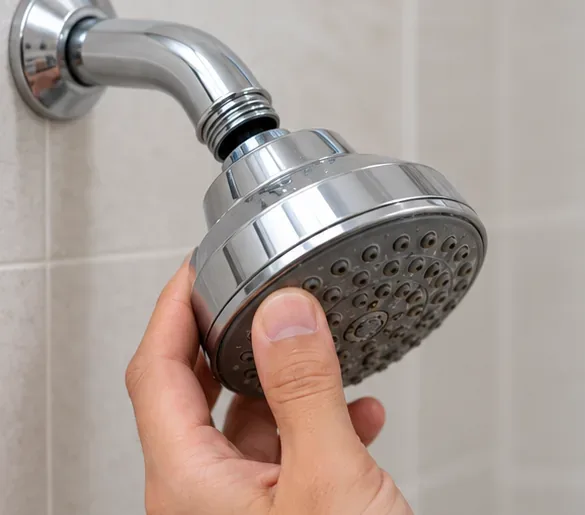
Step 1: Remove the shower head only when you need access to the inlet, filter screen, or internal passages; support the fixture and protect its finish.
What is the safest first method for mineral buildup?
For flexible rubber or silicone spray nozzles, use your fingers first. Rub each nozzle to break loose the chalky deposit, then run water through the shower head. This avoids exposing the finish and internal components to a chemical cleaner when mechanical cleaning is enough.
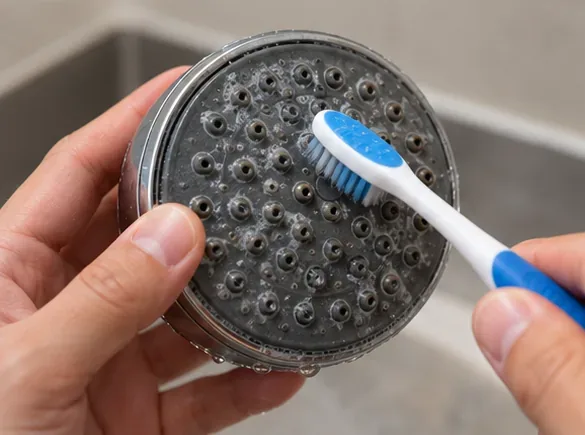
Waterpik manuals for many models give similar advice and, on applicable flexible nozzles, also permit a soft-bristled toothbrush. That is not a universal instruction for every shower head. Some premium-finish manufacturers advise against brushes on finished surfaces. If you use a soft brush, keep it on the flexible nozzle material and only do so when your model's care instructions allow it.
Step 2: If your manufacturer permits it, a soft brush can help loosen deposits from flexible nozzles; avoid scrubbing decorative finishes or using abrasive tools.
If the nozzles clear and the spray becomes even again, stop there. A stronger treatment is unnecessary.
What can you use instead of vinegar for stubborn limescale?
A mild citric-acid-based cleaner is one verified vinegar-free option, but only where the manufacturer approves it. hansgrohe's current care guidance recommends gentle cleaners containing citric acid for its compatible showers and warns against cleaners containing acetic acid, hydrochloric acid, formic acid, or chlorine bleach.
hansgrohe also says not to spray cleaner directly onto the shower fixture because mist can enter the product. Instead, apply the cleaner to a soft cotton cloth and wipe the affected surface, or follow the model-specific instructions for a brief cleaning bath. Observe the cleaner's dosage and contact-time directions and the shower manufacturer's limits. The company's general FAQ states a maximum exposure time of 10 minutes for prescribed cleaning agents.
This does not mean citric acid is approved for every chrome, matte black, brass, nickel, painted, plastic, or specialty shower head. If your manufacturer's manual does not approve it, do not assume that replacing vinegar with citric acid is harmless. Use the mechanical and flushing methods first, then ask the manufacturer what descaler is compatible with your exact model.
How do you clean the inlet screen when the spray is weak?
If the shower head looks clean but flow is still poor, check for a filter screen at the inlet. Many shower heads have a small screen or washer assembly where the fixture attaches to the shower arm or hose.
Waterpik directs users of applicable models to remove the screen and back-flush it to remove particles. Moen's shower-care guidance similarly describes removing the shower head, clearing outlet or inlet passages on applicable designs, and flushing the head with clean water.
Do not enlarge holes with a needle or wire unless the manufacturer specifically instructs that method for your model. A rigid object can damage a soft nozzle, scratch a finish, or alter the spray opening.
Why is rinsing so important?
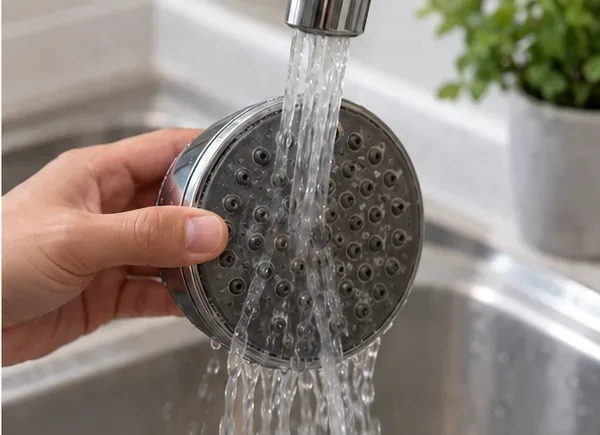
Whether you only loosened deposits mechanically or used an approved cleaner, rinse the shower head thoroughly with clear water. If it was removed, rinse the face and, where the design permits, flush water through the inlet so loosened particles and chemical residue leave the fixture.
Step 3: Rinse the shower head thoroughly with clear water so loosened mineral particles and any approved cleaning product are removed.
Residual cleaner can attack a finish if it remains in contact too long. It can also make it difficult to judge whether the nozzles are actually clear. After rinsing, wipe the exterior with a soft cloth if the manufacturer's finish-care instructions permit it.
How do you know whether the cleaning worked?
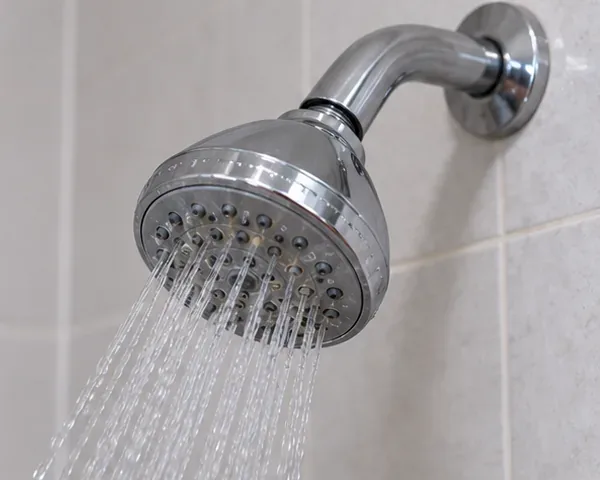
Reinstall the filter screen, washer, and shower head in the correct order. Hand-tighten as directed by the manufacturer, then turn on the water and test every spray setting. A successful cleaning should produce a reasonably even pattern without jets shooting sideways from partially blocked holes.
Step 4: Run the shower after reassembly and check the entire spray pattern; an even flow is a better success test than appearance alone.
Also check the connection for leaks. If the spray remains uneven, rub the flexible nozzles again and recheck the inlet screen. If one or two passages remain blocked, consult the model manual before probing them.
Should you use baking soda instead of vinegar?
Not as a universal substitute. Baking soda appears frequently in household cleaning advice, but major shower manufacturers do not all recommend it for their finishes and internal components. hansgrohe specifically advises against household staples such as baking powder in its faucet care guidance and recommends citric-acid-based products instead for compatible surfaces.
The safer rule is not “replace vinegar with another pantry ingredient.” The safer rule is “use what the fixture manufacturer approves.” For some models, that may mean no chemical at all.
What about dish soap?
Mild soap can be appropriate for routine exterior soil on some fixtures, but it is not necessarily a mineral descaler. Delta care instructions for many shower products emphasize a damp cloth and soft towel for the finish, and some Delta support responses permit well-diluted dish soap when additional cleaning is needed.
If your problem is hard-water scale inside the nozzle openings, soap may remove body oils or soap film around the area without dissolving the mineral deposit itself. Mechanical nozzle cleaning or an approved descaling product is the more relevant method.
Which cleaners should you avoid?
Do not assume bleach is safe. Several manufacturers warn that chlorine bleach can damage finishes or components.
Avoid strong acids and aggressive bathroom cleaners unless specifically approved. Hydrochloric and formic acid are common examples manufacturers warn against.
Do not mix cleaning products. Mixing acids, bleach, or other cleaners can create dangerous reactions and gases.
Avoid abrasive pads and powders on finished surfaces. They can scratch or dull the coating.
Do not spray chemical cleaner directly into openings unless the manufacturer tells you to. Cleaner can enter the internal mechanism.
When should you stop cleaning and troubleshoot something else?
What you observe
What to do next
White crust mainly on flexible nozzles
Rub the nozzles and flush with water; use a permitted soft brush only if the manufacturer allows it.
Heavy scale remains on a compatible fixture
Use the manufacturer-approved descaler; a mild citric-acid cleaner is an option for products whose instructions permit it.
Shower face is clean but overall flow is weak
Inspect and back-flush the inlet screen, then consider upstream pressure or valve restrictions.
Only one spray mode is weak
Check the model's selector and internal-cleaning instructions rather than repeatedly treating the finish.
Finish is flaking, swollen, cracked, or permanently discolored
Stop chemical cleaning and contact the manufacturer; the issue may be material damage rather than removable scale.
Flow does not improve after nozzles and screen are clear
Investigate the hose, flow restrictor, valve, plumbing pressure, or internal blockage according to the service manual.
How often should you clean a shower head?
There is no universal schedule because mineral buildup depends heavily on water hardness, temperature, shower use, and the nozzle design. hansgrohe advises cleaning more frequently in areas with higher lime content and identifies weaker or uneven spray as an early sign that scale is accumulating.
A simple preventive habit is to rub flexible nozzles and wipe visible water from the shower head before heavy deposits harden. That can reduce how often you need a chemical descaling treatment.
What is the best vinegar-free method overall?
For most people, the best first attempt is mechanical rather than chemical: rub flexible nozzles, clean or back-flush the inlet screen if accessible, and rinse thoroughly. If mineral scale remains, check the manual before choosing a descaler. On manufacturers such as hansgrohe that explicitly approve citric acid, a mild citric-acid cleaner provides a documented vinegar-free option.
The limit of any generic method is the fixture itself. Shower heads vary in finish, nozzle material, filters, internal valves, and removable parts. If the manual for your exact model conflicts with general advice, follow the manual. That is the most reliable way to remove scale without trading a clogged shower head for a damaged one.
For additional model-specific reference, see Waterpik's shower-head care manual, which covers nozzle cleaning and filter-screen flushing for applicable models.