How to Get Dry-Erase Marker Off a Wall Without Ruining the Paint
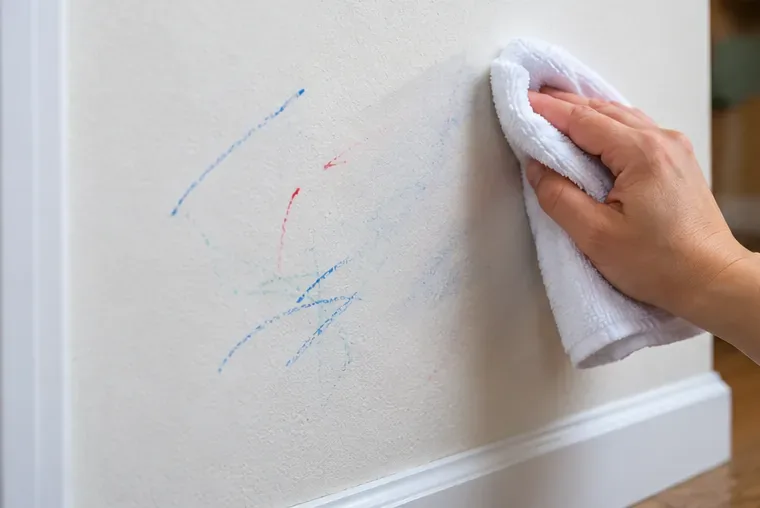
Learn how to remove dry-erase marker from a painted wall safely, from water and mild soap to careful rubbing-alcohol spot treatment.
The most important answer is this: do not put blinds in a bathtub until you have confirmed that the specific material and operating system can be immersed in water. Bathtub cleaning can be appropriate for some aluminum blinds and removable vinyl vertical vanes, but it can damage real wood, many faux-wood products, fabric treatments, cellular shades, decorative tapes, and headrails that contain lift or motor components.
For example, Hunter Douglas specifically allows water immersion for certain Modern Precious Metals aluminum blinds, with exclusions for the Natural Elements collection and for particular headrails or bottom rails. Bali states that removable vinyl vertical vanes can be immersed, while fabric vanes should not be soaked. LEVOLOR's current wood and faux-wood care guidance directs owners toward dusting, vacuuming, or light damp cleaning rather than bathtub immersion. Manufacturer care pages referenced here were checked in September 2026.
Start with the care label, installation manual, or the manufacturer's cleaning page for your exact product. A blind that looks like plastic may actually be composite or faux wood, and a metal blind may contain a headrail that should stay dry.
| Blind type | Bathtub immersion? | Better default if unsure |
|---|---|---|
| Aluminum horizontal blinds | Sometimes. Hunter Douglas permits it for specific Modern Precious Metals products, with operating-system exclusions. | Dust, vacuum with a brush attachment, or spot clean according to the manual. |
| Vinyl vertical vanes | Often possible when the vanes can be removed. Bali explicitly permits immersion of vinyl vanes. | Remove and wash only the vinyl vanes; keep fabric components out of the tub. |
| Real wood blinds | No as a general rule. | Dry dusting or the manufacturer-approved furniture-care method. |
| Faux wood / alternative wood | Do not assume it is safe. Some manufacturers allow a lightly damp cloth but not soaking. | Dust, vacuum, or wipe lightly with a damp cloth if permitted. |
| Fabric or cellular shades | Usually no for home bathtub soaking. | Vacuum or spot clean according to the fabric-specific care guide. |
| Motorized or specialized lift systems | Do not immerse electronic or excluded headrail components. | Follow the exact operating-system care instructions. |
Hunter Douglas' metal-blind care guidance describes bathtub cleaning for certain aluminum blinds and warns against immersing specified headrails and some bottom rails. Its broader blind-cleaning guide also notes that real wood should be protected from high moisture. Bali's official cleaning guide states that vinyl vertical vanes may be immersed but fabric vanes may not. LEVOLOR's wood and faux-wood technical guide advises against using water, solvents, or abrasive solutions on those blinds, with only limited lightly damp cleaning described for certain faux-wood products.
Lower the blind before removal if the manufacturer's installation instructions call for it, then take the blind out of its brackets without pulling on lift cords or tilting mechanisms. Remove loose dust before wet cleaning so the bathtub does not immediately become muddy.
Before adding water, identify the headrail, bottom rail, decorative tapes, motors, batteries, and lift-system hardware. Some products allow the slat assembly to get wet but exclude particular rails. If the manual says a headrail must not be immersed, position the blind so that component remains above the waterline.
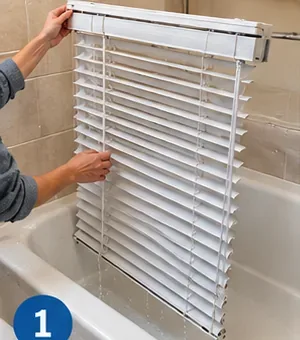
For products that are specifically water-immersible, use lukewarm rather than hot water. Hunter Douglas' published immersion method for its applicable aluminum blinds calls for lukewarm water with mild detergent. Avoid bleach, strong degreasers, abrasive powders, chemical solvents, and aggressive spot removers unless the manufacturer explicitly allows them.
You do not need a heavily foaming bath. A small amount of mild detergent is easier to remove and reduces the chance of leaving residue on slats, cords, or ladder strings.
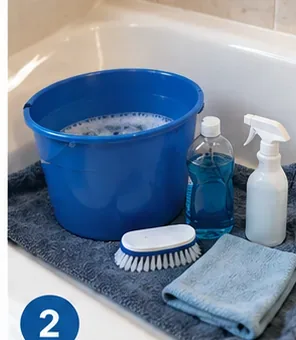
Lower the permitted portion of the blind into the water. For the Hunter Douglas aluminum-blind method, the published instruction is to immerse the assembly in lukewarm water with mild detergent and wash for about five minutes by gently moving the liquid around with your fingers. That is a useful reminder that “deep cleaning” does not mean aggressive scrubbing.
If your own manufacturer's instructions permit a soft cloth or sponge, work lightly along the slats. A soft brush should be used only when the product guidance allows it. Thin aluminum slats bend easily, and vigorous scrubbing can crease edges or distort the ladder cords.
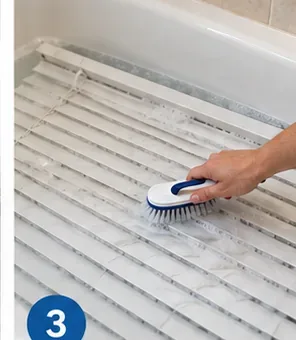
After the approved wash period, drain the dirty water. If the care instructions allow rinsing, use clean lukewarm water to remove residual detergent. Keep any excluded motor, headrail, clutch, or bottom-rail components above the water or rinse stream.
This is also the point to look for greasy kitchen film or nicotine-like residue that remains after a gentle wash. Do not automatically escalate to stronger chemicals. If mild detergent does not remove the buildup, check whether the manufacturer recommends professional ultrasonic cleaning or replacement instead.
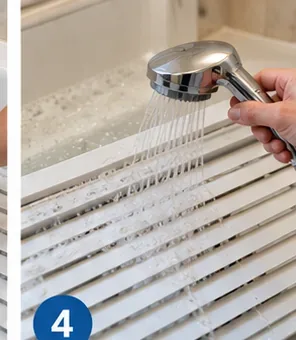
Lift the blind evenly and allow water to drain back into the tub. Support the assembly rather than letting the entire wet weight hang from one cord, one side of the headrail, or a single ladder string. Do not twist or wring the blind.
If the slats are aluminum, check that they are still aligned as they drain. A minor bend is easier to notice while the blind is off the window than after it has dried.
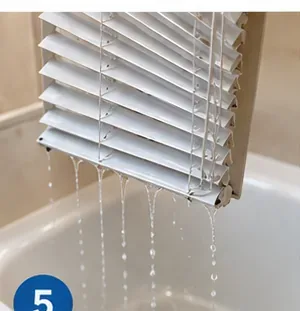
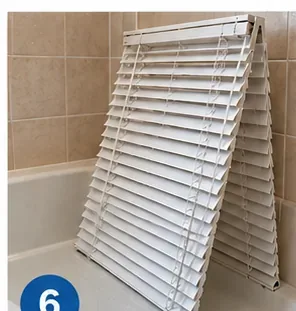
Set the blind in a well-ventilated area where water can continue to drain safely. Do not reinstall it while cords, tapes, or internal channels are still damp. Trapped water can create spotting, corrosion risk on susceptible hardware, or sticky operation.
Drying time depends on the blind's construction, room humidity, airflow, and how much water entered the assembly. Instead of relying on a universal number of hours, wait until the slats, cords, rails, and accessible internal areas are dry to the touch and no water drips when the blind is tilted.
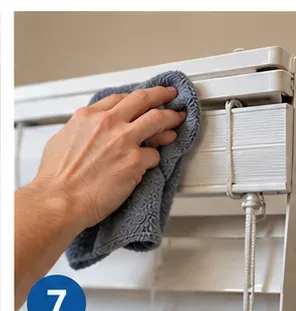
If the headrail or other components were kept out of the bath, clean them separately using the manufacturer's permitted method. That may mean a microfiber cloth, dry dusting, a vacuum brush attachment, or a lightly damp cloth. Do not spray cleaner directly into a motorized rail, clutch, cord lock, or battery compartment.
Hunter Douglas also cautions against immersion of certain operating-system headrails. The model-specific restriction matters more than the fact that the slats themselves are metal.
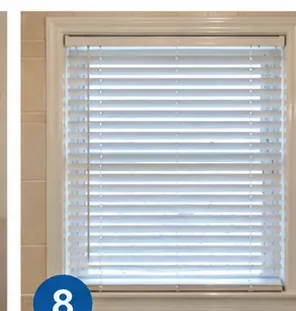
Once completely dry, reinstall the blind in its brackets. Tilt the slats slowly, then raise and lower the blind only as the product is designed to operate. Stop if the blind binds, one side rises unevenly, cords feel sticky, or the slats catch on each other.
A good result is not simply “whiter blinds.” The blind should be visibly cleaner, free of detergent residue, dry, correctly aligned, and able to tilt and lift normally without new noises or resistance.
Skip immersion if the care instructions prohibit water, if the blind contains wood, fabric, paper-like cellular material, decorative tapes that should stay dry, or a motorized headrail that cannot be separated from the washable portion. Real wood is especially vulnerable because prolonged water exposure can swell, warp, stain, or damage the finish.
Faux wood deserves caution too. “Faux” does not mean waterproof. LEVOLOR's current technical guide for its real and faux-wood blinds tells users not to use water as a general cleaning method and limits certain faux-wood products to a lightly damp cloth. That makes full bathtub soaking a poor default when you do not know the exact product.
Fabric vertical blinds are another common exception. Bali allows vinyl vertical vanes to be immersed but explicitly says fabric vanes should not be soaked. Cellular and pleated shades also have construction and fabric treatments that may be damaged by home immersion.
Kitchen blinds often collect airborne cooking oil that binds dust to the slats. If your blinds are an immersion-approved metal or vinyl product, mild detergent in lukewarm water can help loosen that film. If they are wood, faux wood, fabric, or a product with uncertain care instructions, use the manufacturer's spot-cleaning method instead of assuming the bathtub is safer because the dirt is heavy.
For example, a lightly dusty approved aluminum blind may need only dusting or vacuuming and no bathtub at all. A removable vinyl vertical vane with greasy residue can be a better candidate for immersion. A stained real-wood blind, by contrast, should stay out of the tub even if wiping takes longer.
After the blind is fully dry and back on the window, look for four things: the slats are cleaner without chalky detergent film, the cords and ladders are not stiff, the blind tilts smoothly, and the lift mechanism operates as it did before cleaning. Water spots that remain after drying may respond to a dry microfiber wipe, but streaks, swelling, discoloration, or warped slats suggest the cleaning method was too wet or otherwise unsuitable.
If operation is worse after cleaning, stop repeatedly cycling the mechanism. Make sure no cord is twisted, that the headrail is seated correctly, and that no moisture remains. For motorized or proprietary lift systems, use the manufacturer's troubleshooting instructions rather than adding lubricant or disassembling the rail unless the documentation tells you to.
The bathtub method is useful, but it is a material-specific cleaning technique rather than a universal shortcut. It is most defensible when the manufacturer explicitly says the blind or removable vane can be immersed. For products that only permit dusting, vacuuming, or damp wiping, a bathtub can create more problems than it solves.
So the sequence is simple: identify the blind, confirm water immersion is allowed, keep excluded hardware dry, use lukewarm water and mild detergent, clean gently, dry completely, then test the blind after reinstallation. If the manufacturer does not approve immersion, choose the less aggressive cleaning method instead.
Learn how to remove dry-erase marker from a painted wall safely, from water and mild soap to careful rubbing-alcohol spot treatment.
Learn when bathtub cleaning is safe for blinds, which materials should never be soaked, and how to wash, rinse, dry, and rehang approved blinds without damage.
Learn how to clean a printer cartridge safely, when to use built-in cleaning, how to handle inkjet contacts, what to avoid, and how to verify print quality.
Learn how to clean a guitar fretboard safely, choose the right method for finished or unfinished wood, avoid common myths, and condition only when needed.
Learn how to clean a stained dry-erase board safely, remove ghosting and stubborn ink, handle permanent marker, and avoid common cleaning mistakes.
Clean PS5 cooling vents without opening the console using PlayStation’s recommended low-powered vacuum method, plus airflow and noise checks.
Learn how to clean an HP printer head safely using diagnostic pages, built-in cleaning tools, alignment checks, and model-specific manual care.
Clean a microwave grease filter safely, know when a charcoal filter must be replaced, and use a quick checklist for model-specific care.
Learn how to disinfect a hairbrush without damaging it, with material-specific steps, CDC head-lice guidance, and a clear cleaning-vs-disinfection decision.
Learn how to clean an air fryer heating element safely, remove grease and stuck food, avoid damaging the coating, and know when to stop and check the manual.