How to Use Google Lens on Chromebook

How to Use Google Lens on Chromebook lets you scan objects, translate text, and solve problems directly from your device. Follow these steps to get started quickly.
Fabric blinds can look simple to clean, but the safest method depends on what the window covering is actually made from. Many products people call “fabric blinds” are technically Roman shades, cellular or honeycomb shades, fabric vertical vanes, or soft sheer panels. Those constructions do not all tolerate water, rubbing, vacuum brushes, or deep cleaning in the same way.
This guide gives you a conservative beginner-friendly process that works as a starting point for many fabric window coverings. The first rule is to check the manufacturer’s care instructions before using moisture, detergent, steam, or a vacuum attachment. Guidance from Hunter Douglas and LEVOLOR shows why this matters: some fabrics can be spot-cleaned, while certain blackout, sheer, or specialty materials have additional restrictions.
Start by identifying the construction. A Roman shade is a fabric panel that folds into soft horizontal sections when raised. A cellular or honeycomb shade has hollow fabric cells that trap air. Fabric vertical blinds use hanging vanes, while sheer shades combine translucent fabric with softer internal vanes.
These names matter because cleaning advice can change by product. For example, LEVOLOR’s vertical-blind guide says its fabric vanes can be periodically dusted or vacuumed and spot-cleaned with mild soap and water after a colorfastness check, but they should not be machine-washed or dry-cleaned. Meanwhile, Hunter Douglas guidance for Luminette Privacy Sheers calls for low-suction vacuuming and specifically warns against aggressive vacuuming that could distort the fabric.
Avoid starting with stain remover, bleach, window cleaner, solvent, or steam. Those may be appropriate for a specific product only when its care instructions explicitly say so.
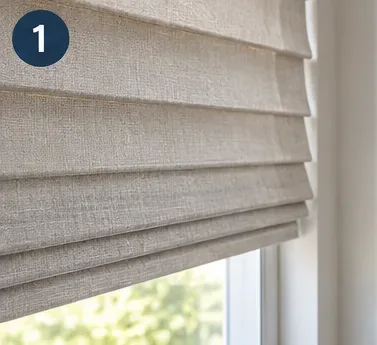
Look closely at the blind or shade before touching it. Note whether the fabric is sheer, textured, blackout-lined, coated, or visibly delicate. Check the headrail, bottom rail, or original paperwork for the model or fabric name. If you can identify the manufacturer, use its current care guide rather than assuming every fabric shade can be treated the same way.
Also note where the dirt is. A light gray film usually calls for dust removal, while isolated fingerprints or food spots may need spot-cleaning. Water rings, greasy stains, mold-like growth, or widespread discoloration are reasons to slow down and consider professional cleaning.
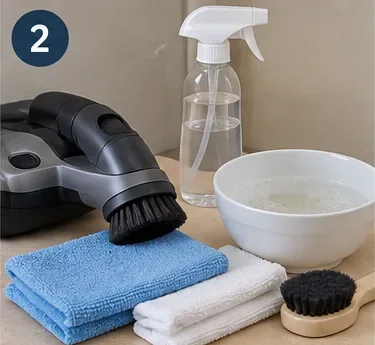
Place a towel on the windowsill or floor to catch dust or an occasional drip. Keep your cleaning solution in a bowl rather than spraying the blind directly; direct spraying can over-wet one area and leave a visible edge.
Use lukewarm rather than hot water. “Mild detergent” means a gentle household detergent without bleach or abrasive particles. You need only a small amount because excess soap can be difficult to remove from fabric mounted on a window.
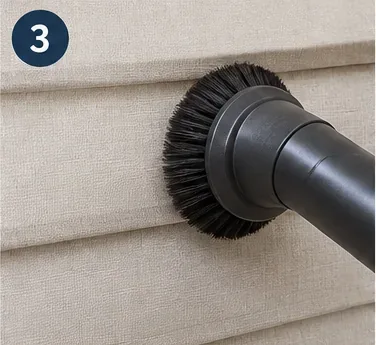
Lower or close the blind so the surface is supported and easy to reach. Dust from top to bottom. A feather duster is often enough for routine cleaning. For deeper dust removal, use a low-suction vacuum and move gently rather than pressing the nozzle into the fabric.
Hunter Douglas recommends gentle vacuuming with a brush attachment for many Roman shades, and its cellular-shade care guidance also lists light dusting and gentle vacuuming. However, its Luminette sheer guidance differs: a low-suction handheld vacuum may be used, but a brush attachment and rigorous vacuuming are discouraged because they can distort that fabric. That is why identifying your product in Step 1 is important.
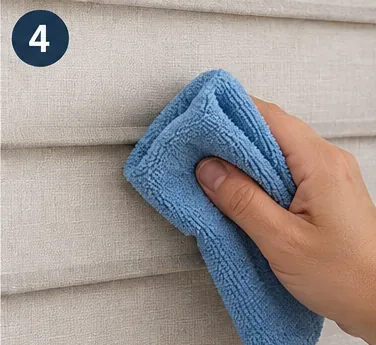
If the care guide allows spot-cleaning, test your method where a slight change would be hard to notice, such as near an edge or lower corner. Dampen a clean white cloth with lukewarm water and, if needed, a very dilute mild-detergent solution. Wring the cloth thoroughly so it is damp, not dripping.
Blot the test area and let it dry. Check for color transfer, a darker ring, surface fuzzing, shrinkage, or a change in texture. LEVOLOR’s guidance for fabric vertical vanes specifically advises checking colorfastness in an inconspicuous area before spot-cleaning. If the test changes the appearance, stop and use dry cleaning methods only until you can confirm a safer product-specific option.
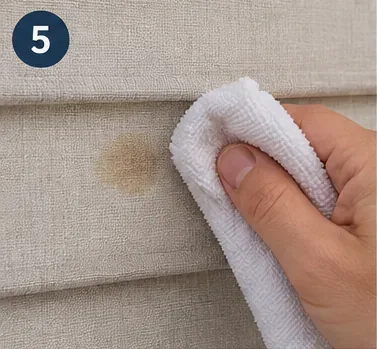
For a stain that passed the test, support the fabric with your free hand if possible and blot with a clean section of cloth. Work from the outside edge of the mark toward the center so you do not spread it. Use minimal liquid and give the moisture time to lift the soil.
Do not scrub back and forth. Hunter Douglas advises gentle blotting for Roman shades and notes that rubbing can damage fabric. Its Luminette instructions also recommend supporting the fabric from behind while blotting to reduce distortion. If the stain does not improve after a few careful passes, adding more pressure is usually not the right next step.
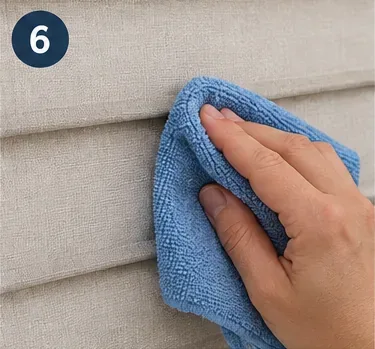
If you used detergent and the manufacturer allows water-based spot-cleaning, lightly blot the treated area with a second cloth dampened with plain water. Do not soak the fabric. The goal is to remove leftover cleaner, not rinse the entire shade.
For some specialty sheers, the exact sequence differs. Hunter Douglas, for example, instructs Luminette owners to let a treated area air-dry and then remove excess solution by blotting with distilled or bottled water. Follow that product-specific method if it applies to your window covering.
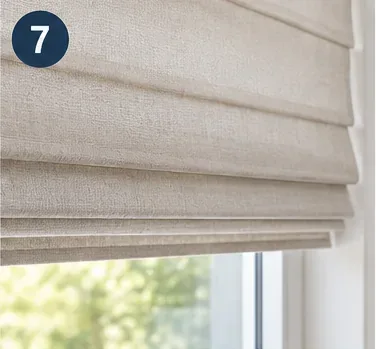
Allow the blind to air-dry fully before raising, stacking, or folding it. Keeping the fabric in its normal hanging position helps limit creasing and uneven drying. LEVOLOR’s cellular-shade guidance tells users to dry shades completely in the lowered or closed position after spot-cleaning.
Do not speed drying with a hot hair dryer or other concentrated heat. When a manufacturer recommends forced air for dust removal, it generally specifies cool or non-heat settings. Heat can affect coatings, adhesives, pleats, or dimensional stability.
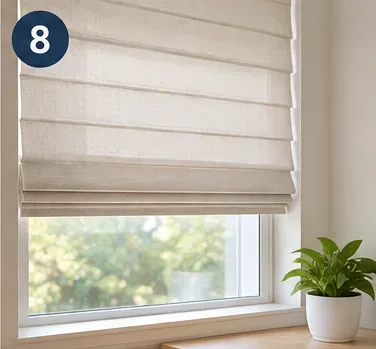
Once the blind is dry, look at it from several angles in daylight. A successfully cleaned area should not feel stiff, show a new tide mark, or look noticeably lighter than the surrounding fabric. Hunter Douglas notes that spot-cleaning can sometimes create a visibly cleaner area, so avoid expanding a small treatment into a large wet patch unless the care guide supports it.
For maintenance, light dusting is usually safer than waiting until dirt becomes embedded. Clean visible spills promptly, because old stains often require more aggressive treatment. If you have several matching blinds, clean them on a similar schedule so one does not become noticeably brighter than the others.
| Type | Good starting method | Important caution |
|---|---|---|
| Fabric vertical vanes | Dust or vacuum gently; spot-clean allowed stains with mild soap and water | LEVOLOR advises testing colorfastness and says not to machine-wash or dry-clean its fabric vanes |
| Roman shades | Light dusting, gentle vacuuming, then careful blotting if spot-cleaning is allowed | Rubbing may damage or crease the fabric |
| Cellular or honeycomb shades | Dust first; use gentle low-suction cleaning | Some blackout or specialty fabrics have restrictions on spot-cleaning, immersion, or vacuuming |
| Sheer fabric shades or soft vertical sheers | Very gentle dust removal and product-specific spot treatment | Some styles should not be vacuumed with a brush or rubbed because the fabric can distort |
Consider a professional cleaner when the fabric has widespread grime, water damage, heavy grease, unknown stains, delicate embellishments, or a manufacturer restriction against home spot-cleaning. Professional injection/extraction cleaning is a process that applies a cleaning solution to fabric and removes the dirty solution at nearly the same time. Hunter Douglas describes this as an option for many of its fabric-based window treatments, while also noting that product exclusions exist.
If you use a professional service, provide the exact product or fabric name when possible. Do not assume that a cleaner who works on one type of shade can use the same method on every blackout, sheer, cellular, or woven fabric.
Guidance was checked against current manufacturer information available in September 2026, including Hunter Douglas Roman shade care, Hunter Douglas cellular shade care, Hunter Douglas Luminette care, and LEVOLOR’s fabric vertical blind cleaning guide. Because “fabric blinds” covers many constructions, the safest final authority is always the care information for your exact product.
How to Use Google Lens on Chromebook lets you scan objects, translate text, and solve problems directly from your device. Follow these steps to get started quickly.
Learn how to clean a lululemon yoga mat using current care guidance: wipe gently, avoid soaking and bleach, dry fully, and store out of sunlight.
Learn how to remove hot glue from fabric using cooling, gentle scraping, and cautious alcohol treatment, with fabric-safety checks for delicate materials.
Learn how to clean a freezer ice maker safely, remove stale ice and residue, wash and dry the bin, and know when deeper cleaning or service is needed.
Learn how to season gas grill grates safely, when seasoning is actually needed, and how cast iron, stainless, and porcelain grates differ.
Learn how to clean fabric blinds safely: identify the material, remove dust, spot-clean stains, avoid damage, air-dry correctly, and know when to call a pro.
Learn how to clean an Ooni pizza stone safely with dry brushing, high-heat burn-off, and flipping—plus what to avoid and how to know it is clean enough.
Learn how to clean a mechanical keyboard safely, from removing keycaps and dust to washing compatible caps, drying, reassembly, and testing.
Learn how to remove hardened wax from clothes safely: harden, scrape, transfer with low heat, pretreat residue, wash by the care label, and air-dry.
Clean a removable retainer at least daily, rinse it whenever you remove it, and use a deeper manufacturer-approved clean about weekly. Learn what changes the schedule.