Home
» How to
»
How to Clean White Running Shoes: The Safest Method and When to Use Alternatives
How to Clean White Running Shoes: The Safest Method and When to Use Alternatives
Current guidance as of September 2026: there has not been a broad shift toward throwing running shoes in the washer. adidas published an updated running-shoe cleaning guide on June 15, 2026, while its general care guidance, Nike, and Brooks still point most owners toward gentle hand cleaning and room-temperature air drying. The practical takeaway is simple: use hand cleaning as the default, then follow model-specific instructions if your exact shoe says something different. See the current adidas running-shoe cleaning guide, adidas sneaker-care guidance, Nike shoe-cleaning instructions, and Brooks running-shoe care guidance.
White running shoes are harder to keep bright because every splash, road film, grass mark, and dried mud spot is visible. The temptation is to use stronger chemicals or a washing machine. That can make a shoe look cleaner faster, but it also increases the chance of fading, distorted foam, stretched fabric, or unnecessary wear. The best method depends on how dirty the shoes are and what the upper is made from.
Which cleaning method should you choose?
Method
Best for
Main advantage
Main tradeoff
Recommendation
Dry brushing
Dust, dried mud, trail grit
Almost no moisture exposure
Will not remove set-in stains
Use first, even if you plan a deeper clean
Spot cleaning
Fresh scuffs or small marks
Fast and low-risk
Can leave the rest of a white upper looking uneven
Best for routine upkeep between deeper cleans
Hand cleaning
Most mesh, knit, and synthetic running shoes
Good control over water, detergent, and pressure
Takes more time and requires air drying
The safest default for most white running shoes
Machine washing
Only models whose manufacturer explicitly permits it
Convenient for a thoroughly dirty shoe
More agitation and water exposure; many brands advise against it
Do not use unless your exact model instructions allow it
Strong whitening products
Very limited material-specific cases
Can attack stubborn discoloration
Higher risk of color change or material damage
Avoid bleach and harsh cleaners unless the manufacturer specifically approves them
A useful example of why model-specific care matters: adidas' general sneaker guidance says not to machine wash shoes, but its official 4DFWD care article describes a cold, delicate machine-wash option for that particular construction. That is an exception, not a universal rule for white running shoes.
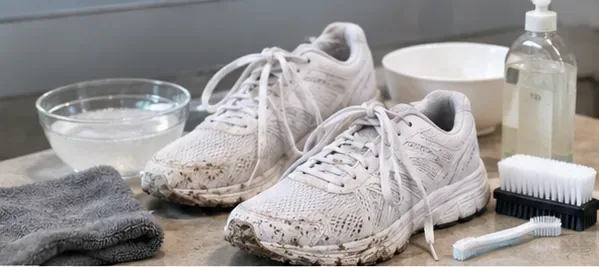
What you need for the safest general method
A soft-bristle shoe brush or clean soft toothbrush
Two clean microfiber cloths or soft washcloths
A small bowl of lukewarm water
A small amount of mild laundry detergent or mild dish soap
White paper towels or a clean dry cloth for shaping while drying
For white shoes, mild does not mean ineffective. The goal is to loosen dirt without soaking the cushioning or aggressively abrading mesh. Nike specifically recommends a mild cleaning solution and warns that highly concentrated dishwashing liquid can discolor some materials or strip natural oils. adidas also advises against bleach and other harsh chemicals.
Start with mild supplies and check the shoe materials before using water or cleaner.
How to clean white running shoes in 8 steps
1. Check the material and the exact model instructions
Before getting the shoes wet, identify the upper. Most modern road-running shoes use engineered mesh, knit, or synthetic overlays, but some pairs include leather or suede details. Mesh and knit usually tolerate gentle damp cleaning. Leather needs material-appropriate care, while suede and nubuck can show water marks and deserve a separate suede-specific method.
If the brand publishes care instructions for your exact shoe, those instructions take priority over any general guide. This is especially important for specialty midsoles, waterproof membranes, bonded overlays, and shoes that explicitly allow or prohibit machine washing.
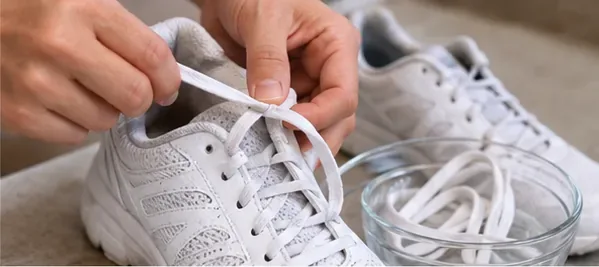
2. Remove the laces and removable insoles
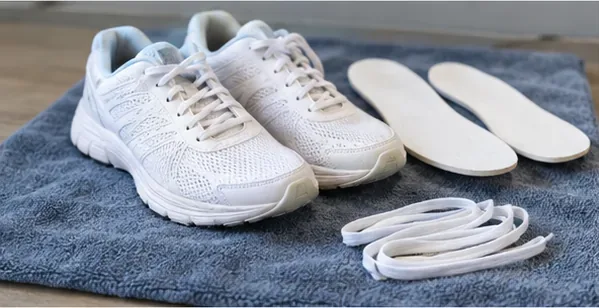
Take out the laces so you can reach the tongue, eyelets, and mesh beneath them. Remove the insoles only if they are designed to come out easily; do not force a liner that appears glued in place. Cleaning and drying these pieces separately also keeps trapped moisture from lingering inside the shoe.
Removing laces and insoles opens the upper for more even cleaning and lets each part dry separately.
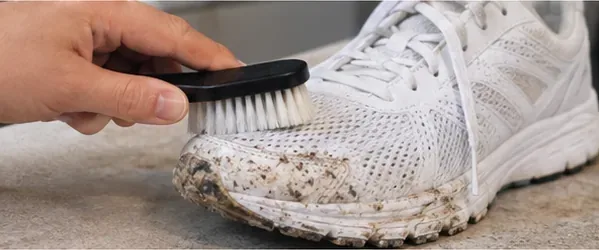
3. Dry-brush loose dirt before adding water
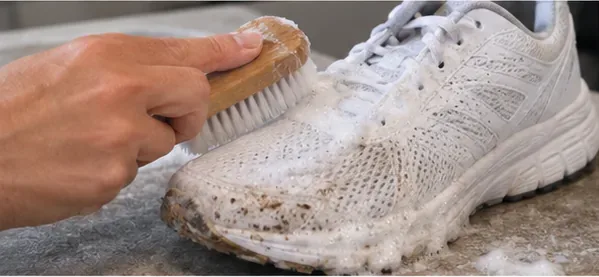
If the shoes are muddy, let the mud dry first. Then knock the soles together gently outdoors and use a soft brush to remove loose grit from the outsole, midsole edge, and upper. This first pass matters because adding water to a layer of dry dirt can spread it into a larger stain.
Use lighter pressure on mesh than on the rubber outsole. Brooks recommends brushing caked dirt from the bottom before moving on to damp cleaning, and adidas similarly starts with removing surface dirt.
Brush off dry dirt first so you do not turn loose grit into muddy residue while washing.
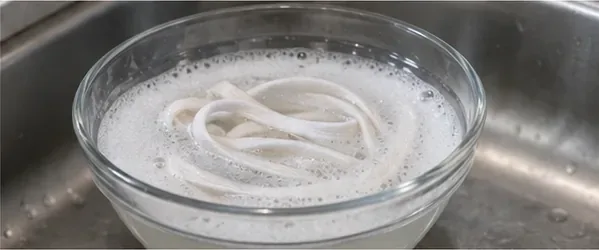
4. Wash the laces separately
Place the laces in a small bowl of lukewarm water with a small amount of mild soap. Work the solution through them gently, rinse until the water runs clear, and lay them flat to air dry. If the laces are frayed, permanently gray, or structurally damaged, replacement may make more sense than increasingly aggressive whitening.
For insoles, be more conservative: wipe or lightly hand-clean them with a damp cloth and mild solution, then let them dry completely outside the shoes. Avoid soaking foam insoles unless the manufacturer says it is safe.
Laces can be washed separately with a small amount of mild soap, then rinsed and air-dried.
5. Clean the outsole and midsole, then the upper
Mix a small amount of mild detergent or soap into lukewarm water. Start with the outsole and midsole because those areas usually carry the heaviest grime. A toothbrush can help reach grooves and the edge where the upper meets the sole.
For the white mesh or knit upper, switch to a soft brush or cloth and use less liquid. Work gently in small sections. Do not scrub as if you are cleaning a rubber sole; repeated hard brushing can roughen knit fibers and distort mesh. Nike's guidance for knit and mesh likewise favors a mild solution and gentle brushing rather than harsh products.
If the shoe is mostly clean except for one mark, stop here and spot-clean only that area. A full wet cleaning creates more drying time and more water exposure with no benefit when the rest of the shoe is already clean.
Use gentle pressure on mesh and knit; focus more scrubbing on durable outsole and midsole surfaces.
6. Remove soap with a clean damp cloth
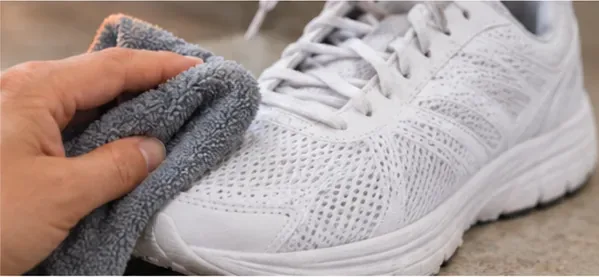
Rinse your cloth in clean water, wring it out well, and wipe the upper repeatedly until no obvious soap residue remains. Blot rather than grind the cloth into the fabric. For most running shoes, this controlled wipe-down is preferable to putting the whole shoe under a faucet or submerging it.
If a white stain remains, repeat one gentle cleaning cycle rather than immediately reaching for bleach. Stronger chemistry may brighten one patch while changing the surrounding fabric, printed details, or bonded overlays.
Wipe away cleaner with a clean damp cloth instead of repeatedly saturating the upper.
7. Air-dry everything at room temperature
Blot excess moisture with a dry towel. Lightly stuff the shoes with clean white paper towels or a dry washcloth to help them hold their shape and absorb moisture from the inside. Place the shoes, laces, and insoles separately in a well-ventilated room.
Do not use a clothes dryer, heater, hair dryer, or other concentrated heat source. Nike warns that excess heat can damage shoes, while Brooks says machine drying can warp shoe materials and foam. adidas also recommends room-temperature drying and warns against dryer heat. Direct intense sunlight is not a good shortcut for white shoes either; adidas notes that prolonged sun exposure can contribute to yellowing of white soles.
Air-dry shoes, laces, and insoles separately at room temperature before reassembly.
8. Reassemble only when completely dry
Once the upper, insole, and laces are fully dry, reinstall the insole and lace the shoes. Check the upper for stiff soap residue, look inside for remaining dampness, and inspect the sole for dirt you may have missed. If one small area still needs attention, spot-clean it rather than repeating the entire wash.
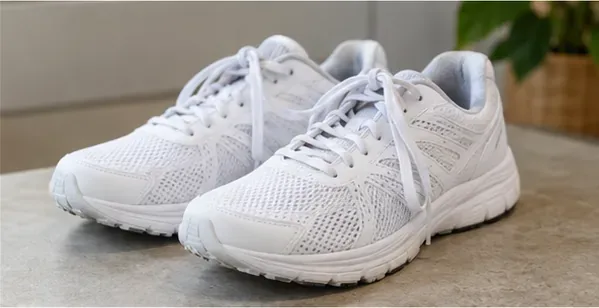
Reinstall completely dry insoles and laces, then check for residue or missed spots before the next run.
Hand washing vs. machine washing: the real tradeoff
Machine washing is attractive because it is easy and visually thorough. The downside is that you give up control: the entire shoe is saturated, the upper is agitated, and foam and bonded components are exposed to repeated mechanical stress. Brooks explicitly advises against machine washing or drying its running shoes, and Nike recommends hand washing as the safer general approach.
That does not mean every washer-safe claim is wrong. Some specific designs have official machine-wash instructions. The decision rule is therefore not “never use a washer” or “washers are fine.” It is: use a washer only when the care instructions for your exact model explicitly say you can. If you cannot verify that permission, hand cleaning is the lower-risk choice.
What about baking soda, bleach, and “whitening hacks”?
White shoes invite whitening experiments, but brighter is not always safer. Nike notes that a baking-soda-and-water paste can be used on white or light-colored shoes in some cases. That can be useful for a small, compatible surface, but it is not automatically appropriate for every knit, coating, print, or overlay. Test a small inconspicuous area first and do not leave a paste sitting on delicate fabric longer than necessary.
Bleach is a different category. adidas explicitly lists bleach and harsh cleaning products among its “don'ts.” For typical white running shoes, the potential cosmetic payoff is not worth the higher risk of discoloration or material damage. If ordinary mild cleaning does not remove a mark, living with a faint stain is often the better tradeoff than escalating to a chemical the manufacturer does not recommend.
Material-specific adjustments
Material
Safer approach
What to avoid
Engineered mesh
Soft brush or damp cloth with diluted mild cleaner
Hard scrubbing, soaking, concentrated cleaner
Knit upper
Gentle strokes following the knit direction; minimal liquid
Stiff brushes, bleach, dryer heat
Rubber outsole
More vigorous brushing with mild soap is usually appropriate
Solvents or cleaners not approved by the maker
Foam midsole
Soft brush or cloth; wipe clean
High heat and harsh chemicals
Leather overlays
Damp cloth and leather-compatible cleaner if needed
Soaking and aggressive brushing
Suede or nubuck
Use suede-specific tools and instructions
Following the wet mesh-cleaning routine without checking care guidance
How often should you clean white running shoes?
There is no universal mileage interval. Brooks says there is no set cleaning timeframe and suggests paying attention to accumulated mud and debris, especially on trail shoes where packed dirt can affect traction. For white road-running shoes, a practical approach is to dry-brush after dirty runs, spot-clean fresh marks when they appear, and save a full hand cleaning for when the whole upper actually needs it.
That approach has a useful tradeoff: frequent light maintenance keeps white shoes presentable while reducing the number of full wet cleanings. It also means stains are less likely to sit for weeks before you deal with them.
Quick checklist before you finish
Did you check the exact model's care instructions?
Did you remove dry dirt before using water?
Did you use a mild, well-diluted cleaner?
Did you keep hard scrubbing away from mesh and knit?
Did you clean laces and removable insoles separately?
Did you remove soap residue with a clean damp cloth?
Did you avoid bleach, high heat, and the dryer?
Are the shoes completely dry before you run in them again?
Bottom line
For most white running shoes, the best balance of cleaning power and material safety is a controlled hand wash: dry-brush first, use a small amount of mild cleaner, work gently on the upper, wipe away residue, and air-dry at room temperature. Spot cleaning is even better when only one area is dirty. Machine washing can be convenient, but it should be treated as a model-specific exception rather than the default.
That may leave a faint stain that a harsher method could remove, but it also reduces the chance of damaging the very mesh, foam, and structure that make a running shoe perform as intended. For a shoe you actually run in, preserving the materials is usually a better trade than chasing perfect showroom white.