With a QR code, you can quickly open a document by pointing your phone's camera at it. Here's how to create QR codes on Google Docs .
QR Code or QR code helps users share files online with everyone quickly just by scanning it with a smartphone. Compared to sharing links via email, this method is easier. In fact, you don't even need the recipient's email to share files with them via QR code. You can share everything via QR code, but did you know that you can share Google Docs via QR code?
Google Docs offers more tools than many people think. Some of them are nested in menus and toolbars, others are hidden in the software. QR code generator for Google Doc is one of them. How to use it is very easy.
How to create QR codes for Google Docs
You have two ways to create QR codes for Google Docs, specifically:
Use tools available on Chrome

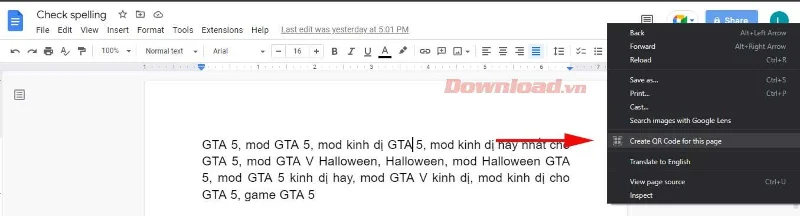
You can actually create a QR code for a Google Docs document, just like you can create a QR code for any website. When opening Google Docs in Chrome, left click on the Share icon in the URL field. From the resulting drop-down menu, select the Create QR Code button .

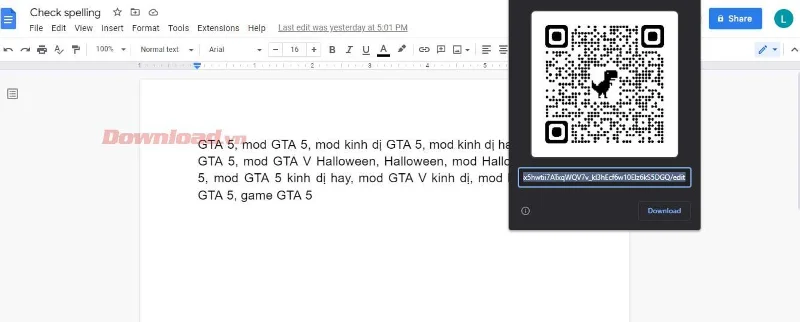
This action creates a QR code. If the person you want to share a document with is in the same room, they can use their phone to scan it right onto your screen. Additionally, you can download QR code. Here, you can print it, paste it into another document, email it, post it on social media, or do whatever you want.
Right click on the toolbar

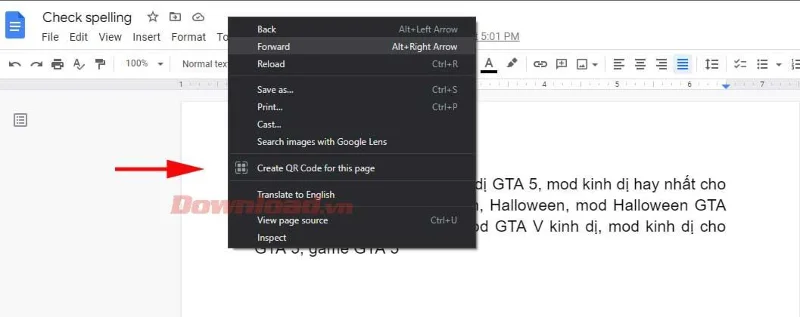
You can also create a QR code for an open Google Docs page by right-clicking on the toolbar, above the document. This action will create a pop-up menu.
About halfway down this menu, you'll see a button to Create QR code for the page, with the same square icon on the right. Left click on this button to create QR code, download link and text link.
When you share a QR code that leads to a Google Doc page, you are sharing exactly what you want others to see as if you gave someone a standard text link. That means, before creating a QR code for Google Docs, you need to understand the sharing permissions available on the document.
For example, do you want others to be able to share and edit documents once they have scanned a QR code? Or just read and comment?
You can fine-tune these settings by left-clicking the blue Share button near the top right corner of the Google Doc.
Note, although other users need the Google Docs app to edit documents on their smartphones, anyone can view Google Docs as a website whether they have the app installed or not.
Above is how to create QR codes for Google Docs . Hope the article is useful to you.