Do you want to remove header and footer from PDF table ? Below are some of the simplest ways to remove headers and footers on PDF tables .

Choosing the right software and following the right steps, you can quickly delete headers and footers in PDF tables . Ideally, you should remove them before converting the document.
How to delete headers and footers in tables in PDF documents
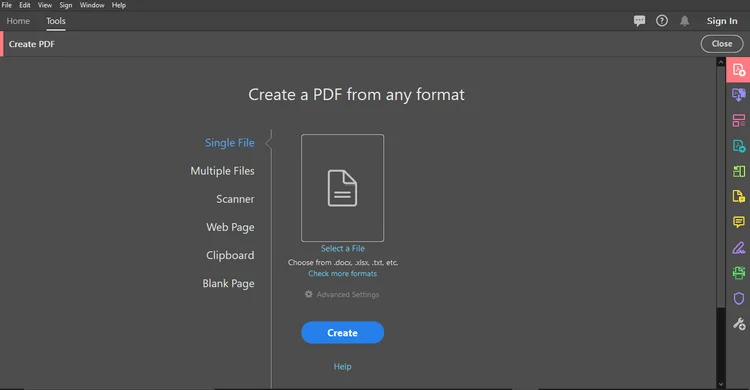
Create PDF with Adobe Reader
First, you must convert any incompatible formats to formats that can be edited by the PDF reader you are using. To do this, you need software that can open, edit, and convert documents to PDF. The article uses Adobe Reader.
1. Open Adobe Acrobat > select Tools .

2. Click Create PDF and select the file type you want to create into PDF. It can be a scanned copy, one or more different files.

3. Following the instructions, click Next or Create according to the file type you want to convert.
4. A window will appear, giving you options for where to save the converted PDF. Select the appropriate location and click Convert .

You can now edit and delete headers and footers in the document.
Delete headers and footers on PDF tables with Able2Extract
If tables have headers and footers, PDF conversion can make the tables messy. To avoid that, you must run the PDF through a second software. It will help you delete the header and footer first.
Using Able2Extract Professional, you can cut out all headers and footers on the board before converting.
Prepare PDF conversion
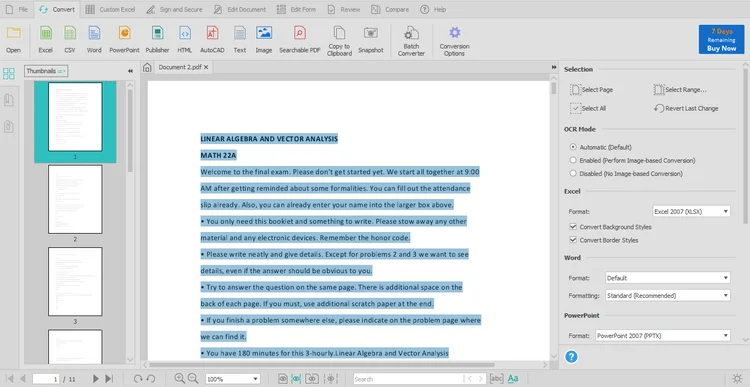
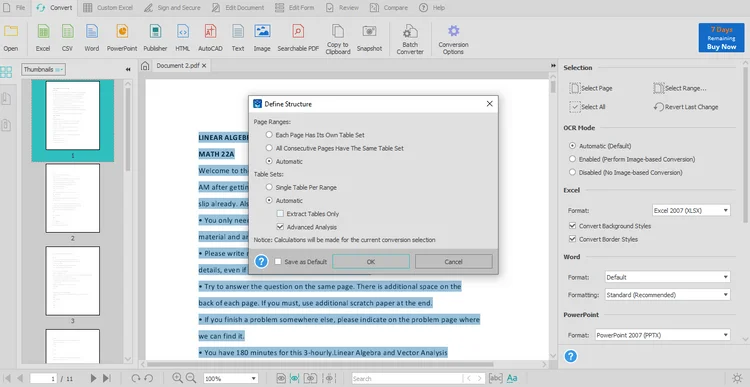
1. Use Able2Extract Professional to open the PDF document.

2. Click on all the tables you want to convert to select them.

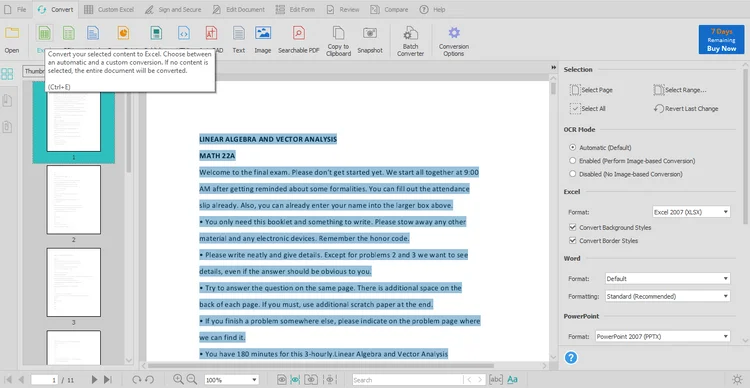
3. On the Command toolbar , select the Excel icon .

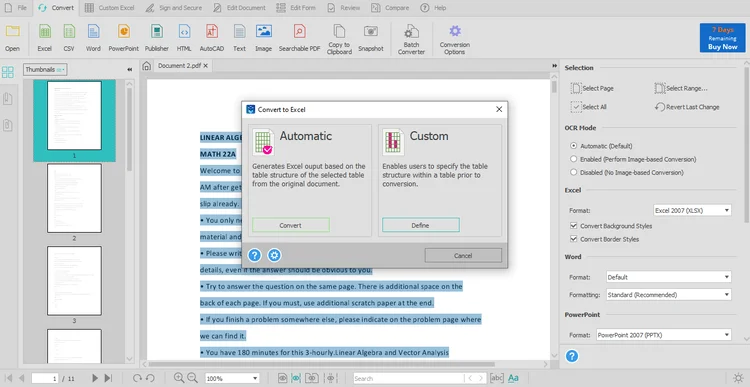
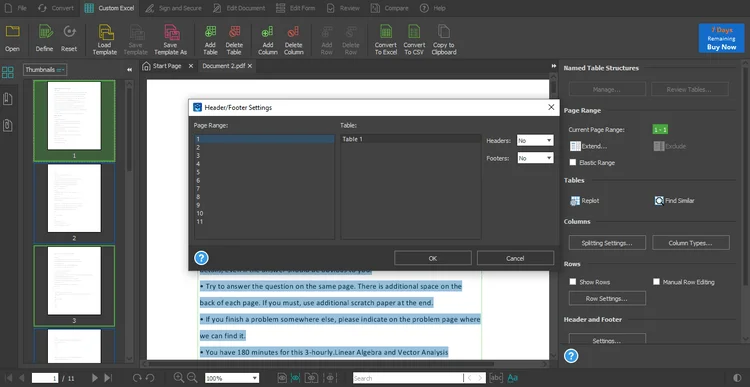
4. A dialog box appears. There, click Define , then select Custom PDF to Excel .

5. Change the table structure on Custom Excel as desired.

Remove header & footer from PDF table
Delete headers
- Click on the Edit Header feature > left click on the title line of a specific header.
- Hold the left mouse button and move it to change the position of the header.
- You can remove the header by removing it from the page border.
Delete footer
- Click Edit Footer . This feature allows you to change small details of the footer.
- Left click on the footer line, then move it around to set the exact position of the footer you want.
- Remove the footer completely by moving it outside the page and placing it in a shaded area.
Header/Footer options
This is the best option to remove these two elements from the PDF table. Access these options as follows:
- Go to Settings .
- In the settings panel, you can choose to disable headers or footers across the entire document, including in tables.

Note, the first two features allow you to select the header and footer you want to delete so you can retain their desired positions in the PDF document.
Above is how to delete header and footer in the table of a PDF document . Hope the article is useful to you.