Make Every New Writer Document Use Your Template
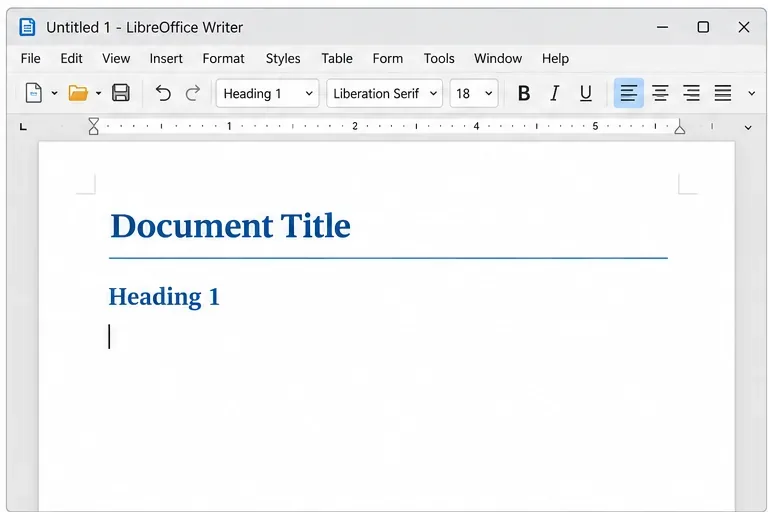
Set a custom LibreOffice Writer template as the default so new documents open with your preferred styles and page layout.
Encountering the GPT Reserved Partition Too Small Error can be frustrating, especially when you're trying to install or upgrade Windows. This error often pops up during disk partitioning, leaving you stuck and wondering why your system won't cooperate. But don't worry—it's a common issue with straightforward fixes. In this guide, we'll walk you through understanding the problem and resolving it efficiently, so you can get back to using your PC without the headache. Whether you're a beginner or have some tech know-how, these steps will empower you to tackle it confidently.
The GPT Reserved Partition, also known as the Microsoft Reserved Partition (MSR), is a small, hidden section on GPT-formatted drives. It's essential for Windows to manage disk operations, like converting between basic and dynamic disks or handling UEFI boot processes. Typically, it's just 16MB to 128MB in size, but when it's deemed "too small" (often under 128MB), Windows throws this error during installation, upgrades, or partitioning tasks.
Why does this happen? Common culprits include:
Understanding this error is the first step to fixing it. It's not a sign of major hardware failure but rather a configuration hiccup that can be resolved with the right tools. Let's dive into the solutions, starting with the safest methods.
For many users, Windows' built-in Disk Management tool can resolve the GPT Reserved Partition Too Small Error without extra software. This method works best if you have unallocated space nearby. Follow these steps carefully to avoid data loss—always back up your important files first! 😊
This approach is quick and doesn't require downloading anything. If the partition isn't adjacent or shrinkable, move to the next method. Pro tip: If you're on Windows 11, ensure your BIOS is set to UEFI mode for GPT compatibility.
When built-in tools fall short, reliable third-party software like EaseUS Partition Master or MiniTool Partition Wizard can precisely resize the GPT Reserved Partition. These tools are updated regularly to handle the latest Windows versions, including fixes for the "too small" error in recent builds.
Here's a step-by-step using EaseUS (free version available):
| Step | Action | Tips |
|---|---|---|
| 1 | Download and install EaseUS Partition Master from the official site. | Choose the free edition for basic fixes. Avoid shady downloads! ⭐ |
| 2 | Launch the tool and select your disk. Right-click the Reserved Partition and choose Resize/Move. | Ensure at least 128MB is allocated. Drag the slider to adjust. |
| 3 | Apply changes. The tool will reboot into a pre-OS environment to make adjustments safely. | Back up data beforehand—resizing can sometimes lead to minor issues. |
| 4 | Verify in Disk Management post-reboot. Retry your Windows task. | If errors persist, check for firmware updates on your motherboard. |
Users report 90% success with this method for the GPT Reserved Partition Too Small Error. It's user-friendly and handles complex layouts better than native tools. Remember, always download from official sources to stay secure.
If you're comfortable with commands, Diskpart in Command Prompt offers a no-frills way to address the GPT Reserved Partition Too Small Error. This is ideal for bootable USB scenarios or when GUI tools aren't accessible. Proceed with caution—this can wipe data if mistyped!
diskpart and hit Enter.list disk (note your system disk number, e.g., Disk 0)select disk 0 (replace 0 with your disk)list partition (identify the reserved partition, usually type "Reserved")select partition X (X is the reserved partition number)delete partition override (this removes it safely)create partition msr size=128 (creates a new 128MB MSR)exit and close the prompt. Restart the installation.This method recreates the partition fresh, often resolving corruption issues tied to the error. It's powerful but requires precision—double-check disk numbers to avoid affecting the wrong drive. 👍
Once fixed, keep this error at bay with these simple habits:
chkdsk C: /f /r to scan for errors.Staying proactive means fewer surprises. If you're dealing with a multi-boot setup, tools like Rufus can help create GPT-compatible installation media effortlessly.
Most cases of the GPT Reserved Partition Too Small Error are DIY-friendly, but if you're seeing persistent boot loops, data loss, or hardware warnings, it might indicate deeper issues like failing SSDs. In such scenarios, consult a technician or visit official support forums. For Windows-specific queries, the Microsoft Community is a goldmine of user-tested advice.
Wrapping up, fixing the GPT Reserved Partition Too Small Error doesn't have to be overwhelming. With these methods, you'll reclaim control over your disk setup in no time. If this guide helped, share your success story in the comments below—we love hearing how you overcame tech hurdles! Ready to try the first method? Your smooth Windows experience awaits. 🚀
Set a custom LibreOffice Writer template as the default so new documents open with your preferred styles and page layout.
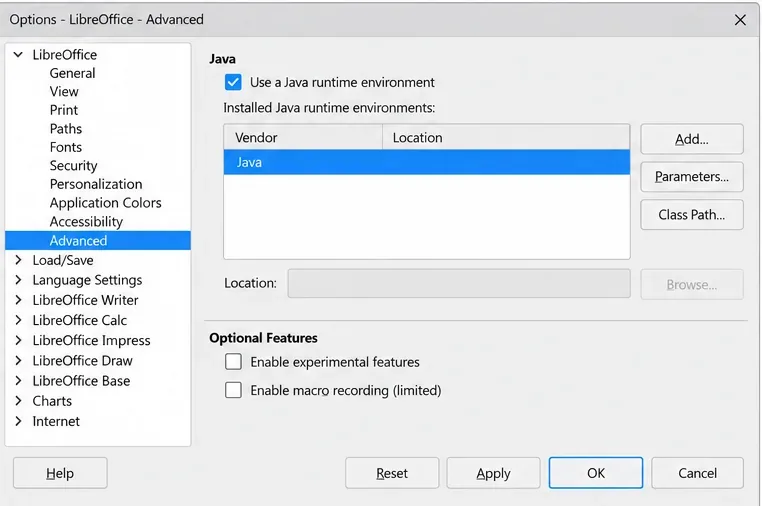
Install a compatible Java runtime, enable it in LibreOffice, and troubleshoot an empty JRE list without changing unrelated settings.
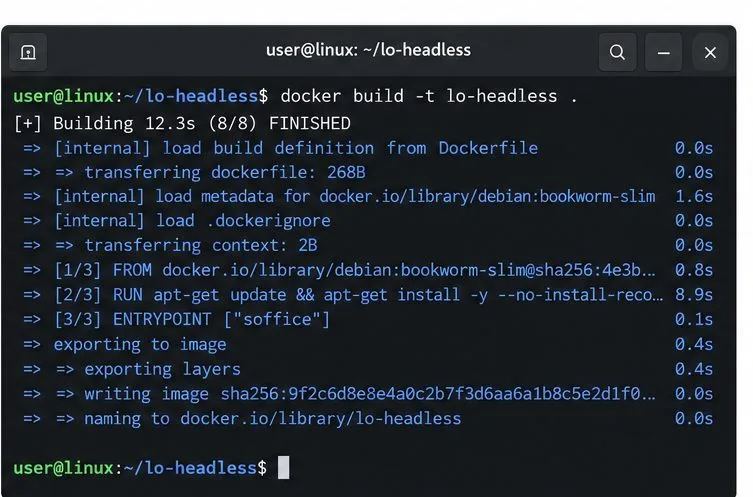
Build a small LibreOffice container, convert office documents without a GUI, and verify PDF output while limiting host-file access.
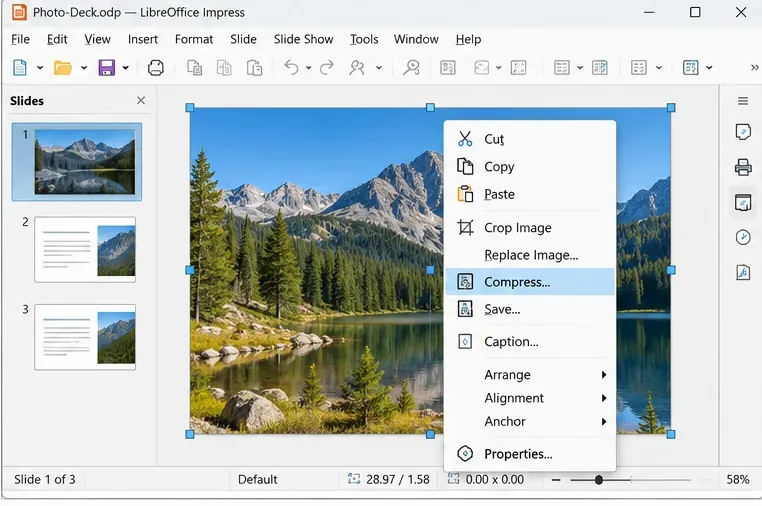
Reduce oversized LibreOffice presentation files by compressing embedded photos, choosing sensible image settings, and checking slide quality before sharing.
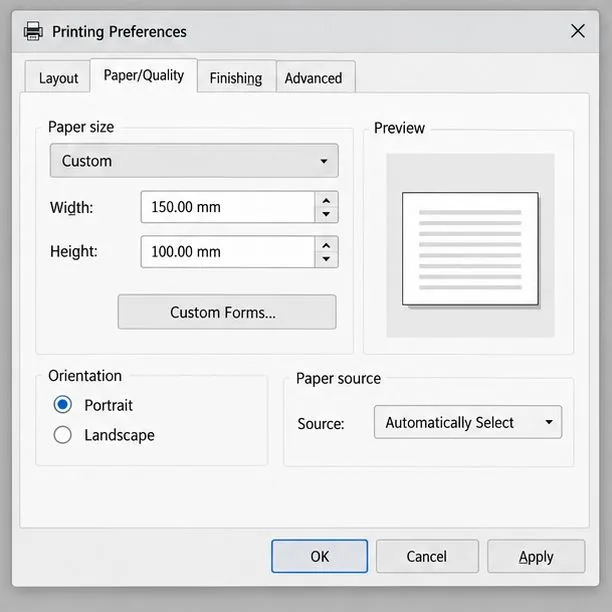
Match LibreOffice’s page dimensions to your printer, check printable margins, and correct scaling before printing a custom-size document.
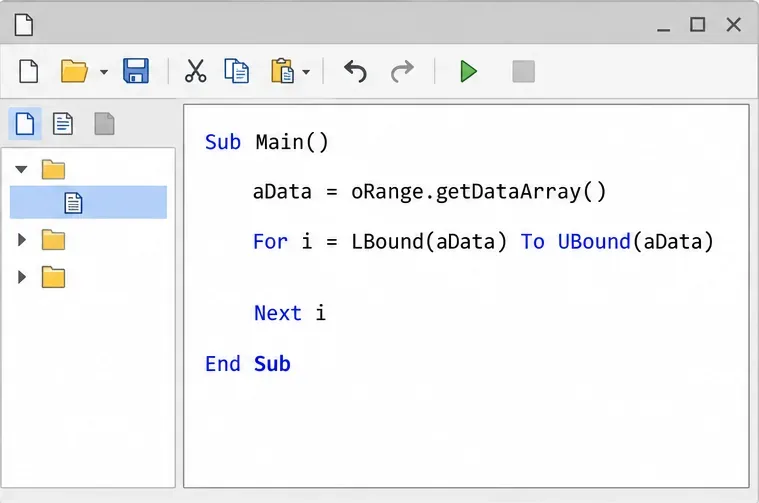
Replace repeated cell access with bulk range reads and writes, then benchmark the result and protect formulas in large Calc workbooks.
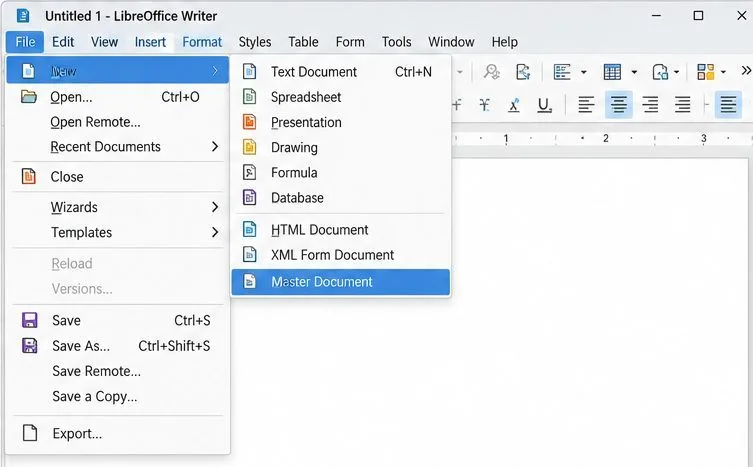
Split a long manuscript into chapters, assemble them in Writer, and keep styles, contents, and export checks consistent.
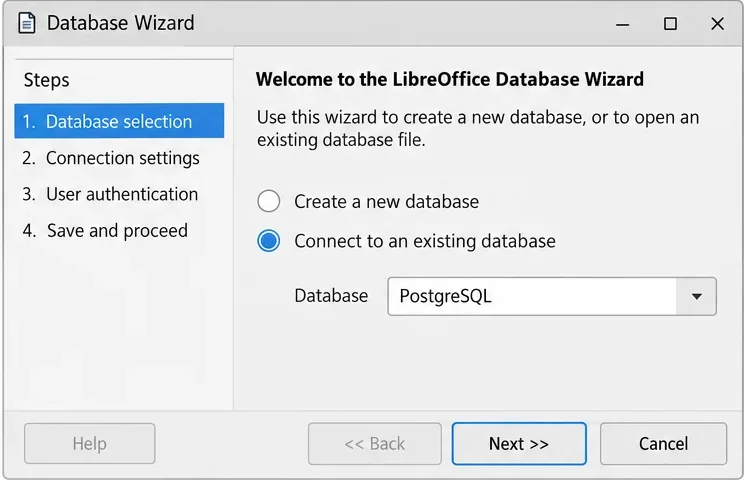
Use Base’s direct PostgreSQL option to enter your server details, sign in, save an ODB connection file, and troubleshoot common access errors.
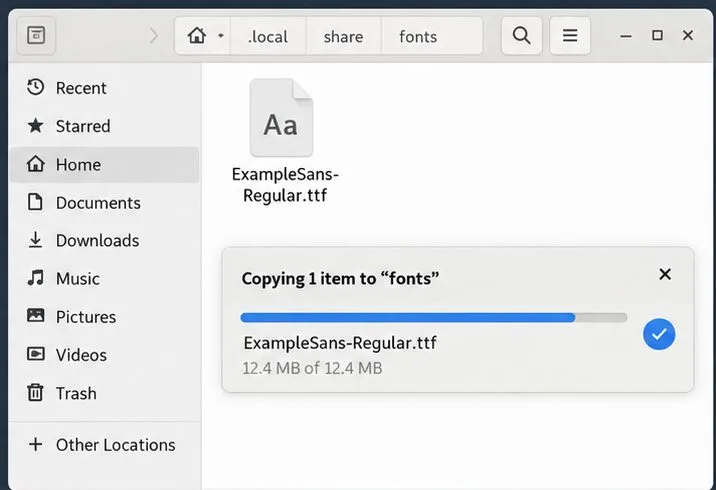
Install a font in your Linux user font folder, restart LibreOffice Flatpak, and confirm it appears in Writer without weakening the app sandbox.
Protect your work and isolate network-drive save crashes in LibreOffice on macOS Sonoma with a local-first workflow, permission checks, and targeted tests.