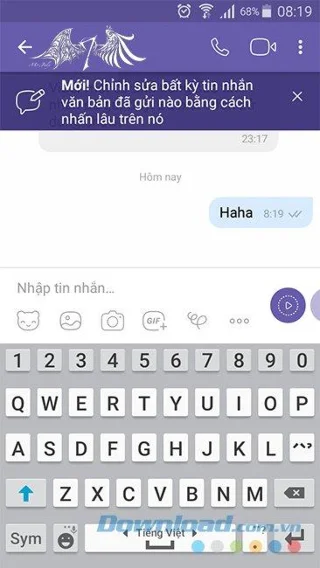
Free chat tool Viber version 9.8.1 has just added a new feature, allowing users to edit Viber messages sent on all operating systems. This feature is quite handy and long-awaited by Viber users .
In fact, this feature has been on a free chat software for a long time, which is Skype . It is not known for what reason that until now, this chat application on this Viber phone brought it to its users. However, that is not too important, because now we can edit Viber messages on computers and mobile easily.
Viber for PC
How to fix Viber messages on computer
Step 1 : You open a Viber conversation with any person chatting with them.
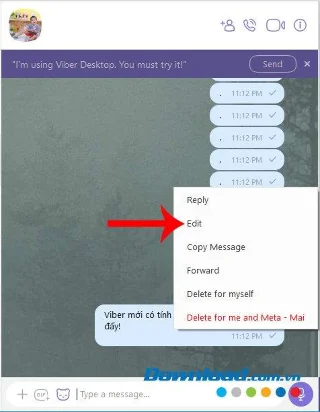
Step 2 : You choose the Viber message to edit, right-click on the message, select Edit .
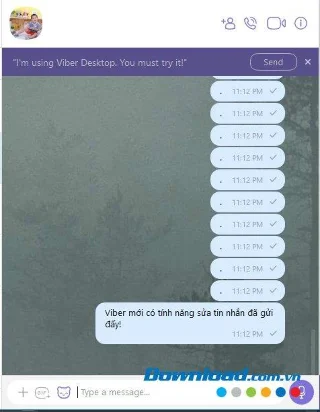

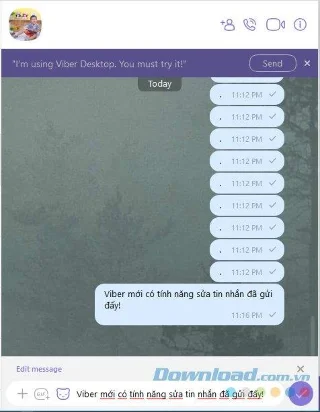
Step 3 : You will see the whole content of the message displayed in the edit box, this time, just edit the message as you like and then send as normal.


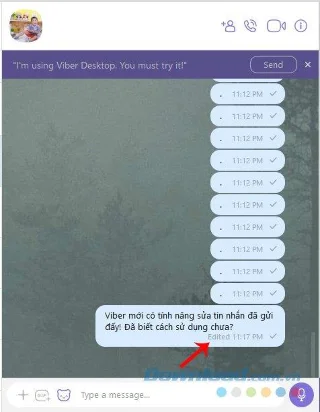
Now the new message will display instead of the original message, you can recognize it via the Edited - Edited message below the message.
Video tutorial to repair Viber messages on PC:
Edit sent Viber messages on iPhone, iPad
Viber for iOS
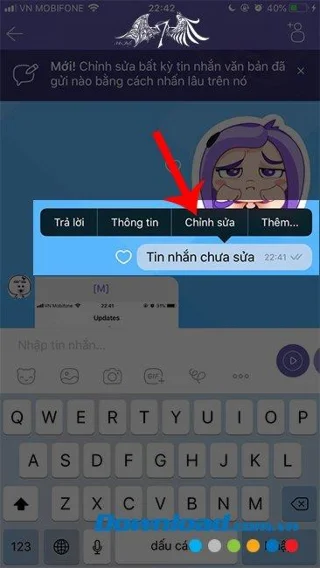
Step 1 : You also open your conversation with any one up. Here, select the message you need to edit, then:
- Touch the message, hold for about 2 seconds
- A popup with many options will appear, select Edit - Edit


Step 2 : Change the content of the selected message and then send as usual.


Edit Viber messages on iPhone, iPad:
Edit Viber messages on Android
Viber for Android
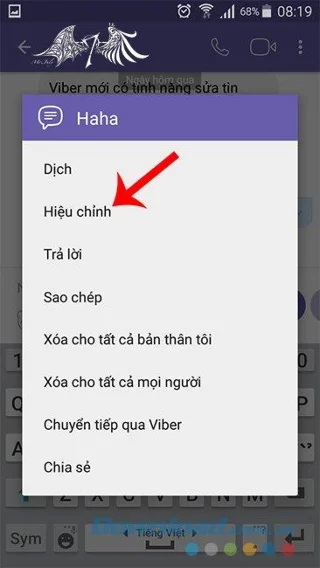
The way is similar to editing Viber messages on iOS and PC, you also open the chat and select a message to edit. Click on the message and hold for a while, when the options panel appears, touch Edit - Edit.


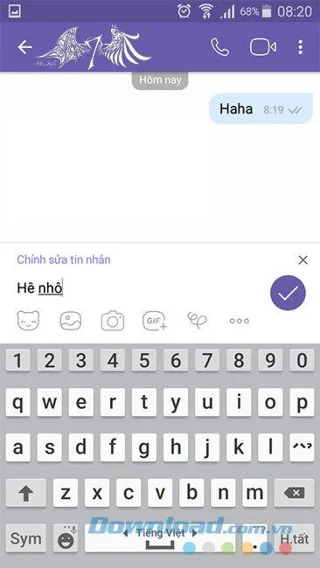
Then proceed to re-enter the new message content or correct the original message and send is done.


ATTENTION:
- To be able to use this Viber message editing feature, you need to update Viber on your device to the latest version.
- Messages after being edited and sent will still display in the exact location of the original message.
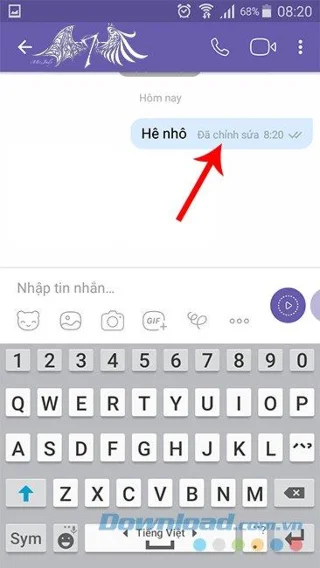
- Below the edited message, there will be the message "Edited" - Edit so that you and the chat can recognize it together.
- Viber message editing feature can be used on PC, mobile, private chat or group chat.