Home
» How to
»
How to Get Chewing Gum Out of Clothes Without Spreading the Mess
How to Get Chewing Gum Out of Clothes Without Spreading the Mess
Chewing gum is easiest to remove from clothing when you change its texture before you try to pull it away. The most dependable starting point for washable clothes is to harden the gum with ice or a freezer, lift off as much as possible without stretching the fabric, pretreat any residue, and wash according to the care label. The important part is not speed; it is knowing when the gum is ready to release and when continued scraping is more likely to damage the garment than help it.
What should you do first when gum sticks to clothing?
Do not immediately tug, rub, or smear soft gum. That can push it farther across the fabric or stretch fibers around the spot. First, look at the garment's care label and identify whether the item is normally machine washable, hand washable, or dry-clean-only. In the United States, care labels are specifically intended to tell consumers what regular care a garment can tolerate; the Federal Trade Commission's Care Labeling Rule explains those requirements.
Garment situation
Best first move
When to change course
Washable cotton, denim, or many synthetics
Harden the gum, scrape gently, pretreat, then wash as labeled.
Stop scraping if fibers begin to fuzz, stretch, or snag.
Delicate knit, embroidery, lace, or loosely woven fabric
Use ice and very gentle lifting only.
If gum is wrapped around threads rather than sitting on top, consider professional cleaning.
Dry-clean-only garment
Avoid soaking or laundering at home.
Tell the cleaner where the gum is and what, if anything, you already used on it.
A good result does not necessarily mean restoring the area to a visually perfect, factory-new appearance in one attempt. The practical goal is to remove the gum without creating a larger stain, thinning the fabric, distorting the weave, or setting residue with heat.
Should you freeze chewing gum before trying to remove it?
For most washable fabrics, yes. Cold makes soft gum firmer and less adhesive, which gives you a better chance of lifting it away in pieces instead of stretching it into a wider smear. Tide recommends placing a bag of ice over soft gum or putting a small garment in the freezer; Clorox likewise advises using enough ice to harden the gum before scraping.
Step 1: Harden the gum completely
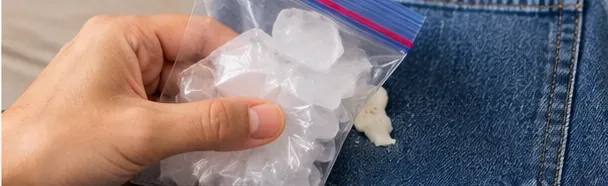
Lay the garment flat with the gum facing up. Put ice in a sealed plastic bag and hold it against the gum until the gum feels firm rather than tacky. If the garment is small and the care label presents no reason not to, you can also place it in a clean bag and put it in the freezer.
A bag of ice hardens chewing gum on denim so it can be lifted instead of smeared across the fabric.
What should you look for? Press the edge of the gum lightly. If it bends, stretches, or sticks to your finger, give it more time. If it feels firm and begins to separate at the edge, move to scraping.
When should you switch methods? If the gum repeatedly warms and softens before you can remove it, work in shorter sections and reapply ice between passes. Do not compensate by digging harder with a sharp tool.
How do you scrape hardened gum without damaging the fabric?
Step 2: Lift from the edge with a dull tool
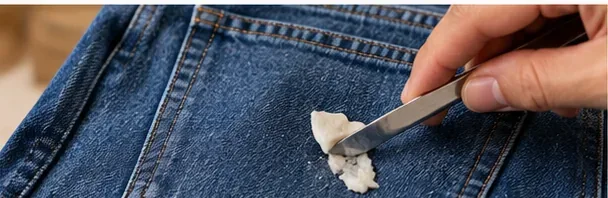
Use a plastic spoon, a dull table knife, or another smooth-edged tool. Start at an outer edge and lift a small amount at a time. Keep the tool nearly parallel to the fabric rather than stabbing downward into the weave. Tide specifically warns that pulling hard can damage fibers, while Clorox recommends gentle scraping and notes that excessive scraping can distort the fabric's appearance.
A dull edge is used almost flat against the denim to lift hardened gum without aggressively digging into the fibers.
Remove whatever comes away with light pressure. Re-freeze the spot if the gum turns soft again. A few thin traces left between fibers are preferable to damaging the garment while trying to get every last fragment mechanically.
How do you judge progress? The bulk of the gum should be gone, the fabric should still lie normally, and there should be no obvious pulled threads. A faint sticky film or discoloration can be handled in the pretreatment stage.
What if sticky residue is still woven into the fibers?
Step 3: Spot-test, then pretreat the remaining mark
Check the care label again before adding any cleaner. For a normal washable garment, apply a small amount of liquid laundry detergent to an inconspicuous area first if you are uncertain about colorfastness. If the test area shows no color transfer or damage, apply detergent to the remaining gum mark and work it in gently with your fingers or a soft-bristled toothbrush.
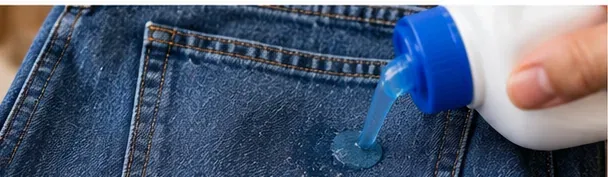
Tide's current guidance recommends spot-testing the cleaning solution and pretreating remaining residue with liquid detergent before washing. You do not need to scrub until the fabric looks brand new at this stage. The purpose of pretreatment is to loosen what remains so laundering can carry it away.
After the bulk gum is removed, a small amount of liquid laundry detergent can pretreat residue on a washable garment.
What is too much scrubbing? If the fabric starts to pill, lighten, look fuzzy, or develop stretched threads, stop. More force is not a better treatment. Let the detergent do some of the work, then launder the item according to its label.
When should you wash the garment—and when should you avoid the dryer?
Step 4: Wash as labeled, inspect, then dry
Once the solid gum is removed and the residue has been pretreated, wash the garment using the method and temperature permitted by its care label. Clorox advises using the warmest water allowed by the care label for its recommended wash treatment; Tide similarly instructs users to wash on a cycle suitable for the fabric.
The more important decision comes after washing: inspect the area before using a heated dryer. Tide cautions that drying a remaining stain can make it more difficult to remove. If the spot still feels tacky, waxy, or unusually stiff, repeat the pretreatment and wash process rather than applying dryer heat.
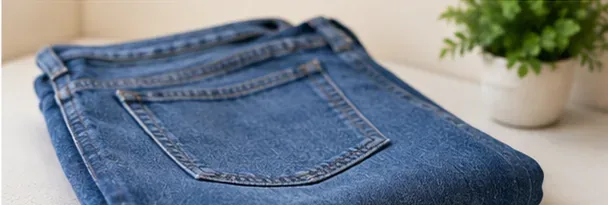
Before machine drying, confirm that the gum is gone and the treated area no longer feels sticky or stiff.
Is vinegar worth trying if detergent is not enough?
It can be an alternate method for some colorfast, washable fabrics, but it is not the first step you need for most gum spots. Tide describes warm distilled white vinegar as one option for softening remaining gum, with a colorfastness test first. That approach works differently from freezing: cold helps the bulk gum become brittle, while warm vinegar is intended to help loosen residue.
If you choose to try vinegar, do it only after checking the care label and spot-testing a hidden area. Do not mix random household cleaners together. Also keep the method focused: adding peanut butter, oils, or multiple improvised products may create a second stain that is harder to diagnose than the original gum.
What about an iron or other heat?
Tide also describes an iron-and-cardboard transfer method as an alternative for some fabrics. That does not mean heat is universally safer or better. Heat can soften gum rapidly, and a fabric that cannot tolerate the iron setting may be damaged. If you already have a straightforward cold-removal option, freezing is easier to control because it reduces stickiness instead of making the gum more fluid.
If a care label says not to iron, do not use an iron-based gum technique. If the garment is delicate, expensive, structurally unusual, or decorated with heat-sensitive trim, professional cleaning may be the lower-risk choice.
Does the fabric type change the answer?
Yes, especially when the gum is caught inside loops or textured fibers rather than sitting on a relatively flat surface.
Denim and sturdy cotton: These usually tolerate careful scraping better than delicate fabrics, but aggressive metal scraping can still abrade the surface.
Polyester and other washable synthetics: Freezing and gentle lifting are sensible starting points. Follow the temperature limits on the care label when washing or drying.
Knits and embroidery: Work slowly. Do not hook the tool under yarns or decorative threads. If gum is deeply wrapped around them, repeated scraping may do more harm than leaving the final work to a cleaner.
Wool, silk, suede, or dry-clean-only pieces: Treat the care label as the controlling instruction. Clorox specifically advises taking dry-clean-only suede to a dry cleaner rather than proceeding with home laundering.
How can you tell the chewing gum is actually gone?
Do not rely only on color. Gum residue can be hard to see on dark fabric. Check the area in good light and run clean fingertips over it once the garment is cool and dry enough to inspect. The treated spot should not feel tacky, rubbery, greasy, or noticeably stiffer than the surrounding cloth.
If the garment passes those checks, finish drying it exactly as the care label allows. If not, repeat the least aggressive effective step: re-freeze any remaining solid gum, or pretreat a thin residue again. Repeating a controlled process is usually safer than suddenly escalating to a stronger solvent or sharper scraper.
When should you stop trying at home?
Change course when the cleaning process starts threatening the garment. Stop if color transfers during a spot test, fibers begin to fray, the fabric stretches out of shape, a coating or print starts lifting, or the care label excludes the treatment you were considering. Professional cleaning is also sensible for high-value clothing, formalwear, delicate trims, and gum that is deeply embedded in textured fibers.
The most successful gum removal is not the attempt that uses the strongest product. It is the one that removes the gum while leaving the fabric, color, shape, and finish intact.