Home
» How to
»
How to Get Deodorant Off a Black Shirt: Quick Fixes and Deep-Clean Methods
How to Get Deodorant Off a Black Shirt: Quick Fixes and Deep-Clean Methods
White deodorant streaks are especially obvious on a black shirt, but not every mark needs a full wash. A fresh transfer from a deodorant stick can often be lifted with a dry towel, clean sock, or similar soft fabric. A chalky underarm patch that has built up over repeated wears usually needs pretreating and laundering.
The practical rule is simple: start with the least aggressive method that fits the stain, check the garment care label before adding water or a cleaning product, and do not put the shirt in the dryer until you know the mark is gone. Current guidance from Tide, Persil, and Whirlpool all emphasize pretreating, following the care label, and checking the stain before heat drying.
Quick reference: which method should you use?
What you see
Best first move
When to escalate
Fresh white streak from getting dressed
Rub gently with a dry towel, clean sock, or nylon fabric.
If residue remains, rinse and pretreat before washing.
Powdery or waxy underarm residue
Brush off excess, rinse, then pretreat with laundry detergent.
Repeat the pretreatment if the mark remains after washing.
Hard, crusty buildup
Test a vinegar treatment on a hidden area, then soak or pretreat if the fabric allows.
Use a second cleaning cycle rather than drying a visible stain.
Delicate, dry-clean-only, or color-unstable fabric
Follow the care label instead of a general home remedy.
Use a professional cleaner when the label or fabric requires it.
Fastest fix for a fresh white deodorant mark
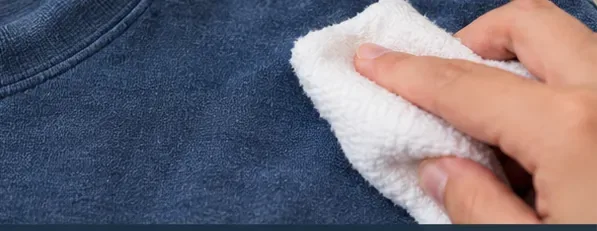
If the shirt is otherwise clean and the deodorant transferred while you were pulling it on, try a dry method first. Persil recommends rubbing colored clothing with nylon stockings, a dry towel, or a clean sock to lift marks left by a deodorant stick. Keep the pressure light and work from the edge of the mark inward so you do not spread powder across a larger area.
Avoid immediately wetting a simple surface streak unless the dry method fails. Water can turn a quick wardrobe fix into a damp patch that needs time to dry.
How to remove deodorant buildup from a black shirt
1. Identify whether the mark is transfer or buildup
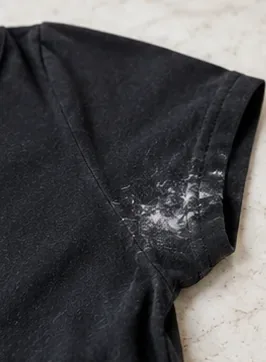
Look closely at the underarm area in good light. Fresh transfer usually sits on top of the fabric as a bright white streak. Older buildup may look gray-white, waxy, stiff, or crusty and can extend through the inside and outside of the fabric. Check the shirt's care label before moving beyond a dry wipe.
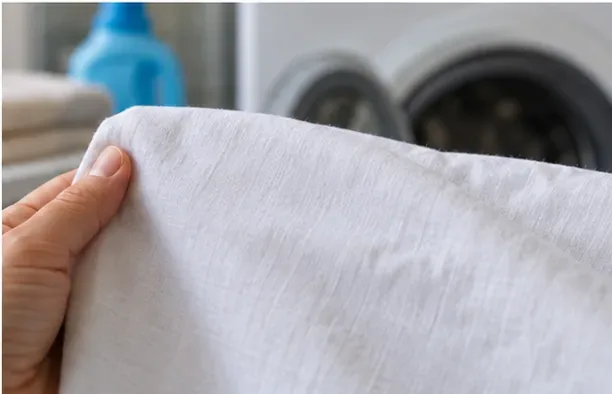
A chalky white patch around the underarm seam usually needs more than a quick surface wipe.
2. Remove loose residue before adding liquid
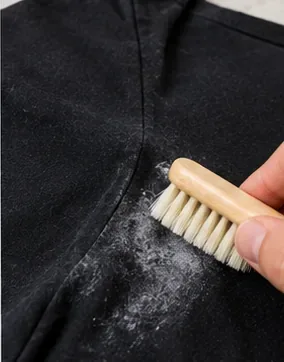
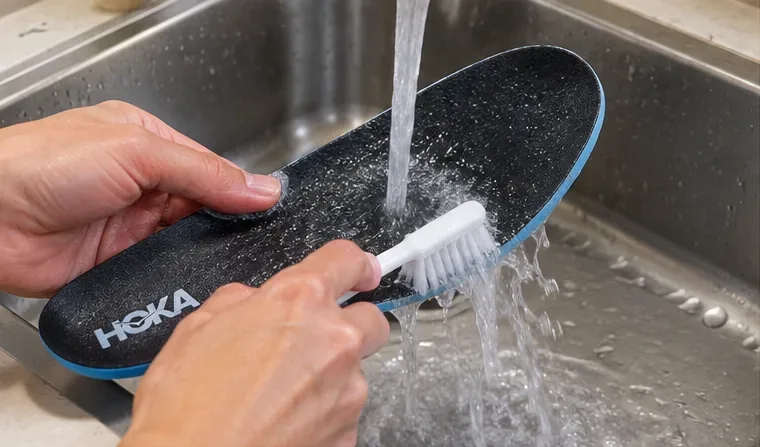
Gently brush away dry excess with a soft-bristled clothes brush or toothbrush. Tide's stain-removal guidance begins by removing excess deodorant before rinsing. Do not scrape with a knife, abrasive pad, or hard brush; those can roughen the surface of dark fabric and make the cleaned area look lighter than the rest of the shirt.
Use a soft brush to loosen dry deodorant without scuffing the black fabric.
3. Pretreat with a small amount of laundry detergent
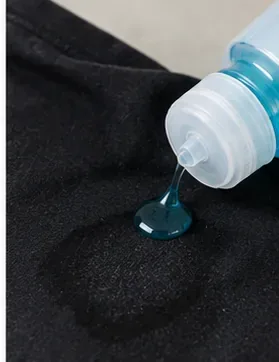
For a washable black shirt, liquid laundry detergent is a straightforward pretreatment because it is designed to be rinsed from clothing. Apply a small amount directly to the affected fibers and follow the product directions. Tide also provides a brand-specific oxygen-detergent paste method for deodorant stains on black clothing; if you use a specialty product, follow its label rather than improvising the concentration.
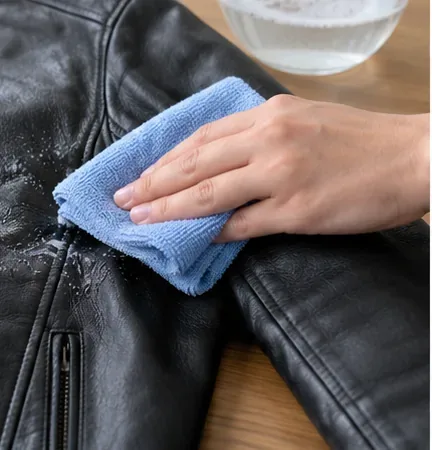
Before any new cleaner touches a favorite black shirt, test it on an inside seam or another hidden area and let that spot dry. This is especially important with dark dyes, printed graphics, stretch blends, wool, silk, and other fabrics with special care requirements.
Apply only enough liquid laundry detergent to wet the deodorant-stained fibers before gently working it in.
4. Work the pretreatment in gently
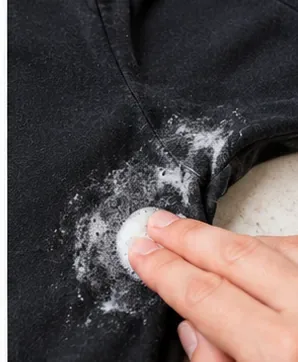
Use your fingertips or a soft-bristled toothbrush to distribute the detergent through the stained area. You are trying to loosen residue, not scrub the fabric white. Tide recommends a soft-bristled toothbrush for its pretreatment method, and Persil similarly advises gentle rubbing when applying detergent.
Give the pretreatment the contact time specified by the detergent maker. More time is not automatically better, particularly on dark or delicate materials.
Work the pretreatment through the stained fibers with light pressure instead of aggressive scrubbing.
5. For stubborn buildup, consider a tested vinegar treatment
If detergent alone is not enough and the care label permits wet cleaning, white vinegar is one manufacturer-published option. Persil advises soaking a deodorant stain in white vinegar for about an hour before brushing and washing. Whirlpool gives a more diluted recipe: four cups of warm water mixed with one cup of white vinegar, with a hidden-area test before treating the stain.
Those are different methods from different sources, so do not combine them into a stronger homemade formula. Pick one published approach, spot-test first, and rinse as directed. For a valuable or delicate black shirt, it is reasonable to skip vinegar and stay with the garment maker's care instructions.
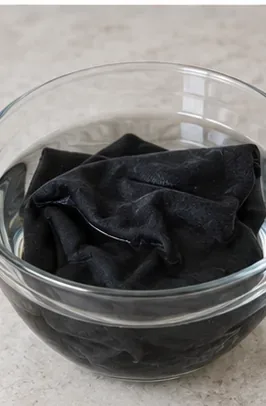
An optional soak can help stubborn buildup, but only when the care label and a hidden-area test indicate the fabric can handle it.
6. Wash according to the care label
After pretreatment, wash the shirt using the cycle, detergent, and maximum water temperature permitted by its care label. Tide recommends the hottest temperature the garment can safely take; that does not mean choosing hot water automatically. A black cotton tee may have different limits from a black athletic shirt with elastane or a dark wool knit.
Wash dark clothing with similar colors, and use the correct detergent dose. Extra detergent is not a shortcut for underarm buildup; if it fails to rinse away, it can leave its own residue.
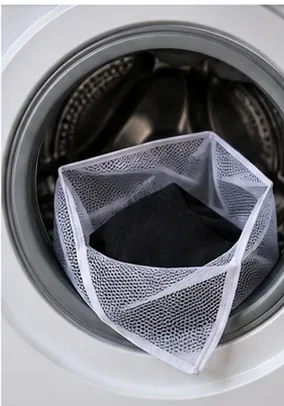
Wash the pretreated black shirt on the cycle and water temperature specified by its care label; a mesh bag is optional for garments that benefit from gentler handling.
7. Air-dry first and inspect the underarm area
Before using a clothes dryer, inspect the shirt while it is clean and damp, then again after air-drying if the mark is difficult to judge on wet fabric. Tide warns that drying can set a remaining deodorant stain and make it harder to remove. Whirlpool likewise recommends air-drying stain-treated garments first and repeating treatment as needed.
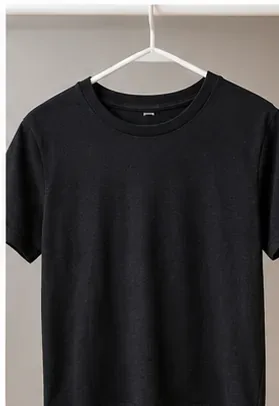
Air-dry the shirt first so you can confirm the deodorant mark is gone before exposing the fabric to dryer heat.
8. Repeat only the treatment that is still needed
If a faint mark remains, repeat the detergent pretreatment rather than stacking multiple cleaners at once. If the shirt is clean and the fabric has returned to its normal hand and color, normal care can resume. Persistent stiffness or discoloration may be a combination of deodorant, antiperspirant ingredients, sweat, body oils, and repeated heat exposure, so more than one wash may be required.
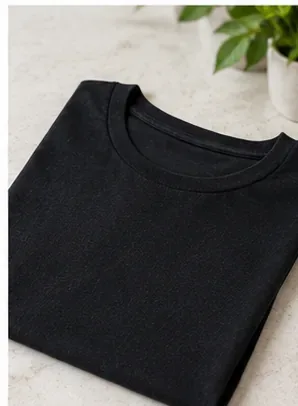
The finished black shirt should be free of chalky white residue without a bleached-looking patch where the stain was treated.
What should you avoid on a black shirt?
Hydrogen peroxide unless the product and garment instructions specifically allow it. Whirlpool notes that hydrogen peroxide can discolor darker clothing and recommends its peroxide method only for white items.
Lemon-and-sun treatments. Persil describes lemon juice plus sunlight as having a natural bleaching effect and recommends that approach for light clothing, not as the default for black shirts.
Chlorine bleach. It can permanently strip or shift dark dye. Use only products explicitly labeled as safe for the garment and color.
Abrasive scrubbing. Even if the residue disappears, a scuffed patch on black fabric can remain visible.
Dryer heat before checking. If residue remains, repeat treatment first.
Mixing household chemicals. Do not combine stain removers, bleach, acids, or other cleaners unless the product directions explicitly instruct you to do so.
Why do deodorant marks look so obvious on black fabric?
Many deodorants and antiperspirants can leave light-colored solids or waxy residue on fibers. On black fabric, that residue creates maximum visual contrast. Underarm buildup can become more stubborn because it is not just a single swipe of deodorant: repeated applications can mix with sweat, skin oils, detergent residue, and heat over time.
That is why a fresh streak often wipes away dry while an older patch feels stiff and survives a normal wash. The cleaning method should match the type of mark rather than treating every white underarm spot the same way.
Prevention checklist for black shirts
Apply only the amount of deodorant or antiperspirant you actually need.
Let the product dry before pulling on a black shirt; Persil specifically recommends this to reduce transfer.
Put fitted shirts on carefully so the underarm area does not drag over fresh product.
Wash shirts before residue becomes thick and stiff.
Use the correct detergent dose and rinse thoroughly.
Keep high heat away from a stain that has not fully come out.
Bottom line
For a fresh white deodorant streak on a black shirt, start dry: a clean sock, dry towel, or nylon fabric may be enough. For a chalky or crusty underarm stain, brush off loose residue, pretreat with a suitable laundry detergent, wash according to the care label, and air-dry before checking the result. A spot-tested vinegar treatment can be useful for stubborn buildup when the fabric allows it. Avoid peroxide and bleaching-style remedies on dark clothing unless the product maker and garment label clearly say they are safe.