Home
» How to
»
How to Get Fabric Glue Off Clothes Without Making the Stain Worse
How to Get Fabric Glue Off Clothes Without Making the Stain Worse
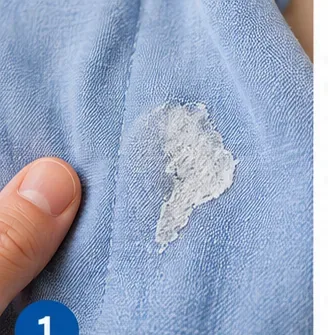
A drop of fabric glue on a shirt or pair of jeans can look deceptively simple: it dries clear or white, turns stiff, and then refuses to lift in the wash. The reason is that “fabric glue” covers several different adhesive chemistries. Some water-based formulas are easy to rinse while still wet, while permanent fabric adhesives are specifically designed to survive laundering after they cure.
The safest approach is to start with the least aggressive method that matches the glue you actually spilled. If the glue is still wet and the manufacturer says it is water-based, rinse or clean it now. If it has already dried, remove the surface buildup gently before soaking or pretreating. Use acetone, rubbing alcohol, or another solvent only when the adhesive maker recommends that type of solvent and the garment can tolerate it.
This distinction matters. Aleene's current FAQ says its water-based fabric glues can be rinsed or washed out easily while still wet, while certain solvent-based fabric glues may require a solvent such as acetone. The same company describes Fabric Fusion as a permanent adhesive once cured. Gorilla Fabric Glue is likewise sold as a permanent, waterproof bond intended to remain flexible after washing. In other words, a fresh spill and a fully cured bond are not equally removable.
First: is the fabric glue still wet or already cured?
If you know the exact adhesive, read its bottle or official product page before doing anything else. For a fresh, water-based glue spill, delaying treatment can turn an easy water cleanup into a much harder removal job. Aleene's official fabric-glue FAQ states that water-based products such as Fabric Fusion and Permanent Fabric Glue can wash out with a water rinse or wash cycle while the glue is still wet. Its Fabric Fusion product instructions also specify water cleanup while wet.
If the glue is already drying or you cannot identify it, avoid vigorous rubbing. Rubbing semi-dry adhesive can spread it into a larger area and push it deeper into the weave. Let the surface firm enough to lift cleanly, then proceed from mechanical removal to washing and, only if necessary, compatible solvents.
Situation
Best first move
What to avoid
Known water-based fabric glue, still wet
Remove excess and rinse with water according to the glue instructions
Waiting for it to cure or rubbing it deeper into the fabric
Dried surface layer on a washable garment
Gently scrape or lift excess with a dull edge
Sharp blades, aggressive picking, or stretching the weave
Unknown adhesive or persistent residue
Cold-water soak or laundry pretreatment, then reassess
Jumping immediately to acetone or other strong solvent
Known solvent-based glue
Use only the solvent and method recommended by the adhesive maker after a fabric compatibility test
Assuming every solvent is safe on every fiber or dye
Fully cured permanent fabric adhesive
Try conservative removal, but accept that complete removal may not be possible
Damaging the garment in pursuit of a perfect result
Identify the adhesive and check the garment care label before treatment. A fresh water-based fabric glue is handled differently from a cured permanent adhesive.
Step 1: remove excess glue without damaging the fibers
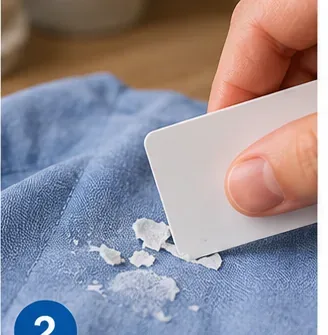
For dried glue sitting on top of the fabric, flex the garment gently and lift off loose flakes with your fingers or the edge of a plastic card, spoon, or dull butter knife. Work from the outside of the patch toward the center. Do not saw back and forth with a sharp blade.
The American Cleaning Institute's current stain-removal guide recommends hardening adhesive residue with ice or cold water, scraping with a dull knife, pretreating, rinsing, and laundering. That general sequence is useful for dried residue because it removes as much solid material as possible before chemicals are introduced.
Stop scraping when the remaining material is embedded in the weave rather than sitting above it. At that point more force is more likely to fuzz the fabric than remove the glue.
For glue that has dried on the surface, lift away what you can with a dull edge instead of digging into the fibers.
Step 2: try water and laundry pretreatment before a strong solvent
For a washable garment with dried residue, soak the stained area in cool water for several minutes and gently work at any glue that softens. Then apply a prewash stain remover or a small amount of liquid laundry detergent, following the product directions and the garment care label.
This is the lowest-risk next step when the glue type is uncertain. The American Cleaning Institute recommends pretreatment after excess adhesive is removed, followed by rinsing and laundering. It also advises treating stains promptly and repeating treatment rather than machine-drying a garment while the stain remains.
If you know the spill was a water-based fabric glue and it has not fully cured, water may be enough. If nothing changes after soaking and pretreatment, that is a sign to identify the adhesive more precisely before escalating.
Step 3: when should you use rubbing alcohol or acetone?
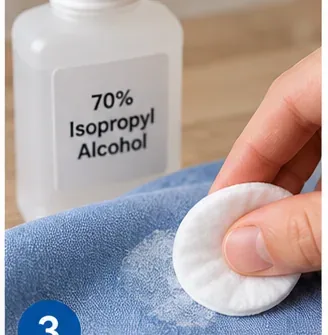
Use a solvent only when you have a reason to believe it matches the adhesive. Aleene's FAQ says solvent-based fabric glues may require acetone for removal while the glue is wet, and its general cleanup guidance lists acetone, high-strength rubbing alcohol, or mineral spirits as possible options for solvent-based adhesives. Those are manufacturer-specific suggestions, not a blanket rule for every garment.
Before treating the visible stain, test the solvent on an inside seam or other hidden area. Let the test spot dry and check for color loss, texture change, stiffness, shine, or fiber damage. If anything changes, stop.
Fiber content matters. The University of Georgia Cooperative Extension's textile-care solvent reference says acetone should not be used on acetate fabrics. It also warns that rubbing alcohol can damage acetate, triacetate, modacrylic, and acrylic fibers and can fade some dyes. Solvents are flammable, so use them with good ventilation and away from flames or heat.
For dry-clean-only garments, silk, vintage clothing, highly structured pieces, or any fabric whose fiber content is unclear, professional cleaning is a safer escalation than home solvent experiments.
A solvent is an escalation step, not the default. Use rubbing alcohol or acetone only when the adhesive maker recommends a compatible solvent and a hidden-area test passes.
Step 4: work softened residue gently
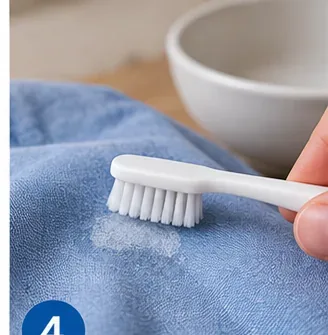
If a tested treatment begins to soften the glue, blot it with a clean white cloth or cotton pad. Replace or rotate the cloth as adhesive transfers so you do not spread it back onto the garment. On sturdy cotton or denim, a very soft brush may help loosen residue after it has softened, but brushing is optional—not a requirement.
Stop if you see color on the cloth, pilling, broken threads, a shiny patch, or distortion of the weave. A faint remaining adhesive mark is easier to live with than a permanently abraded spot.
On sturdy washable fabric, gentle mechanical action can help loosen softened residue; stop if the weave pills, color transfers, or fibers begin to distort.
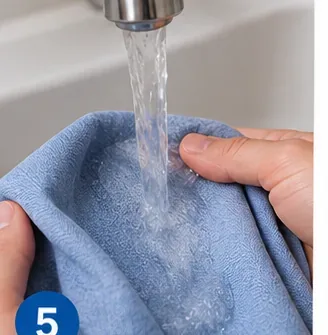
Step 5: rinse out the treatment
Once no more adhesive is transferring, rinse the treated area thoroughly using water that is safe for the garment. The purpose is to remove loosened glue, laundry pretreatment, and any compatible solvent residue before the main wash.
If you used a flammable solvent, allow it to evaporate fully in a ventilated area and follow the solvent label before putting the garment into a washer or dryer. Never combine cleaning chemicals in an attempt to make them “stronger.”
Rinse treated residue thoroughly before laundering, following the garment label and the adhesive manufacturer's cleanup guidance.
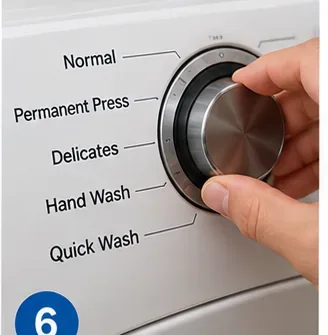
Step 6: launder according to the garment care label
Wash the garment with regular laundry detergent using the warmest water and cycle allowed by its care label. The American Cleaning Institute recommends laundering adhesive stains after pretreatment and rinsing. A normal wash can remove softened glue fragments and treatment residue, but it is not a guarantee against cured permanent fabric adhesive.
If the glue itself was intended to become wash-resistant, ordinary laundering may have little effect after cure. Aleene's Fabric Fusion is marketed as permanent and washable after curing, while Gorilla Fabric Glue is described by the manufacturer as a permanent, waterproof bond that remains flexible after washing. If a permanent adhesive has fully cured deep in the fibers, complete removal may require more damage than the garment can tolerate.
Launder only after excess glue and treatment residue have been removed, using the warmest water and cycle that are safe for the garment.
Step 7: air-dry before deciding the stain is gone
Do not move straight from the washer to a heated dryer. Air-dry the garment and inspect the area in bright light. Heat can make some remaining residues harder to address, and a damp fabric can hide clear adhesive films that become obvious only after drying.
Feel the area as well as looking at it. If the fabric looks normal but still feels rigid, rubbery, or coated, some adhesive is probably still present. Repeat the least aggressive treatment that previously helped rather than jumping to a stronger solvent.
Air-dry first and inspect the area in good light. Avoid the dryer until you are satisfied the stain is gone.
Step 8: know when another round is worthwhile—and when to stop
A second round makes sense if the stain is clearly smaller, softer, or lighter after the first treatment. Repeat scraping, soaking, pretreatment, or the tested adhesive-specific solvent rather than mixing methods randomly.
Stop home treatment when the fabric begins to lose color, the weave is weakening, the adhesive is not changing at all, or the garment is valuable enough that further experimentation is not worth the risk. Fully cured permanent fabric glue may leave a shadow, stiff patch, or bonded fibers even after careful treatment. In that situation, a professional cleaner can evaluate whether further solvent work is realistic.
A successful result is clean, flexible fabric without a hard adhesive film, discoloration, or weakened fibers. Persistent cured permanent glue may require professional care or may not be fully removable.
What about fresh fabric glue that has not dried yet?
This is the easiest case if the adhesive is water-based. Lift off the bulk of the glue with a spoon or clean cloth without smearing it, then follow the manufacturer's wet-cleanup instructions immediately. Aleene's says its water-based fabric glues can rinse or wash out while wet. For heat-activated adhesive, follow the specific product instructions before any heat-setting step because heat is what makes the bond permanent.
If the glue is solvent-based, do not assume water will remove it. Identify the product and follow its cleanup instructions. Aleene's, for example, recommends an appropriate solvent for certain solvent-based fabric glues while wet. Always test the solvent against the garment first.
Can freezing help with dried glue?
It can help with some adhesive residues because cold makes the surface harder and easier to scrape. The American Cleaning Institute recommends ice or cold water to harden adhesive stains before scraping. Put ice in a sealed bag so you do not unnecessarily soak a dry-clean-only garment, and use a dull edge once the glue firms up.
Freezing does not chemically dissolve a cured fabric adhesive. It is simply a mechanical aid that can help remove the raised portion before other treatment.
Can you use nail-polish remover?
Only with caution. Many nail-polish removers contain acetone, but they can also contain dyes, oils, fragrances, or conditioners that leave another stain. If the adhesive manufacturer specifically calls for acetone, pure acetone gives you more predictable chemistry than a cosmetic product—but it still must be compatible with the garment.
Do not use acetone on acetate fabric. If the fiber content is unknown, or if the care label says dry clean only, do not experiment on the visible area.
How to check the result before you finish
The glue patch is no longer raised above the fabric.
The area does not feel hard, rubbery, or tacky after it is completely dry.
No dye transferred during treatment and there is no lighter ring around the former stain.
The weave, knit, or nap has not been scraped thin or fuzzy.
The garment has been rinsed and washed according to its care label.
You have air-dried and inspected it before using dryer heat.
If all six checks pass, the garment is ready for normal care. If the glue is gone but the fabric is slightly flattened, gentle steaming or brushing may restore texture if the garment label allows it. If a hard permanent patch remains after repeated safe treatment, further home chemistry is unlikely to be worth the risk.