Home
» How to
»
How to Get Gum Off Jeans Without Damaging the Denim
How to Get Gum Off Jeans Without Damaging the Denim
As of September 2026, there is no meaningful new change in the basic advice for removing chewing gum from jeans. Current guidance from clothing-care and laundry manufacturers still points to the same low-risk sequence: harden the gum, lift it away gently, treat any residue, wash according to the care label, and inspect the spot before using heat. That is useful news because it means you do not need a trendy solvent or a complicated hack to deal with most gum-on-denim accidents.
The most dependable starting point is cold. Clorox's current gum-removal guidance recommends hardening gum with ice before scraping it away, while Whirlpool's current fabric-care guide likewise starts with ice or freezing and warns against sharp scraping tools. For jeans specifically, the care label still takes priority over any general stain-removal advice.
What you are trying to achieve
A good result is not simply “the gum looks gone.” You want the denim fibers to feel normal, the treated area to be free of sticky residue, and the color and surface texture to look unchanged once the fabric is dry. If the spot is still tacky, shiny, stiff, or visibly darker after cleaning, the job is not finished yet.
The method below is designed for ordinary washable denim. Raw denim, coated denim, heavily embellished jeans, vintage garments, and jeans labeled dry-clean-only may need a more conservative approach. When in doubt, stop after gently removing the bulk of the gum and ask a professional cleaner.
What you will need
Ice cubes and a resealable plastic bag, or access to a freezer
A dull spoon, plastic scraper, or the rounded edge of a butter knife
Liquid laundry detergent
A soft toothbrush or soft cloth
Clean water and a towel
Avoid razor blades, utility knives, or aggressive metal scrapers. They can cut or fuzz denim fibers even when the gum itself comes off quickly.
How to get gum off jeans step by step
1. Read the care label before treating the spot
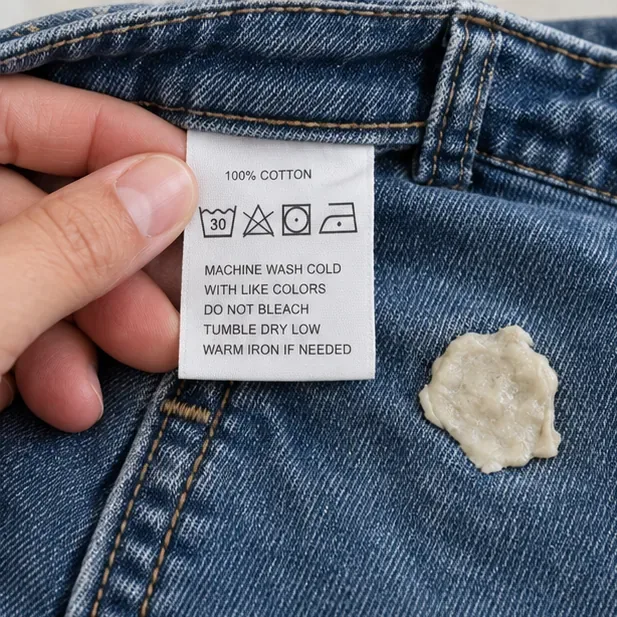
Check the jeans' care label before you use detergent, warm water, alcohol, vinegar, or any stain remover. Different denim finishes and stretch blends can react differently to cleaning products. If you plan to use anything beyond mild laundry detergent, spot-test it on an inside seam first.
Check the jeans' care label first so the stain treatment and wash method do not conflict with the garment's instructions.
For everyday denim care, Levi's current denim-care guidance recommends cold water, a gentle cycle, mild detergent, and air drying when possible to help preserve fit and color. Your own label, however, is the final authority for your jeans.
2. Harden the gum with ice
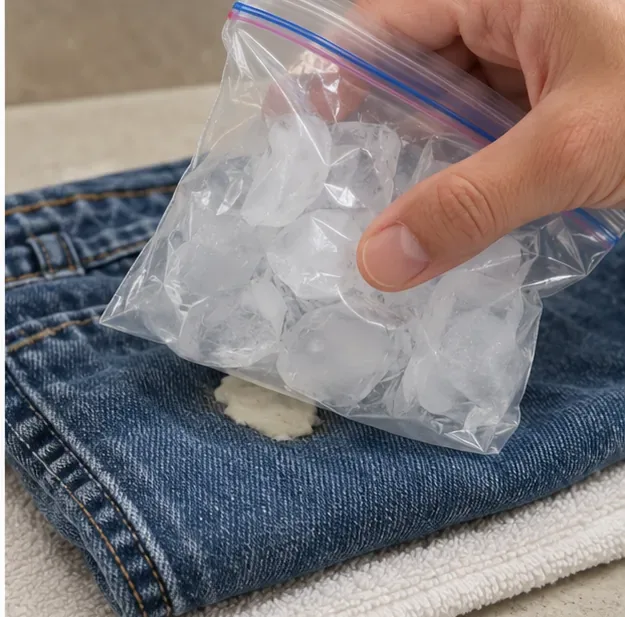
Put ice in a sealed bag and press it against the gum until the gum becomes firm rather than stretchy. Whirlpool recommends about 10 to 15 minutes when using ice. If the gum is large or deeply mashed into the weave, you can put the jeans in a plastic bag and place them in the freezer instead. Keep the gum facing outward so it does not stick to another part of the garment.
Chilling the gum makes it firmer and less elastic, which gives you a better chance of lifting it without pulling denim fibers.
Move on only when the gum feels hard. If it bends and smears when touched, keep chilling it.
3. Scrape from the outside toward the center
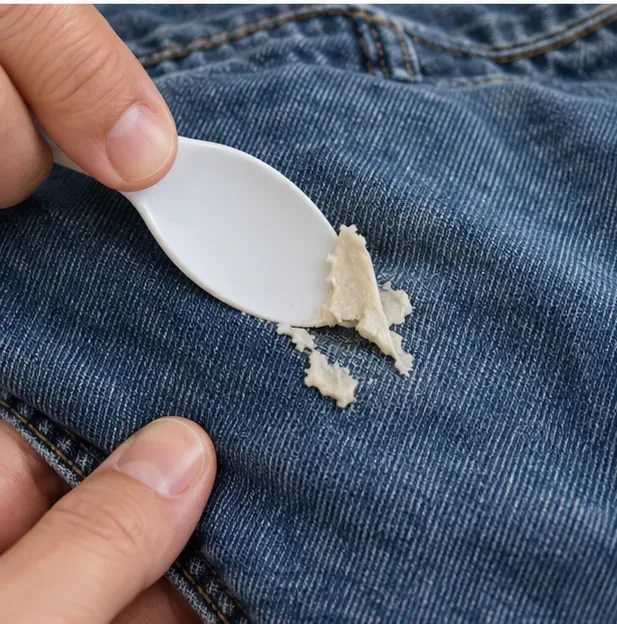
Use a spoon or another dull edge to lift the hardened gum. Work in short strokes and avoid digging into the weave. If the gum softens while you work, stop and apply more ice. Pulling warm gum can stretch it into a wider area and force it between the yarns.
Use a dull edge and light pressure to lift hardened gum without cutting or roughening the denim surface.
The goal here is to remove the bulk, not to make the fabric perfectly clean in one pass. A thin residue is easier to treat safely than a large sticky mass.
4. Treat the residue with liquid laundry detergent
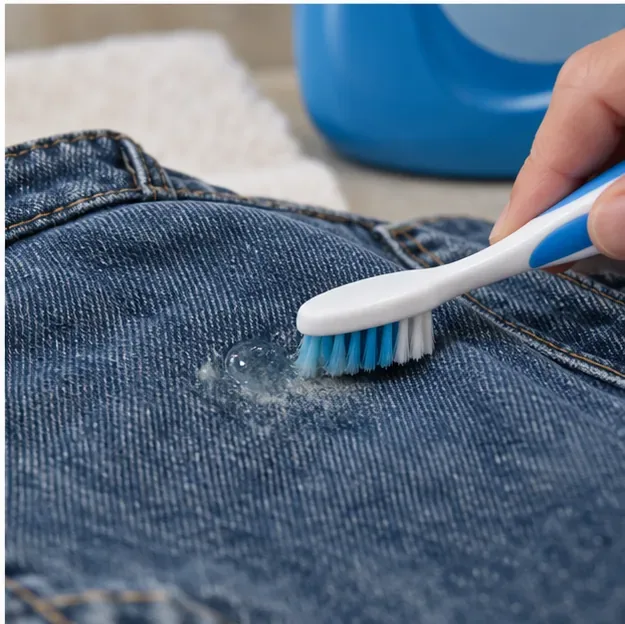
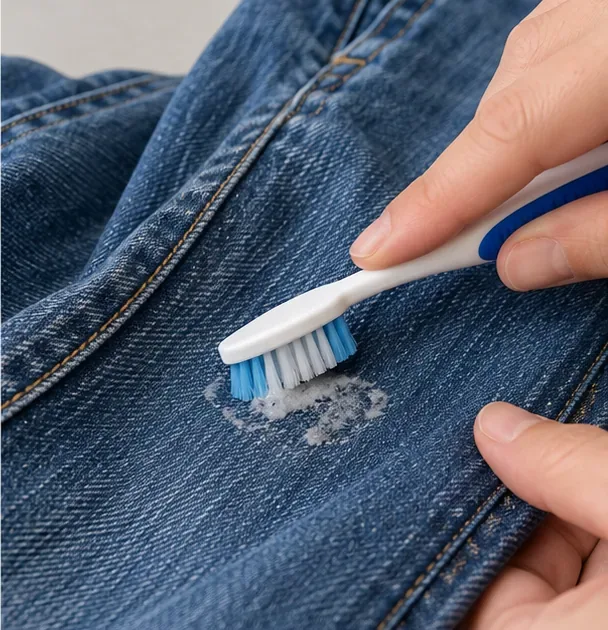
Once the solid gum is gone, apply a small amount of liquid laundry detergent to the remaining residue. Gently work it with a soft toothbrush or your fingers. Whirlpool specifically recommends liquid detergent and a soft toothbrush for stubborn residue. Do not scrub aggressively; repeated light passes are safer than one hard pass.
Work a small amount of liquid laundry detergent into the remaining residue with a soft brush rather than scraping harder.
If the spot begins to look fuzzy or lighter than the surrounding denim, stop brushing. That is a sign that the treatment is becoming harder on the fabric than on the residue.
5. Apply detergent from the reverse side if residue remains
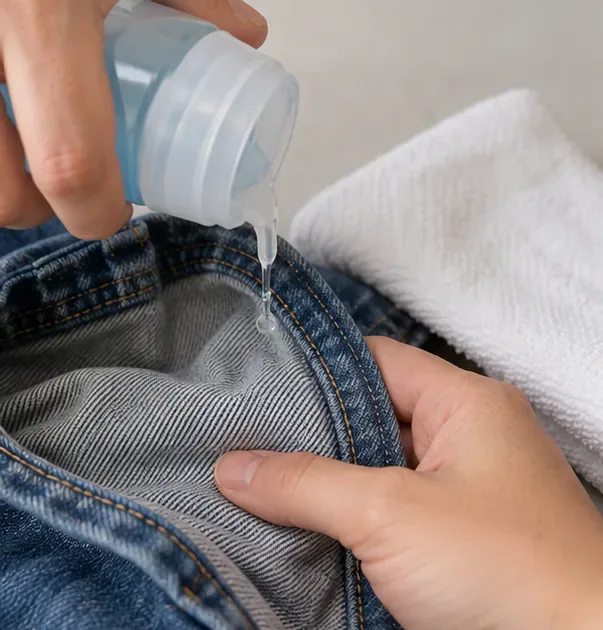
For gum that has been pressed deeply into the denim, turn the jeans inside out and work a little detergent into the back of the affected area. This can help loosen residue from the opposite side instead of forcing it farther into the face of the fabric. Use only enough detergent to wet the small area.
Applying detergent from the reverse side can help loosen residue that is lodged between the denim yarns.
Rinse or blot away excess product before laundering. The fabric should not feel saturated with concentrated detergent.
6. Make a second gentle pass if needed
Inspect the surface under good light. If you can still feel a sticky patch, use the soft brush again with light pressure. Do not switch immediately to stronger solvents just because a trace remains. Often a second cold-and-detergent pass is enough.
A second gentle brushing pass is preferable to using a sharp tool or heavy pressure on the denim.
For a genuinely stubborn residue, some manufacturer guides also describe vinegar or rubbing alcohol. Those are not universal denim treatments. Whirlpool advises spot testing and notes that alcohol-containing products should be thoroughly rinsed before the garment goes into a washer or dryer. If your jeans contain stretch fibers, coatings, prints, or special finishes, staying with mild detergent is the safer default.
7. Wash according to the care label
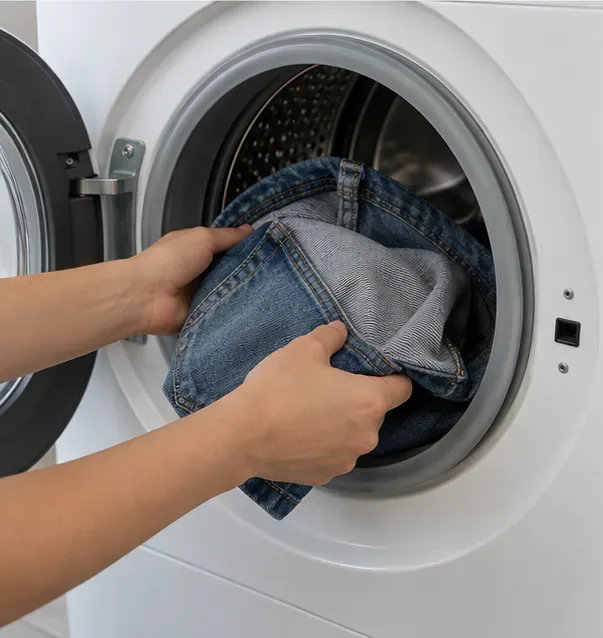
When the gum and obvious residue are gone, launder the jeans according to the care label. Tide's current gum-removal guidance also says to follow the garment label and to repeat treatment if a stain remains before drying. If the jeans are dark, washing inside out can help limit visible abrasion and fading.
Wash only after the gum itself has been removed, using the cycle and water temperature allowed by the care label.
Do not assume hotter water is automatically better. For many jeans, especially dark or stretch denim, cold water is the more conservative choice unless the label says otherwise.
8. Inspect before heat drying
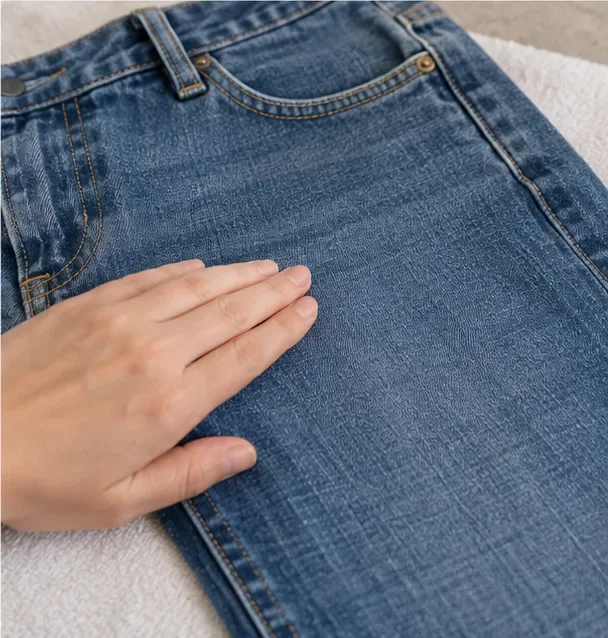
After washing, examine the area while the jeans are still damp and again after air drying. Run your fingertips over the spot. It should feel like the surrounding denim, with no tackiness or waxy patch. Whirlpool and Tide both caution against putting a still-stained garment into the dryer because heat can make residue more difficult to remove.
Inspect the cleaned denim before using dryer heat; repeat treatment if the area still feels sticky or looks stained.
Air drying is especially useful at this stage because it lets you evaluate the result without committing the remaining residue to heat. Levi's also recommends air drying denim when practical to help reduce shrinkage and fading.
When the ice method is enough—and when to change methods
Stay with the ice-and-detergent method if the gum hardens well, lifts in pieces, and leaves only a light film. It is simple, inexpensive, and relatively gentle on ordinary denim.
Consider a different approach only when the gum remains embedded after repeated chilling and gentle scraping. At that point, you can evaluate a fabric-safe stain remover or another treatment permitted by the jeans' care instructions. Always spot-test first. A method that removes residue quickly but strips dye, damages stretch fibers, or changes the finish is not a successful result.
Professional cleaning is the better option if the jeans are expensive, vintage, coated, decorated with leather or glued trims, labeled dry-clean-only, or already showing dye transfer during spot testing.
What not to do
Do not pull soft gum. It stretches and can spread deeper into the weave.
Do not use a sharp blade. Denim is sturdy, but individual yarns can still be cut.
Do not pour strong solvents on the spot without testing. Color loss can be harder to fix than the gum.
Do not dry the jeans with visible or sticky residue remaining. Inspect first and repeat treatment if needed.
Do not ignore the care label. General stain advice cannot account for every dye, finish, or fiber blend.
How to know the jeans are ready to wear again
You are finished when the area is no longer sticky, no raised gum remains between the yarns, and the treated patch looks and feels consistent with the surrounding denim after drying. A faint wet-looking mark immediately after treatment may disappear as the fabric dries, so judge the final color only when the jeans are fully dry.
If the texture is clean but a visible stain remains, repeat the detergent pretreatment once more before considering a stronger product. If the color itself has changed, stop: additional scrubbing is unlikely to restore lost dye.
Bottom line
There is no major new 2026 trick that replaces the established method. For most washable jeans, the sensible sequence remains: check the label, harden the gum with ice, scrape gently, treat residue with mild detergent, wash as directed, and inspect before heat drying. That approach focuses on removing the gum while preserving the denim—which is the result that matters.