Home
» How to
»
How to Get Gum Out of Sheets Without Damaging the Fabric
How to Get Gum Out of Sheets Without Damaging the Fabric
The safest first move is to harden the gum with ice, gently lift off as much as possible with a dull edge, treat any sticky residue with liquid laundry detergent, then wash according to the sheet’s care label. Do not put the sheet in the dryer until the gum and any oily-looking residue are completely gone. Heat can make leftover gum harder to remove.
This approach works well for most washable cotton, cotton-blend, polyester, and microfiber sheets. It is also practical for a large fitted sheet because you can treat only the affected spot instead of trying to fit the whole sheet into a freezer. Manufacturer guidance from Whirlpool’s fabric-gum removal guide recommends hardening gum with ice, scraping with a dull-edged tool, treating residue, washing according to the care label, and checking again before drying.
Quick Answer: The 4-Step Method
Harden the gum with ice. Hold an ice pack or a resealable bag of ice on the spot until the gum feels firm and brittle.
Lift off the hardened gum. Use a spoon, dull butter knife, or plastic card and work slowly from the outside toward the center.
Treat the residue. Apply a small amount of liquid laundry detergent and gently work it into the sticky area with your fingers or a soft toothbrush.
Wash, inspect, then dry. Launder according to the care label. Check the area while the sheet is still wet or air-dried. If any gum remains, repeat the treatment before using a heated dryer.
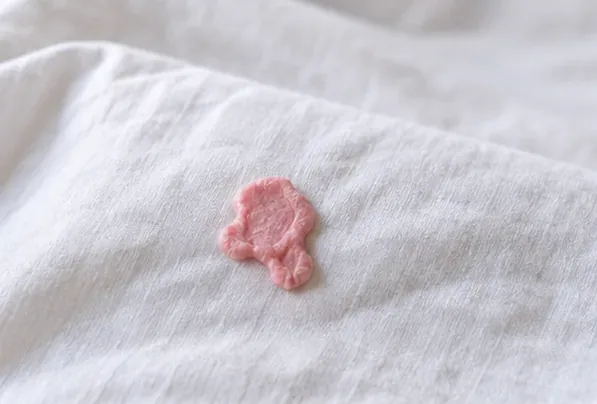
Start by locating the full gum patch and keeping the fabric flat so the sticky area does not spread to another part of the sheet.
What You Need
Ice cubes in a resealable plastic bag or a flexible ice pack
A spoon, plastic card, or another dull-edged tool
Liquid laundry detergent
A soft toothbrush or clean white cloth for residue
Paper towels or a clean towel to support the fabric while treating it
Avoid razor blades, sharp knives, stiff wire brushes, or aggressive scraping. They can snag threads, roughen the sheet surface, or create a hole that is worse than the original stain.
Step 1: Freeze the Gum Until It Turns Firm
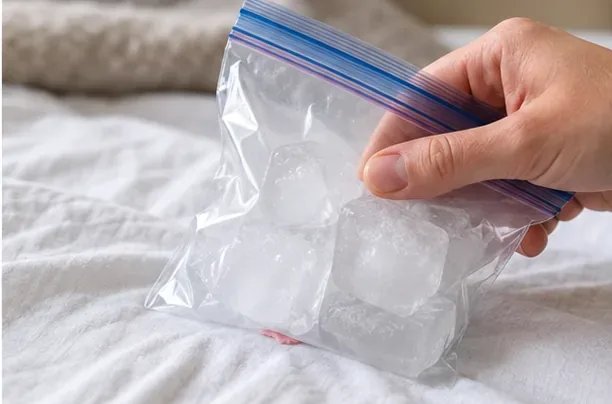
Place the affected area of the sheet on a flat surface. Put ice in a sealed bag so melting water does not soak the bed linen, then hold the bag directly against the gum. Whirlpool suggests about 10 to 15 minutes, or until the gum is hard and brittle.
The reason this works is mechanical: cold gum loses much of the soft, stretchy behavior that makes it smear into fibers. Once it is firm, you can often break or lift it away in pieces rather than spreading it.
If the gum softens while you are working, stop and reapply the ice. Do not keep scraping soft gum just to finish faster.
A sealed bag of ice chills the gum in place, making this method practical even when the sheet is too large to put in a freezer.
Step 2: Gently Scrape Away the Hardened Gum
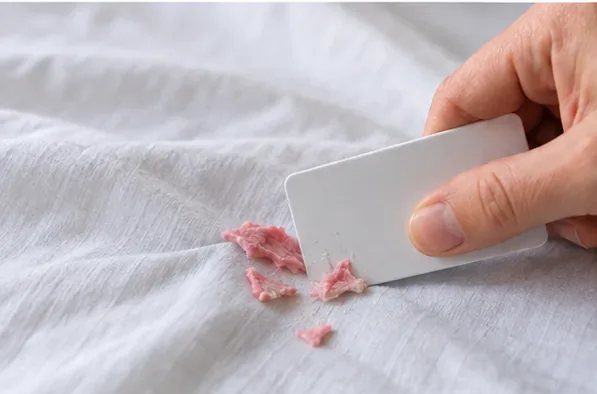
Hold the fabric steady with one hand. With the other, slide the edge of a spoon or plastic card under the hardened gum. Lift a little at a time. For a thick blob, removing the outer pieces first can make the remaining layer easier to control.
Work slowly. The goal is not to scrape the sheet clean in one pass; it is to remove the bulk without stretching or abrading the fibers. Re-chill stubborn sections as needed.
For tightly woven cotton or polyester, a plastic card is usually easy to control. For flannel, jersey, bamboo-derived rayon, or other soft knits, use especially light pressure because raised or stretchy fibers are easier to disturb.
Use a dull plastic edge to lift hardened gum in small pieces rather than dragging soft gum across the fabric.
Step 3: Treat the Sticky Residue
After the main piece is gone, you may still see a tacky film or faint mark. Apply a small amount of liquid laundry detergent directly to that area. Gently work it in with your fingers or a soft toothbrush, then let it sit briefly before washing. Whirlpool’s current guidance suggests allowing a detergent or stain-treatment product to work for roughly 10 to 15 minutes on remaining residue before laundering.
Do not automatically reach for vinegar, rubbing alcohol, or an adhesive remover. Those options can be appropriate only for some fabrics and only after checking the product label and spot-testing. Whirlpool specifically cautions that vinegar is not recommended for delicate fabrics or items containing elastic, including fitted sheets. That makes the ice-and-detergent method a better default for bedding.
What if the sheet is fitted?
Treat the fabric section exactly the same way, but keep vinegar and other acidic or solvent-based experiments away from the elasticized edge unless the manufacturer says they are safe. If the gum is on the elastic itself, use ice, very gentle lifting, and detergent first.
What if the sheet is delicate or dry-clean-only?
Stop after removing only what comes away safely. Do not improvise with alcohol, adhesive remover, or aggressive brushing. Follow the manufacturer’s care instructions or take the sheet to a professional cleaner. The Federal Trade Commission’s Care Labeling Rule explains why care instructions and warnings matter for textiles: different materials can be harmed by washing temperatures, drying methods, bleaching, or other treatments.
Step 4: Wash the Sheet and Check Before Drying
Wash the sheet using the method and water temperature allowed by its care label. There is no single “best” temperature for every sheet: cotton, polyester, linen, rayon, and specialty blends can have different limits. Use the label rather than guessing.
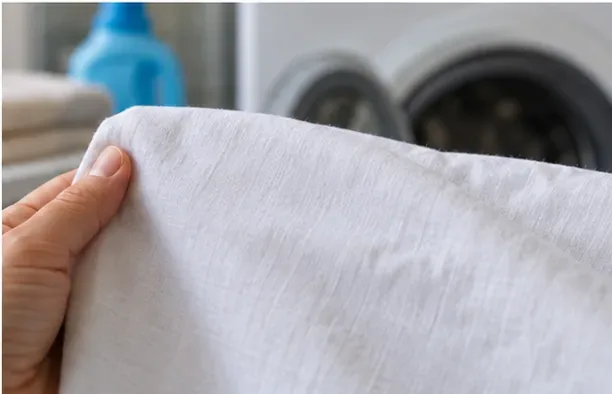
When the wash cycle finishes, inspect the exact area where the gum was stuck. Run your fingers over it. If it still feels tacky, rubbery, waxy, or stiff, do not use a heated dryer yet. Repeat the ice, gentle scraping, and detergent steps.
Inspect the treated area after washing and before tumble-drying; repeat the treatment if any sticky residue is still present.
Which Method Fits Your Situation?
Situation
Best first move
What to avoid
Fresh, soft gum on washable sheets
Ice until hard, then scrape gently
Rubbing or smearing it while soft
Dried gum
Re-harden with ice, lift in small pieces, then treat residue
Sharp scraping tools
Fitted sheet with elastic
Ice plus detergent
Vinegar on or near elastic unless the maker approves it
Delicate, stretchy, or specialty fabric
Minimal mechanical removal, then follow the care label
Solvents or vigorous brushing without testing
Residue still present after washing
Repeat treatment before drying
Heated tumble drying while residue remains
Why Not Just Use Hot Water?
Hot water is not the first choice for removing the gum itself because softened gum can become more difficult to control and may spread deeper into the weave. More importantly, the correct wash temperature depends on the sheet’s construction and care instructions. Freezing first gives you a way to remove most of the physical gum before exposing the fabric to a wash cycle.
Once the gum is gone, wash only at a temperature the care label permits. The FTC’s textile-care guidance makes clear that washing and drying temperatures are part of the manufacturer’s care instructions, so a generic “always use hot water” rule is not appropriate.
What About Peanut Butter, Oil, or Other Internet Tricks?
Greasy products can sometimes loosen sticky materials, but they also introduce a new oil stain that then has to be removed. For bed sheets, there is usually little reason to start with an oily treatment when ice and detergent offer a simpler, lower-mess path supported by manufacturer guidance.
Likewise, rubbing alcohol and adhesive removers should not be treated as universal solutions. If the basic method fails on a durable sheet, check the product label, test any treatment on a hidden area, rinse thoroughly, and make sure no solvent remains before laundering or drying.
Quick Checklist Before You Put the Sheet Back on the Bed
The visible gum is gone.
The fabric no longer feels tacky or rubbery.
No oily or discolored residue remains.
The treated area has survived washing without pilling, stretching, or color loss.
The sheet was dried only after the gum was fully removed.
For most washable sheets, that is the whole process: freeze, lift, treat, wash, and inspect before heat. It is simple because it addresses the gum in the right order—first changing its texture so it can be removed mechanically, then cleaning the small amount of residue left behind.