How to Wash Suede Safely: What to Do Instead of Soaking It
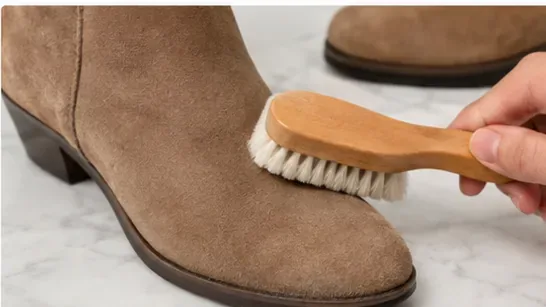
Learn how to clean suede safely without machine washing or soaking it, including brushing, stain removal, air-drying, and suede protection.
Lipstick can leave two problems at once: an oily or waxy film and a strong pigment. That combination is why a quick wipe often makes the mark larger instead of cleaner. The best result is not simply a lighter stain. You want the fabric to look even in normal light, feel free of greasy residue, and show no new fading, ring marks, fuzzing, or texture damage from the cleaning process.
For most washable garments, a conservative sequence works well: remove excess product, pretreat with a laundry-safe cleaner, wash according to the care label, and inspect before using dryer heat. The American Cleaning Institute stain-removal guide recommends pretreating lipstick with a prewash stain remover, liquid laundry detergent, a detergent paste, or bar soap before laundering. Clorox's lipstick-stain guidance likewise emphasizes dabbing rather than rubbing and checking the stain before tumble drying.
Before you start, decide what “clean” means for the item. A successful treatment should meet all of these checks:
If one of those checks fails, change the treatment rather than scrubbing harder. More force is not necessarily more effective, especially on knits, delicate weaves, printed fabrics, or dark colors.
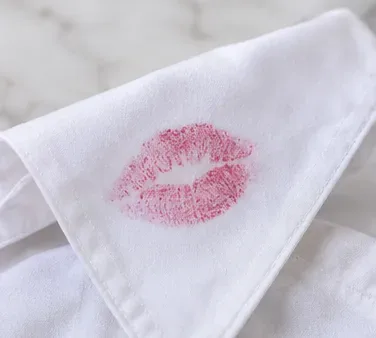
Read the care label first. The Federal Trade Commission explains that garment care labels are intended to provide at least one safe regular-care method and can include warnings about procedures that may damage the item. See the FTC Care Labeling Rule guidance.
If the label says Dry Clean Only, or if the item is silk, suede, leather, a fragile embellished fabric, or a garment with unstable dye, home treatment may create a larger problem than the lipstick. Blot away loose product without spreading it, then use a professional cleaner. For washable items, test any stain remover on a hidden seam first and wait long enough to check for color transfer or texture change.
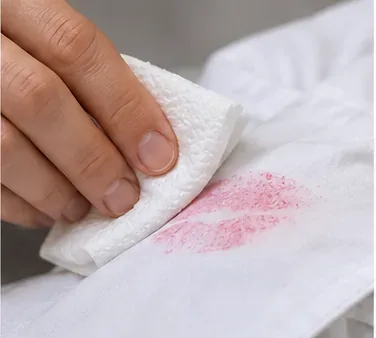
If there is a thick smear or a small lump of lipstick on the surface, gently lift it with the edge of a spoon or another blunt tool. Do not grind it into the weave. Then blot with a clean white cloth or paper towel. Use a fresh section of the towel as color transfers.
Result check: the stain may still be visible, but it should not be getting wider. If each blot leaves new color on the towel, keep blotting gently before adding more cleaner.
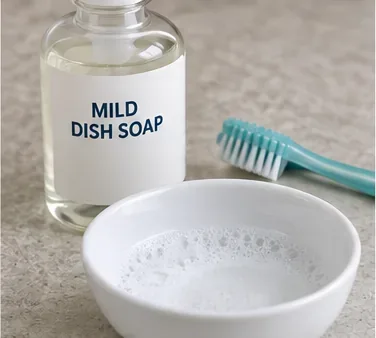
Lipstick commonly contains oily or waxy ingredients, so the first cleaning job is to loosen that residue. Apply a small amount of liquid laundry detergent or a prewash stain remover directly to the mark. The American Cleaning Institute lists those as standard pretreatment options for cosmetics and lipstick.
For a sturdy washable fabric, a few drops of mild hand dishwashing liquid can also help with grease. Clorox's lipstick guidance uses dish detergent as a dabbing treatment. If you use dishwashing liquid, rinse it out thoroughly before the garment goes into a washing machine so excess suds do not become a new problem.
Result check: after a few minutes of contact, the area should feel less slick. If the fabric color starts transferring to your cloth or swab, stop and rinse the product out.
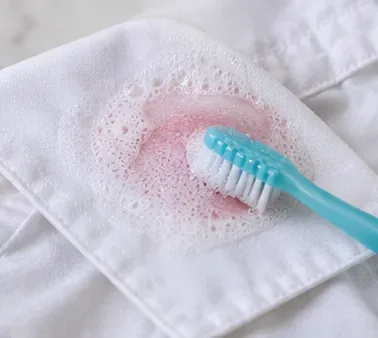
Massage the pretreatment into the stained fibers with clean fingertips. On durable cotton or similar fabric, a soft-bristled brush can help, but keep the motion small and gentle. Avoid hard circular scrubbing on delicate or loosely woven material because mechanical abrasion can leave a permanent fuzzy patch even after the color is removed.
For a stubborn lipstick mark on a washable, colorfast fabric, the American Cleaning Institute's lipstick guidance for cloth napkins describes dabbing with 70% or 90% rubbing alcohol while the stain rests face-down on absorbent towels. Treat that as an escalation step, not the default: test a hidden area first, work in a ventilated space, keep it away from flames, and do not use it on a fabric whose care instructions or dye stability are uncertain.
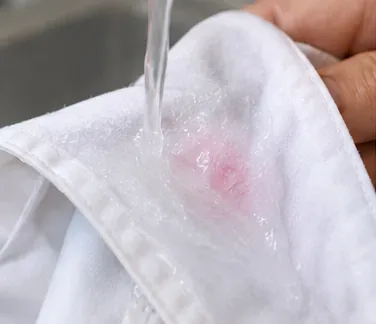
Rinse the treated area with water at a temperature allowed by the care label. When the garment construction permits, direct water from the back of the stain toward the front so loosened residue is pushed out rather than deeper into the fabric.
Result check: the rinse water should become clear and the greasy feel should be reduced. A faint pigment shadow at this stage is not necessarily failure; it may respond to the regular wash.
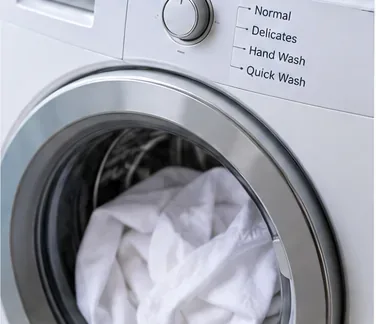
Wash the item with a quality laundry detergent using the safest cycle and temperature permitted by its care label. Clorox recommends the hottest water that the garment label allows, while the FTC emphasizes following the manufacturer's supported care method. If the item cannot tolerate a hot wash, do not increase temperature just because the stain is difficult.
For white or colorfast laundry, a stain-removing laundry additive may be useful if its label says it is safe for the fabric. Do not improvise chemical mixtures. Follow the product label exactly, and rinse one treatment out before switching to another.
This is the decision point that protects the garment from a preventable setback. Tide's makeup-stain guidance advises repeating stain-removal steps when a mark remains rather than putting the garment into the dryer, because heat can make residual staining harder to remove.
Hold the area at an angle to the light. If there is no obvious color but you can still see a darker greasy patch, repeat the detergent pretreatment. If the area feels normal but a pink or red shadow remains, use a suitable laundry stain remover that is safe for the garment and repeat the wash. If the fabric itself has faded or roughened, stop treating it; more chemistry or abrasion will not restore lost dye or damaged fibers.
Let the garment air-dry. Once dry, inspect it again in bright light. Some oil marks are easier to see after the water has evaporated, so a stain that appeared gone while wet may still need another treatment cycle.
If the stain is fully gone and the fabric looks and feels normal, resume the garment's regular care routine. If a trace remains, repeat the gentlest effective step once more rather than jumping straight to a harsher solvent.
| What you see after treatment | What it probably means | Best next move |
|---|---|---|
| Greasy or darker patch, little pigment | Oil/wax residue remains | Repeat liquid detergent or laundry-safe degreasing pretreatment, then rinse and wash again. |
| Pink or red shadow, no greasy feel | Mostly pigment remains | Use a fabric-safe stain remover or laundry additive only if the care label and product directions allow it. |
| Stain is smaller but transfers to a towel | Cleaner is still lifting lipstick | Continue gentle blotting with clean absorbent material rather than scrubbing harder. |
| Color from the garment transfers to the towel | Dye may not be colorfast | Stop home treatment, rinse out the cleaner, and consider professional care. |
| Area looks clean when wet but reappears dry | Residual oil or pigment remains | Repeat pretreatment and washing before using dryer heat. |
| Texture is rough, fuzzy, stretched, or faded | The fabric itself is being damaged | Stop. More stain removal may worsen permanent damage. |
An older stain can still improve, but expect more than one careful cycle. Pretreat, launder, air-dry, and reassess. A stain that has been through a hot dryer may take longer because oily residue can penetrate farther into the fibers. Clorox notes that even oily lip-product stains that have been dried may sometimes respond to repeated pretreatment, but the result depends on the fabric, dye, stain age, and previous heat exposure.
Stop escalating when the treatment begins to change the garment more than the stain. A faint residual mark on an expensive, delicate, or dark-colored item may be a better professional-cleaning candidate than a reason to keep experimenting at home.
Do not automatically reuse the clothing method. Upholstery and carpet can have backing, padding, finishes, or dyes that react differently to water and solvents. The University of Georgia Cooperative Extension's cosmetics and lipstick stain-removal reference specifically warns against overwetting carpet and upholstery and recommends testing cleaning agents in an inconspicuous area.
Before calling the job finished, let the item dry completely and inspect it under bright, neutral light. Look from more than one angle and run clean fingers across the former stain. The best outcome is not merely “less red.” It is a surface that matches the surrounding fabric in color, sheen, texture, and feel.
If the stain is gone but the treatment left a ring, stiffness, fading, or fiber damage, the result still needs attention. If the stain remains but the fabric is unchanged, repeating the same gentle pretreatment once is reasonable. If the garment dye is lifting, the texture is changing, the care label limits home cleaning, or the item has high monetary or sentimental value, that is the point to stop and hand it to a professional cleaner.
Learn how to clean suede safely without machine washing or soaking it, including brushing, stain removal, air-drying, and suede protection.
Learn how to dry a wet phone charger port safely, compare air-drying, wireless charging, emergency overrides, and service, and avoid heat, rice, and objects.
Clean a refrigerator water dispenser safely with mild soap, careful nozzle cleaning, mineral-scale removal, drying, and filter checks.
Learn how to take a bike chain off safely, whether it uses a quick link or rivet, plus which tools to use and when a connector must be replaced.
Learn how to remove rust from golf clubs safely, starting with soap and a soft brush, when to stop, and how raw wedges differ from plated irons.
How to Use Google Lens on Chromebook lets you scan objects, translate text, and solve problems directly from your device. Follow these steps to get started quickly.
Clean a BUNN coffee maker with vinegar safely using the verified Heat N Brew method, plus model checks, sprayhead care, flushing steps, and mistakes to avoid.
Learn how to clean a garbage disposal with ice, compare cold-water, citrus, and deeper-clean options, and know when ice is not enough.
Learn how to remove school glue, super glue, hot glue, and adhesive residue from clothes safely, with fabric-specific steps and solvent cautions.
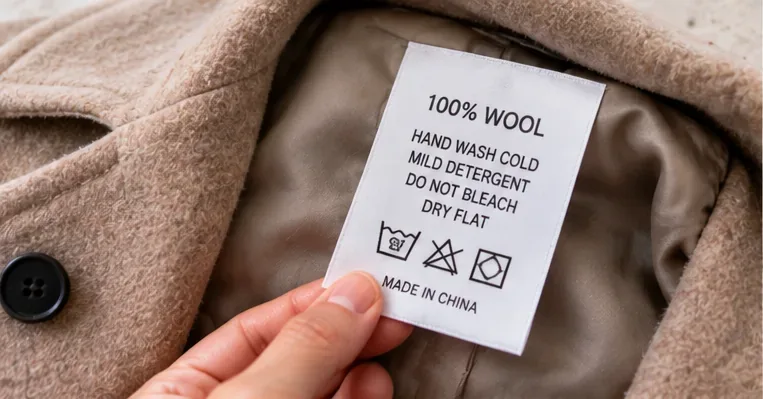
Learn how to wash a wool coat safely by following its care label, choosing a wool-safe detergent, washing gently, and drying without shrinking or distortion.