How to Wash Suede Safely: What to Do Instead of Soaking It
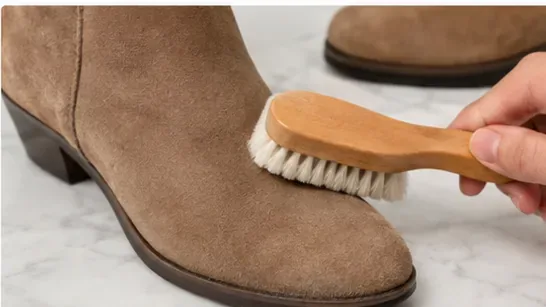
Learn how to clean suede safely without machine washing or soaking it, including brushing, stain removal, air-drying, and suede protection.
You pull an iron from the bag and notice orange specks on the face, grooves, or hosel. The first instinct is often to reach for vinegar, steel wool, or a power tool. That can be the wrong move. Golf-club finishes vary, and some wedges are intentionally left raw so they will rust over time.
The safest approach is to work from mild to stronger methods: first identify the finish, then clean with warm water, light soap, and a medium-soft brush, dry the club completely, and only consider a more abrasive treatment when the manufacturer specifically allows it for that finish. If rust remains on a plated or coated club after gentle cleaning, stop before using harsh chemicals or aggressive abrasives.
Titleist's club-care guidance recommends a medium-soft brush with light soap and warm water and warns that harsh chemicals may alter the finish. The same guidance explains that some Vokey raw and raw-black wedges expose carbon steel and are designed to rust. See the Titleist Club Care 101 guidance.
Rust forms when exposed iron or steel reacts with moisture and oxygen. TaylorMade describes the basic condition for its raw wedges as “oxygen + moisture = rust.” On a raw, unplated wedge, that oxidation is expected. On a plated or finished iron, visible rust can instead suggest that moisture reached exposed metal through wear, scratches, chips, or prolonged damp storage.
Storage matters. Titleist recommends making sure clubs and headcovers are completely dry before putting them away because wet storage can lead to rust and corrosion. A round in the rain, wet grass, a damp towel in the bag, or a club stored before it has dried can all create the conditions rust needs.
Before cleaning, ask one question: Is this rust supposed to be there?
Look up the exact model if you are unsure. A shiny chrome-plated iron, a black-coated wedge, a raw carbon-steel wedge, and a raw-face wedge can all react differently to cleaning.
TaylorMade states that its unplated Milled Grind RAW wedges will rust. Callaway likewise states that the raw face on Jaws Raw wedges is designed to rust over time without affecting playability. Titleist's Vokey product specialist has also explained that raw finishes are designed to rust and that keeping them clean and dry can slow the process.
That means a rusty raw wedge does not automatically need restoration. If the club is performing normally and the rust is part of the intended finish, leaving it alone may be the correct maintenance choice.
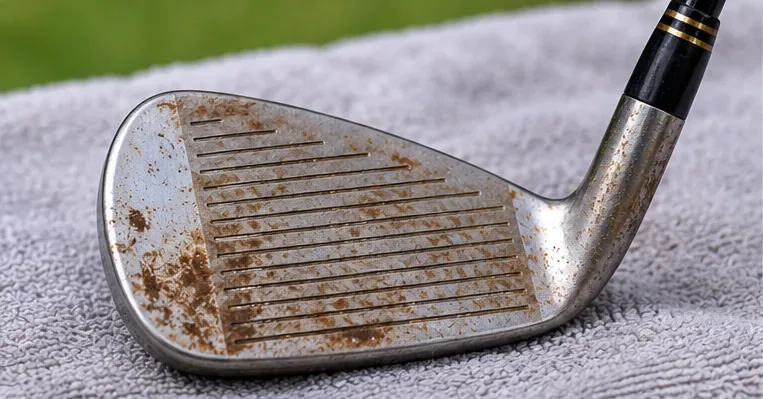
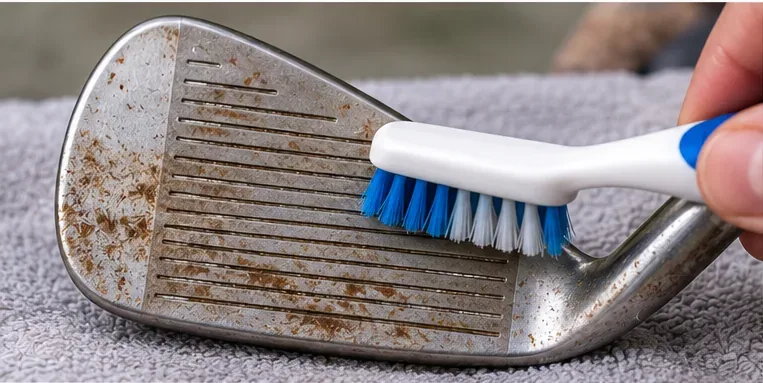
For unwanted surface rust or dirty-looking oxidation on a finished club, begin with the least aggressive method. Add a small amount of mild dish soap to warm water. Wet the clubhead with the solution and use a medium-soft nylon brush or soft toothbrush to work across the face and through the grooves.
Titleist's manufacturer guidance supports warm water, light soap, and a medium-soft brush. It does not recommend starting with strong acids, chemical rust removers, buffing wheels, or other harsh treatments.
You do not need a long soak. The goal is to loosen dirt, grass residue, and light surface contamination so you can see what rust remains. Keep the grip and shaft from sitting unnecessarily in water, and avoid leaving the whole club submerged.
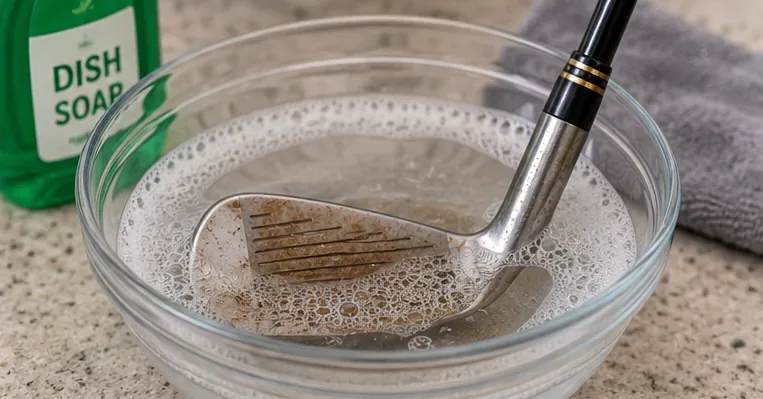
Brush along the grooves and across the affected areas with light pressure. Rinse away loosened debris and look at the metal again. If the orange discoloration was mostly surface contamination, the club may already look substantially better.
A soft or medium-soft brush is important because the goal is cleaning, not grinding away the finish. Avoid a wire wheel, rotary polishing tool, coarse sandpaper, or heavy metal brush on a plated or coated club unless the club manufacturer specifically says that treatment is appropriate.
Titleist explicitly cautions that harsh chemicals can alter a club's finish, and its Vokey specialist does not recommend aggressive chemical or buffing-wheel rust removal on raw finishes. That is a useful stopping rule: if soap and a soft brush do not solve the problem, identify the exact finish before escalating.
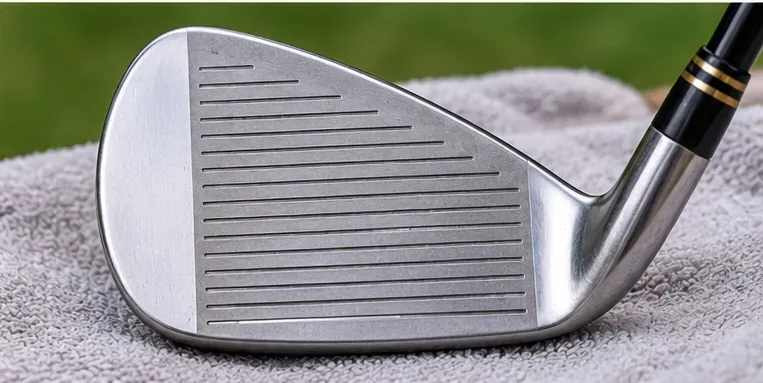
Rinse the cleaned clubhead with clean water, then dry it immediately with a soft towel. Pay attention to the grooves, the junction around the hosel, cavity edges, and any recesses where water can remain.
Do not put a damp iron back into a wet headcover or sealed bag pocket. Let the club air-dry until no moisture remains. This is one of the simplest ways to prevent a small rust problem from returning quickly.
| Club type or finish | What to do next | What to avoid |
|---|---|---|
| Chrome-plated or coated iron/wedge | Stop after gentle cleaning if rust persists and check the manufacturer's care guidance or a qualified club technician | Unverified acids, coarse abrasives, power buffing, or sanding that can strip the finish |
| Raw or unplated wedge designed to rust | Decide whether removal is even necessary; keep clean and dry if you want to slow further oxidation | Assuming all rust is damage |
| Older Callaway raw/vintage finish covered by Callaway's guidance | A synthetic scouring pad may be used if you intentionally want to clean and slow the rusting process | Applying that recommendation automatically to other brands or plated finishes |
| Deeply pitted face, hosel, or shaft | Have the club inspected before continued use | Grinding away material just to make the surface look smooth |
Callaway's customer-service guidance for its older raw “vintage” wedge finish says owners who want to clean the finish and slow rust can use a synthetic scouring pad; Callaway specifically cites Scotch-Brite Purple in that context. That is a manufacturer-specific recommendation for a raw finish, not a universal instruction for every golf club.
If your club is a raw Callaway finish covered by that advice, use the pad lightly and monitor the surface. If your club is chrome plated, painted, PVD coated, or has another decorative finish, do not assume the same abrasive is safe.
You can review Callaway's manufacturer guidance on raw wedge rust through its official customer-service FAQ.
These methods appear frequently in informal golf discussions, but they are not a good default for an unknown club finish. Acids can attack some finishes, and abrasives can remove plating, paint, black oxide, or decorative coatings along with the rust.
For a raw wedge, some manufacturers have offered model-specific abrasive guidance. For finished clubs, the verified manufacturer advice used here points first to mild soap, warm water, and a soft brush. Unless your club's maker gives a stronger treatment for that exact finish, do not turn a cosmetic rust spot into permanent finish damage.
Do not judge a raw wedge by the same standard as a chrome iron. TaylorMade states that its Milled Grind RAW wedges are unplated and will rust. Callaway's Jaws Raw page says its raw face allows rusting in the scoring area over time without affecting playability. Titleist's Vokey team has similarly said its raw finish is designed to rust.
That rust may look alarming if you are used to polished chrome, but it can be normal product behavior. If you dislike the appearance, keeping the face clean and thoroughly dry will help slow additional oxidation, but a raw wedge may continue to develop patina because bare steel is exposed.
For current examples, see TaylorMade's Milled Grind RAW wedge specifications and Callaway's Jaws Raw product information.
After the club is fully dry, inspect it in bright light. A successful gentle cleaning should leave the grooves free of dirt and loose rust, with no new scratches, hazy patches, missing coating, or obvious finish damage. Run a dry cloth over the face; it should not pick up loose orange powder.
If a finished club still has small brown stains but the surface is smooth and the coating appears intact, do not keep escalating automatically. Cosmetic discoloration is less serious than stripping a protective finish. If the rust is deep enough to create pits, if chrome is flaking, if the shaft is corroded, or if the clubhead shows structural damage, have a qualified club technician or the manufacturer inspect it.
The practical sequence is simple: identify the finish, start with soap and a soft brush, dry completely, and only use stronger abrasion when the manufacturer has approved it for that specific raw finish. That removes the easy rust without risking the club just to chase a perfectly polished appearance.
Learn how to clean suede safely without machine washing or soaking it, including brushing, stain removal, air-drying, and suede protection.
Learn how to dry a wet phone charger port safely, compare air-drying, wireless charging, emergency overrides, and service, and avoid heat, rice, and objects.
Clean a refrigerator water dispenser safely with mild soap, careful nozzle cleaning, mineral-scale removal, drying, and filter checks.
Learn how to take a bike chain off safely, whether it uses a quick link or rivet, plus which tools to use and when a connector must be replaced.
Learn how to remove rust from golf clubs safely, starting with soap and a soft brush, when to stop, and how raw wedges differ from plated irons.
How to Use Google Lens on Chromebook lets you scan objects, translate text, and solve problems directly from your device. Follow these steps to get started quickly.
Clean a BUNN coffee maker with vinegar safely using the verified Heat N Brew method, plus model checks, sprayhead care, flushing steps, and mistakes to avoid.
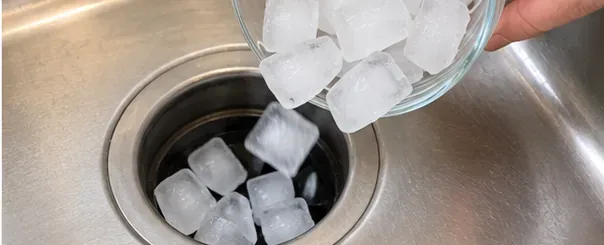
Learn how to clean a garbage disposal with ice, compare cold-water, citrus, and deeper-clean options, and know when ice is not enough.
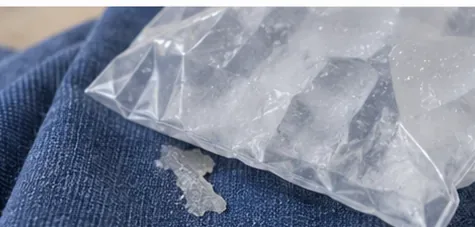
Learn how to remove school glue, super glue, hot glue, and adhesive residue from clothes safely, with fabric-specific steps and solvent cautions.
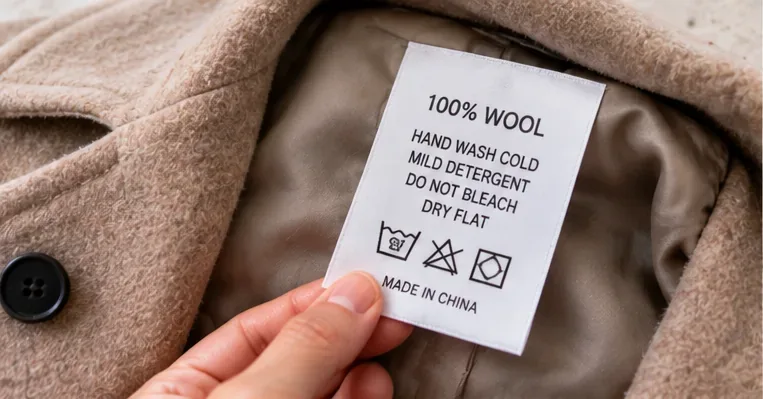
Learn how to wash a wool coat safely by following its care label, choosing a wool-safe detergent, washing gently, and drying without shrinking or distortion.