Yogurt is a seemingly indispensable dish in every family's refrigerator. Eating yogurt regularly will bring many wonderful effects: good digestion, better appetite, beauty for women or prolong life ... Everyone thinks to make the Delicious and nutritious milk jars take time and effort as well as special tools are required. But with WebTech360's experience in making yogurt with rice cookers, it will help you to eliminate the worries above.
Yogurt making ingredients and tools.
- 500 ml of sugar-free pasteurized milk
- 1 box of yogurt to make yeast
- 500 ml of hot water
- 1 box of condensed milk with sugar
- Spoon, rice cooker
- Cups, bags or glass jars to store yogurt
- Implementation time: 8 hours

Yogurt making ingredients and tools.
After you have fully prepared the above ingredients and tools, then start doing it right away. This way is very simple, you just need to spend a little time and effort to have a delicious and nutritious dish for the whole family.
How to make yogurt with a rice cooker.
Step 1: Pour condensed milk and fresh milk into a large bowl to stir the mixture until it dissolves. Most people who make yogurt use longevity milk, as it is moderately sweet and not too fat. Then put on the stove and boil over low heat, until the milk is almost boiling and bubbles on the face, turn off the heat. You should not overheat as this will lose the nutrients in the milk. Remember to stir during the cooking time to keep the milk from drying. In addition, to avoid spoiled milk after 2 hours, you will preserve the milk by placing the pot of hot milk in a basin containing cold water.

Step 1
Step 2: When the mixture is about 35-40 degrees, you add sugar to stir, the amount of sugar depends on your taste and your family. Add 1 box of prepared yogurt to this mixture, then use a spoon to stir to dissolve the yogurt. In order to ferment yogurt, you should let the yoghurt to ferment in the outside environment to cool down before proceeding.

Step 2
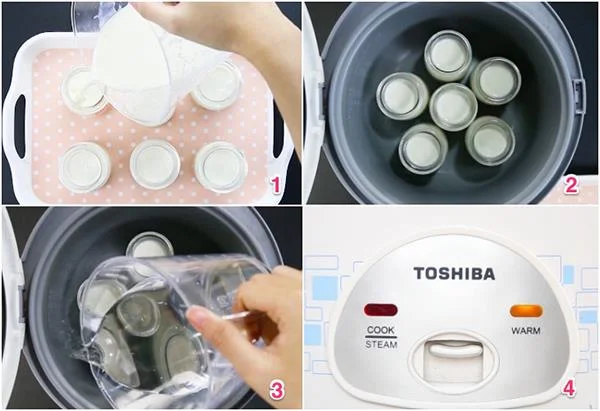
Step 3: After the yogurt mixture is completely dissolved, you proceed to pour the yogurt into each pre-prepared jar or bag. Put the yogurt in the rice cooker, pour warm water into the pot. If it is cold you can turn the rice cooker in Warm mode, but hot season is not necessary. Do this for 4-6 hours. Finally, put the yogurt in the refrigerator cooler. How to make this yogurt is simple, isn't it? Please take advantage of every device in the house to create delicious and nutritious dishes for the family.