How to Use Google Lens on Chromebook

How to Use Google Lens on Chromebook lets you scan objects, translate text, and solve problems directly from your device. Follow these steps to get started quickly.
A blob of hot glue on clothing or upholstery creates an awkward problem: acting too quickly can spread the adhesive deeper into the fibers, while using the wrong solvent can damage the fabric itself. The safest approach is usually to let the glue harden, remove as much as possible mechanically, then use cold or a carefully tested solvent only if residue remains.
Illustrative example: imagine a weekend craft project in which a coin-sized drop of hot-melt glue lands on a washable blue cotton-blend apron. This is a hypothetical example used to show how the process works; it is not a test result or a customer testimonial. The same sequence can help with many washable fabrics, but the fiber content, dye, finish, backing, and care label always take priority.
Hot-melt adhesive is designed to flow while heated and become firm as it cools. That is why rubbing a fresh spill is usually counterproductive: it can push molten glue farther into the weave. Loctite's current U.S. guidance for hot glue on textiles, accessed in September 2026, specifically advises letting the spot dry rather than rubbing it, then using freezing or isopropyl alcohol as removal methods. See the manufacturer's hot-glue removal guidance for textiles.
The American Cleaning Institute gives similar general advice for adhesive stains: harden the surface with ice or cold water, scrape with a dull knife, pretreat if appropriate, rinse, and launder according to the fabric's care instructions. Its stain guide is available at the American Cleaning Institute stain-removal guide.
Avoid sharp blades. The goal is to separate the hardened adhesive from the fibers, not cut or shave the textile.
In the hypothetical apron example, the first move is to stop touching the spill. Do not smear, rub, or press fresh glue into the weave. Wait until the adhesive is fully cool and firm. If the glue is still warm, the surface can look solid while the center remains soft.
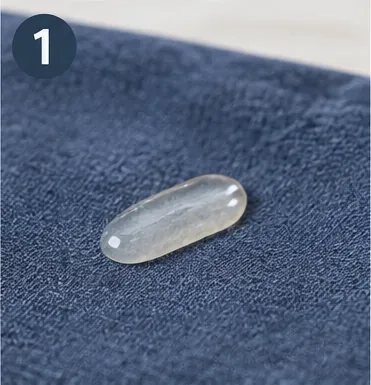
Once the glue is rigid, try to lift an edge with a fingernail or a smooth, dull plastic edge. Work slowly and keep the tool nearly parallel to the fabric so you are not digging into threads. If the glue begins to flex instead of separating, stop and move to the chilling step rather than forcing it.
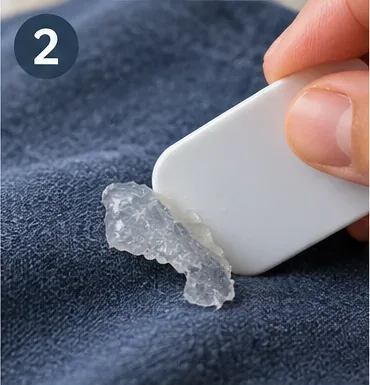
You may remove the main blob but still see small translucent chips or a thin film. This is the point to reassess. In our example, the apron still has scattered residue, so the next action should be more cooling, not immediate solvent use. If the fabric has already returned to a clean appearance, skip unnecessary treatment.
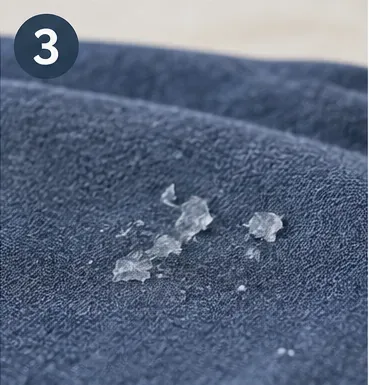
For a small washable garment, Loctite recommends placing the item in a freezer for about 30 minutes. If the item is too large for a freezer, its guidance suggests applying a sealed bag of ice to the area. Cold makes the hot-melt adhesive more rigid and can make it easier to separate from the textile.
Do not hold loose ice directly against a fabric that should not be saturated. For upholstery, lined pieces, or items with water-sensitive finishes, keep moisture contained in a sealed bag.
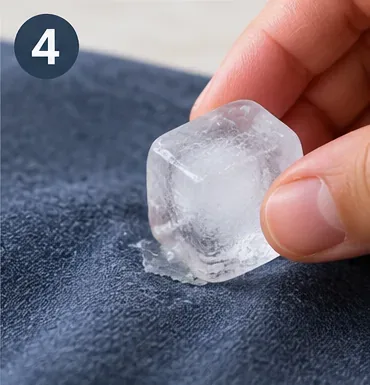
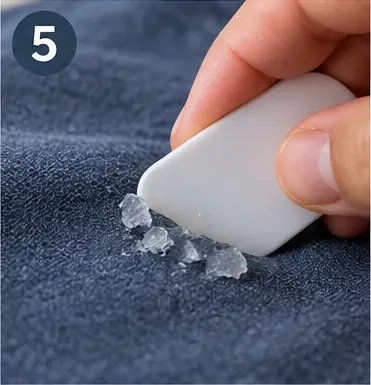
After chilling, lift the glue again with a dull edge. Work from the outer edge toward the center and stop if threads begin to fuzz, stretch, or lift. A few repeated light passes are safer than one forceful scrape.
In the hypothetical apron case, this second mechanical pass removes most visible fragments. If the spot is clean at this stage, you can proceed directly to laundering according to the care label.
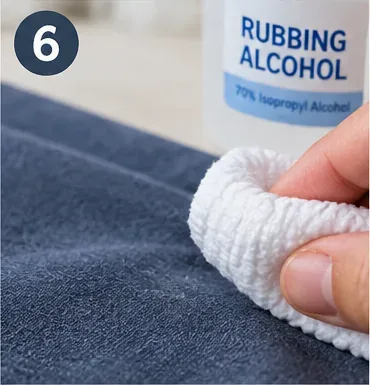
Loctite lists isopropyl alcohol as a second method for hot glue on textiles and recommends working from the edges of the dried glue spot inward with a cotton swab. That does not mean rubbing alcohol is safe for every textile. The University of Georgia Cooperative Extension notes that alcohol can fade some dyes and can damage acetate, triacetate, modacrylic, and acrylic fibers. Its solvent cautions are summarized on the UGA Textiles fabric-care products page.
Check the fiber-content and care labels first. Then test a tiny amount on an inconspicuous inside seam. Let the test area dry and look for color transfer, fading, texture change, stiffness, or surface distortion. If anything changes, stop. For dry-clean-only garments, delicate fibers, unknown blends, coated fabrics, or valuable upholstery, a professional cleaner is the safer next step.
If the hidden test is successful, dampen a cotton swab or white cloth with a small amount of isopropyl alcohol. Touch the edge of the residue and work inward. Do not flood the area. As the bond loosens, lift the glue rather than rubbing it into the cloth.
Once the glue is gone, remove treatment residue as the item's care instructions allow. For the washable apron in our example, that means laundering with the normal detergent and a temperature permitted by the label. The American Cleaning Institute recommends following fabric-care instructions and, for stain-removal work generally, avoiding the dryer until the stain has been removed.
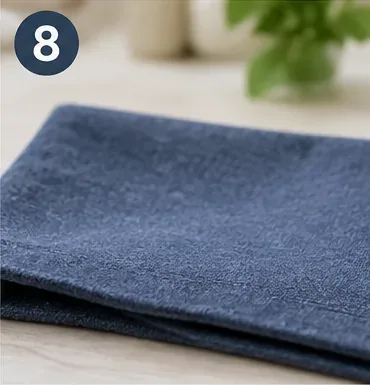
Air-drying after the first treatment is useful because it gives you another chance to inspect the area before exposing it to dryer heat. Upholstery or non-washable items should not be soaked merely to mimic a clothing-laundry step.
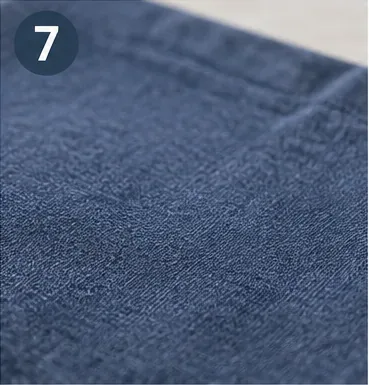
After the fabric is dry, look across the surface from several angles. A successful result should have no raised glue, tacky film, obvious discoloration, or distorted fibers. Run a clean fingertip lightly over the area to compare its texture with the surrounding fabric.
If a small amount of glue remains but the textile still looks undamaged, repeat the cold-and-lift sequence once more. If the fabric is fading, pilling, stretching, or changing texture, stop rather than escalating to stronger solvents.
| Fabric or situation | Safer starting point | What to avoid or verify |
|---|---|---|
| Washable cotton or linen | Cool, peel, freeze or ice, then launder as labeled | Still test any solvent because dyes and finishes vary |
| Polyester or nylon blends | Mechanical removal and cold first | Hidden-test alcohol; blends may contain less tolerant fibers |
| Acetate, triacetate, modacrylic, or acrylic | Mechanical/cold methods or professional cleaning | UGA warns that alcohol can damage these fibers |
| Silk, wool, dry-clean-only garments, coated textiles | Stop after gentle mechanical removal if there is any doubt | Avoid improvising with solvents, heat, or soaking without specialist guidance |
| Upholstery with backing or foam | Cold applied in a sealed bag, then gentle lifting | Do not overwet; liquids can migrate into backing or padding |
Hot-melt glue can soften with heat, and Loctite describes an iron-and-scrap-cloth method for carpet. That does not make an iron the best first choice for clothing: garment fibers, dyes, coatings, and finishes may react differently to heat, and moving molten adhesive can spread the spot. For ordinary fabric, the manufacturer's textile-specific methods are freezing and carefully applied isopropyl alcohol.
Acetone is also not a universal shortcut. The University of Georgia specifically warns against acetone on acetate fibers, and solvents can affect dyes and finishes. Unless the garment manufacturer or a qualified textile-care professional confirms compatibility, begin with the lower-risk cold-and-lift approach instead of escalating immediately to a stronger chemical.
Return to the hypothetical apron: the glue is no longer visible, the surface feels like the surrounding fabric, the blue color has not shifted, and the weave is not fuzzy or stretched. Those are the useful success criteria—not simply whether the largest blob came off.
If you cannot remove the residue without changing the fabric, the correct result is to stop. A dry cleaner or upholstery professional can identify fibers and finishes that are difficult to assess at home. No household method can guarantee complete removal from every textile, especially when hot glue has penetrated an open weave or bonded to a coating.
This guide uses textile-specific hot-glue instructions from Loctite, general adhesive-stain guidance from the American Cleaning Institute, and solvent/fiber cautions from the University of Georgia Cooperative Extension. Product formulas, care instructions, and institutional guidance can change, so check the linked source and the item's own label before treating a valuable or delicate textile.
How to Use Google Lens on Chromebook lets you scan objects, translate text, and solve problems directly from your device. Follow these steps to get started quickly.
Learn how to clean a lululemon yoga mat using current care guidance: wipe gently, avoid soaking and bleach, dry fully, and store out of sunlight.
Learn how to remove hot glue from fabric using cooling, gentle scraping, and cautious alcohol treatment, with fabric-safety checks for delicate materials.
Learn how to clean a freezer ice maker safely, remove stale ice and residue, wash and dry the bin, and know when deeper cleaning or service is needed.
Learn how to season gas grill grates safely, when seasoning is actually needed, and how cast iron, stainless, and porcelain grates differ.
Learn how to clean fabric blinds safely: identify the material, remove dust, spot-clean stains, avoid damage, air-dry correctly, and know when to call a pro.
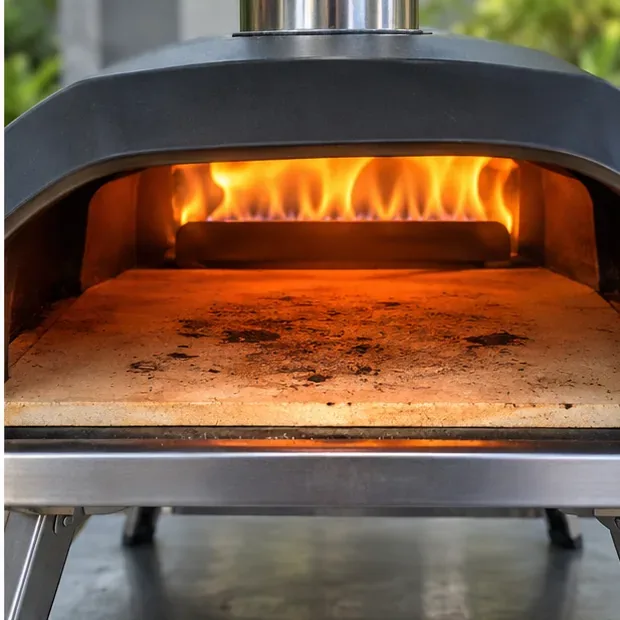
Learn how to clean an Ooni pizza stone safely with dry brushing, high-heat burn-off, and flipping—plus what to avoid and how to know it is clean enough.
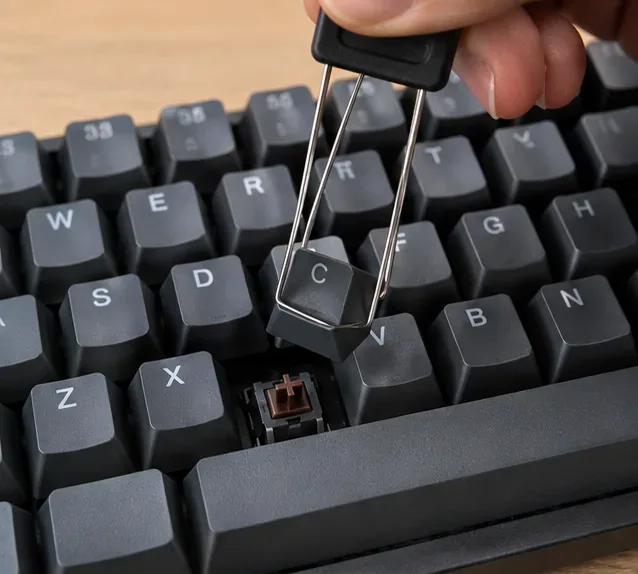
Learn how to clean a mechanical keyboard safely, from removing keycaps and dust to washing compatible caps, drying, reassembly, and testing.
Learn how to remove hardened wax from clothes safely: harden, scrape, transfer with low heat, pretreat residue, wash by the care label, and air-dry.
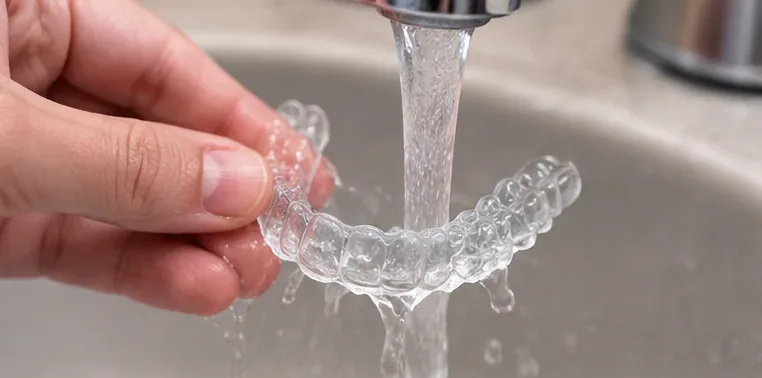
Clean a removable retainer at least daily, rinse it whenever you remove it, and use a deeper manufacturer-approved clean about weekly. Learn what changes the schedule.