Home
» How to
»
How to use Samsung WA10F5S5QWA, WA11F5S5QWA washing machine control panel
How to use Samsung WA10F5S5QWA, WA11F5S5QWA washing machine control panel
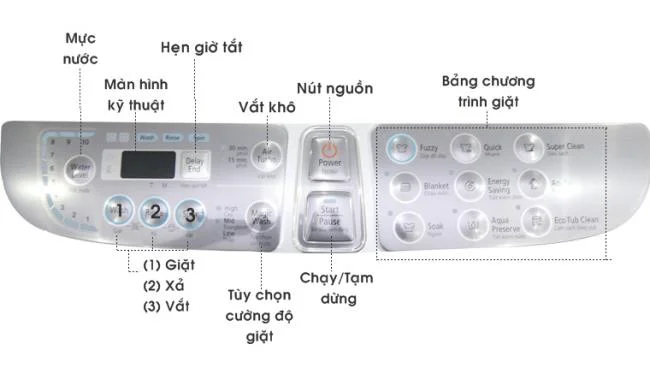
To help you use your Samsung WA10F5S5QWA , WA11F5S5QWA more efficiently and smoothly . WebTech360 will guide you how to use the control panel effectively with just simple operations.
You can use a single washing program to wash less dirty clothes. For example, you can activate a one-time washing program for less-soiled clothes.
The steps to wash clothes manually
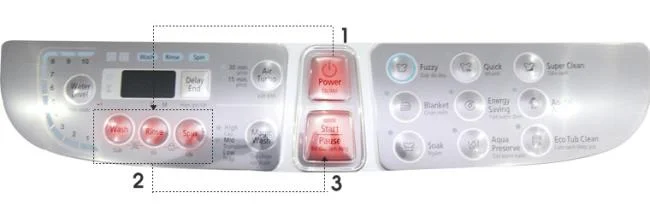
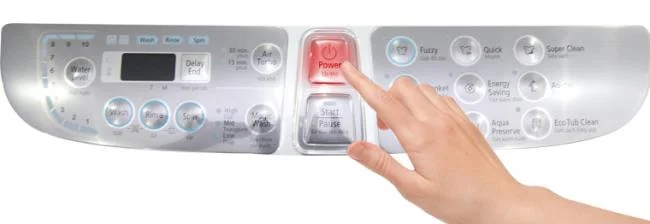
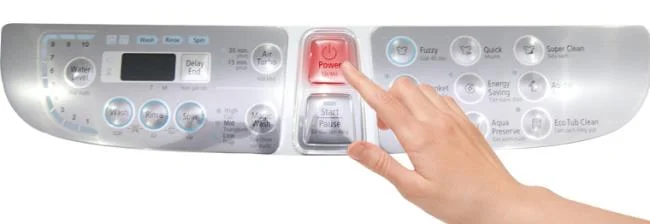
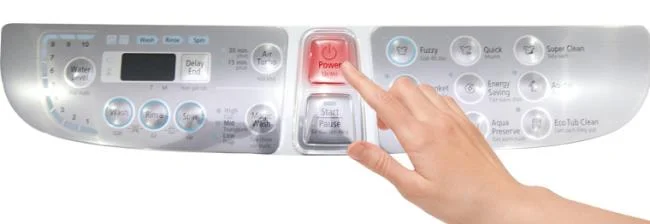
Step 1: Click the Power button to start the machine
Step 2: Press the Wash / Rinse / Spin button to activate the personalized program according to your needs. If you want to combine washing programs you can press the program buttons as follows:
+ Wash + Rinse: Rinse after washing
+ Rinse + Spin: Squeeze after washing
+ Wash + Rinse + Power Spin: Rinse and then spin in order.
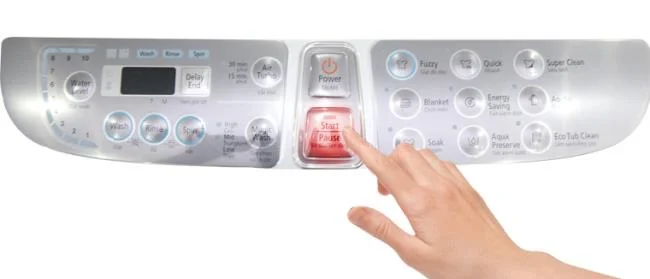
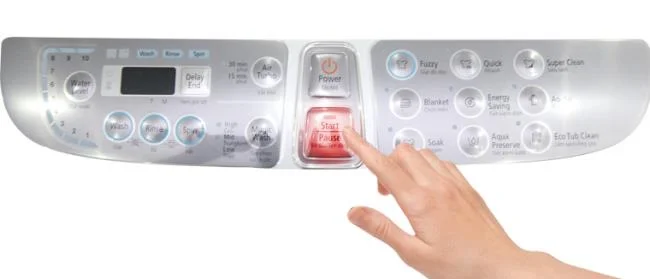
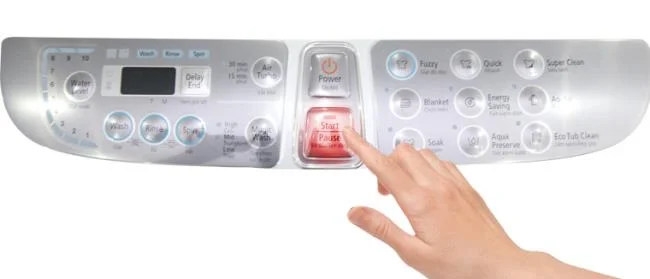
Step 3: Click Start / Pause to finish the installation
2. Other machine wash mode buttons.
These buttons allow you to choose different washing modes for different fabrics.
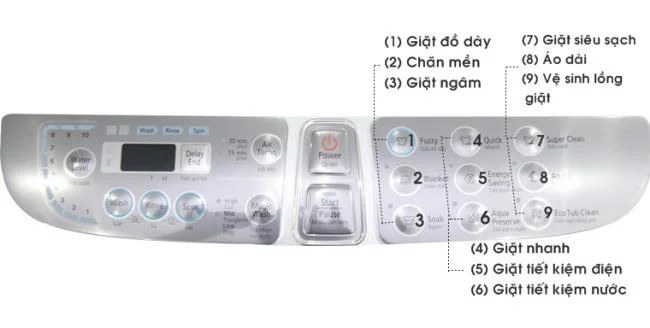
Table of washing mode of the machine
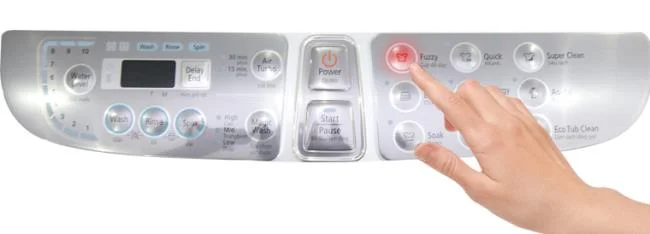
(1) Fuzzy (Wash thick clothes): Use to wash thick clothes such as jeans, thick khaki.
(2) Blanket: A specialized mode for washing blankets.
(3) Soak: The machine will intensify the soaking cycle before washing. Helps to wash clothes cleaner. Suitable for clothes with stubborn stains
(4) Quick: Use for clothes that are less dirty, or you need a quick wash.
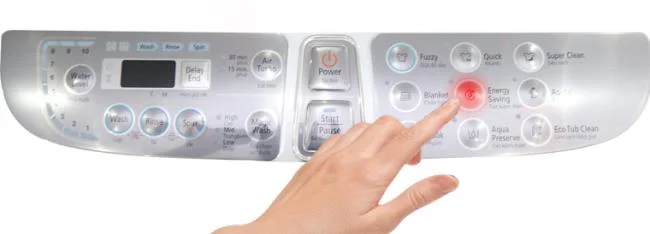
(5) Energy Saving : Washing saves energy
(6) Aqua Saving: The program helps you save water optimally. The discharged water will be used in subsequent processes, reducing high water costs.
(7) Super Clean: Make your clothes extremely clean.
(8) Ao-dai (Ao Dai): Ao-dai washing.
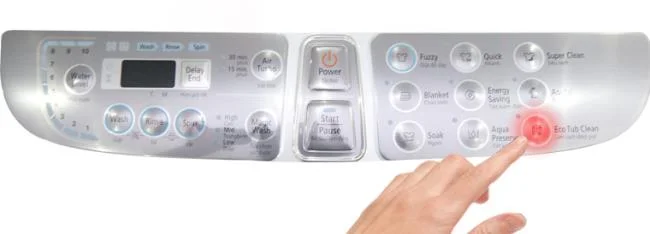
(9) Eco Tub Clean: The machine automatically cleans the drum .
3. Wash thick clothes
For thick clothes, their washing course is different from other clothes. Need to choose the right mode to achieve a clean effect.
Press the Power button to turn on the machine
Choose Fuzzy mode
Press the Fuzzy wash mode in the washing program panel according to the instruction.
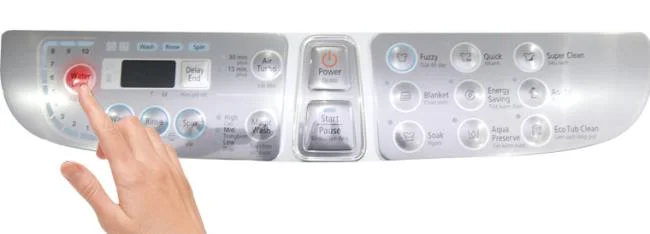
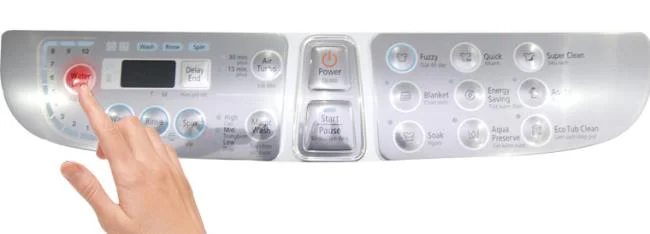
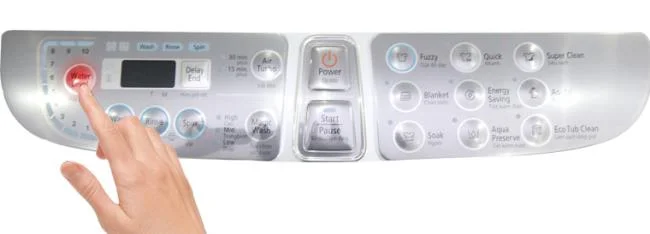
Press the Water Level button.
You adjust the appropriate water level from 1 to 10. Corresponding 1 is the lowest level, 10 is the highest level. The machine has many water level modes, helping you to precisely adjust the water level when washing, reducing water waste.
Finish with the Start / Pause button
4. Child safe lock mode
This wash mode allows you to disable all the setting buttons on the control panel during washing. The washing program selected is fixed and cannot be changed. In order to increase the safety of children and not affect the washing process.
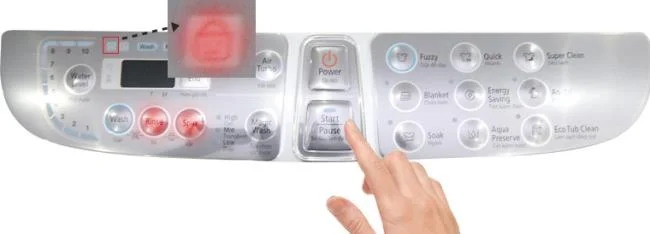
Press two Rinse + Power Spin buttons at the same time for 3 seconds
To open child safe lock mode. Press at the same time for 3 seconds the two "Rinse" and "Spin" buttons. The Child Lock light will light up when this function is on. To cancel this function, do the same to open. Mode will remain when turning on or off the Power button “Power”.
Note: It is recommended to turn off the mode when it is not needed anymore in case others do not know how to reopen the control panel next time.
5. How to clean the washing bucket
For better performance of washing machine, longer machine life. You should clean the washing bucket at least every 2 weeks. In order to limit dirt, bacteria grow in the machine, adversely affect not only the health of you and your family, but also the "health" of the washing machine. Samsung washing machines support you to self-clean the washing machine with very simple operation.
The first step is to open the Power button
Press the Water Level button to select the water level
Then you press the Water Level button to select the water level, which will usually be the highest water level (Level 10) for a more comprehensive cleaning of the tub.
Press the Eco Tubo Clean mode.
And finally to end a process is also the familiar Start / Pause button
6. How to save water
Water cost savings are essential. This is the machine's energy-saving washing program. The machine will retain the amount of water after rinsing, and use it for the next washing cycle, to limit the excess water.
The first step is to open the Power button
Press the Energy Saving button to select the water level
Select the water level with the Water Level button
And finally to end a process is also the familiar Start / Pause button
Hopefully with some simple operations that WebTech360 has just shared, you can control your washing machine, helping to bring the best washing performance to the family.