How to Wash Suede Safely: What to Do Instead of Soaking It
Learn how to clean suede safely without machine washing or soaking it, including brushing, stain removal, air-drying, and suede protection.
The safest way to wash a North Face puffer jacket is not to follow one universal recipe. First check the sewn-in care label and identify whether the insulation is down, synthetic, or a hybrid. That distinction matters because The North Face publishes different care directions for different products. As of September 2026, its current down-jacket product pages commonly specify a front-loading washer, warm water, down-specific liquid detergent without bleach, a gentle cycle, low spin, an optional extra rinse, and low-temperature tumble drying with dryer or tennis balls. Current synthetic-insulation pages may instead allow machine washing at 104°F (40°C) or below and call for a mild detergent.
There is also a regional nuance worth knowing. The North Face's U.S. Product Care FAQ says home washing is possible for down but recommends a professional service that specializes in cleaning down. Meanwhile, current product-specific pages such as the 1996 Retro Nuptse Jacket care page provide detailed home-washing instructions. The practical conclusion is simple: your jacket's own label is the controlling instruction, and model-specific guidance is more useful than generic internet advice.
| What you find | What it means | What to do |
|---|---|---|
| Down, recycled down, goose down, waterfowl down, or a fill-power number | The insulation depends on loft and can clump badly when wet. | Use the care label first. If home washing is allowed, favor a front-loader, a down-specific cleaner, gentle agitation, and a long low-heat dry. |
| Heatseeker™, ThermoBall™, Ecofluff, polyester insulation, or other synthetic fill | The fill is synthetic and may have different detergent and temperature instructions. | Follow the label. For example, a current Huila Synthetic Insulation Jacket page allows machine washing at 104°F (40°C) or below. |
| Down plus synthetic panels | Hybrid construction can make generic advice unreliable. | Do not guess from the outer appearance. Use the exact garment label or official product page. |
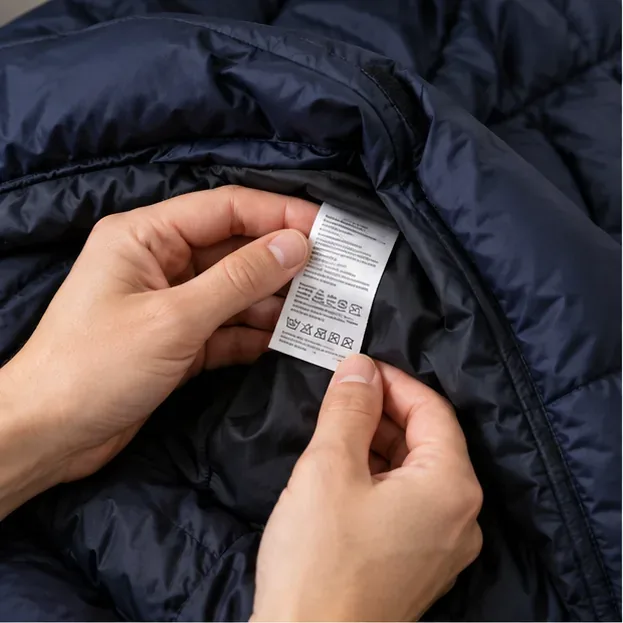
Verified: The North Face tells owners to check the care tag inside the garment before washing. That tag can specify temperature, machine type, drying restrictions, and whether professional cleaning is preferred.
What depends on the jacket: A Nuptse down jacket, a ThermoBall synthetic puffer, and a DryVent insulated jacket can all look like “puffers” while requiring different care.
Action: Photograph the care label with your phone before you start. If the symbols are unclear, look up the exact style number on The North Face website rather than relying on a generic puffer-jacket guide.
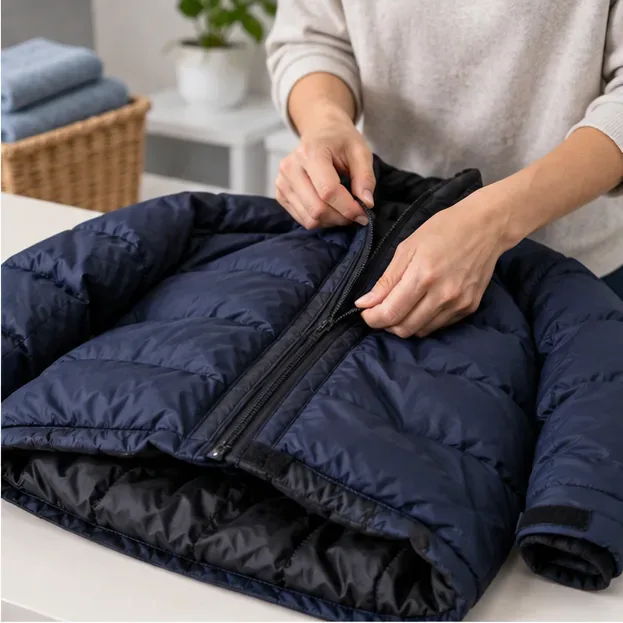
Verified: Current North Face care instructions tell users to close zippers and hook-and-loop fasteners before cleaning; several product pages also say to turn the garment inside out.
Remove keys, paper, lip balm, and anything else from every pocket. Brush away loose mud after it dries rather than grinding grit into the shell during washing. Close the main zipper and pocket zippers. Secure hook-and-loop tabs so they cannot abrade neighboring fabric.
Action: Give the jacket a 30-second hardware check. If a zipper pull, snap, seam, or baffle is already damaged, repair that problem before machine washing.
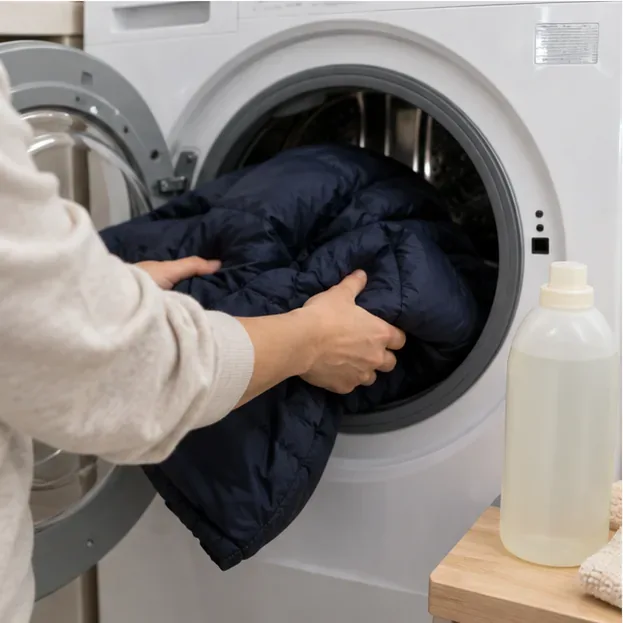
Verified for many current down models: The North Face's product-specific down guidance says to use only a front-loading machine. It also recommends washing and drying down items individually.
What depends on the jacket: Synthetic models may have less restrictive machine directions, so the label still wins. Capacity matters too. A tightly packed puffer cannot rinse well and can be stressed when saturated.
Action: If the jacket barely fits into the drum dry, do not force it. For a bulky down parka or a small home machine, use a larger compatible washer or a professional cleaner experienced with down.
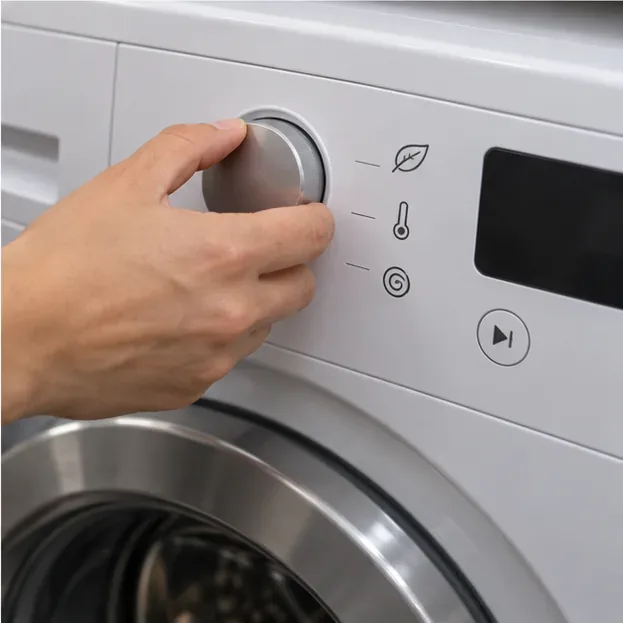
Verified for current North Face down care: Several down product pages specify warm water, a liquid detergent formulated for down, no bleach, a gentle cycle, and low spin. Current synthetic-insulation pages can instead specify a mild detergent and washing at 104°F (40°C) or below.
Do not assume that a strong household detergent is better. Heavy residue is exactly what you do not want trapped in an insulated garment. Likewise, do not add chlorine bleach. If the jacket has a waterproof or DWR-treated shell, The North Face's waterproof-jacket care guidance also says to avoid fabric softener and chlorine bleach.
Action: Use the smallest appropriate dose listed by the cleaner manufacturer and the exact temperature permitted by the garment label. If the label conflicts with a web page, follow the label.
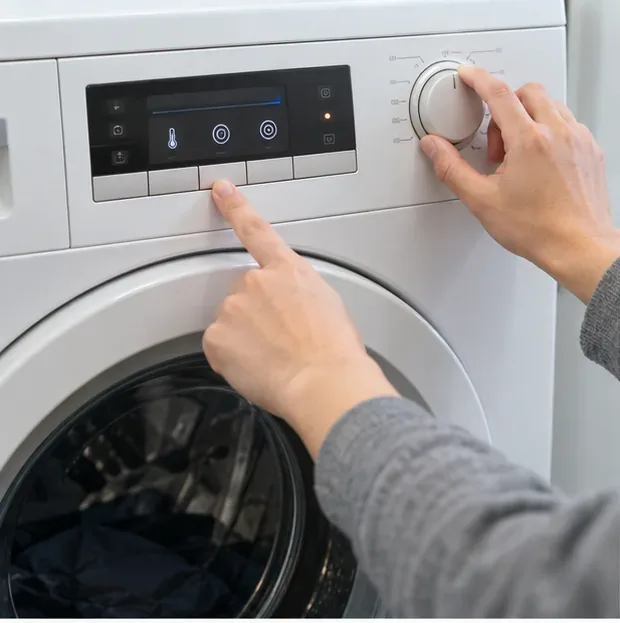
Verified: The North Face's down guidance says you may repeat the rinse cycle to make sure soap residue is removed. It also notes that an extra spin cycle can help remove excess water.
Common misconception: “More detergent means a cleaner jacket.” That is not a useful rule for insulated outerwear. Too much cleaner is harder to rinse out, and remaining residue is the problem you are trying to avoid.
Action: If you used too much detergent, see suds late in the cycle, or the jacket feels slick after rinsing, run another rinse before drying. Do not compensate by wringing the coat.
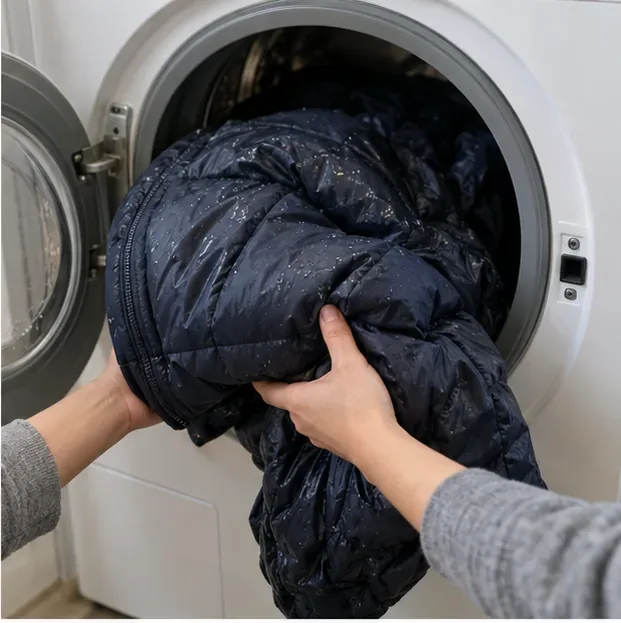
Verified for down: Current North Face down instructions explicitly say not to lift the wet product by pulling it out; instead, scoop it from the bottom. Wet down and a wet shell are much heavier than the dry garment, so concentrated pulling can stress seams and baffles.
Action: Put both hands under the jacket, gather it as a supported bundle, and transfer it directly to the dryer or another clean surface. Never twist or wring the jacket to remove water.
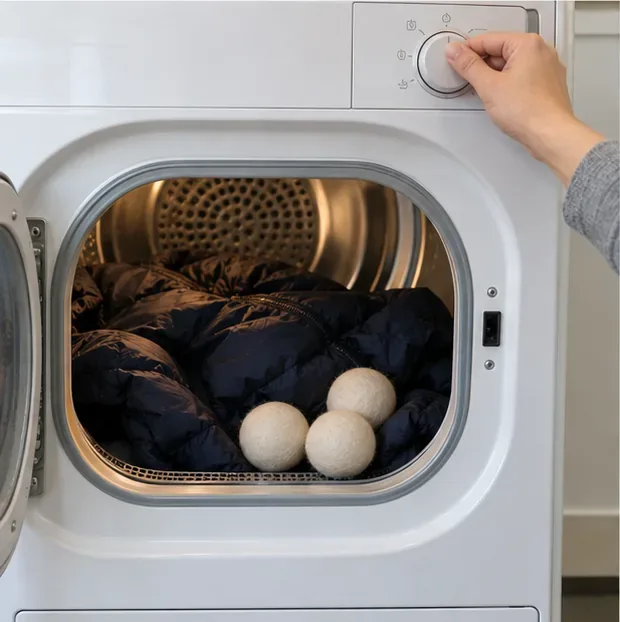
Verified for many current down models: The North Face recommends a long tumble dry on a low setting and says dryer balls or tennis balls can help keep down from clumping. This is one reason the idea is more than an internet “hack”; it appears in the manufacturer's current care instructions.
Common misconception: “Air drying is always the gentlest and safest option.” Not necessarily for down. A jacket can remain damp inside the baffles long after the shell feels dry, and clumped down does not insulate properly. Some current North Face down pages specifically tell users not to hang dry.
Action: Use low heat only when the care label allows tumble drying. Stop periodically, feel every baffle, and gently break apart clumps with your fingers before restarting the dryer. High heat is not a shortcut.
Verified principle: The purpose of cleaning down is to restore and preserve loft, and The North Face emphasizes long, low drying for down products. A jacket that still has cool, dense, or heavy spots is not finished.
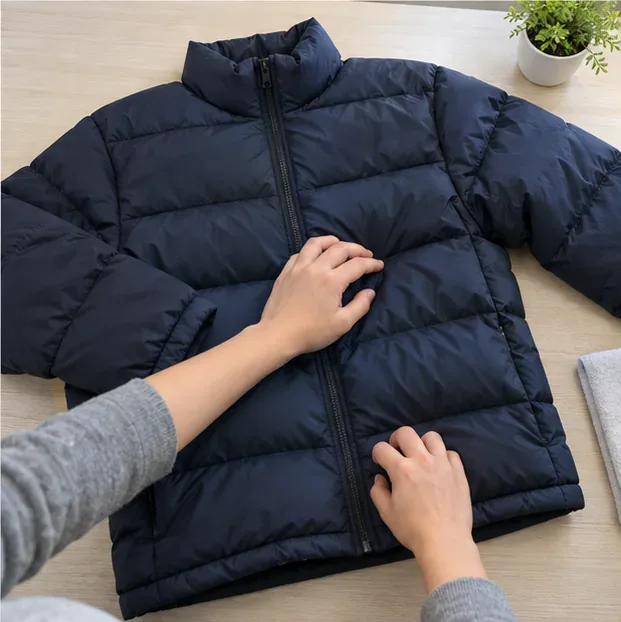
Lay the dry jacket out and compare the baffles. They should feel light and evenly filled rather than hard or matted. Gently massage any remaining small clumps and return the jacket to a low dryer cycle if permitted. Only store it when the fill is dry throughout.
Action: Do a final “cool spot” check at the cuffs, hood, collar, lower back, and thickest baffles. These areas can hide moisture.
False. The North Face sells both down and synthetic insulated jackets, and some garments combine materials. The Huila line, for example, uses synthetic insulation, while the 1996 Retro Nuptse uses down.
Action: Read the insulation line on the tag before choosing detergent or drying method.
Not for applicable down jackets. Current North Face down-care instructions recommend adding tennis balls or tumble-dryer balls during low-temperature tumble drying to reduce clumping.
Action: If your label allows tumble drying, use clean balls and low heat; if it does not, do not copy the method blindly.
Not verified. The North Face U.S. care page recommends a service that specializes in cleaning down. That wording should not be treated as blanket approval for every dry-cleaning solvent or process.
Action: Ask the cleaner specifically whether it handles technical down garments and whether it will follow the jacket's care label.
Usually not enough information to conclude that. Down collapses when wet and can remain clumped until it is thoroughly dried and redistributed. A synthetic jacket can also look compressed while saturated.
Action: Finish the approved drying process completely before judging the result. If loft does not return after full drying, inspect for detergent residue, trapped moisture, or physical damage.
Not necessarily. On shells with a durable water-repellent finish, reduced beading can mean the DWR needs cleaning or renewal rather than that the insulation has failed. The North Face's U.S. product-care guidance explains that dirt and wear can reduce DWR performance and recommends following the care label before considering retreatment.
Action: Clean the jacket correctly first. If the shell still wets out and the garment is designed with DWR, use only a compatible treatment and follow both the garment and treatment instructions.
This is where model-specific instructions matter most. Some North Face regional product pages describe alternatives for particular down products, while the U.S. general guidance recommends specialist professional cleaning for down. There is not one verified no-dryer method that can safely replace every jacket's own care label.
Action: If your label requires or recommends tumble drying and you do not have an appropriate dryer, use a laundromat dryer with a true low-heat setting or a specialist down-cleaning service. Do not place the jacket directly on high heat or improvise with a heater.
For a North Face puffer, the most important step is identifying the exact insulation and following the garment's care label. For many current down models, verified manufacturer guidance supports a front-loading washer, warm water, down-specific liquid detergent without bleach, gentle agitation, low spin, an optional extra rinse, careful handling while wet, and a long low-temperature tumble dry with dryer or tennis balls. Synthetic puffers can have different instructions, including washing at 104°F (40°C) or below with a mild detergent.
The useful rule is not “wash every puffer this way.” It is “use the most specific verified instruction available for your exact jacket.” That keeps the process simple, avoids the most common care myths, and gives the insulation the best chance to recover its loft and performance.
Learn how to clean suede safely without machine washing or soaking it, including brushing, stain removal, air-drying, and suede protection.
Learn how to dry a wet phone charger port safely, compare air-drying, wireless charging, emergency overrides, and service, and avoid heat, rice, and objects.
Clean a refrigerator water dispenser safely with mild soap, careful nozzle cleaning, mineral-scale removal, drying, and filter checks.
Learn how to take a bike chain off safely, whether it uses a quick link or rivet, plus which tools to use and when a connector must be replaced.
Learn how to remove rust from golf clubs safely, starting with soap and a soft brush, when to stop, and how raw wedges differ from plated irons.
How to Use Google Lens on Chromebook lets you scan objects, translate text, and solve problems directly from your device. Follow these steps to get started quickly.
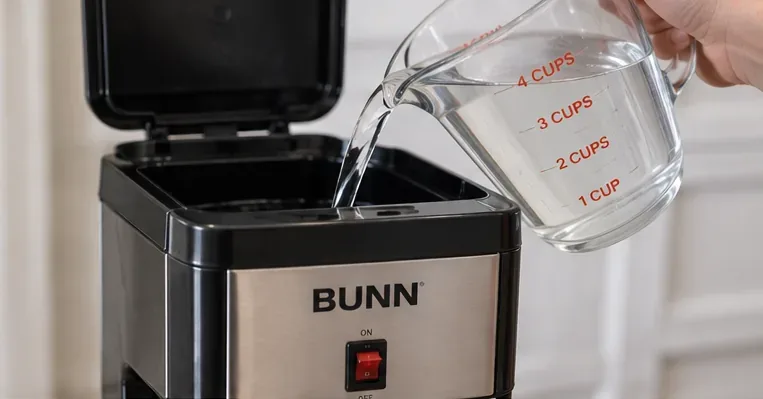
Clean a BUNN coffee maker with vinegar safely using the verified Heat N Brew method, plus model checks, sprayhead care, flushing steps, and mistakes to avoid.
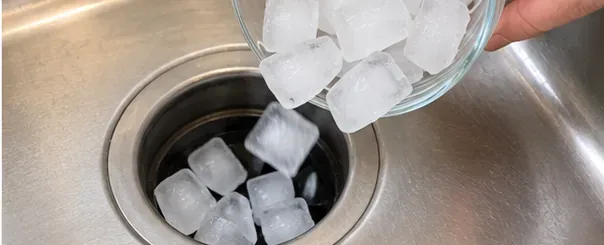
Learn how to clean a garbage disposal with ice, compare cold-water, citrus, and deeper-clean options, and know when ice is not enough.
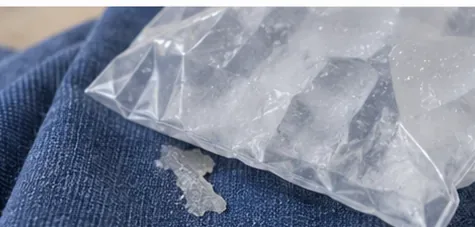
Learn how to remove school glue, super glue, hot glue, and adhesive residue from clothes safely, with fabric-specific steps and solvent cautions.
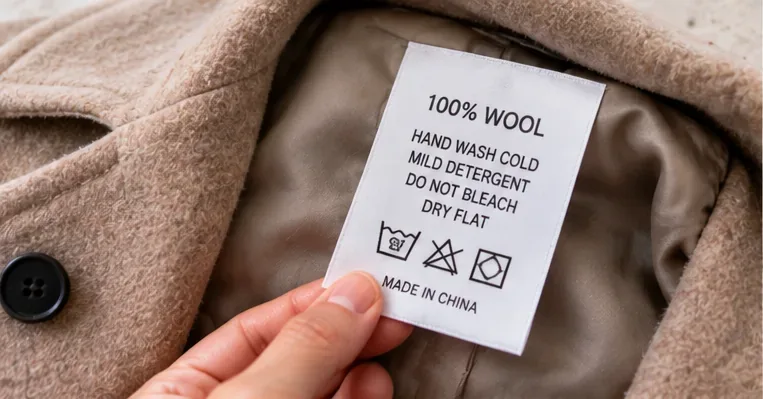
Learn how to wash a wool coat safely by following its care label, choosing a wool-safe detergent, washing gently, and drying without shrinking or distortion.