How to Wash Suede Safely: What to Do Instead of Soaking It

Learn how to clean suede safely without machine washing or soaking it, including brushing, stain removal, air-drying, and suede protection.
Yes, most current Sunbeam heated blankets can be washed in a washing machine, but only after the controller and power cord are disconnected. Sunbeam's current heated-bedding guidance says to machine wash in cold water on a gentle cycle, or hand wash. For drying, the company's instructions allow a low, delicate tumble in a household dryer, but the blanket should be removed while still damp, gently returned to its original size, and then finished on a clothesline or shower rod. The blanket must be completely dry before any power or control plug is reconnected.
That short answer applies to Sunbeam heated bedding covered by the company's general care instructions. Your sewn-in care label and exact model manual still matter. Sunbeam itself tells owners to follow the easy-care label or user manual, so if your blanket gives different model-specific directions, use those directions instead of a generic routine.
| Question | Sunbeam guidance | What to do |
|---|---|---|
| Can it go in a washing machine? | Yes, for heated bedding covered by the current instructions | Disconnect all controls and cords, then wash in cold water on a gentle cycle |
| Can it be hand washed? | Yes | Follow the blanket's care label or model manual; the general manual does not give a soak time |
| Can it go in a dryer? | Yes, with restrictions | Use a household dryer on low/delicate, remove the blanket while still damp, then finish hanging |
| Can it go in a laundromat or commercial dryer? | No | Use a home dryer only if following the low/delicate instructions, or finish by hanging |
| Can you dry clean it? | No | Do not use dry-cleaning solvents |
| Can you use bleach, a wringer, or an iron? | No | Avoid all three |
| Can the controller get wet? | No | Detach it before washing and never immerse it |
| When can you plug it back in? | Only when completely dry | Check the blanket, connector, cord, and controller before reconnecting |
These points are stated in Sunbeam's current Heated Bedding FAQ and in the company's Sunbeam Heated Bedding instruction manual. The manual available on Sunbeam Home is marked © 2022; the FAQ was still live when this guide was checked in September 2026.
Disconnect the power cord from the wall before detaching the control cord from the heated blanket. Sunbeam's manual then tells you to disconnect the controller cord from the blanket connector. On the illustrated connector in the manual, squeezing the hinges on both sides helps release it.
Do not put the controller or attached power electronics in the washer. Sunbeam states that the controller is not waterproof and should not be immersed in water or other liquids.
Before washing, inspect the blanket rather than automatically putting a damaged item through a cycle. Check that no cords remain connected and look for wiring that has worn through the fabric. Sunbeam also advises examining the heated product, cord, and controller for wear or damage before use. If you find exposed wiring, a damaged cord, abnormal operation, or other obvious damage, stop using the blanket rather than trying to clean it and test it again.
Example: If the blanket is dirty but the fabric is intact, the connector is undamaged, and no wire is visible through the fabric, the normal wash instructions are relevant. If a wire has broken through the fabric near the foot of the blanket, washing is not the next step; discontinue use and contact Sunbeam support.
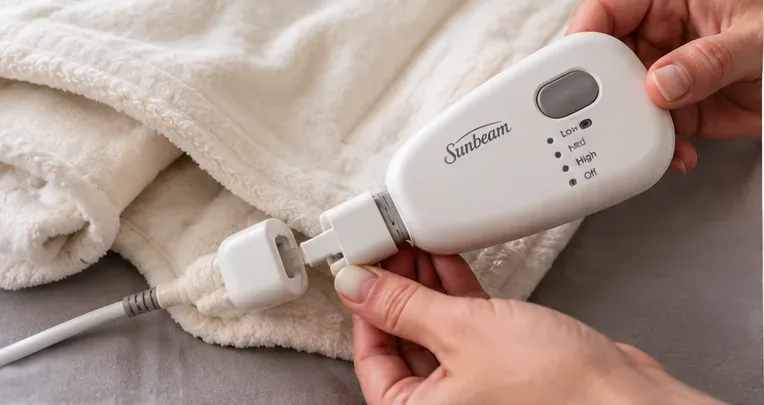
Place the blanket in the washer only after every detachable control cord has been removed. Sunbeam's general heated-bedding manual specifies cold water and a gentle cycle. It also permits hand washing.
The reason to follow the cycle and temperature limits is not simply to protect the surface fabric. Heated bedding contains internal wiring. Sunbeam warns that improper laundering can create problems with the heating wire and may create a fire hazard. The manual also warns that shrinkage from incorrect washing can be hazardous.
Do not add bleach. Sunbeam's care warning explicitly says not to use it. The general manual excerpt we verified does not specify a detergent type, quantity, presoak time, or fabric-softener procedure. If your sewn-in care label gives additional laundry-product instructions, follow that label rather than guessing.
Example: A washer setting labeled “Cold / Gentle” matches the general instruction more closely than a hot sanitary cycle or a heavy-duty cycle. If your machine has only unusual specialty cycles and you cannot tell which one is equivalent to gentle, hand washing according to the product label may be the clearer option.
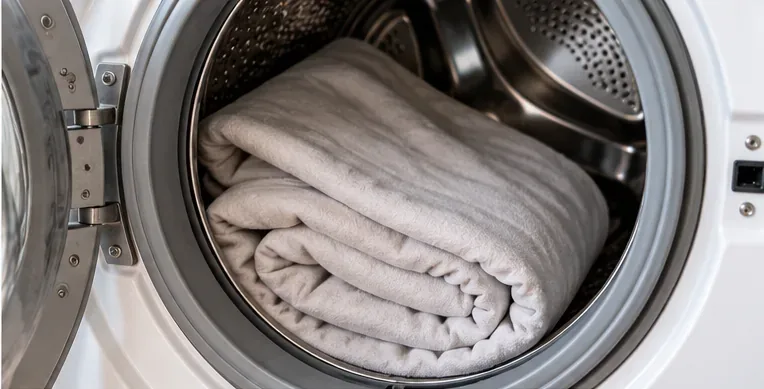
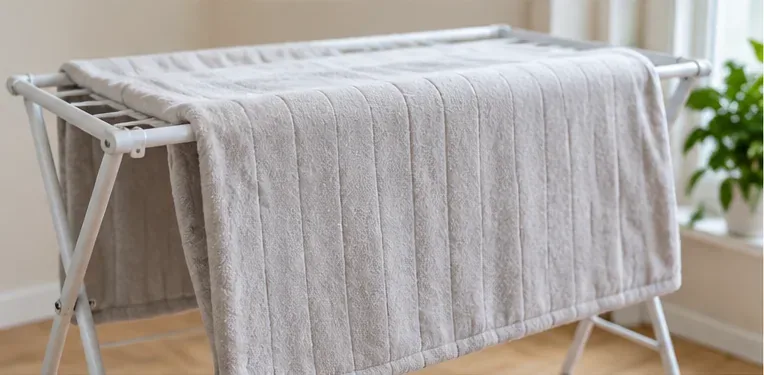
This is where the phrase “dryer safe” can be misunderstood. Sunbeam's FAQ says its heated bedding is washing-machine and dryer safe because the controller is detachable. The detailed manual adds important conditions: use a low, delicate tumble cycle, remove the blanket while it is still damp, gently stretch it back to its original size, and then drape it over a clothesline or shower rod to finish drying.
Do not use a commercial dryer or a dryer at a laundromat. Sunbeam specifically cautions that these dryers get too hot and can damage the heated product's wiring. Also do not use a wringer, and do not iron the blanket.
When the blanket is still damp, gently restore its original shape without sharply folding, twisting, or aggressively pulling it. Then drape it over a clothesline or shower rod. Sunbeam says not to use clothespins. The general directions do not tell you to clip the blanket at the corners, and pinching a wired heated product is not a useful improvisation.
Example: If you have a household dryer with a clearly labeled Low or Delicate heat setting, the detailed Sunbeam method allows you to tumble the blanket on that setting and take it out damp. If the only dryer available is a high-heat commercial machine, skip it and follow the permitted hang-drying route instead.
Do not reconnect the power plug or control plug while the blanket is damp. Sunbeam repeats this point in both its FAQ and instruction manual: the heated product must be completely dry before reconnecting the electrical components.
Once dry, inspect the blanket again. Look over the fabric, connector area, cord, and controller for visible damage or changes that concern you. The company's safety instructions say to discontinue use immediately if improper operation, wear, or damage is observed.
When the blanket is dry and undamaged, reconnect the control cord to the blanket module according to the setup directions for your model. Make sure the connection is complete; Sunbeam's setup instructions warn that a loose connector can present a fire risk.
Example: A surface that feels dry is not a reason to rush if thicker seams or the connector area still feel damp. Leave the blanket drying longer. There is no benefit to “testing” a partially damp electric blanket by plugging it in.
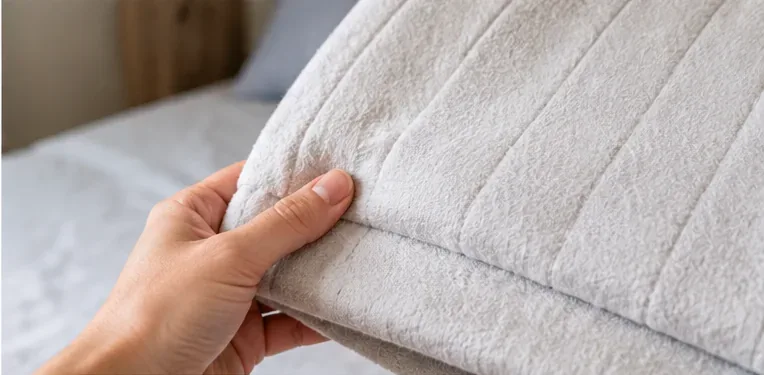
Sunbeam's general instructions allow hand washing, and the FAQ also says heated bedding may be hand-washed and line dried. However, the generic manual we verified does not give a universal soak duration, detergent formula, tub-filling level, or hand-agitation technique.
That missing detail matters. It is better to follow the sewn-in care label or your exact model manual than to borrow a “15-minute soak” or chemical recipe from a different blanket. The key verified restrictions still apply: remove the controller, do not immerse the controller or cord, do not use bleach, do not wring, do not iron, do not dry clean, and do not reconnect until the blanket is completely dry.
Sunbeam has sold many heated blankets, throws, mattress pads, and connected products. The current FAQ provides broad heated-bedding directions, but the care label on your exact product is the better tie-breaker when a detail differs.
For example, a conventional Sunbeam heated blanket with detachable wired controls fits the general method above. A cordless heated throw with a removable battery has different electrical hardware and should be cleaned according to its own battery-removal and care instructions. Likewise, if your blanket is old enough that its label gives a different process, do not assume today's general FAQ overrides the original care instructions.
If you cannot identify the model, the label is unreadable, or the connector or wiring looks damaged, the safe next action is to stop and use Sunbeam's official contact page rather than experimenting with wash temperatures, solvents, or drying methods.
For most Sunbeam electric blankets with detachable controls, washing is not complicated: disconnect, inspect, wash cold and gentle, dry carefully, and wait for complete dryness before restoring power. The details about heat, controllers, and drying matter because this is not ordinary bedding—it is bedding with an electrical heating system built inside.
Learn how to clean suede safely without machine washing or soaking it, including brushing, stain removal, air-drying, and suede protection.
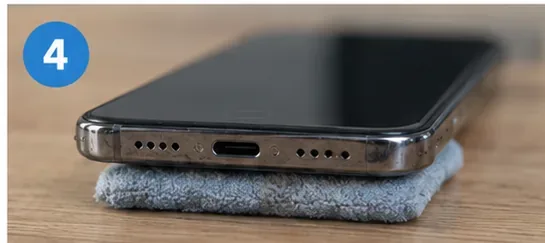
Learn how to dry a wet phone charger port safely, compare air-drying, wireless charging, emergency overrides, and service, and avoid heat, rice, and objects.
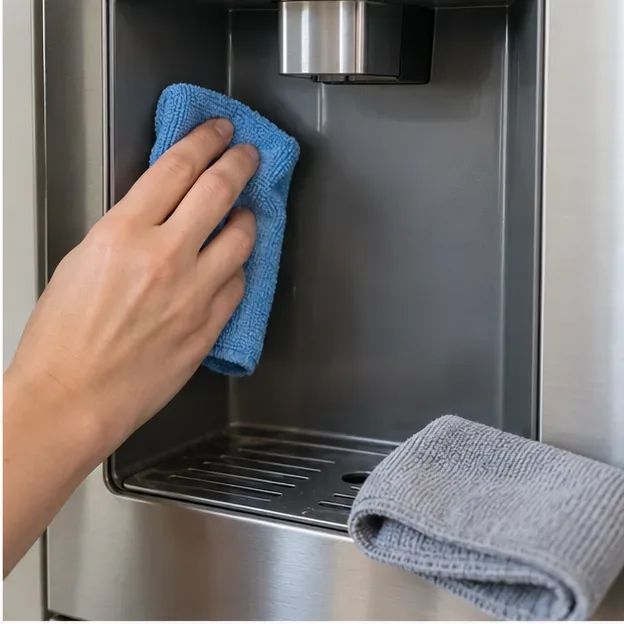
Clean a refrigerator water dispenser safely with mild soap, careful nozzle cleaning, mineral-scale removal, drying, and filter checks.
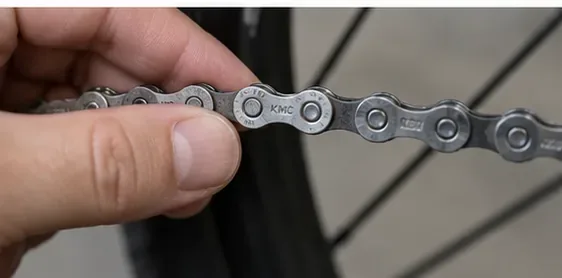
Learn how to take a bike chain off safely, whether it uses a quick link or rivet, plus which tools to use and when a connector must be replaced.
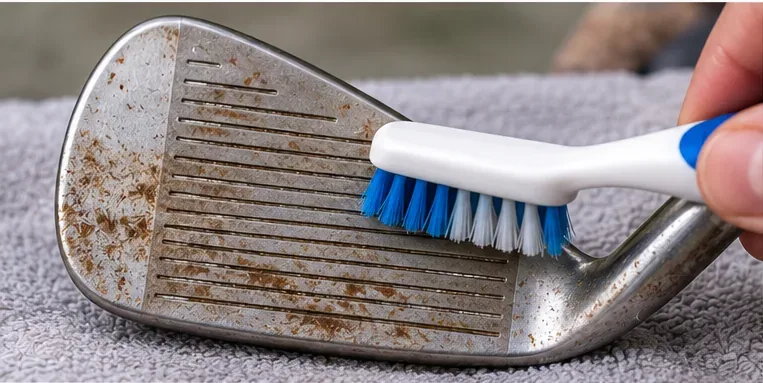
Learn how to remove rust from golf clubs safely, starting with soap and a soft brush, when to stop, and how raw wedges differ from plated irons.
How to Use Google Lens on Chromebook lets you scan objects, translate text, and solve problems directly from your device. Follow these steps to get started quickly.
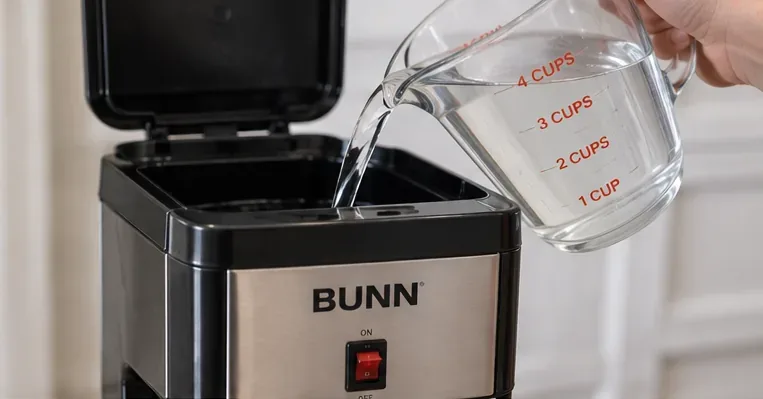
Clean a BUNN coffee maker with vinegar safely using the verified Heat N Brew method, plus model checks, sprayhead care, flushing steps, and mistakes to avoid.
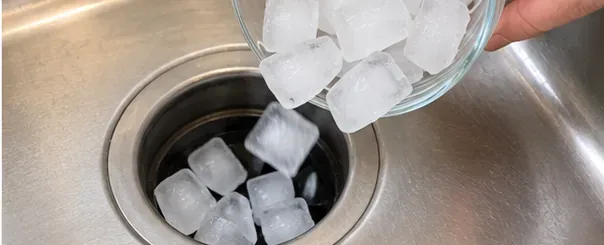
Learn how to clean a garbage disposal with ice, compare cold-water, citrus, and deeper-clean options, and know when ice is not enough.
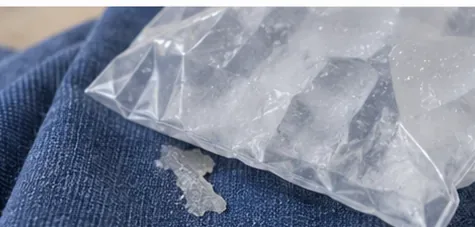
Learn how to remove school glue, super glue, hot glue, and adhesive residue from clothes safely, with fabric-specific steps and solvent cautions.
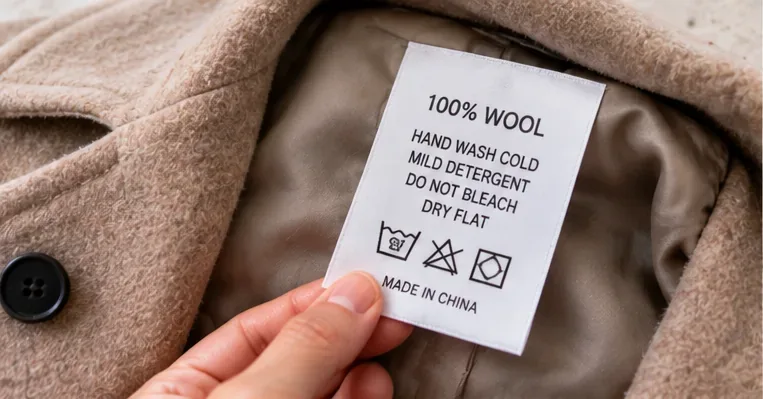
Learn how to wash a wool coat safely by following its care label, choosing a wool-safe detergent, washing gently, and drying without shrinking or distortion.