Home
» How to
»
How to Wash a Weighted Blanket with Glass Beads Without Damaging It
How to Wash a Weighted Blanket with Glass Beads Without Damaging It
A weighted blanket filled with glass beads may look washable because the filling itself is made of glass, but that shortcut can lead to the wrong care method. The construction around the beads—fabric, stitching, baffles, ties, cover, and total wet weight—matters just as much as the fill. Current manufacturer instructions also differ: Gravity says the weighted inner portion of its glass-bead blanket should be hand-washed and air-dried, while Baloo says its glass-bead weighted blanket can be machine-washed in cold water on a gentle cycle and dried on low heat. That contrast is the most important fact to understand before you start.
Practical rule: treat the care label and the instructions for your exact model as the authority. Do not assume that a method is safe merely because another glass-bead blanket can be washed that way. Manufacturer guidance referenced in this article was checked on September 13, 2026.
Quick decision guide before washing
Question
What it means
Action
Does the label say the weighted insert is machine washable?
Machine washing may be acceptable, subject to washer capacity and cycle instructions.
Follow the stated water temperature, cycle, detergent, and drying method.
Does it say hand wash or spot clean only?
The insert should not be put through a normal washer cycle.
Use the specified hand-cleaning method or contact the manufacturer if instructions are unclear.
Is there a removable duvet cover?
The cover and weighted insert may have different care rules.
Separate them and follow the instructions for each component.
Is the blanket close to your washer's load limit?
A blanket becomes heavier when saturated and may create an unbalanced load.
Check the appliance manual and use a suitable commercial machine or another approved method if capacity is uncertain.
Are seams torn or beads leaking?
Washing can worsen the damage.
Stop and repair the blanket or contact the maker before a full wash.
Misconception: Glass beads mean the blanket is automatically machine washable
Verified: false. Glass beads are used in both machine-washable and non-machine-washable weighted blankets. For example, Gravity's current weighted blanket instructions say the removable cover is machine washable but the weighted inner piece should be hand-washed and air-dried. By contrast, Baloo's current weighted blanket instructions say its glass-bead blanket is machine washable and dryer safe.
Action: identify whether your label refers to the cover, the weighted insert, or both. If you no longer have the tag, look up the exact model on the manufacturer's support or product page rather than relying on generic advice.
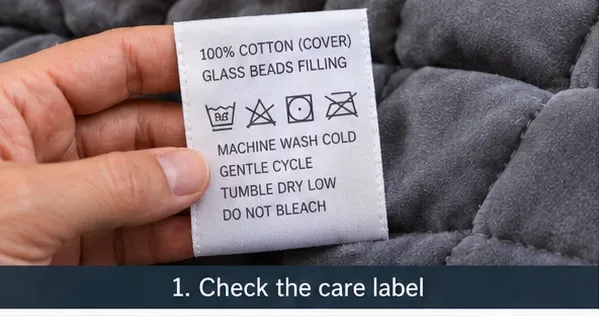
Start with the exact care label. Glass-bead filling does not, by itself, tell you whether the weighted insert can go in a washing machine or dryer.
Misconception: If the cover can go in the washer, the insert can too
Verified: false for some products. A removable cover is often designed for routine washing, while the weighted insert can have stricter limits. Gravity is a clear example: the outer cover is machine washable, but the weighted inner blanket has different care instructions.
Action: remove the duvet cover if your blanket has one, undo ties or connectors carefully, and wash the cover separately according to its label. Keep the weighted insert out of the washer unless its own instructions explicitly allow machine washing.
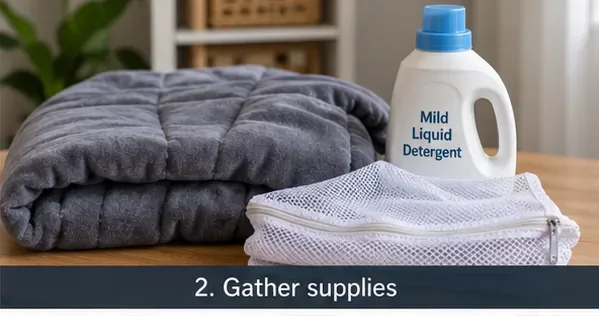
Gather only what your care instructions call for. Mild detergent is common in manufacturer guidance, but accessories such as a laundry bag are optional rather than universal.
Step 1: Inspect the blanket before adding water
Spread the blanket on a bed or clean floor and check both sides. Look closely at the perimeter seams, the stitched pockets that contain the beads, zippers, ties, and any area that has been repaired before. A small tear matters because agitation and the extra weight of a wet blanket can place more stress on damaged stitching.
Action: if you see loose glass beads, an opening in a baffle, or a seam that is separating, do not proceed with a full wash. Repair it according to the manufacturer's guidance or ask the maker about service options.
Step 2: Spot-treat stains when that can avoid a full wash
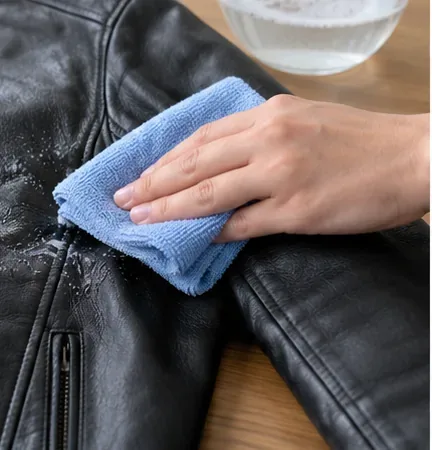
A localized spill does not always require saturating the entire weighted insert. If the care instructions permit spot cleaning, use a small amount of the recommended or mild detergent on a damp cloth, work gently from the outside of the stain toward the center, and blot rather than aggressively scrubbing the fabric. Test any cleaner on an inconspicuous area when the manufacturer does not specify one.
Action: give spot treatment time to work, then blot away detergent residue with a clean damp cloth. Avoid bleach or fabric softener unless the care instructions expressly allow them.
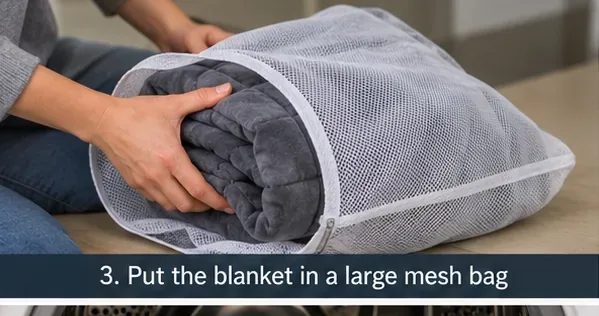
A mesh laundry bag can add a layer of containment, but use one only if the blanket maker and your washer instructions allow it; it is not a standard requirement for every weighted blanket.
Step 3: Check washer capacity before choosing the machine-wash route
Verified: heavy and bulky laundry can cause vibration or an out-of-balance load. Whirlpool's washer guidance tells users to check the item's care label and warns against overloading the washer. Baloo likewise tells owners to check the washing machine's weight capacity because a weighted blanket will be heavier when wet, and it recommends a commercial washer for its King size.
Depends on circumstances: there is no single home-washer weight limit that applies to every appliance. Capacity, tub design, cycle, and the blanket's saturated weight all matter.
Action: compare your blanket's dry weight and size with your washer's manual. If the margin is small or the manufacturer recommends commercial equipment, do not improvise with a home machine.
Step 4: Machine wash only if your exact blanket permits it
If the weighted insert is labeled machine washable, follow the stated cycle exactly. Cold water and a gentle cycle are common in current manufacturer instructions, but they are not a universal rule. Wash the blanket by itself when directed so the machine can handle the heavy item predictably and the fabric is not rubbing against zippers or hardware from other laundry.
Action: use only the detergent amount and type allowed by the care instructions. Stop the cycle if the washer begins banging, walking, or repeatedly failing to balance the load.
Machine washing is appropriate only when the blanket's own care instructions permit it and the appliance can safely handle the load.
Is a mesh laundry bag required?
Unknown unless your product instructions say so. A large mesh bag is sometimes used to contain bulky textiles, but the manufacturer sources reviewed for this article do not establish it as a universal requirement for glass-bead weighted blankets. A bag also does not solve a washer-capacity problem.
Action: use a mesh bag only when the blanket manufacturer and appliance instructions permit it. Do not add one simply because it appears in a generic laundry routine.
Step 5: Hand wash when the insert is specifically labeled for hand washing
For a hand-wash-only insert, use a clean bathtub or basin large enough to support the blanket without sharp folds. Follow the manufacturer's temperature and detergent directions. If the label provides only a general hand-wash instruction, cool or cold water and a small amount of mild detergent are conservative choices, but do not override a specific product instruction.
Lower the blanket into the water gradually, press water through the fabric with your hands, and avoid forceful twisting. Drain the tub, refill with clean water, and repeat gentle pressing until detergent residue is removed.
Action: support the blanket's weight with both hands when moving it. Do not lift a saturated blanket by one corner or one tie because that concentrates load on a small section of stitching.
Step 6: Remove water without wringing
A wet weighted blanket is much harder to handle than a normal comforter. Instead of twisting it, let excess water drain while the blanket remains supported. You can gently press sections against the bottom of the tub or between clean towels if that approach does not conflict with the care instructions.
Action: move the blanket in sections and keep its weight distributed. If the insert is too heavy to lift safely when wet, get help rather than dragging or stretching it.
Misconception: Every glass-bead blanket must be air-dried
Verified: false as a universal claim. Drying rules differ by construction. Gravity tells owners to air-dry its weighted inner blanket, while Baloo says its glass-bead weighted blanket can be dried on low heat.
Action: follow the drying method on your exact label. If it says air dry, do not substitute a hot dryer. If it expressly permits tumble drying, use only the listed heat level and machine type.
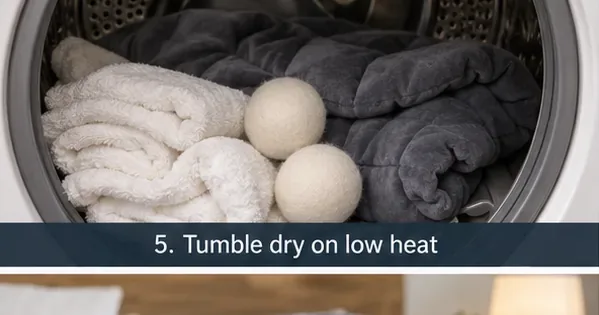
Low-heat tumble drying is brand-specific. Some glass-bead blankets permit it, while others require the weighted insert to air-dry.
Step 7: Dry the blanket completely and keep the fill distributed
If air drying is required, lay the blanket flat on a clean, moisture-safe surface or across a drying setup that supports the weight over a broad area. Turn or reposition it as needed so trapped moisture can escape from both sides. Avoid hanging a very wet weighted blanket from a narrow line or a single corner unless the manufacturer specifically recommends that method.
If low-heat tumble drying is permitted, make sure the dryer is also large enough for the heavy item to move without being tightly packed. Do not increase heat just to shorten drying time.
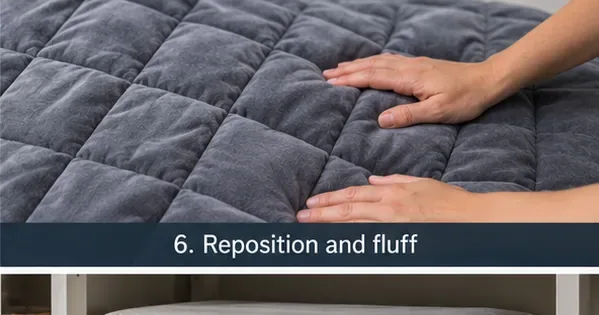
Action: periodically smooth the quilted pockets with your hands so the blanket dries evenly and retains a consistent feel.
While the blanket dries, gently flatten and redistribute the quilted sections so the fill remains even without twisting or wringing the heavy fabric.
Step 8: Confirm it is fully dry before putting the cover back on
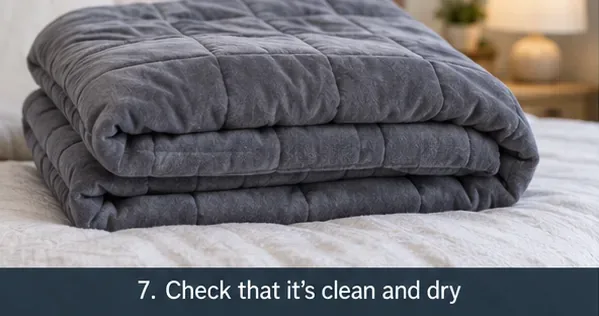
Do not judge dryness only from the surface. Feel several central sections, corners, and seams. The blanket should have no cool, damp patches, and there should be no musty odor. Check again for weakened seams or bead leakage after washing.
Action: if any section is still damp, continue the approved drying method before folding, using, or storing the blanket. Once dry, redistribute the fill gently and reattach the duvet cover evenly.
Before reuse, check that the blanket is fully dry, the seams are intact, and the weight still feels evenly distributed.
Storage after washing
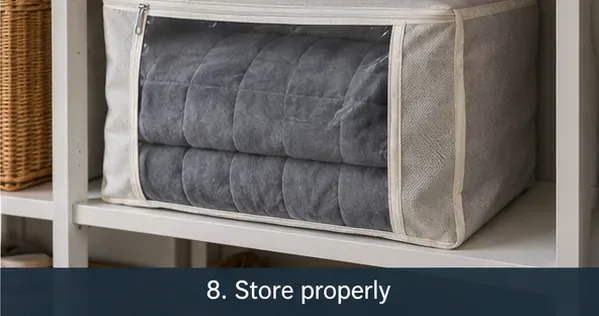
Store a clean weighted blanket only when it is completely dry. Fold it so the weight is supported rather than leaving it hanging for long periods from a single point. A dry shelf or breathable fabric storage case can protect it from dust while avoiding trapped moisture.
Action: before long-term storage, do one last seam check and make sure the cover and insert are both dry.
Store the blanket only after it is completely dry. Keep it supported and protected from moisture between uses.
What to do when the label is missing or instructions conflict
Unknown: without model-specific instructions, no one can verify whether a particular weighted insert is safe for machine washing or tumble drying merely by knowing that it contains glass beads. Fabric coatings, thread, internal batting, baffle construction, and total weight can change the care requirements.
Action: search the manufacturer's current support page using the exact product name, size, and approximate purchase year. If you still cannot verify the instructions, contact the manufacturer before immersing the insert. A conservative spot-cleaning approach may be safer than experimenting with a full wash, but even that should respect any material-specific restrictions you can identify.
Bottom line
The safest way to wash a weighted blanket with glass beads is not to follow a single universal recipe. First determine what your own blanket allows. Then check the appliance capacity, protect damaged seams from further stress, use the specified wash method, and dry it exactly as directed. The most useful distinction is simple: glass beads describe the filling, not the complete care instructions.