How to Wash Suede Safely: What to Do Instead of Soaking It
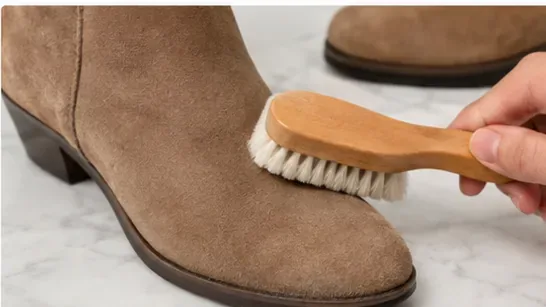
Learn how to clean suede safely without machine washing or soaking it, including brushing, stain removal, air-drying, and suede protection.
The most important rule for washing a wool coat is simple: follow the sewn-in care label before choosing a home-washing method. Some wool coats can be hand-washed, some are machine-washable on a wool or very gentle cycle, and some are marked Dry Clean Only or Do Not Wash. Woolmark's current care guidance makes the same point: the care claim is the deciding instruction because wool garments can differ in construction and finishing.
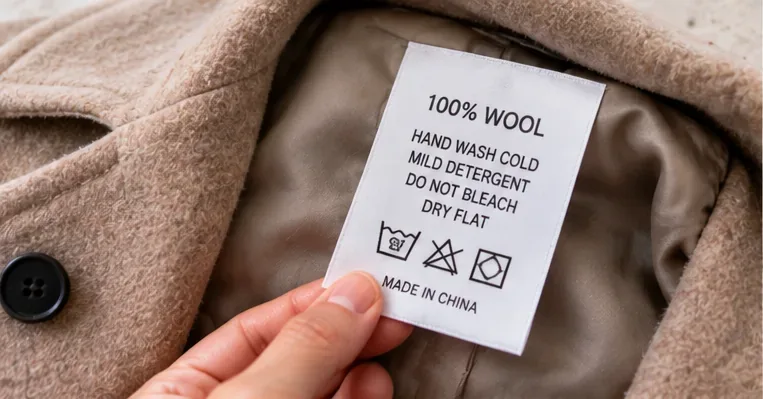
To make the choices concrete, this guide uses one hypothetical example throughout: imagine a camel-colored coat with a 100% wool outer shell, a polyester lining, and a label that says Hand Wash Cold, Do Not Bleach, and Dry Flat. This is an example for explaining the process, not a report of a real garment test. If your own coat's label says something different, your label wins.
Start with the care label, not the fiber-content tag alone. “100% wool” tells you what the shell is made from, but it does not tell you whether the whole coat is safe to wet-clean. A coat may also contain a lining, shoulder structure, interfacing, padding, adhesives, decorative trim, or tailored components that affect the approved cleaning method.
Woolmark's washing-symbol guidance explains that a Hand Wash claim calls for careful wet cleaning, while a Do Not Wash claim means the item should not be washed because it may be sensitive to wet treatment or unsuitable for a domestic machine. Woolmark separately states that clothing marked Dry Clean Only should be taken to a professional dry cleaner.
For our hypothetical camel coat, the label says Hand Wash Cold, so home hand washing is an allowed route. If that same coat instead said Dry Clean Only, the rest of the wet-washing steps in this guide would not apply.
Detergent choice matters. Woolmark recommends a neutral, mild wool detergent for wool garments and advises against heavy-duty detergents, enzyme-containing “bio” detergents, and detergents that contain bleach. See Woolmark's wool detergent guidance.
Before washing, empty the pockets and remove detachable belts, jewelry, pins, and accessories. Woolmark's general care guidance recommends emptying pockets and removing accessories to help prevent sagging and distortion. Check the coat for loose buttons, tears, weak seams, or stains that may need separate professional attention.
For the hypothetical coat, empty the pockets, remove its detachable belt, fasten any closures that the garment construction suggests should stay aligned, and gently brush away loose surface dust with a soft garment brush if the fabric is woven. Woolmark notes that brushing woven wool lengthwise can remove surface soil before it becomes a stain.
If there is a specific stain, do not automatically reach for chlorine bleach or a strong stain remover. The example label says Do Not Bleach, and Woolmark's care-symbol guidance says a crossed-out bleach symbol means bleaching is not allowed. For an expensive coat or an unknown stain, professional cleaning can be safer than experimenting with aggressive chemistry.
Fill a clean basin with enough water for the coat to move freely. Our hypothetical label says cold water, so use cold water for this example. Woolmark's general hand-wash guidance allows approximately 30°C water for many hand-wash-only wool garments, but it also says the particular article's instructions matter. A colder label instruction should therefore be followed.
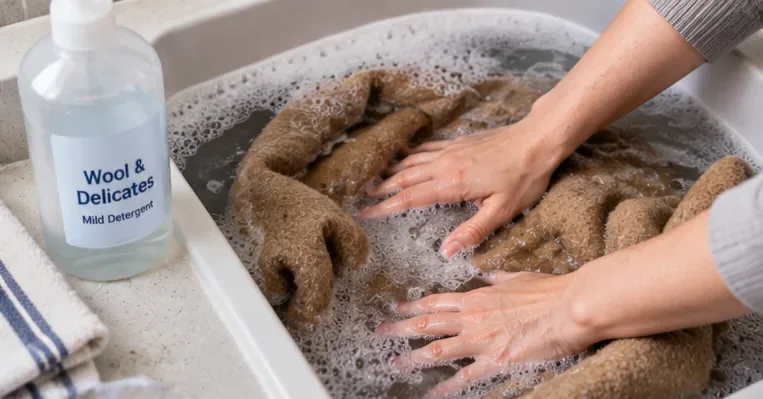
Dissolve a small amount of mild wool detergent in the water before adding the coat. Submerge the coat and let water move through the fabric. Press and gently agitate it rather than rubbing, twisting, or pulling.
Woolmark's general hand-wash instructions describe allowing the garment to float in the detergent solution and agitating carefully. They specifically advise against rubbing, pulling, and wringing. For some Woolmark hand-wash guidance, a short soak of about 10 minutes is used, but that should not override a coat label or manufacturer instruction that specifies a different process.
For our hypothetical coat, a brief, gentle soak and light pressing are reasonable because its label explicitly allows hand washing. If your coat has leather trim, glued decorations, unusual shoulder structure, or a label that lacks a wet-cleaning claim, do not assume this example transfers safely to it.
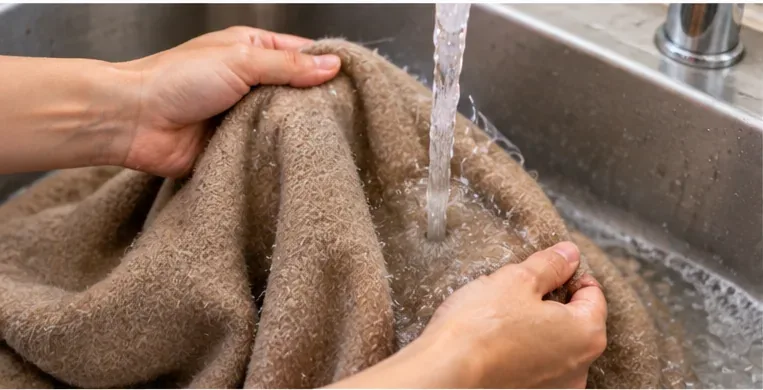
Drain the wash water and refill the basin with clean water at a compatible temperature. Gently press the coat through the rinse water to carry detergent out of the fibers. Repeat if necessary until the water is clear and the fabric no longer feels soapy.
Woolmark's hand-wash guidance calls for thorough rinsing and careful removal of excess water, not wringing. Wringing creates concentrated mechanical stress and can distort a wet coat. Instead, support the garment with both hands while moving it; wet wool is heavier than dry wool.
In our hypothetical example, once the coat is rinsed, lift it with its weight supported rather than dangling it from the collar or one sleeve. Place it on a clean towel and press gently to transfer out excess moisture. You can roll the towel and coat together loosely and press, but do not twist the roll as if wringing a rag.
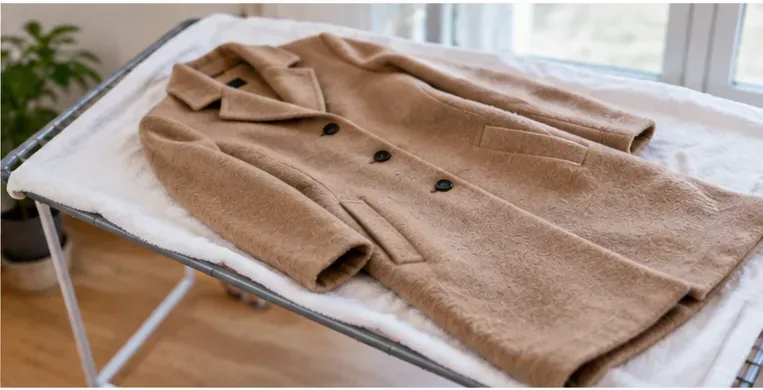
Our hypothetical coat says Dry Flat, so spread it over a clean, pale towel or a broad drying surface and ease it back into its normal proportions. Align the lapels, sleeves, hem, pockets, and front edges while the fabric is still damp. Let it air-dry away from direct sunlight, radiators, heaters, and other concentrated heat.
Woolmark's drying guidance recommends drying wool away from direct sunlight and heat. It also distinguishes between garment types: knitwear is generally flat-dried, while some woven items such as jackets can be dried on a suitable hanger. The specific care claim still controls the decision.
That distinction matters for coats. A woven wool coat whose label explicitly permits hanging may be supported on a broad, shaped hanger. Our example does not permit that shortcut because its label says Dry Flat. Flat drying also reduces the chance that a water-heavy coat will pull out of shape at the shoulders.
Do not put a coat in the tumble dryer unless the care label explicitly authorizes tumble drying. Woolmark says only garments carrying a tumble-dry care claim should use that route, normally with a low-heat or wool/delicate process. See Woolmark's tumble-drying guidance.
A machine-washable wool coat is a different case from our hypothetical hand-wash coat. Woolmark explains that machine-washable wool with a very mild wash claim should use a reduced-mechanical-action cycle, preferably a wool or delicates program. Its guidance also recommends keeping the drum lightly loaded rather than packed full.
If your coat explicitly says Machine Wash, use the temperature, cycle, spin, and drying instructions on that label. Do not convert “machine washable” into permission for a normal heavy-duty cycle. Gentle mechanical action is part of the care claim.
If a bulky coat does not fit comfortably in your washer, the size itself becomes a practical limitation even when the fabric is machine-washable. Forcing it into an undersized drum creates poor rinsing and unnecessary mechanical stress. A professional cleaner or appropriate larger-capacity equipment may be the better choice.
Stop before adding water. Woolmark says wool garments labeled Dry Clean Only should be taken to a professional dry cleaner. The fact that another wool coat can be hand-washed does not make yours wet-cleanable.
This is especially relevant to highly tailored coats. Even when the shell fiber is washable in isolation, the finished garment can include construction elements whose performance in water has not been approved by the maker.
Returning to the hypothetical example, imagine the identical-looking camel coat now has a Dry Clean Only label instead of Hand Wash Cold. The visual appearance and wool percentage have not changed, but the correct cleaning decision has changed completely. That is why the care label is more useful than a generic “wool coat” rule.
That is too broad. Woolmark notes that many wool garments are hand- or machine-washable. The correct method depends on the care claim.
This is the opposite mistake. A Do Not Wash or Dry Clean Only label is a clear reason not to use the hand-wash steps above.
Woolmark recommends mild, neutral wool detergents and advises avoiding heavy-duty, enzyme-containing, and bleach-containing detergents for wool care.
Mechanical stress can distort the garment while it is wet. Hand washing should rely on gentle movement and pressing rather than aggressive friction.
Radiators, strong sunlight, and unapproved tumble drying can damage wool or change the garment's shape. Air-dry according to the label and keep the coat away from concentrated heat.
| Care label on your wool coat | Best route | Do not assume |
|---|---|---|
| Hand Wash | Hand-wash gently using the label's temperature and a mild wool detergent | That machine washing is also safe |
| Machine Wash / Wool Cycle | Use the specified wool or very gentle program and label temperature | That a normal heavy-duty cycle is acceptable |
| Dry Clean Only | Use a professional dry cleaner | That hand washing is a harmless substitute |
| Do Not Wash | Do not wet-wash; follow the remaining professional-care symbols or manufacturer instructions | That wool fiber content alone makes water safe |
| Tumble Dry permitted | Use only the process allowed by the label | That all wool can go in a dryer |
| Do Not Tumble Dry / Dry Flat | Air-dry as directed | That low dryer heat is automatically safe |
The hypothetical camel coat in this guide can be hand-washed because its example care label says so. That is the lesson to carry to your own closet: the safest answer to “how to wash a wool coat” starts with the individual garment's care instructions, then uses gentle wool-specific handling within those limits.
Learn how to clean suede safely without machine washing or soaking it, including brushing, stain removal, air-drying, and suede protection.
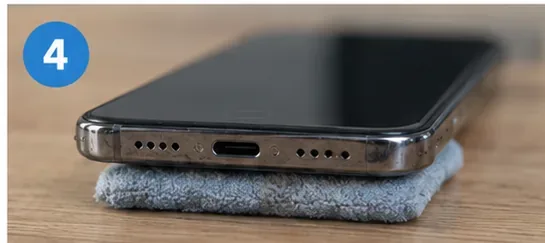
Learn how to dry a wet phone charger port safely, compare air-drying, wireless charging, emergency overrides, and service, and avoid heat, rice, and objects.
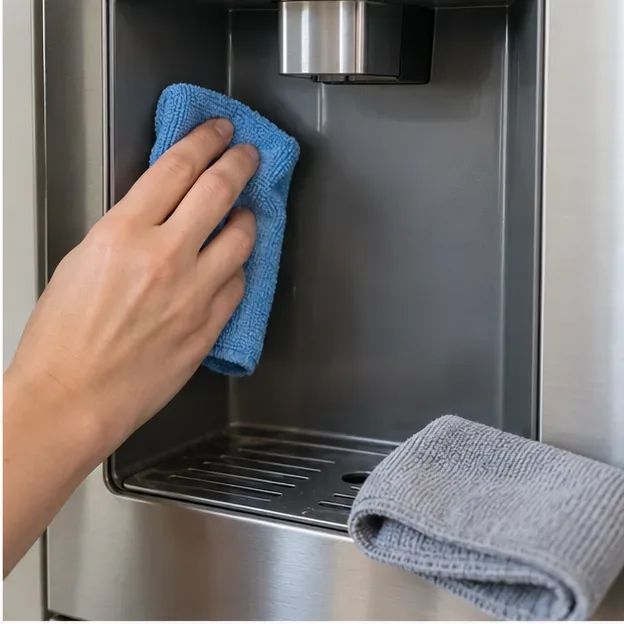
Clean a refrigerator water dispenser safely with mild soap, careful nozzle cleaning, mineral-scale removal, drying, and filter checks.
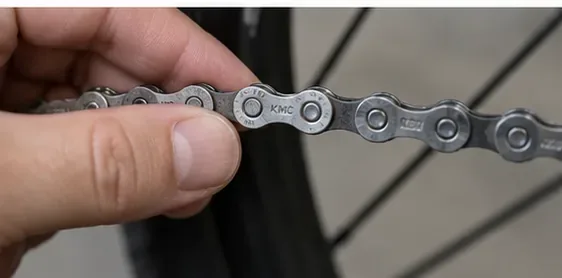
Learn how to take a bike chain off safely, whether it uses a quick link or rivet, plus which tools to use and when a connector must be replaced.
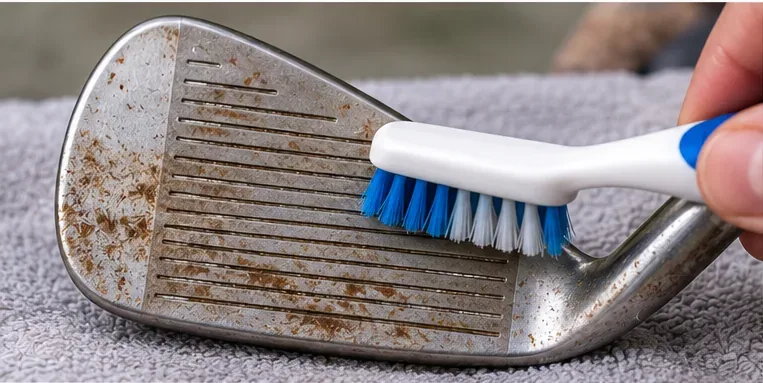
Learn how to remove rust from golf clubs safely, starting with soap and a soft brush, when to stop, and how raw wedges differ from plated irons.
How to Use Google Lens on Chromebook lets you scan objects, translate text, and solve problems directly from your device. Follow these steps to get started quickly.
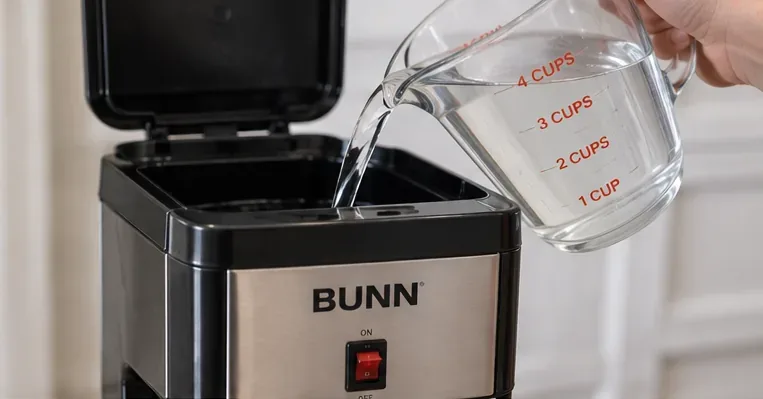
Clean a BUNN coffee maker with vinegar safely using the verified Heat N Brew method, plus model checks, sprayhead care, flushing steps, and mistakes to avoid.
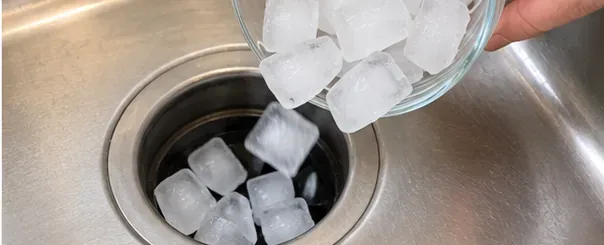
Learn how to clean a garbage disposal with ice, compare cold-water, citrus, and deeper-clean options, and know when ice is not enough.
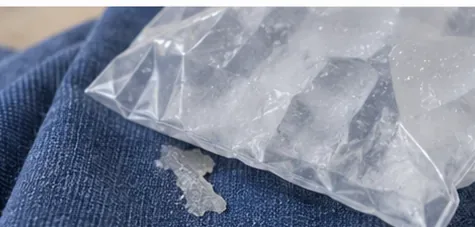
Learn how to remove school glue, super glue, hot glue, and adhesive residue from clothes safely, with fabric-specific steps and solvent cautions.
Learn how to wash a wool coat safely by following its care label, choosing a wool-safe detergent, washing gently, and drying without shrinking or distortion.