Home
» How to
»
How to Wash HOKA Sneakers Safely: A Beginner’s Step-by-Step Guide
How to Wash HOKA Sneakers Safely: A Beginner’s Step-by-Step Guide
If you are cleaning HOKA sneakers for the first time, the safest default is simple: hand wash them with cold water and a mild soap or detergent, then let them dry naturally away from direct heat and sunlight. That matches HOKA’s current general footwear-care guidance. HOKA also says it does not recommend putting the shoes themselves through a washing machine or dryer because those methods can damage materials; another official HOKA care page warns that machine washing can harm fastenings and glue. See HOKA’s footwear cleaning guidance and HOKA’s product-care guidance.
This guide follows that conservative, beginner-friendly method. It also explains when you should change the process for mesh, suede, nubuck, leather, GORE-TEX footwear, or natural-fabric panels.
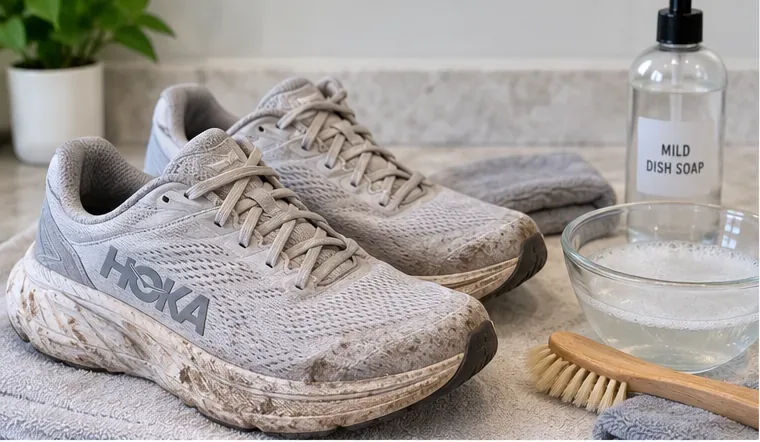
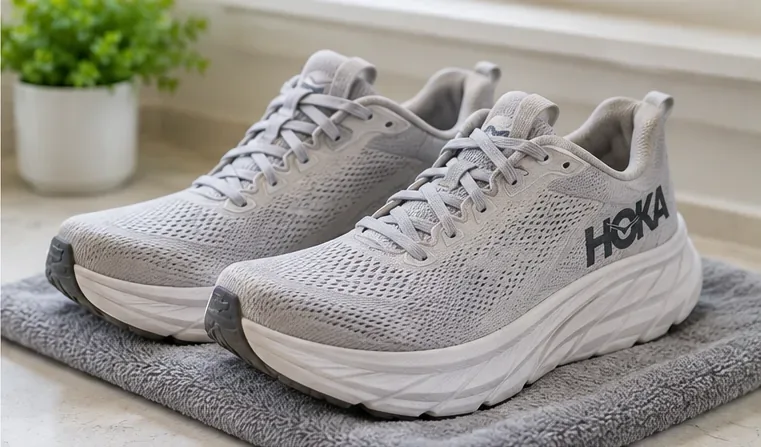
Start with a simple setup: cool water, mild soap, a soft brush, clean towels, and enough space for the shoes to dry naturally.
Before You Start: Know the Parts You Are Cleaning
A few terms make the instructions easier to follow. The upper is the fabric or leather portion that wraps around your foot. The midsole is the thick cushioning layer between the upper and the bottom tread. The outsole is the ground-contact rubber underneath. The insole, sometimes called a sockliner, is the removable footbed inside many shoes.
Most everyday HOKA running shoes use synthetic mesh or knit-like uppers, but not every model is built the same way. Before cleaning, check your specific model’s product description or labels. If you see suede, nubuck, leather, or GORE-TEX components, read the material notes later in this guide before getting those areas wet.
What You Need
A bowl or basin of cold water
A small amount of mild, preferably dye-free detergent or mild dish soap
A soft-bristle brush or soft toothbrush
Two or more clean cloths or towels
Plain absorbent paper or newsprint for stuffing the shoes while drying
Optional: a small laundry bag or clean sock for washing laces separately
You do not need bleach, a stiff scrub brush, a pressure sprayer, a washing-machine cycle for the shoes, or direct heat.
How to Wash HOKA Sneakers Step by Step
1. Inspect the Shoes and Decide Whether the Mud Should Dry First
If the shoes are only dusty or lightly dirty, you can start immediately. If they are coated with thick wet mud, HOKA’s care guidance suggests letting that mud dry first because dried, caked mud can come away more easily in clumps. This keeps you from smearing grit deeper into the upper.
Before adding water, tap the soles together gently outdoors or over a trash can, then brush away loose dirt. Pay attention to the outsole grooves and the seam where the upper meets the midsole.
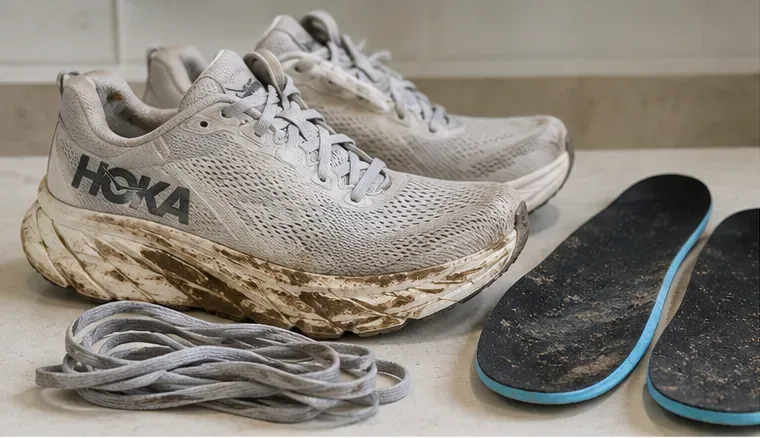
Remove loose dirt before wet cleaning, especially when mud has dried into the outsole and lower sidewalls.
2. Remove the Laces and Insoles
Take out the laces and removable insoles before washing the shoes. HOKA recommends disassembling these removable parts because it speeds cleaning and drying. It also lets you reach the tongue, lace eyelets, and interior edges without forcing a brush into tight spaces.
If an insole seems glued in place, do not force it out. Some footwear uses fixed components. Clean around it gently instead.
Keeping removable parts separate helps the shoes dry more evenly; absorbent paper can also help support the shape while drying.
3. Wash the Laces Separately
HOKA says laces can be washed on a cold setting with regular detergent and suggests placing them inside a sock so they do not become tangled or lost. If you would rather keep the entire process manual, swish the laces in a small bowl of cool, mildly soapy water, work the dirty areas gently between your fingers, rinse, and lay them flat to dry.
Do not put the laces into a hot dryer just because the shoes are drying nearby. Keeping all parts away from unnecessary heat is the simpler beginner-safe approach.
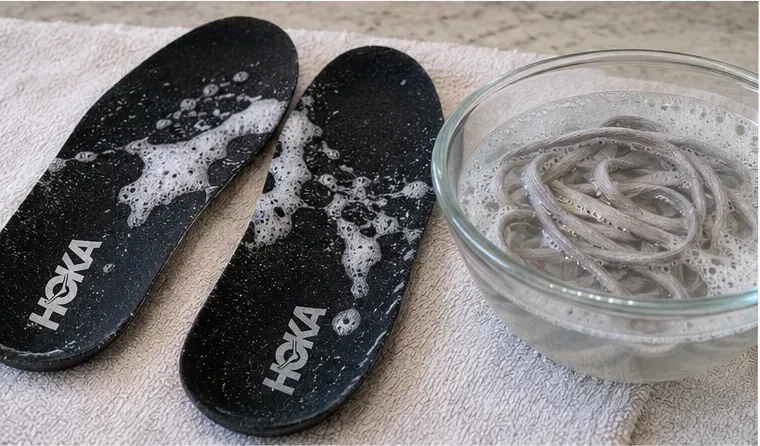
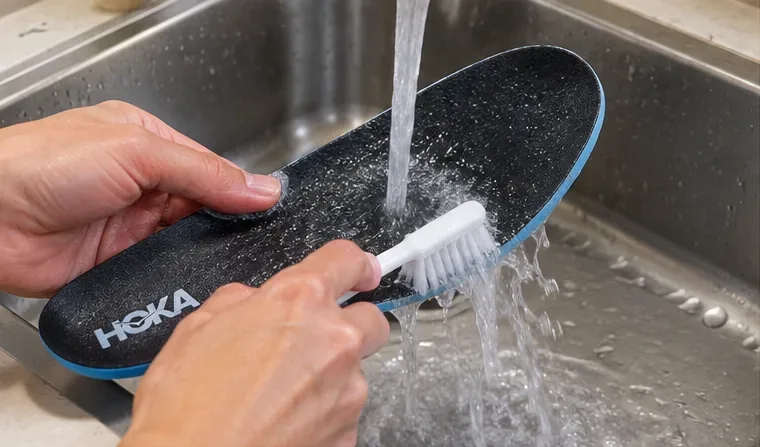
Wash the laces and removable insoles separately so dirt is not trapped between the removable parts and the shoe interior.
4. Brush Away Remaining Dry Dirt
Use a dry paper towel or cloth first, then a soft dry brush for seams, tread edges, and textured areas. This step matters because sand and grit can act like an abrasive if you immediately start scrubbing a wet upper.
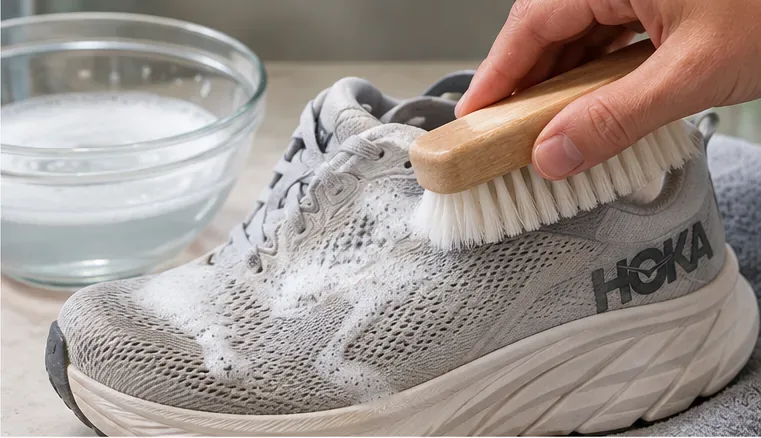
For mesh, use less force than you think you need. HOKA specifically notes that mesh is light and quick-drying but vulnerable to fraying under harsh scrubbing. Repeated light dabbing or short gentle brush strokes are safer than aggressive back-and-forth scrubbing.
5. Clean the Upper and Midsole With a Mild Solution
Add a small amount of mild cleaning agent to cold water. HOKA’s regional cleaning guide lists natural dye-free detergent, dish soap, or even dandruff shampoo as workable options. You do not need a concentrated mixture; the goal is a light lather, not a soak in strong cleaner.
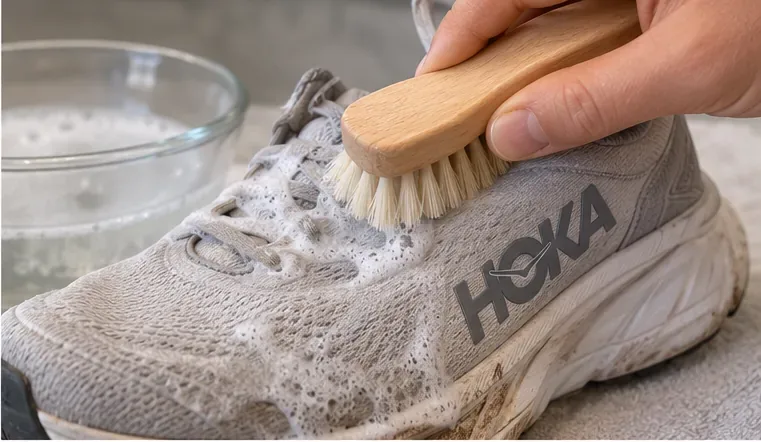
Dip the soft brush into the solution and gently work on dirty areas. Start with the upper, then move to the midsole and outsole edges. Blot dirty liquid away with a towel as you go instead of repeatedly redistributing it over the fabric.
Use a soft brush and light pressure on mesh. The purpose is to lift dirt, not grind the fibers.Work in small sections and refresh the brush as the cleaning water gets dirty rather than over-saturating the shoe.
6. Remove Soap With a Cold, Damp Cloth
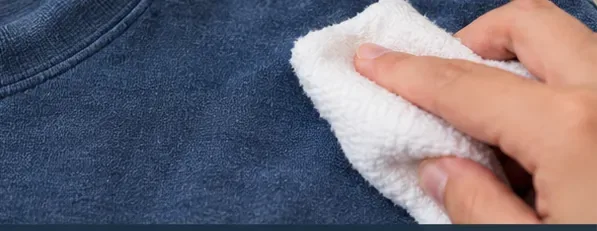
HOKA’s general method calls for wiping away remaining lather with a towel or rag dampened with cold water. For most standard HOKA running shoes, this is preferable to holding the entire shoe under a strong stream of water because it gives you more control over how wet the interior becomes.
Wring the cloth out well, wipe a section, rinse the cloth, and repeat until you no longer see soap residue. If you cleaned the insole separately, rinse or wipe it thoroughly as well.
Remove detergent from removable components thoroughly, then shake off excess water and set them aside to dry separately.
7. Blot, Stuff, and Air Dry
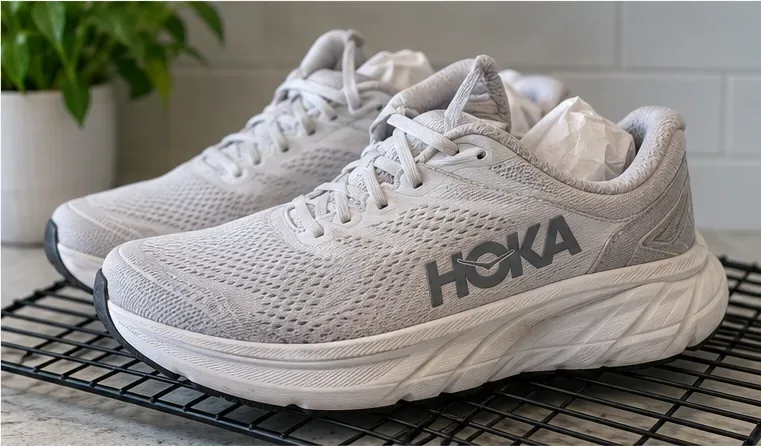
Press a dry towel against the shoes to remove excess moisture. Do not twist, wring, or sharply bend the shoes. Stuff the toe boxes with plain absorbent paper or newsprint, keeping the shape natural rather than packing them tightly. HOKA recommends keeping the insoles separate while the shoes dry.
Place everything in a ventilated indoor area away from direct sunlight, radiators, space heaters, hair dryers, or other direct heat. HOKA notes that sunlight and direct heat can warp footwear. Let the shoes dry naturally before putting the insoles and laces back in.
One HOKA regional care page mentions emergency drying workarounds involving a washing-machine spin cycle or brief gentle dryer use when shoes must be dry in less than 12 hours. However, HOKA’s broader care guidance says the shoes should not be machine washed or dried, and another official regional help page warns that machine washing can damage fastenings and glue. For a beginner, natural air drying remains the least complicated and most conservative choice.
8. Reassemble Only When Everything Is Fully Dry
Feel the inside toe box, heel lining, tongue, and insole before reassembling. These areas can remain damp after the outside looks dry. Once all parts feel dry, replace the insoles, relace the shoes, and loosen the laces enough that the upper is not pulled out of shape while stored.
Reassemble the sneakers only after the upper, lining, insoles, and laces are completely dry.
Adjust the Method for the Shoe Material
Material
What Changes
Mesh
Use a softer brush and minimal pressure. Dab or make short gentle strokes to reduce fraying risk.
Suede or nubuck
Let the material dry first, brush dirt off while dry, then use a stain treatment or cleaner intended for suede or nubuck. Avoid treating these panels like ordinary mesh.
Leather
HOKA says the general method can be used; wipe the surface after cleaning and let it dry naturally.
GORE-TEX footwear
HOKA’s guidance calls for lukewarm rather than cold water with mild detergent. Air dry with the shoes upside down and tongues out. Once dry, test water beading and reapply DWR if needed. DWR means durable water repellent, the surface treatment that helps water bead and roll off.
Canvas or natural fabric
HOKA says a soft brush with a warm-water and baking-soda mixture can be used on natural-fabric areas.
Beginner Mistakes to Avoid
Putting the Whole Shoe in the Washing Machine
This is the most important mistake to avoid. HOKA’s general guidance recommends hand washing, and official HOKA care information warns that machine washing may damage materials, fastenings, or glue. Washing removable laces separately is different from washing the entire shoe.
Using Hot Water Because It Seems More Sanitary
For the general cleaning method, HOKA specifies cold water. Heat is not required to remove ordinary dirt and can create unnecessary risk for adhesives, foams, and shape. The main exception in HOKA’s material guidance is GORE-TEX footwear, where lukewarm water is recommended.
Scrubbing Mesh Hard
Mesh looks sturdy but can fray. A soft brush, mild solution, and repeated light passes are more appropriate than a hard brush or heavy pressure.
Drying in Direct Sun or With a Hair Dryer
HOKA specifically advises natural drying away from direct heat or sunlight. High heat may speed evaporation, but it can also distort footwear materials. Give the shoes enough time to dry indoors.
Cleaning Suede or Nubuck Like Synthetic Mesh
Suede and nubuck need a drier, more specialized approach. If your HOKA model includes those materials, pause before applying the general soapy-water routine to those panels.
Quick Beginner Checklist
Check the shoe material before adding water.
Remove laces and removable insoles.
Let heavy mud dry, then brush it off.
Use cold water and a mild cleaner for the general HOKA method.
Use a soft brush and light pressure on mesh.
Wipe away soap with a cold damp cloth.
Blot rather than wring.
Stuff lightly with absorbent paper to support shape.
Air dry indoors away from direct heat and sun.
Reassemble only when every part is fully dry.
When to Stop and Check Your Specific Model
If you cannot identify the material, the upper has delicate bonded overlays, the shoe contains suede or nubuck, or a stain remains after gentle cleaning, stop before escalating to stronger chemicals or harder scrubbing. Look up the exact model on HOKA’s site or contact HOKA support for model-specific care. The general instructions are broad guidance, not a guarantee that every specialty material or finish should be treated identically.
For most standard HOKA sneakers, the reliable routine is uncomplicated: disassemble, dry-brush, hand wash gently with mild cleaner, wipe away residue, blot, and air dry. That takes longer than tossing the shoes in a machine, but it aligns with HOKA’s published care advice and gives you much more control over the materials that make the shoe comfortable in the first place.