Home
» How to
»
How to Wash Mesh Sneakers Safely: What to Hand-Wash, What to Avoid, and When a Machine Is Okay
How to Wash Mesh Sneakers Safely: What to Hand-Wash, What to Avoid, and When a Machine Is Okay
Mesh sneakers look easy to wash because the upper is light and breathable, but the mesh is only one part of the shoe. Most sneakers also contain foam, adhesives, stitching, overlays, rubber, and sometimes leather or suede details. That is why the safest answer is not simply “throw them in the washing machine.”
The strongest overlap in current manufacturer guidance is this: hand washing is the safest default for mesh and running shoes, while machine washing depends on the brand, model, and materials. Nike says it does not recommend putting shoes in a washing machine and specifically recommends hand washing mesh and Flyknit footwear. ASICS also advises hand cleaning and warns that soaking or machine washing can damage fabrics, adhesives, and foams. adidas, by contrast, says some running shoes can be machine-washed on a cold, gentle cycle, while also noting that hand washing is gentler and can help shoes last longer.
That difference is important. It means there is no universal “mesh sneakers are machine washable” rule. If your exact shoe does not have clear machine-washing instructions, hand washing is the lower-risk choice.
What Is Verified, What Depends on the Shoe, and What Is Still Uncertain?
Question
What official guidance supports
What you should do
Is hand washing safe for mesh?
Nike and ASICS explicitly recommend gentle hand cleaning for mesh or fabric uppers.
Use mild soap, a soft brush or sponge, and controlled moisture.
Can every mesh sneaker go in a washing machine?
No. Nike and ASICS advise against it, while adidas allows it for some running shoes.
Check the exact model instructions. If uncertain, hand wash.
Should shoes be submerged?
ASICS advises against submerging running shoes because water can affect fabrics, glue, and foam.
Clean the upper with a damp soapy sponge rather than soaking the whole shoe.
Can you use bleach?
Nike and ASICS advise against harsh cleaners or bleach for ordinary shoe cleaning.
Use mild detergent or a shoe cleaner suitable for the materials.
Can mesh sneakers go in a dryer?
Nike, ASICS, and adidas all advise air drying rather than using high dryer heat.
Air-dry at room temperature away from radiators and strong direct sun.
Step 1: Identify the Materials Before You Add Water
Start by checking the tongue label, product page, or care instructions for your exact pair. “Mesh” may describe only the main upper. A sneaker can combine mesh with suede, nubuck, leather, glued overlays, reflective films, or specialty membranes that need different treatment.
Nike's official mesh-shoe cleaning guide recommends mild detergent or soap, a soft brush, a cloth, and cool or lukewarm water. ASICS likewise says the cleaning method depends on upper material: fabric, mesh, and canvas can be gently hand-washed, while suede, nubuck, and leather require material-specific care. See the ASICS running-shoe cleaning guide.
Action: if the shoe mixes mesh with leather, suede, nubuck, or another sensitive material, follow the most restrictive care method for the materials present. Do not treat the whole shoe as plain mesh.
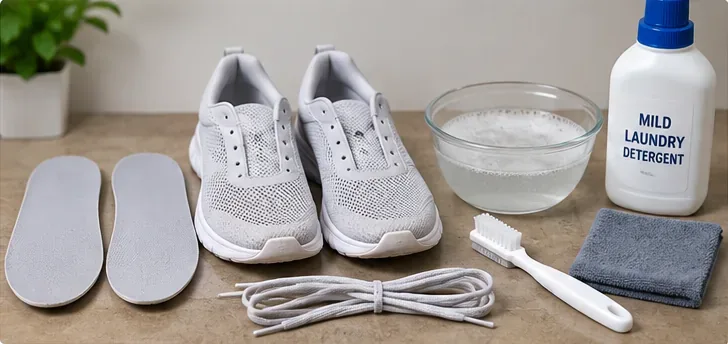
Remove the laces and insoles first, then gather mild detergent, a soft brush, a clean cloth, and a small amount of water for controlled hand cleaning.
Step 2: Remove Loose Dirt Before Wet Cleaning
Let mud dry before you attack it with water. Dry dirt is easier to brush away and less likely to spread into the mesh. Tap the shoes together outside or over a sink, then use a dry soft brush to remove loose soil from the upper and outsole.
Remove the laces and insoles if they come out easily. Nike and ASICS both recommend cleaning these components separately. This also opens the shoe so it can dry more evenly afterward.
Common misunderstanding: more water does not automatically mean a deeper clean. ASICS specifically warns against submerging the shoe. Excess water can reach foam and adhesive layers that do not need to be soaked.
Action: brush first, separate removable parts, and keep the shoe itself as dry as practical until you begin targeted cleaning.
Step 3: Clean the Mesh Upper With Mild Soapy Water
Mix a small amount of mild laundry detergent, clothing-safe soap, or suitable sneaker cleaner with cool or lukewarm water. Avoid hot water. Nike notes that hot water can affect shoe dyes, and both Nike and ASICS recommend mild rather than harsh cleaning products.
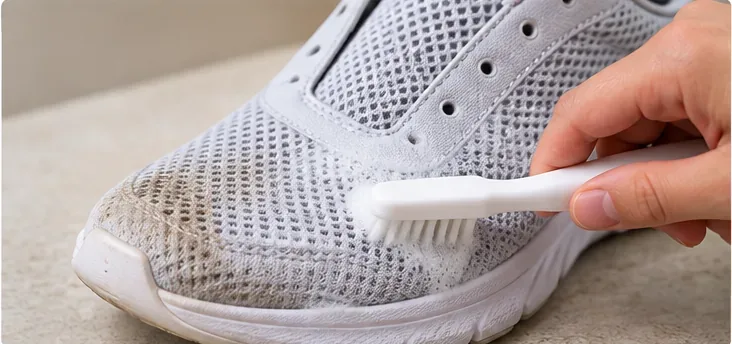
Dip a soft toothbrush, shoe brush, or sponge into the solution rather than pouring cleaner directly onto the shoe. Work gently over the mesh. Nike recommends brushing in the direction of the knit for Flyknit and similar materials. ASICS recommends a wet, soapy sponge for fabric, mesh, or canvas uppers.
Use light pressure. Mesh can snag, fuzz, stretch, or distort if you scrub aggressively. For a stubborn dirty area, repeat several gentle passes instead of using a hard brush or stronger chemical immediately.
Action: clean one small section at a time, then wipe away loosened dirt and soap with a clean damp cloth or sponge.
Use a soft brush and mild soapy water with light pressure; repeated gentle passes are safer for mesh than hard scrubbing.
Do You Need to Rinse the Whole Shoe?
Usually not. For the hand-washing method supported by Nike and ASICS, the goal is to remove soap with a clean damp cloth, sponge, or controlled rinse rather than soaking the entire shoe. ASICS specifically says not to submerge running shoes.
If the outsole needs more water than the upper, clean it separately with a brush and then wipe it down. Keeping outsole dirt away from the upper also prevents muddy water from being transferred back into the mesh.
Action: remove detergent residue until the mesh no longer feels slick or foamy, but avoid saturating the midsole and internal structure.
Can You Machine-Wash Mesh Sneakers?
This is where generic advice often becomes misleading. Nike says it does not recommend washing shoes in a washing machine. ASICS says not to put running shoes in a washing machine because the process can harm fabric, adhesives, foam, fit, or overall integrity. Those positions make hand washing the safest generic recommendation.
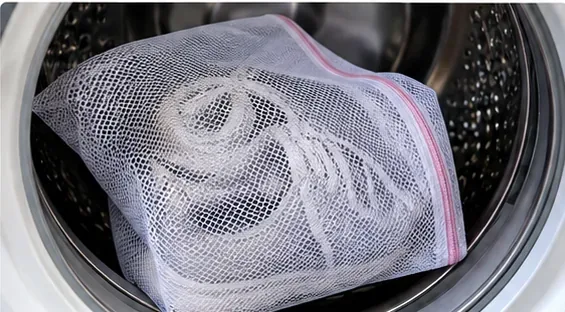
However, adidas publishes a different position for some running shoes. Its official running-shoe cleaning guide says running shoes may be machine-washed in a garment bag or pillowcase on a cold, gentle cycle after removing laces and insoles. The same article also says hand washing is gentler and may help the shoes last longer.
So the verified conclusion is not “machine washing is wrong” or “machine washing is fine.” The correct conclusion is that machine washing is model-dependent.
Action: only use a washing machine when the shoe manufacturer or product-care instructions for your pair allow it. If you cannot verify that, stay with hand washing.
Machine washing should be treated as a model-specific option, not a universal step; use it only when the shoe maker permits a cold, gentle cycle.
What About the Laces and Insoles?
Laces can usually tolerate more washing than the shoe upper. Nike says laces can be washed by hand or placed in a mesh laundry bag on a gentle machine cycle, then air-dried.
Insoles need more caution. ASICS recommends cleaning them with soapy water and a brush, then wiping off dirt and soap with a wet sponge. It specifically advises against soaking insoles because water can damage foam and alter their shape.
Action: wash laces separately, but clean removable insoles with limited moisture and let them dry fully before putting them back into the shoes.
Step 4: Air-Dry the Shoes Away From Heat
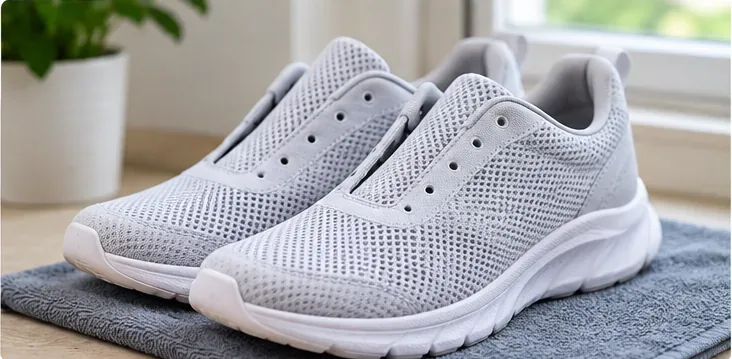
Stuff the shoes loosely with clean paper towels, a washcloth, or a shoe tree to help maintain their shape and absorb moisture. Replace wet paper if necessary. Leave the shoes in a well-ventilated room until they are completely dry.
Avoid the clothes dryer, radiator, heater, or intense direct sunlight. Nike says dryer heat can deform shoes. ASICS warns that heat can damage glue, shape, and materials. adidas also advises air drying and warns that intense heat can melt or curl parts of the shoe.
Common misunderstanding: a hair dryer or radiator is not a harmless shortcut. The upper may feel dry quickly while adhesives and foam are exposed to damaging heat.
Action: let the shoes dry naturally, and do not reinstall damp insoles or laces.
Air-dry mesh sneakers at room temperature in a ventilated area, away from dryers, radiators, and strong direct heat.
When Should You Repeat the Cleaning Instead of Using a Stronger Chemical?
If a stain remains but the mesh looks structurally sound, another gentle hand-cleaning pass is usually a lower-risk choice than immediately using bleach or a strong household cleaner. Nike explicitly advises avoiding bleach and harsh chemicals on mesh shoes, and ASICS says to stick with gentle, clothing-safe products.
For stains that do not respond, identify what caused the stain and what the upper is made from before escalating. A grease stain, dye transfer, grass stain, and mildew mark may require different chemistry. Manufacturer guidance does not establish one universal stain remover that is safe for all mesh sneakers.
Action: stop and check the exact shoe material and cleaner compatibility before using stronger stain treatment.
How to Tell Whether the Shoes Are Clean Enough
Do not judge only by whether a white shoe looks perfectly bright. A safe result means the loose dirt is gone, the mesh no longer feels gritty or coated with detergent, the shoe shape is unchanged, and no glue lines or overlays are lifting.
The mesh should feel clean rather than stiff with dried soap.
The color should remain even, without bleached-looking patches.
The toe box and sidewalls should retain their original shape.
The midsole should not feel waterlogged.
Insoles should be completely dry and flat before reinsertion.
No strong detergent smell or visible foam should remain.
If the shoes look cleaner but have developed a warped midsole, detached overlay, faded patch, or roughened mesh, the cleaning method was too aggressive. Stop rather than repeating it.
Four Myths Worth Dropping
“Mesh Means Machine-Washable”
Not universally. Nike and ASICS advise against machine washing; adidas allows it for some running shoes.
Action: verify the model before using a washer.
“A Full Soak Cleans Better”
ASICS says not to submerge running shoes because water can affect fabrics, adhesives, and foam.
Action: use controlled moisture on the upper instead of soaking the whole shoe.
“Hot Water Gets More Dirt Out”
Hot water can affect dyes and adhesives.
Action: use cool or lukewarm water unless the manufacturer says otherwise.
“The Dryer Is Fine on Low”
The major manufacturer guidance reviewed here favors air drying and warns about heat damage.
Action: air-dry at room temperature.
Bottom Line
The most defensible way to wash mesh sneakers is to treat hand washing as the default: remove loose dirt, take out the laces and insoles, gently clean the mesh with mild soapy water, remove the soap without soaking the whole shoe, and air-dry away from heat. Machine washing is an exception that depends on the manufacturer and model, not a property of mesh itself.
If your exact shoe care instructions conflict with this general method, follow the manufacturer for that model. The construction under the mesh—foam, glue, overlays, lining, and support pieces—can matter just as much as the mesh you can see.