How to Wash Suede Safely: What to Do Instead of Soaking It
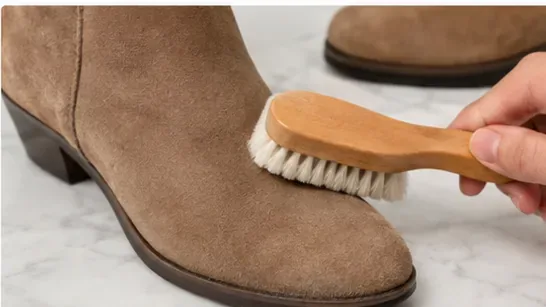
Learn how to clean suede safely without machine washing or soaking it, including brushing, stain removal, air-drying, and suede protection.
Most natural suede should not be washed the way you would wash cotton, canvas, or a synthetic sneaker. The safer approach is to clean it dry first, use very little moisture only when needed, let it air-dry naturally, and then restore the soft surface with a suede brush.
That distinction matters because suede is leather with a soft, raised surface called the nap. Water, heavy rubbing, detergent, heat, and machine agitation can flatten the nap, create tide marks, change the color, or stiffen the leather. The instructions below are a practical starting point for natural suede shoes, boots, bags, and similar items. For a suede jacket or any expensive piece, the care label and the maker's instructions should take priority.
Usually, no—not by soaking it or putting it in a washing machine. Clarks states that suede shoes should never be put in a washing machine, while Nike says it does not recommend machine-washing or hand-washing suede shoes in soap and water. UGG likewise warns that machine-washing or dry-cleaning its delicate footwear can cause irreversible damage.
Those recommendations do not mean suede can never touch moisture. Some manufacturer-approved cleaning routines use a slightly damp cloth, sponge, or a suede-specific cleaner. The important difference is control: the suede is lightly dampened or spot-treated rather than saturated.
For current manufacturer guidance, see Clarks' suede care guide, Nike's suede shoe cleaning guide, and UGG's cleaning and care instructions. These sources were checked in September 2026.
Start with the item's care label. If it says “dry clean only,” “specialist leather clean,” or gives a brand-specific treatment, follow that instruction instead of a general home method. Also confirm that the material is actually natural suede. Microsuede and other synthetic suede-like fabrics can have completely different washing instructions.
If the item is very valuable, heavily stained, has mixed materials, or has a large color-transfer stain, a professional leather cleaner is the lower-risk choice. Clarks specifically recommends professional leather cleaning when a thorough clean is needed.
Avoid assuming that dish soap, laundry detergent, bleach, or an all-purpose household cleaner is safe. Suede finishes differ, and a cleaner that works on one pair of shoes may discolor another item. When using any liquid product, test it on a hidden area first and let that test spot dry completely before continuing.
If the suede is wet from rain, mud, or a spill, do not immediately scrub it. Nike advises letting wet suede and mud dry before brushing because working on wet suede can spread the mess and create a stain. For shoes or bags, loosely stuff the item with plain paper to help it hold its shape while it dries.
Keep the item at room temperature in a ventilated place. Do not place suede on a radiator, use a hair dryer, or put it in a clothes dryer. UGG's current care instructions call for natural drying in a cool, ventilated area away from direct heat and sunlight.
Once the suede is dry, gently brush off dust, dried mud, and loose debris. This should be the first active cleaning step because it removes material that could otherwise be rubbed deeper into the nap.
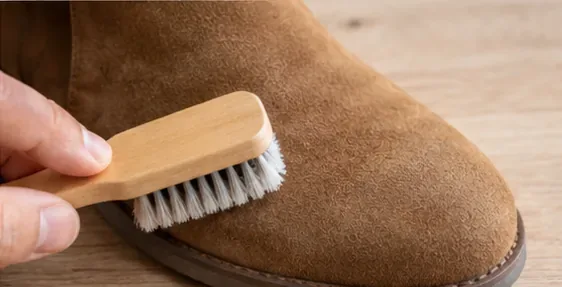
Brush lightly rather than pressing hard. Timberland's May 2026 suede-boot guide recommends brushing in the direction of the fibers to reduce the risk of damage. For a delicate garment, use an especially soft brush and work in small sections.
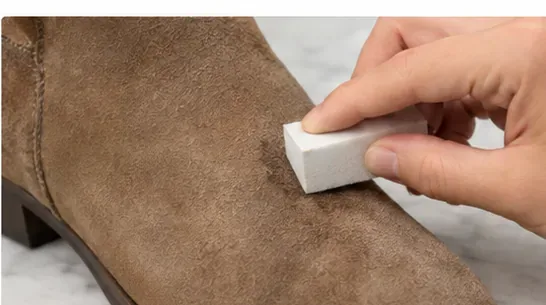
Yes. For dry scuffs and localized surface marks, a suede eraser is often the next step after brushing. Rub the mark gently with short strokes. Stop if the color changes, the surface becomes shiny, or fibers start to look worn.
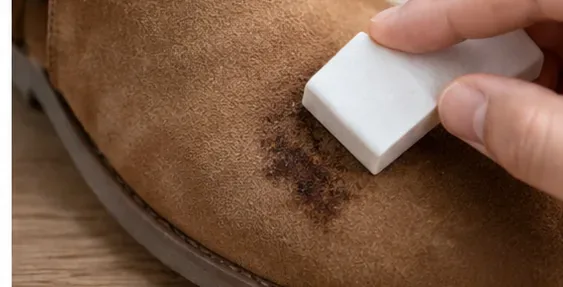
Nike recommends a suede eraser and says a clean pencil eraser can be an alternative for minor marks on suede shoes. A purpose-made suede eraser is preferable because it is designed for this type of surface.
Blot it. Use a clean, absorbent cloth and press gently to pick up moisture. Do not scrub back and forth while the stain is wet; rubbing can spread the liquid and disturb the nap.
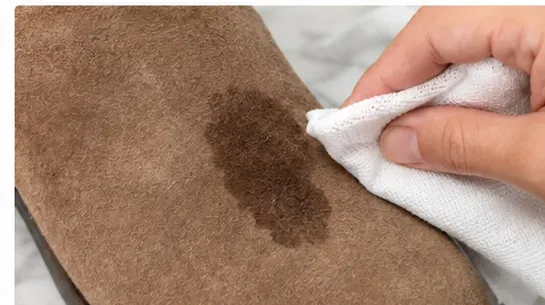
After blotting, let the area dry naturally and reassess it. The wet area may look darker until fully dry, so do not judge the final color while the leather is still damp.
Use the least aggressive method allowed by the manufacturer. Clarks says suede shoes can generally be cleaned with a damp, lint-free cloth or a specialist suede brush and recommends a suede-compatible cleaner for more difficult stains. UGG's care process uses a clean damp sponge with a small amount of its Cleaner & Conditioner rather than pouring cleaner directly onto the footwear.
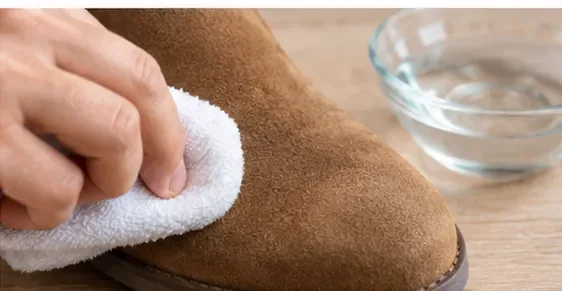
Nike lists a small amount of suede cleaner, white vinegar, or rubbing alcohol on a cloth as options for stubborn stains on suede shoes. That is a shoe-care recommendation, not a universal formula for every suede garment or handbag. Test first, use only a small amount, and defer to the care label if it says otherwise.
Let it dry naturally at room temperature. For footwear or structured bags, fill the interior loosely with plain paper so the item keeps its shape. Replace the paper if it becomes damp. Keep the item away from direct sun, heaters, radiators, and hot air.
After the suede is completely dry, brush it gently to lift the nap. The surface may look temporarily darker or flatter after damp cleaning; brushing after drying helps restore the soft, even texture.
Do not immediately add more liquid. Reassess the dry item first. A second light pass with a suede eraser can help with a remaining dry mark or scuff. Work only on the affected spot and stop if the surface begins to abrade.
If repeated gentle cleaning does not improve the stain, professional cleaning is safer than escalating to stronger chemicals. Stains from dye transfer, paint, adhesives, or unknown solvents are especially easy to make worse at home.
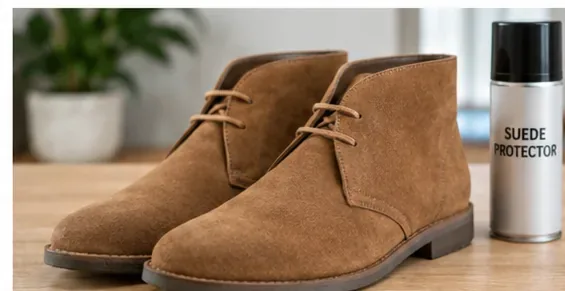
A compatible protector can make future water and dirt marks easier to manage. Apply it only to clean, dry suede and follow the spray's directions for ventilation, distance, drying time, and material compatibility.
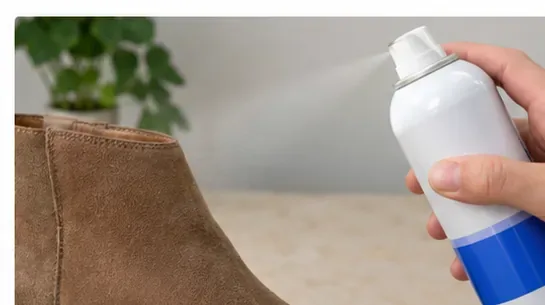
UGG's protector instructions, for example, call for spraying clean, dry suede evenly from about 6 inches away until the surface is wet but not soaked, then allowing 24 hours of natural drying before brushing in one direction. That timing and distance are specific to UGG's product, so use your own protector's label rather than treating those numbers as universal.
| Problem | Best first move | What to avoid |
|---|---|---|
| Dry dirt or mud | Let it dry, then brush gently | Scrubbing while wet |
| Scuff or light dry mark | Suede eraser, then brush | Hard rubbing |
| Fresh water or drink spill | Blot with a clean absorbent cloth | Rubbing the wet area |
| Water mark | Follow the item's manufacturer method and even out moisture only if instructed | Soaking one spot repeatedly |
| Salt stain on suede boots | Use the boot maker's stain method | Assuming one vinegar ratio fits every suede item |
| Oil or grease | Blot fresh grease; use an approved absorbent treatment if the manufacturer recommends one | Adding lots of water |
| Deep, unknown, or valuable-item stain | Professional leather cleaner | Experimenting with strong solvents |
For example, Timberland's current suede-boot guide gives specific methods for its footwear: room-temperature water and even drying for water stains; one part vinegar to two parts water for salt stains; and absorbent powder left overnight for grease. See Timberland's May 15, 2026 suede boot guide. Treat these as manufacturer guidance for comparable footwear, not permission to use the same chemistry on every suede jacket, purse, or dyed accessory.
For natural suede, the practical default is no. Machine washing combines water, detergent, agitation, and spinning—exactly the conditions most suede care instructions try to avoid. Even if the suede survives structurally, the nap may flatten and the color or shape can change.
The exception is a product whose own care label explicitly says machine washing is allowed. That is more likely with synthetic “suede-look” textiles than with genuine suede leather. If the label is missing and the material is uncertain, use the conservative natural-suede method or ask the manufacturer.
Not as a general cleaning method. Nike specifically advises against hand-washing suede shoes with soap and water. Spot cleaning is different from immersion: you control where the moisture goes and how much the leather absorbs.
For a jacket, skirt, gloves, or lined bag, immersion is even riskier because the item may include adhesives, interlinings, dyes, metal trims, or other materials that react differently to water. Follow the care label or use a leather-cleaning specialist.
So, if you searched for “how to wash suede,” the safest answer is to think clean, not wash. Start dry, add the smallest amount of moisture necessary, let the material dry naturally, and restore the nap at the end. That approach solves most everyday suede-care problems while avoiding the damage that full washing can cause.
Learn how to clean suede safely without machine washing or soaking it, including brushing, stain removal, air-drying, and suede protection.
Learn how to dry a wet phone charger port safely, compare air-drying, wireless charging, emergency overrides, and service, and avoid heat, rice, and objects.
Clean a refrigerator water dispenser safely with mild soap, careful nozzle cleaning, mineral-scale removal, drying, and filter checks.
Learn how to take a bike chain off safely, whether it uses a quick link or rivet, plus which tools to use and when a connector must be replaced.
Learn how to remove rust from golf clubs safely, starting with soap and a soft brush, when to stop, and how raw wedges differ from plated irons.
How to Use Google Lens on Chromebook lets you scan objects, translate text, and solve problems directly from your device. Follow these steps to get started quickly.
Clean a BUNN coffee maker with vinegar safely using the verified Heat N Brew method, plus model checks, sprayhead care, flushing steps, and mistakes to avoid.
Learn how to clean a garbage disposal with ice, compare cold-water, citrus, and deeper-clean options, and know when ice is not enough.
Learn how to remove school glue, super glue, hot glue, and adhesive residue from clothes safely, with fabric-specific steps and solvent cautions.
Learn how to wash a wool coat safely by following its care label, choosing a wool-safe detergent, washing gently, and drying without shrinking or distortion.