Restore Collabora CODE Settings Without Losing Deployment Changes
Back up coolwsd.xml and its deployment sources, restore them safely, and verify CODE before users return to editing.
Google Sheets is an online office application that helps us easily draft professional, online spreadsheets. Similar to Microsoft Excel, this application also provides users with many tools to support spreadsheet creation, one of which is support for creating charts and diagrams . That's why, today Download.vn will introduce you how to create a genealogical and organizational chart on Google Sheets.
Drawing an organizational chart and genealogy in Google Sheets will help us arrange the positions and order of members in a group, business or company according to structure. To help everyone quickly and easily create this diagram, we invite you to follow the article Instructions for creating a genealogical and organizational diagram on Google Sheets.
Instructions for drawing genealogical and organizational charts on Google Sheets
Some notes before drawing an organizational chart:
Step 1: First we will access the Google Sheets page on the computer's browser. Then, go to the data table for which you want to create a genealogical, organizational chart.
Step 2: In the Spreadsheet interface, highlight the cells containing the information you want to create a chart for.

Step 3: At this point, click on Insert above the Menu bar.
Step 4: Then, in the Insert window , click on Chart.
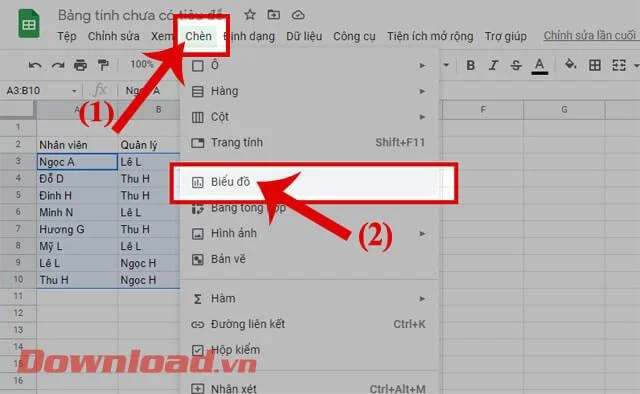
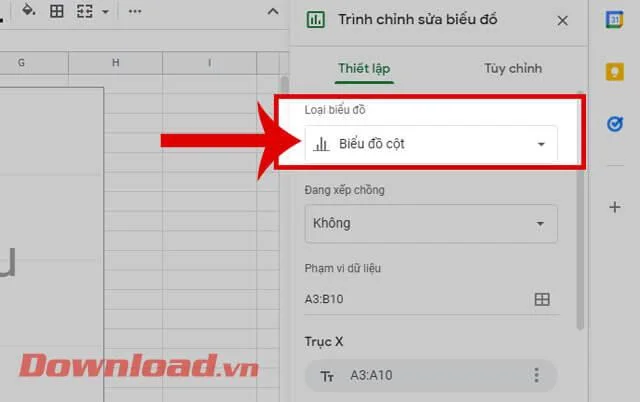
Step 5: On the right side of the screen, the Chart Editor window will now appear , click on Chart type.
Step 6: Now, in the Map Type window , click and select the Organization Chart type.
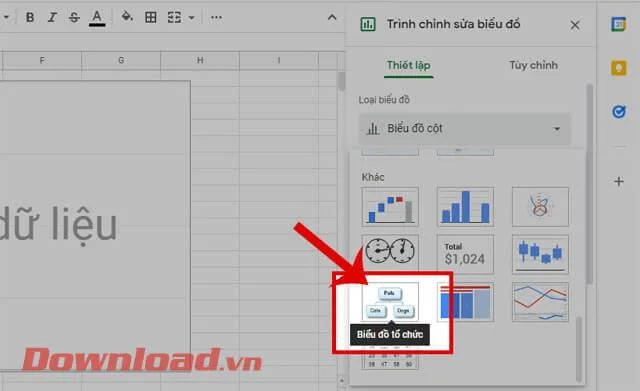
Step 7: Right now on the screen, we will see the organizational chart displayed with the division of positions, names or family genealogies depending on the content displayed in the table.
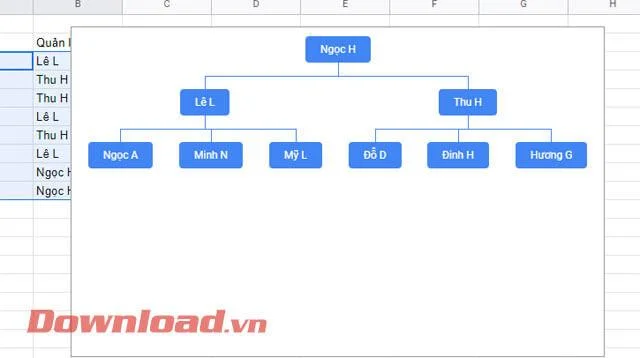
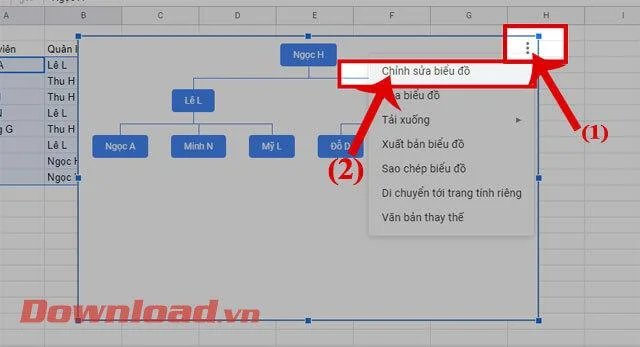
Step 8: If you want to edit the diagram, click on the three-dot icon in the upper right corner of the chart. Then, click Edit chart.
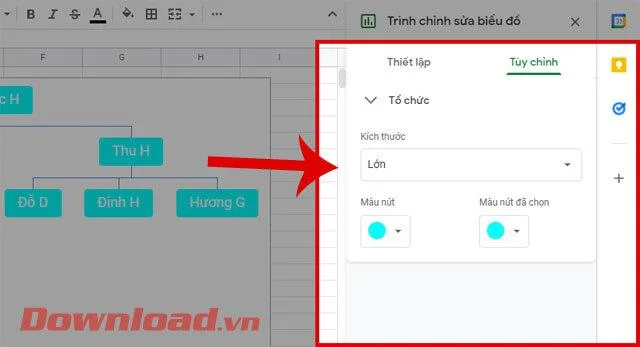
Step 9: Finally, in the Customize window on the left side of the screen, we can adjust the Size and Color of the buttons in the chart.
Video instructions on creating genealogical charts and organizing them on Google Sheets
Wishing you success!
Back up coolwsd.xml and its deployment sources, restore them safely, and verify CODE before users return to editing.
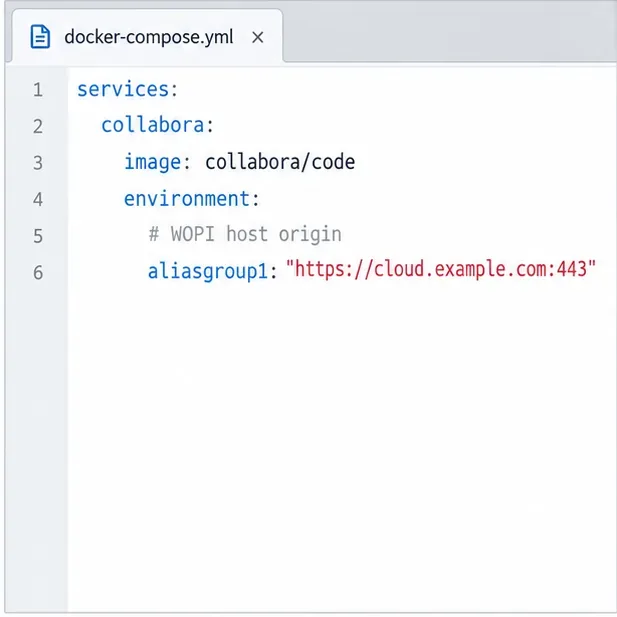
Allow the exact Nextcloud or other WOPI origin in CODE, then verify the active host allow-list and distinguish it from Nextcloud’s source-IP restriction.
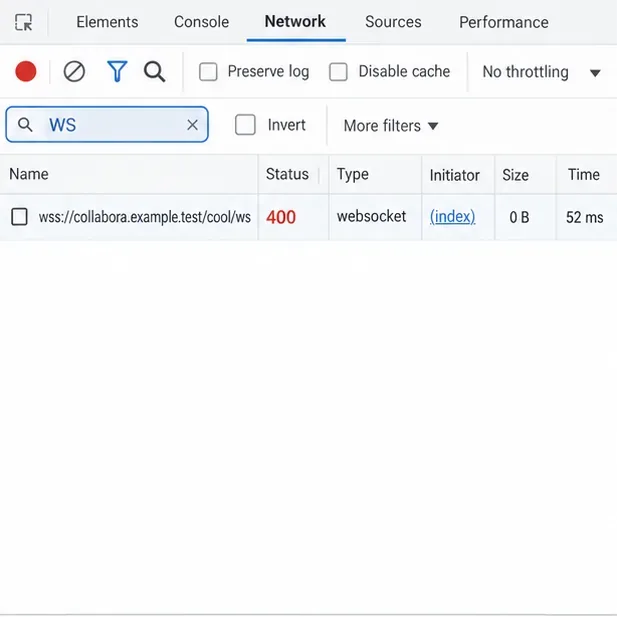
Trace Collabora’s browser, WOPI, and WebSocket connections to find why a document will not open, then apply the fix that matches your Nextcloud setup.
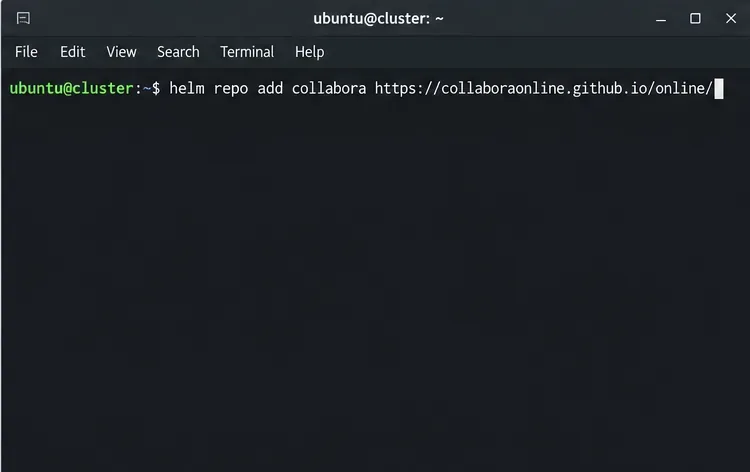
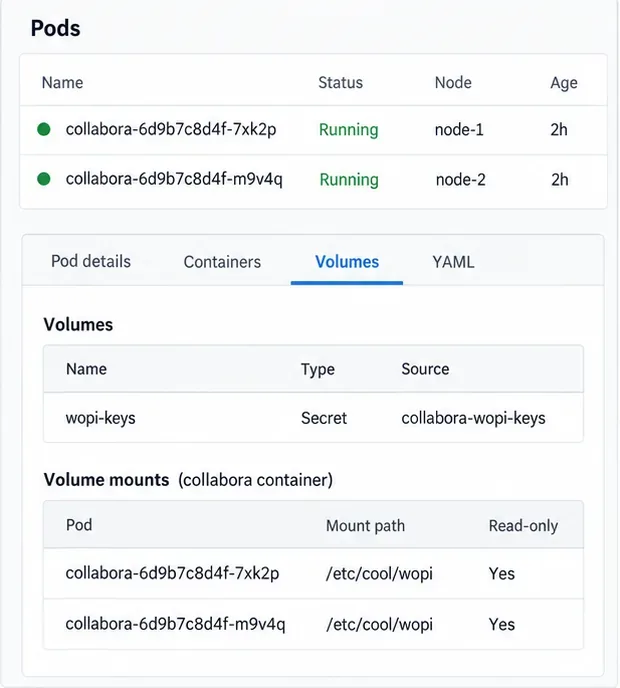
Deploy Collabora CODE replicas with Helm, keep each document on one pod through WOPI affinity, and verify ingress, node placement, and Nextcloud editing.
Trace a failed socket handshake from browser to coolwsd, then match the reverse-proxy route to your Collabora version, including the CODE 26.04 Apache change.
Trace Collabora WOPI proof failures to mismatched keys, stale discovery data, clock drift, or proxy URL changes—without weakening validation.
Reset browser zoom, test a clean session, and identify when a malformed size menu needs a Collabora server update.
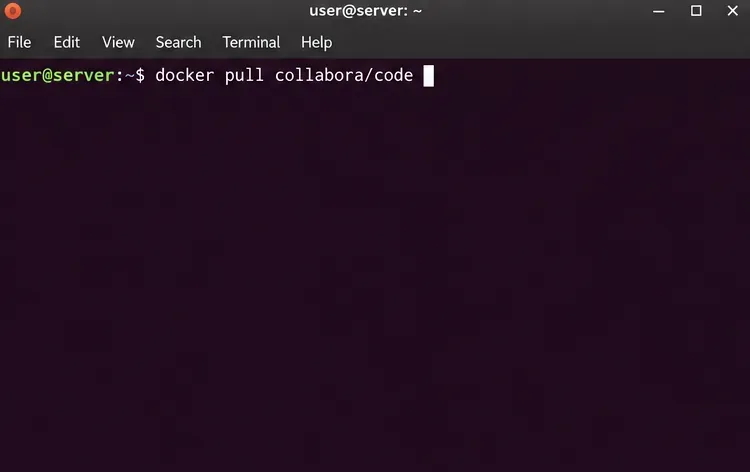
Deploy Collabora CODE with Docker, connect it securely to Nextcloud Office, and verify document editing with practical WOPI and proxy checks.
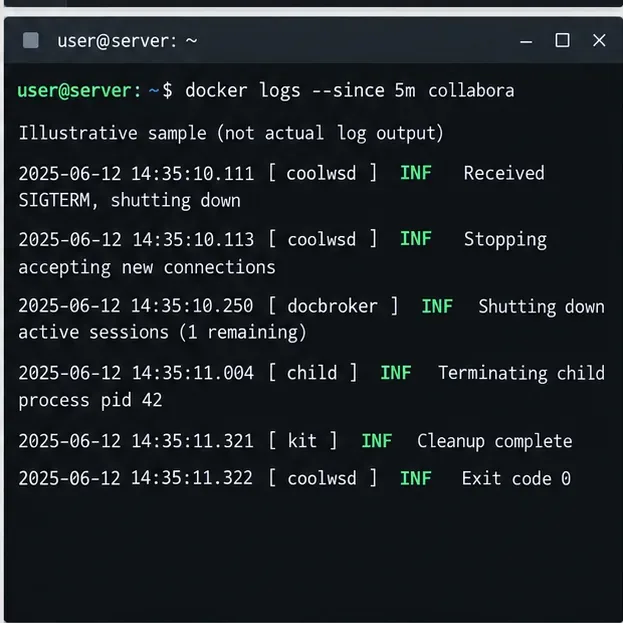
Temporarily raise coolwsd to debug, capture one failed open, and use the log sequence to separate WebSocket, WOPI, proxy, and container issues.
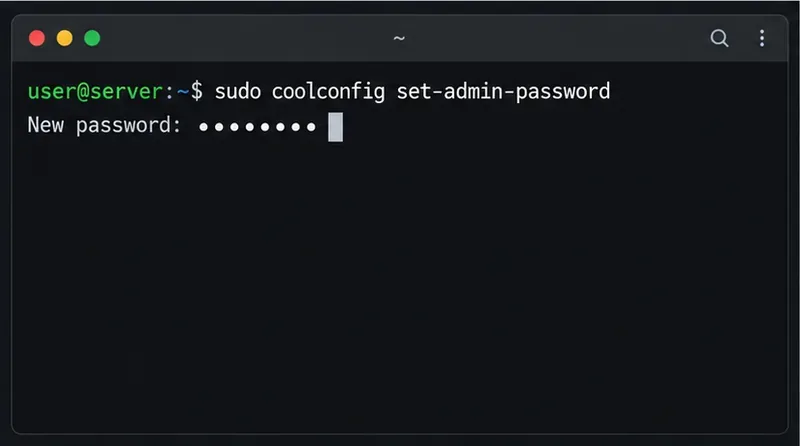
Configure the Collabora Online admin login for Docker or Linux, restart the right service, and verify the new password without exposing it.