Would Europe Be Drawn into a Hypothetical U.S.-Israel-Iran Nuclear War? NATO Rules Explained

A guide to NATO Articles 4 and 5, UN self-defense rules, and why consultation does not mean automatic European entry into war.
The Excel 2016 ribbon in the Office 2016 office suite is a powerful "factory" command that helps you dig deeper into your data. It is always ready for you to make the most of your work with daily functions to enhance data tools and view with one click.
You can personalize the Microsoft Excel 2016 Ribbon to suit your specific usage needs and the following is an article to guide you to do that.
The ribbon is a graphical user interface that contains a large number of commands as well as a set of commands called groups. Separate commands and groups are organized into tabs. Like the Quick Access Toolbar , the Ribbon provides easy location and use for most items that you use in Excel 2016.
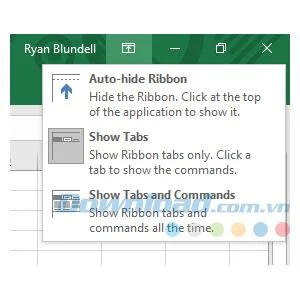
In the upper right corner of the program window, you will see the icon of Ribbon display options. You can change its appearance with just one click and the following are the display options:
While the Ribbon exists there to serve whenever you need it, you don't always need it to be there. If you want those commands to disappear so you can see more boxes on the screen, you can hide the Ribbon and its tabs by clicking the ^ icon in the middle right corner of the ribbon.
To access the Customize Ribbon option , click File> Options> Customize Ribbon .
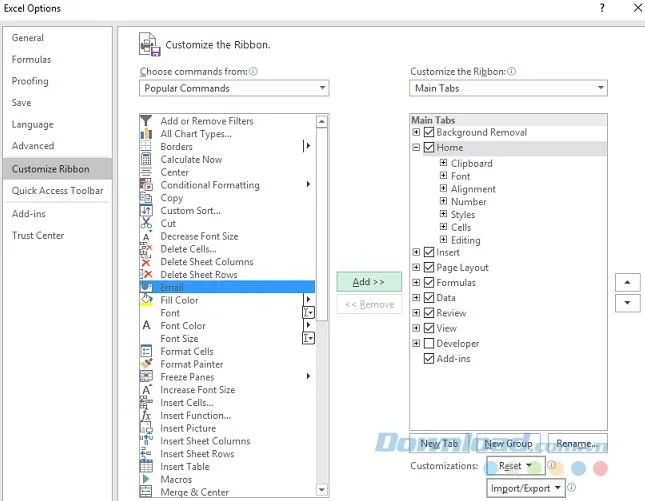
The Options screen is a bit confusing, but really easy to navigate. The left column Choose commands from contains 9 list of commands and tabs to browse while the right column Customize the Ribbon lists what is in the Ribbon. You can select commands and tabs from the left column and click on the> icon to move them to the right column to display the Ribbon, or select the displayed items on the right column and click on the <icon to remove them. You also need to keep in mind that incoming commands cannot be changed and removed.
Individual commands cannot be added to an existing group or tab. You can create a custom group in a tab or subgroup of an existing group. This will allow you to add more commands.
The renaming option can be applied to group names in a tab as well as to custom group commands.
Click on any tab on the Ribbon and select Customize the Ribbon . Select the tab to move in the Customize the Ribbon column . Then, use the up and down arrow keys to reposition the tab in the list. Finally, click on OK to finish.
The same steps can be applied to rearrange the commands in your custom group.
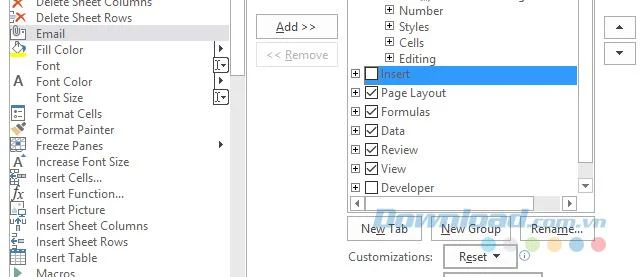
If your group seems to use the same commands in Excel 2016, you can choose to import their Ribbons or export your own to them.
You can export a Ribbon by going to File> Options> Customize Ribbon and selecting Import / Export . Then click on Export all Customizations . Choose a location and file name in the File Save window . Finally, click on Save to save.
You do not need to know all the commands to understand the Ribbon's function. You will gradually discover its functions during use.
A guide to NATO Articles 4 and 5, UN self-defense rules, and why consultation does not mean automatic European entry into war.
Assess claims about Iran in six steps, distinguishing uranium enrichment, weapons development and verified possession.
Understand nuclear decision authority in six steps, including US civilian control and the limits of public information about Israel.
A guide to official 2026 evidence on Hormuz shipping disruption, Iran-related claims, confirmed incidents, and what remains uncertain.
A source-based guide to nuclear escalation risks, UN Charter rules and NATO Article 5 in a strictly hypothetical Iran scenario.
Use five steps to prepare for an outage; nuclear and EMP scenarios are hypothetical, and official shelter instructions come first.
Use 5 defensive steps to verify a cyber disruption, protect household accounts, and avoid mistaking an outage for war.
Use these 5 steps to assess climate effects from a hypothetical Iran strike, compare model assumptions, and avoid unsupported predictions.
Explore six steps for reading research on climate, food and ecosystem recovery after a hypothetical nuclear conflict.
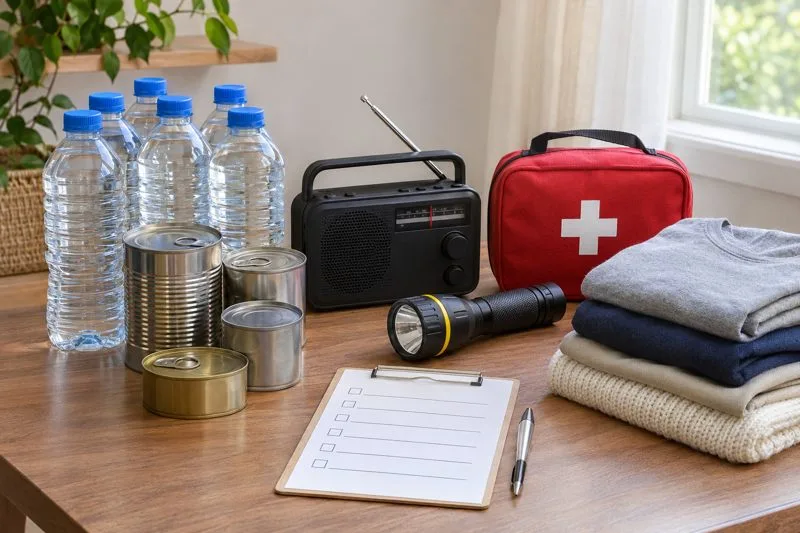
Build a practical fallout preparedness kit in six steps, with sealed food and water, a radio, medical supplies and shelter guidance.