Instructions on how to schedule Sharp air conditioner

Video Instructions on how to schedule Sharp air conditioner

Sharp air conditioner is chosen by many users to use thanks to the integration of many outstanding features and utilities, including timer function. However, not everyone knows how to use this mode, so the article will guide you how to use Sharp air-conditioning timer easily and quickly.

1. How to open timer

Each Sharp air conditioner model will have different types of controls, but the timer operation is the same.

You note, when the timer is on, the air conditioner will be turned on before the set time to ensure the room temperature is set as desired.

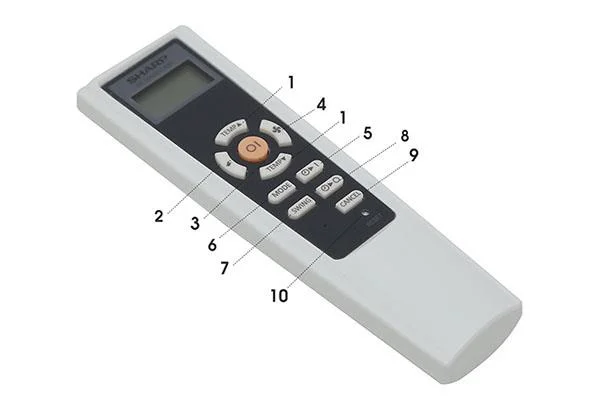
- To open timer, first press the Time On button on the remote.

- Next, you click on that button to set the time to turn on the device.

- When you install successfully, the clock-shaped indicator light will light up on the remote screen.

If you want to cancel the timer setting, just press the Cancel button on the remote.

Instructions on how to schedule Sharp air conditioner

To open timer, first press the Time On button on the remote.

2. How to turn off timer

When you set the timer to turn off the air conditioner, the unit will automatically adjust the temperature to prevent the air from getting too cold while you sleep. Specifically, every 60 minutes of installation, the room temperature will increase 1 degree from the initial temperature.

- First, you also click the Time Off button on the remote.

- Next, you press this button to change the time and choose the time you want to turn off.

- When the operation is successful, the clock picture will be displayed on the remote screen.

If you want to cancel the timer setting, press the Cancel button on the remote.

Instructions on how to schedule Sharp air conditioner

You can set the time as desired.

Some notes when setting timer on Sharp air conditioner:

Timer setting time is up to 12 hours and minimum 30 minutes.

- User cannot set up 2 modes on and off at the same time.

- During a power failure, previous timer settings will be canceled and reset to factory default when power is on.

Sharp timer does not repeat automatically every day, so users need to redo the setting when you want to schedule the next timer.

>>> See more:  Should buy the best air conditioner, save electricity

Timer mode on Sharp air conditioner brings more convenience to users during use of the product. Hopefully with the above information, you can use the timed feature of Sharp air conditioner proficiently.

Leave a Comment

Enable FIPS Mode on SLES 15 and Verify the Boot State

Enable FIPS Mode on SLES 15 and Verify the Boot State

Follow SUSE’s SP7 procedure to enable FIPS mode, reboot safely, verify the active policy, and check whether your compliance requirement calls for validated modules.

Set Up a LUKS-Encrypted Data Volume on SLES

Set Up a LUKS-Encrypted Data Volume on SLES

Compare YaST and cryptsetup for a new encrypted SLES data volume, choose LUKS1 or LUKS2, and verify unlock and mount behavior safely.

Build a Custom AppArmor Profile on SUSE Linux

Build a Custom AppArmor Profile on SUSE Linux

Create, refine, and verify a least-privilege AppArmor profile on SLES 15 SP7, with a clear note on SLES 16’s SELinux default.

Build a Local SUSE Update Server with RMT on SLES 15

Build a Local SUSE Update Server with RMT on SLES 15

Set up RMT on SLES 15, mirror entitled repositories, and verify HTTPS registration and package access from a test client.

Join SLES 15 to Active Directory with SSSD in YaST

Join SLES 15 to Active Directory with SSSD in YaST

Connect SLES 15 to AD with YaST’s SSSD-based logon management, then verify directory lookup, domain login, and Kerberos tickets.

Enable SLES Live Patching and Verify a Kernel Fix

Enable SLES Live Patching and Verify a Kernel Fix

Set up the right Live Patching path for SLES 16.0 or 15 SP7, apply eligible kernel fixes, and confirm what is active without confusing it with a reboot-required kernel update.

Install and Sign Custom Kernel Modules on SLES 15 Secure Boot

Install and Sign Custom Kernel Modules on SLES 15 Secure Boot

Load a custom SLES 15 kernel module without disabling Secure Boot. Match the running kernel, sign the .ko file, enroll a MOK key, and verify loading.

Keep Services Available During a SLES 15 SP5 to SP6 Upgrade

Keep Services Available During a SLES 15 SP5 to SP6 Upgrade

SLES 15 SP5 can migrate online to SP6, but each node must reboot. Use a tested rolling upgrade or blue-green cutover to keep workloads reachable.

Apply the SLES 15 STIG Safely with OpenSCAP

Apply the SLES 15 STIG Safely with OpenSCAP

Use SUSE’s supported STIG profile to scan SLES 15, test remediation, review remaining findings, and retain assessment evidence.

Restore Cockpit Access to SUSE Linux Enterprise Server

Restore Cockpit Access to SUSE Linux Enterprise Server

Trace a failed Cockpit connection through DNS, port 9090, the systemd socket, firewalld, TLS, and login settings using current SUSE guidance.