Fix CODE’s WOPI Host Check by Matching the Host Origin
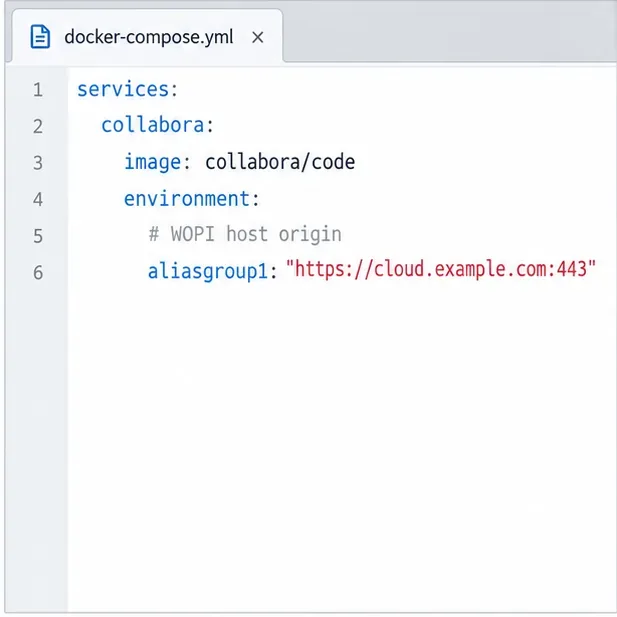
Allow the exact Nextcloud or other WOPI origin in CODE, then verify the active host allow-list and distinguish it from Nextcloud’s source-IP restriction.
Currently, the use of Microsoft Teams for teaching around the world is continuously increasing. However, in the process of using teachers will also encounter a lot of annoying pedagogical situations, such as students setting up secret chat groups on it to do their own work ... But teachers should not be too worry Microsoft provides us with tools so that teachers may want to make this easier to control.
In this tutorial, we will set up allowing who is allowed to create groups on Microsoft Teams
To do this, teachers first need to have an Office 365 system administrator account of their school or unit
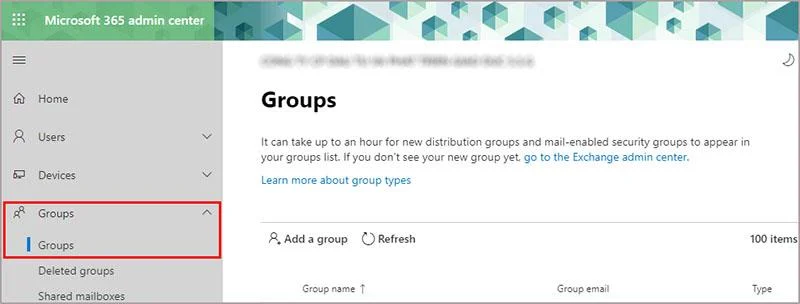
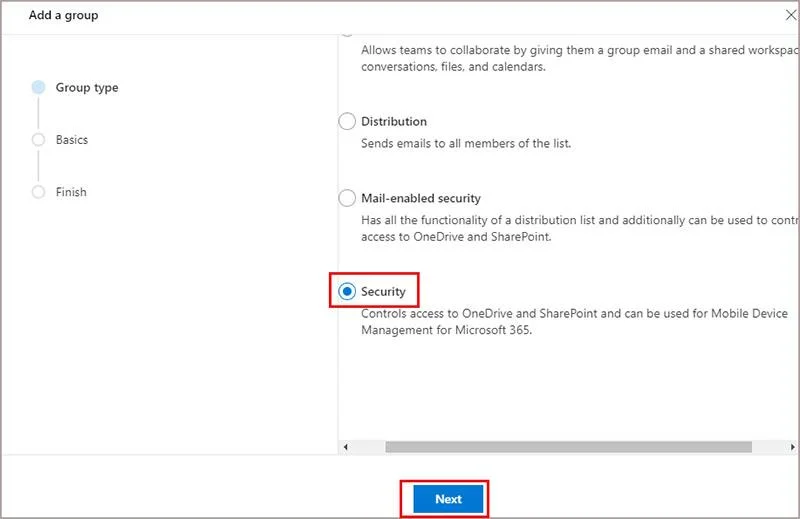
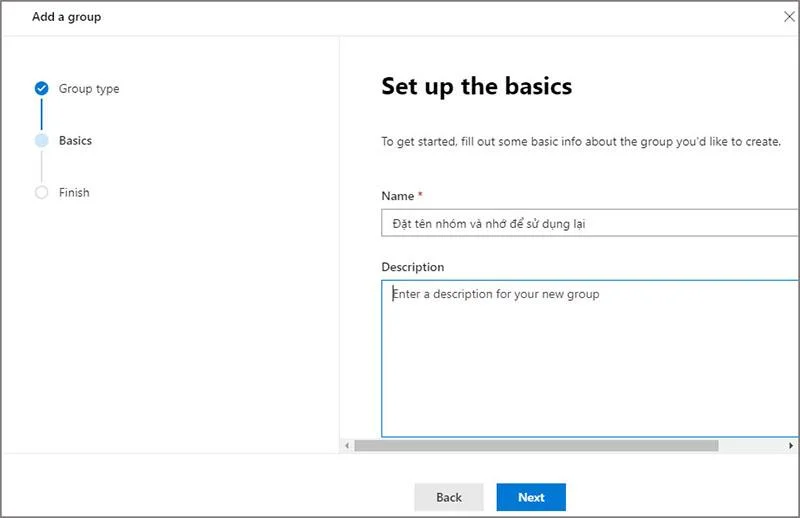
Step 1: Create a security group for users who need to create an Office 365 Group
Important!
When using a security group to restrict who can create groups, you should also consider that this will not allow members outside the security group to create groups on the Office 365 sharepoint.
Perform
Step 2: Run the above PowerShell command
Teachers need to make sure that Powershell is installed on the computer
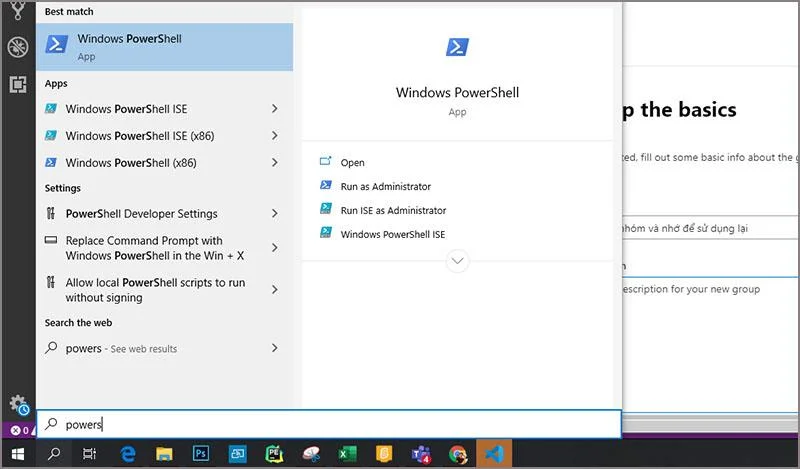
Copy the script below into Windows PowerShell ISE .
Replace SecurityGroupName > with the name of the security group you created. For example:
$GroupName = "Group Creators"
Save the file as GroupCreators.ps1
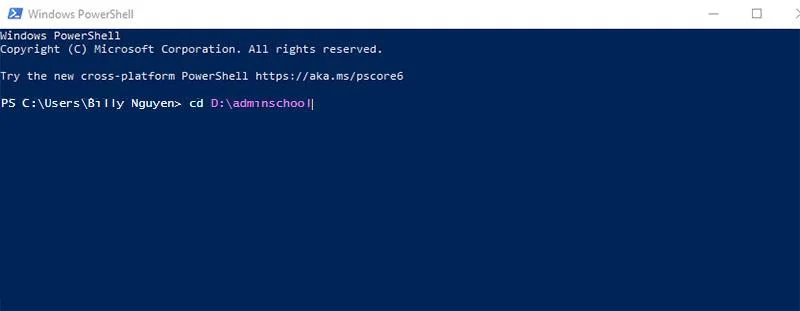
In the PowerShell window , use the CD command to return to the folder where the teacher saved the GroupCreators.ps1 file (enter “CD”). Assuming that file is saved in the adminschool folder, drive D, the teacher will type the command as shown
Run the script by typing:
.\GroupCreators.ps1
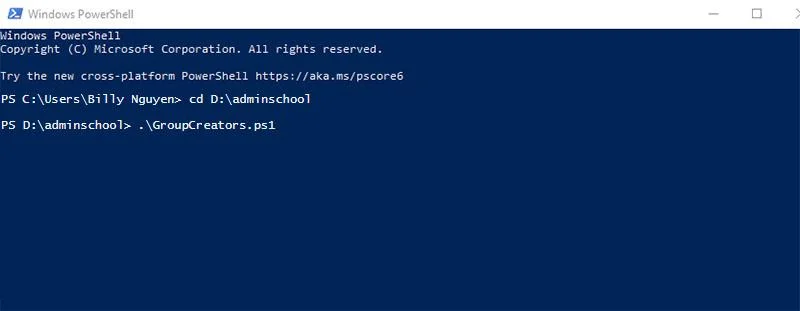
Then you log in with your administrator account at the Powershell command prompt
$GroupName = "" $AllowGroupCreation = "False" Connect-AzureAD $settingsObjectID = (Get-AzureADDirectorySetting | Where-object -Property Displayname -Value "Group.Unified" -EQ).id if(!$settingsObjectID) { $template = Get-AzureADDirectorySettingTemplate | Where-object {$_.displayname -eq "group.unified"} $settingsCopy = $template.CreateDirectorySetting() New-AzureADDirectorySetting -DirectorySetting $settingsCopy $settingsObjectID = (Get-AzureADDirectorySetting | Where-object -Property Displayname -Value "Group.Unified" -EQ).id } $settingsCopy = Get-AzureADDirectorySetting -Id $settingsObjectID $settingsCopy["EnableGroupCreation"] = $AllowGroupCreation if($GroupName) { $settingsCopy["GroupCreationAllowedGroupId"] = (Get-AzureADGroup -SearchString $GroupName).objectid } else { $settingsCopy["GroupCreationAllowedGroupId"] = $GroupName } Set-AzureADDirectorySetting -Id $settingsObjectID -DirectorySetting $settingsCopy (Get-AzureADDirectorySetting -Id $settingsObjectID).Values
The last line of the script will show the updated settings:
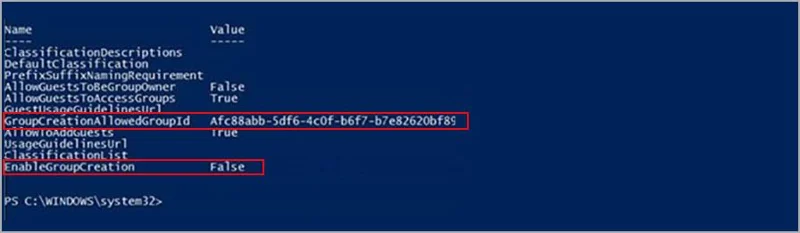
If you later want to change which security group is used, you can run the above script again with the name of the new security group.
If you want to turn off the group creation limit and allow all users to create groups (including students, set $GroupName to “” and $AllowgroupCreation to “True” and run the above script again.
Step 3: Double check if it's already working?
If there are any problems in the process of running the command on Powershell, please create a Ticket and send it to Microsoft's technical support for detailed support (because this is a newly updated feature, there is no many people have experience in this) or select Support in the Microsoft 365 Admin Center
Good luck teachers!
Allow the exact Nextcloud or other WOPI origin in CODE, then verify the active host allow-list and distinguish it from Nextcloud’s source-IP restriction.
Trace Collabora’s browser, WOPI, and WebSocket connections to find why a document will not open, then apply the fix that matches your Nextcloud setup.
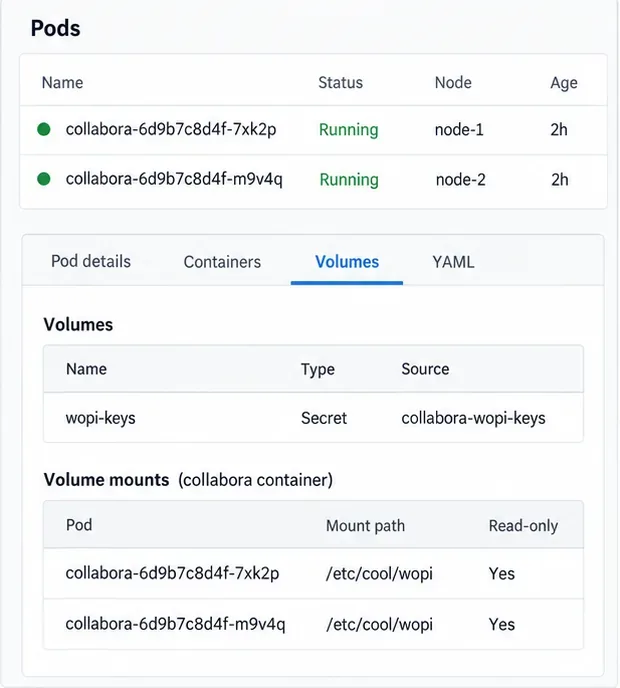
Deploy Collabora CODE replicas with Helm, keep each document on one pod through WOPI affinity, and verify ingress, node placement, and Nextcloud editing.
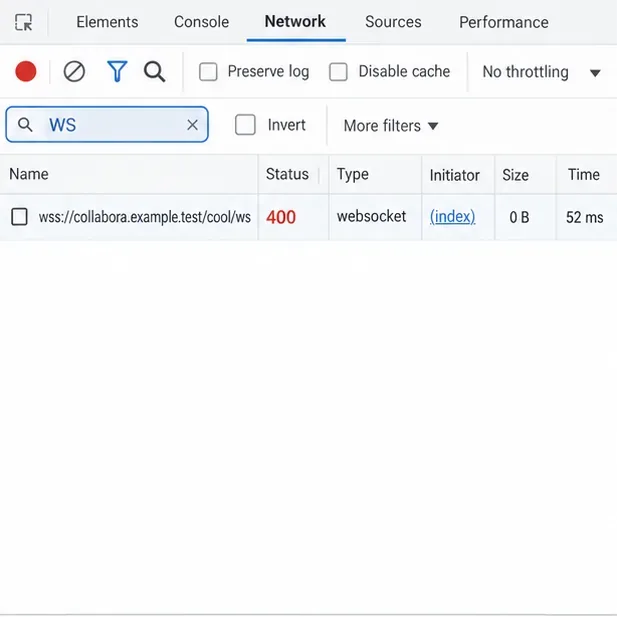
Trace a failed socket handshake from browser to coolwsd, then match the reverse-proxy route to your Collabora version, including the CODE 26.04 Apache change.
Trace Collabora WOPI proof failures to mismatched keys, stale discovery data, clock drift, or proxy URL changes—without weakening validation.
Reset browser zoom, test a clean session, and identify when a malformed size menu needs a Collabora server update.
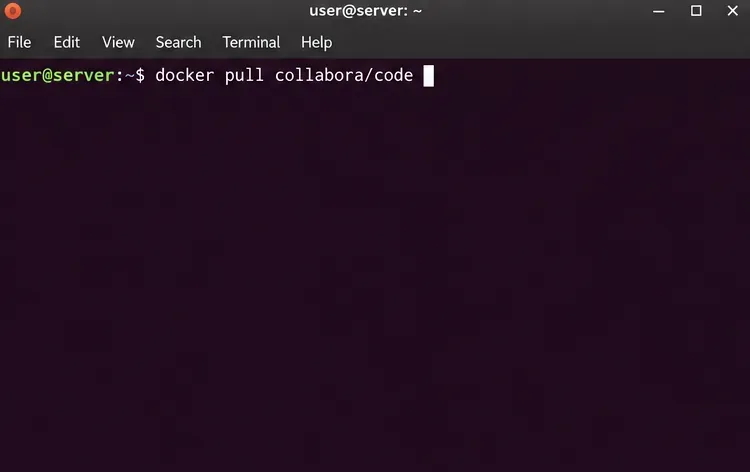
Deploy Collabora CODE with Docker, connect it securely to Nextcloud Office, and verify document editing with practical WOPI and proxy checks.
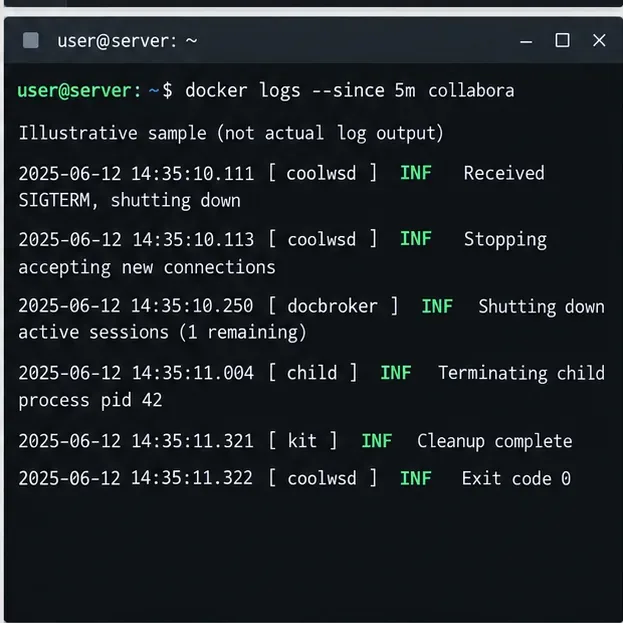
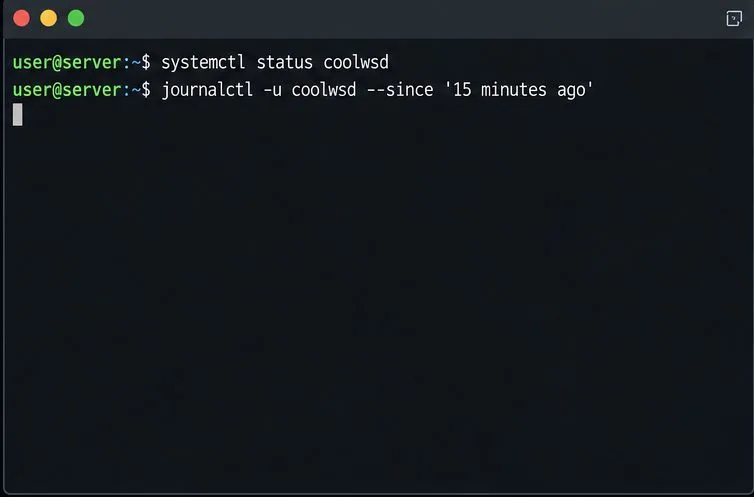
Temporarily raise coolwsd to debug, capture one failed open, and use the log sequence to separate WebSocket, WOPI, proxy, and container issues.
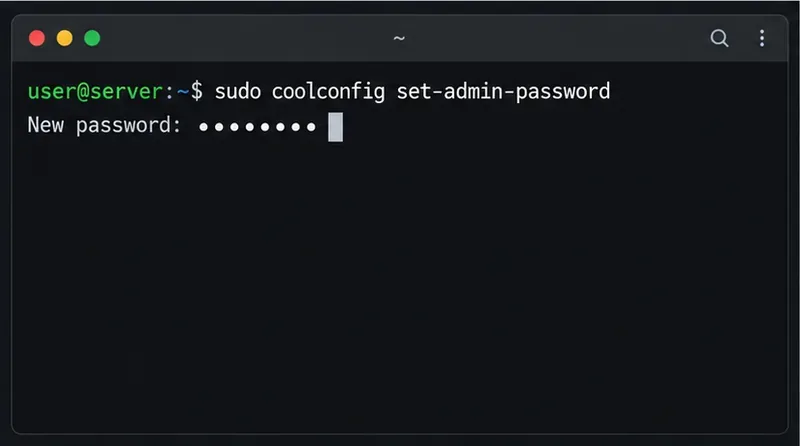
Configure the Collabora Online admin login for Docker or Linux, restart the right service, and verify the new password without exposing it.
Find out whether CPU load comes from active documents, idle worker processes, or server capacity before changing Collabora settings or restarting the service.