Home
» How to
»
Manual CrystalDiskInfo to check computer hard drive, laptop
Manual CrystalDiskInfo to check computer hard drive, laptop
Video Manual CrystalDiskInfo to check computer hard drive, laptop
CrystalDiskInfo is a software that will help you check the status of your hard drive most accurately, if your hard drive regularly uses Ghost or reinstall Windows, the hard drive will be very bad quickly, this situation will resulting in speed for, receive data of the hard drive greatly reduced.
No matter how old or new your hard drive is, you must always monitor its status when operating, this will help you avoid the risks and will "catch" the hard drive if they have problems. , especially when your hard drive contains important data.
And to help you control that problem, today Download.com.vn has made a few detailed instructions for using CrystalDiskInfo through the following article, stay tuned to know how to check the hard drive, control the normal hard drive. through. Before that, you should read the article How to download and install CrystalDiskInfo on your computer to know how to install this software on your computer.
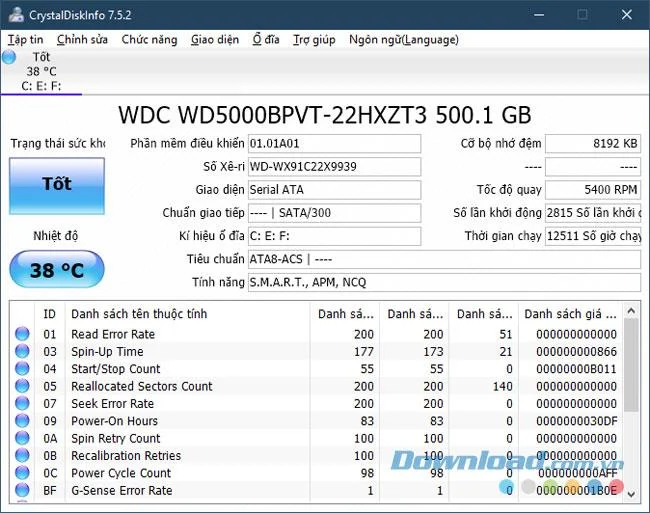
After installing the software, launch CrystalDiskInfo and at the main interface you will see the following parameters to pay attention to:
Health status (Health Status) : At launch, the status of your drive will notice 4 states, namely:
Good (Green) : This status displays a message that your hard drive is in good condition and has no problems.
Warning (Yellow): Your hard drive is experiencing a problem.
Bad (Red): Worst condition, possibly reader or motor wear, surface scratched, or drive overheating ...
Gray (Gray): If this state is your hard drive is having problems, but the software does not identify exactly what your hard drive is experiencing.
Temperature : If the display temperature is below 49 degrees is normal, starting from 50 to 55 you can attach a cooling fan inside the case, or use other methods of cooling. If over 55 degrees , your hard drive is experiencing serious problems, there may be a part of the hard drive under great friction, your hard drive may die at any time.
Firmware : Shows the version of the core software pre-hardened in the hard drive, this software will be activated when the hard drive is eligible, this process occurs before you boot the system. operating.
Buffer Size (Butter Size) : Indicates the size of the buffer memory of the hard drive, the task of this memory is to save the most recently accessed data from the hard disk. When a program needs to access data from the drive to the outside, it will first check in the buffer memory to see if the data it needs is available, this mechanism will increase the power and speed of the system. .
2. Menu in CrystalDiskInfo and how to use it
I. Copy edit menu
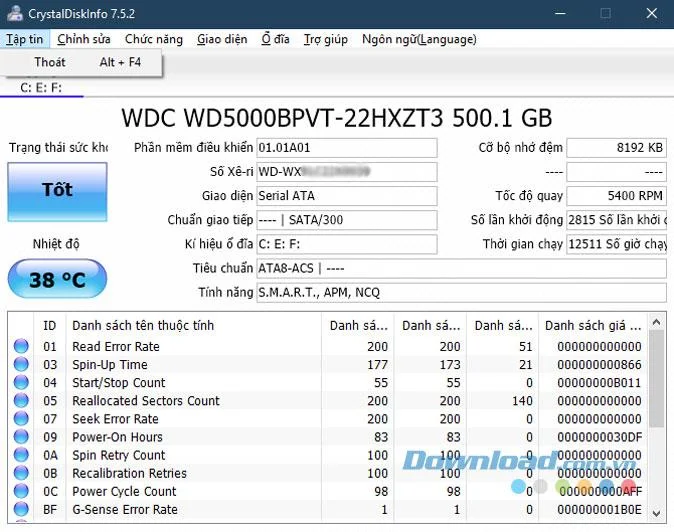
The first is the File menu, this menu has only a sub item that is exiting the program, you can press the shortcut Alt + F4 to exit the program.
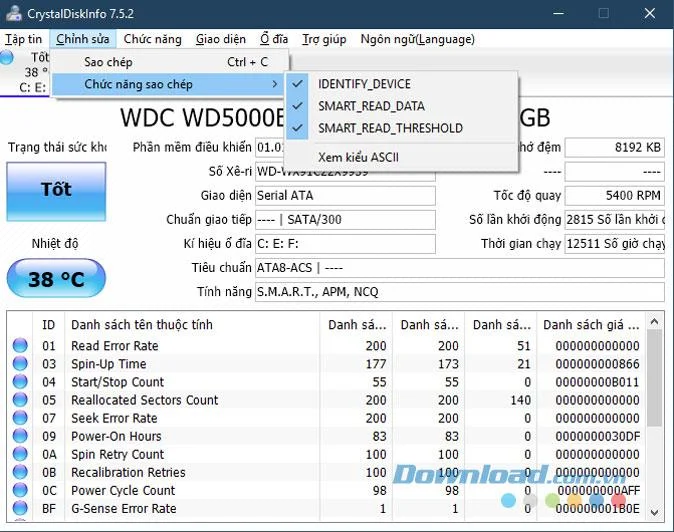
The second menu is the Edit menu with the copy feature, in the Copy Function menu you will be given the option to select such as device identification, smart reading of data, smart reading threshold, finally viewing ASCII type (character codes based on latin letters).
II.Menu Function of the software
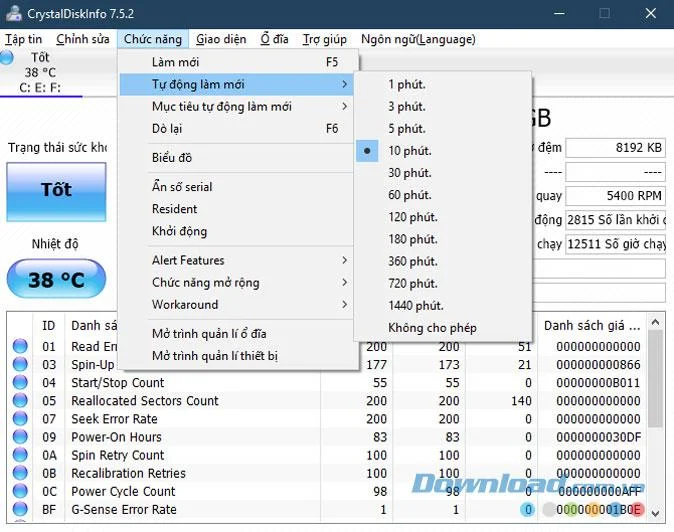
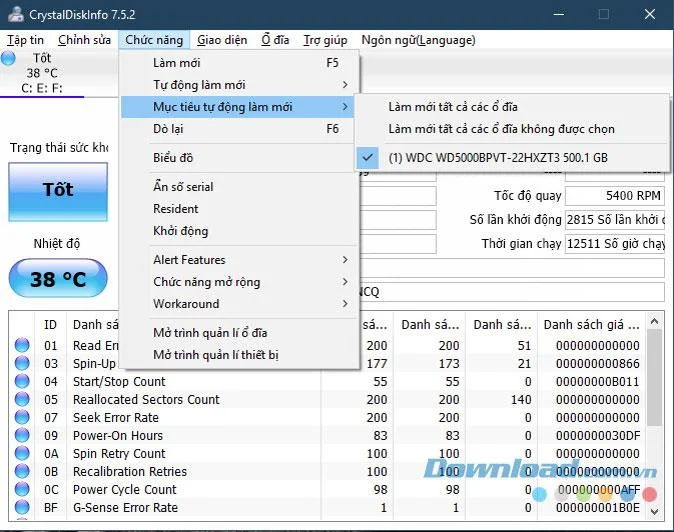
The Function menu includes functions that automatically affect hard drives. We will start with the Refresh section in this menu.
You can adjust the time limit to automatically refresh CrystalDiskInfo to change the parameters displayed on the software to a certain timeline, or you can press F5 to do it manually.
Refresh goal here you can select the hard drives you want to refresh, if you have multiple hard drives on your computer, you can select the drives in the list of available hard drives on your computer and click Select Refresh all drives .
The Refresh all unchecked drives option will refresh the unchecked hard drives in the list.
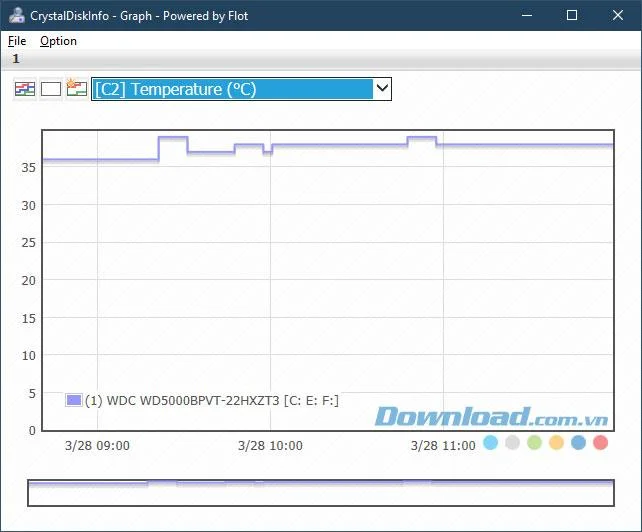
Below you can see the disk activity diagram, serial number hidden, resident hidden icon on the taskbar, startup is started with the system.
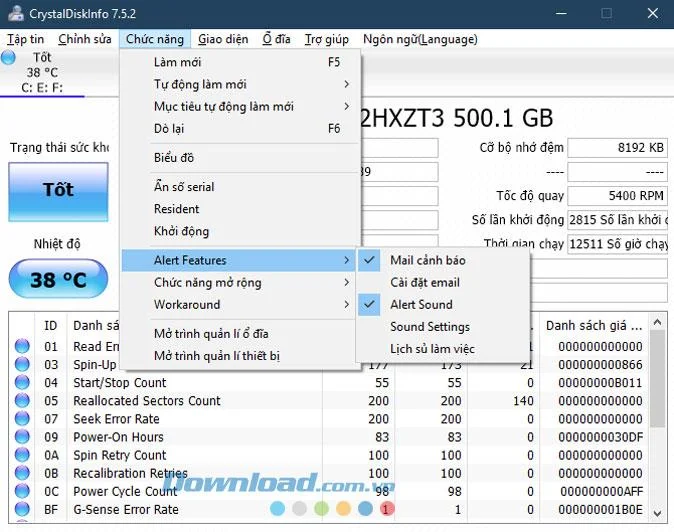
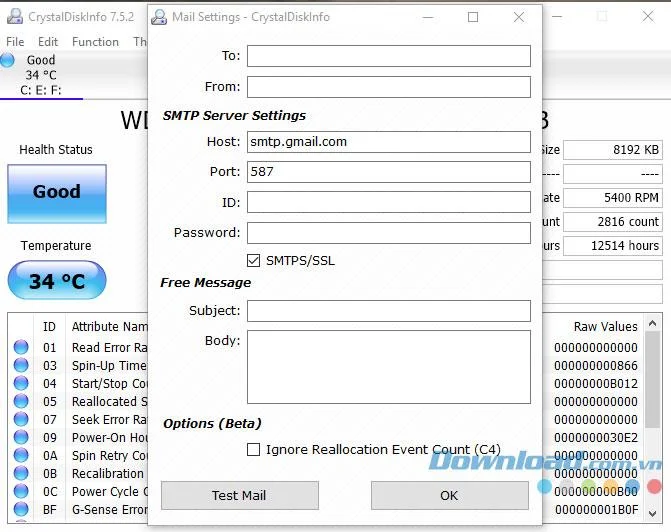
In addition, the Alert Features menu allows you to send the status of the hard drive to your email inbox. Thereby you can control the situation of your hard drive.
Here you can use the SMTP protocol to send mail to your mailbox. SMTP is a simple and fast email transmission protocol. You can learn more on the forums about using SMTP to send you email notifications.
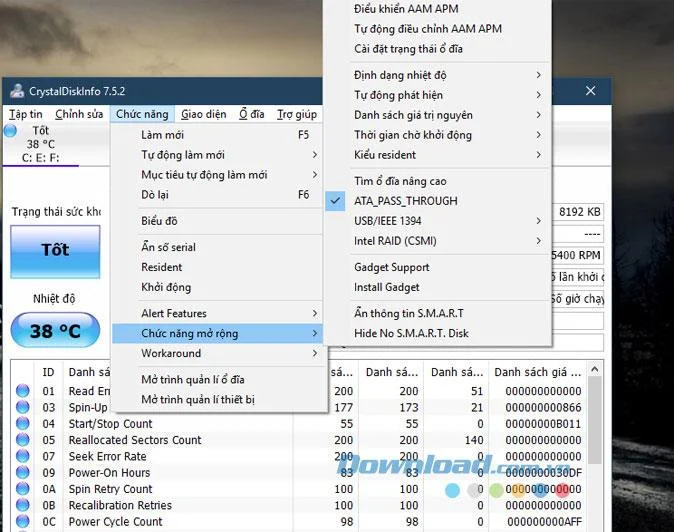
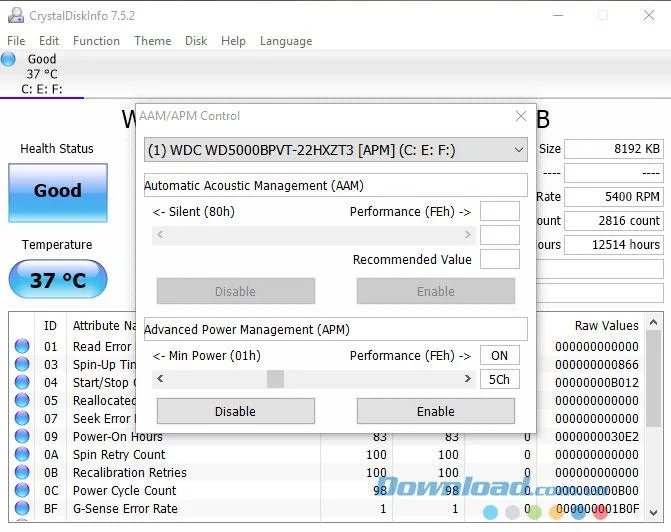
This Expansion Function Box has a lot of options You can use AAM (noise reduction for hard drive) control, APM (power saving mode, automatically rest the hard drive when not in use) . Set drive status. Also you have options like:
Temperature format: Format the temperature in degrees Celsius or Fahrenheit , whichever format you're familiar with.
Auto detect: Set the time to detect problems with your hard drive
List of integer values: Set the counting factor according to DEC and HEX.
Boot wait time: Set the boot timeout of the hard drive.
Resident type: Select to show or hide the resident type in the taskbar
Also you can hide SMART information, install additional software Gadget ...
This is the AAM and AMP menu, you can optionally or to automatically let the hard drive automatically set AAM and AMP mode.
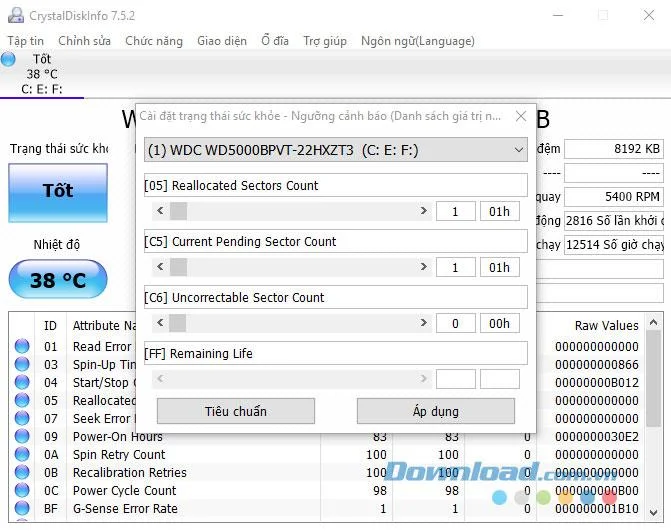
In the Drive status settings menu , click Standard to select the automatic installation and click Apply. There are options there:
Reallocated Sectors Count: Number of sectors counted.
Current Pending Sector Count: The current number of Sector Pending.
Uncorrectable Sector Count: The number of sectors cannot be adjusted.
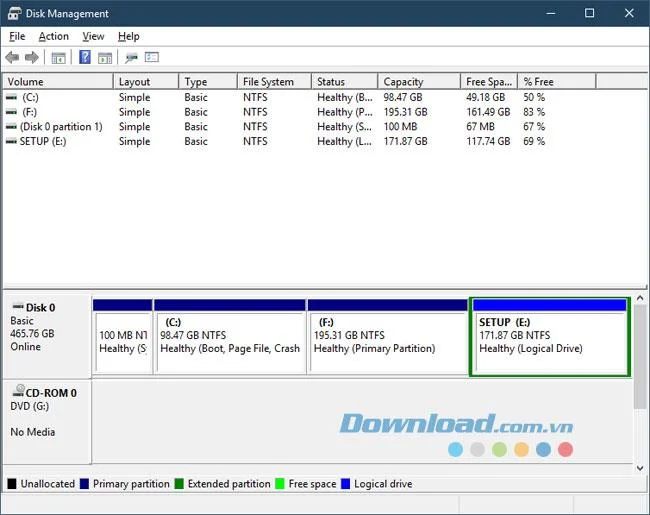
You can also view the details of your hard drive and the size of the partitions using the Open drive management section .
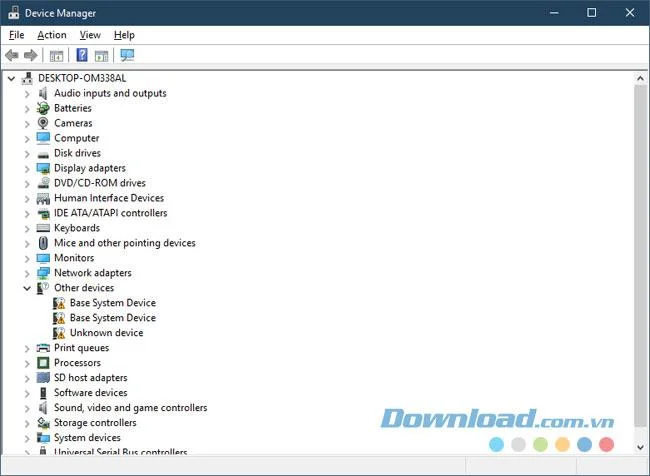
Or open hardware device manager with Open Device Manager.
III. Edit interface, hard drive list and language
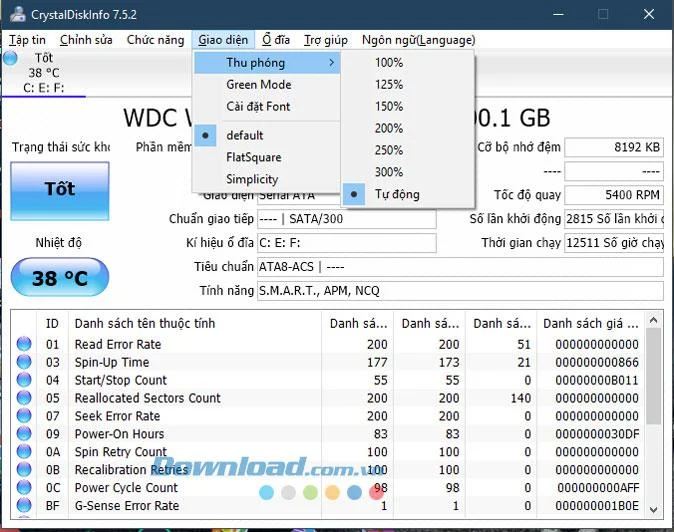
The interface menu includes options related to the size and color of the hard drive state, font size, font, etc.
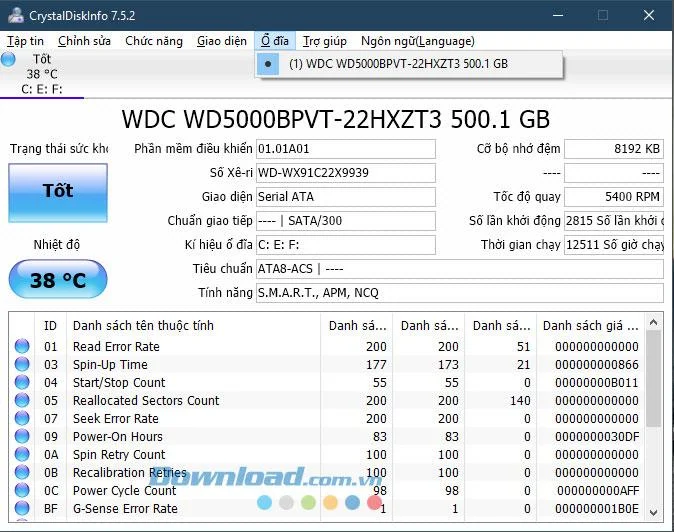
The Drive menu displays the number of hard drives your computer is using.
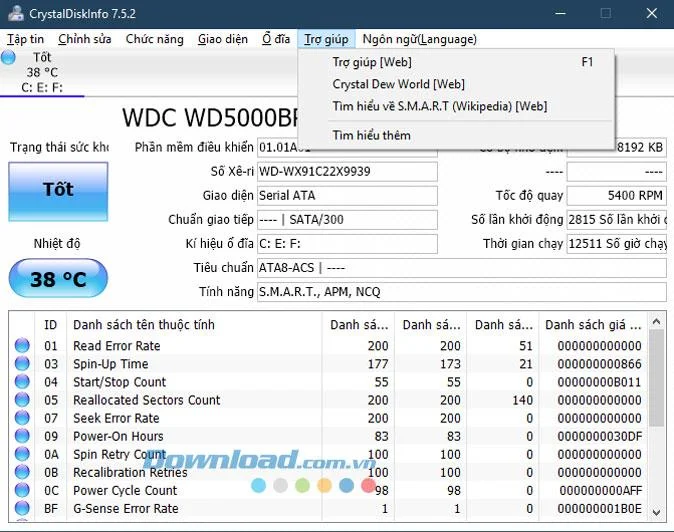
The Help menu will give you some information regarding CrystalDiskInfo, you can get help from the software's website. On Wikimedia ...
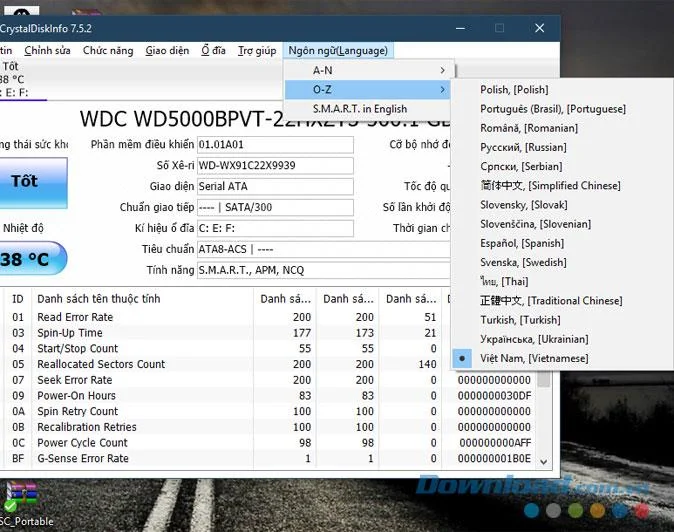
Finally, the language menu, the number of languages supported by CrystalDiskInfo is not much, but you can use Vietnamese in it.
Above are a few instructions for using CrystalDiskInfo of Download.com.vn, hopefully with the instructions above will help you check the status of your hard drive correctly, from which you will prevent. There are undesirable issues on your hard drive.