Your computer has a lot of heavy software such as games or graphics-related software, after being used for a while, it will make your computer after a period of use showing signs of sluggish operation and operation. Your slowdown affects the speed of your work.
The cause of sluggishness after a period of use is due to too much RAM used. In the article below, Download.com.vn will introduce you to a software that helps optimize RAM for your computer to operate more efficiently.
Instructions for installing and using Memory Cleaner on the computer
Step 1: Go to the download link above and click Download.

Step 2: Select a link and download.

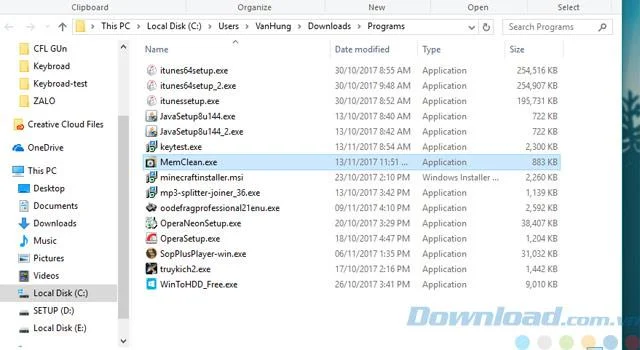
Step 3: After downloading you click on the installation file to proceed with the installation.

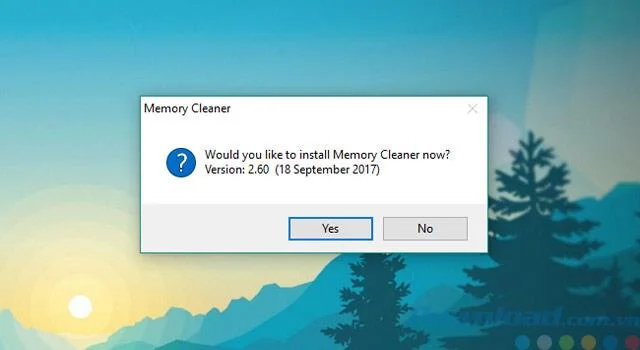
Step 4: Now the software will ask if you want to install Memory Cleaner now, click Yes to begin.

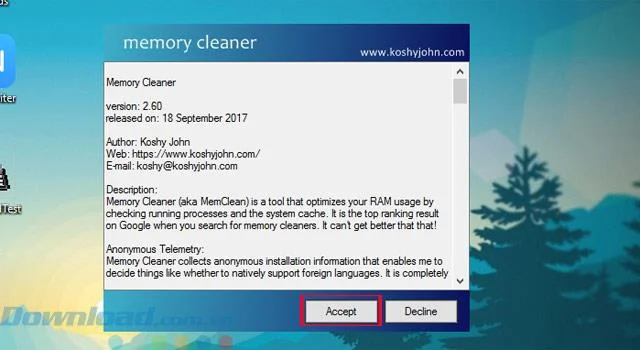
Step 5: Click Accept to agree with the terms of the manufacturer.

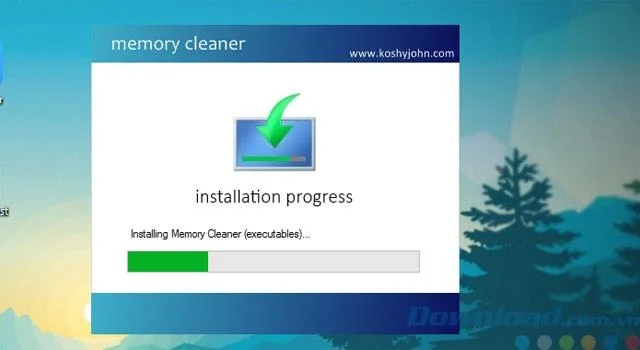
Step 6: Wait a bit for the installation program to complete.

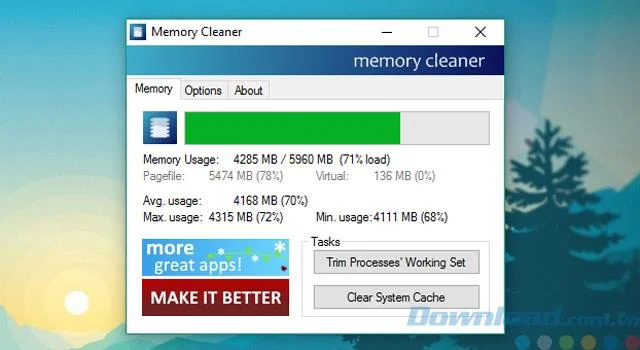
Step 7: After the installation process is completed the software will appear like this. There will be two functions that Memory Cleaner provides:
- Trim Processes' Working Set: this function will help you reduce the amount of RAM of processes in the active application and occupy the space, this function helps Windows have enough memory needed for the system of You can run smoother.
- Clear System Cache: this function helps Memory Cleaner software automatically set to free up system cache, helping RAM to operate more stably.

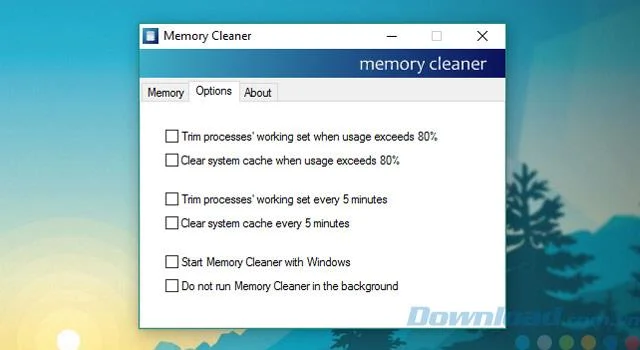
In addition to the two main functions mentioned above, the software also provides a function to help users configure the software to automatically free memory on the computer.
You go to Options will have all 6 options including:

- Trim processes' working set when usage exceeds 80%: this function will set when your RAM usage exceeds 80% of the software will automatically reduce the usage of the software occupying RAM. Help system run smoother.
- Clear system cache when usage exceeds 80%: when your computer uses more than 80% of its RAM, it will automatically free up memory space to help the system run slow and sluggish if you choose this function.
- Trim processes' working set every 5 minutes: setting this function the software will automatically reduce your RAM capacity every 5 minutes.
- Clear system cache every 5 minutes: automatically frees up your RAM every 5 minutes.
- Start Memory Cleaner with Windows: run Memory Cleaner when booting the computer.
- Do not run Memory Cleaner in the background: Do not run Memory Cleaner in the background.
Video on installing and using Memory Cleaner on PC
With the above functions, you can set yourself an automatic mode to help your computer always operate stably.
Hope the article will be useful for you.