Windows 10 is the latest operating system, adding a lot of exciting new features. However, besides there are many features that are rarely used or never used, they are "useless" so that it has no effect but also makes the computer run slower.
So what are these features? How to disable?
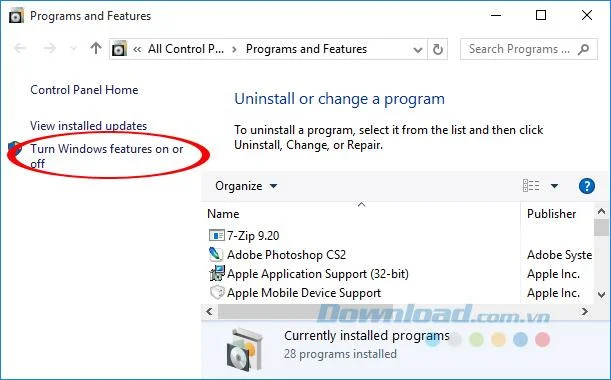
On Windows 10 you can manage features through the Windows Features dialog box. Therefore, the first thing to do is to launch this tool. Right-click the Start button , select Programs and Features.
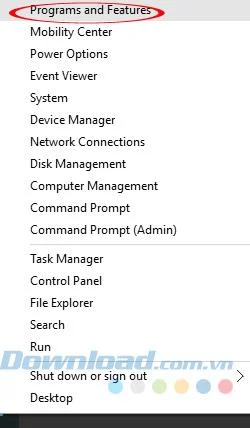
Programs and Features window appears, click the Turn Windows features on or off option on the left side of the screen.

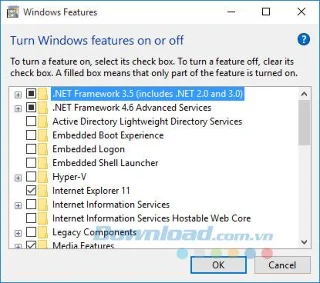
When the Windows Features dialog box appears, follow the instructions below to disable unnecessary features, help the computer run faster:

Note: After each operation will display a message window reminding you to press Yes . Then restart Windows for the changes to take effect.
Disable 10 unused features on Windows 10
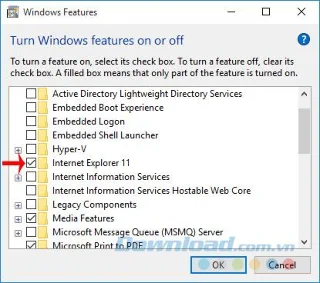
1. Internet Explorer 11
Browsers Internet Explorer fewer user, in Version latest Microsoft operating system has replaced Microsoft Edge as the default browser. This is a brand new web browser that brings a very interesting browsing experience, so look to the Internet Explorer 11 series , uncheck it.

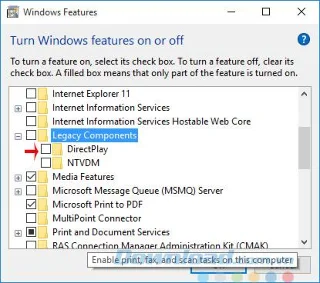
2. DirectPlay
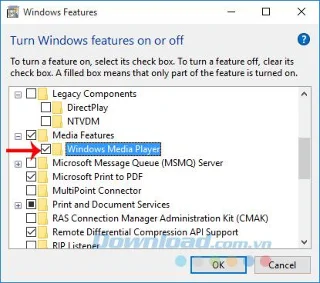
DirectPlay is an API function of Microsoft DirectX API, used for gaming system on Windows Live a long time ago, new game genres are no longer used. So it is best to disable them by: Go to the Legacy Components line , click on the + icon to open more sub-categories, then uncheck the DirectPlay box .

3. Windows Media Player
Although Windows Media Player is a music player so popular on Windows, but OS this latest Groove Music has been the default setting or you want to use the video player 3rd party such as VLC Media Player , KMPlayer to There are more attractive features.
Therefore, if not used to the best, please disable by: Navigate to the Media Features line , click on the + icon to open more sub-categories, then uncheck the box in Windows Media Player .

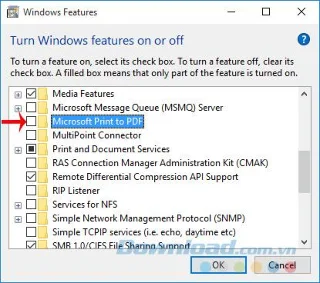
4. Microsoft Print to PDF
Microsoft Print to PDF is a virtual printer service that allows users to print any format to PDF. However, if you are using the Microsoft Office office toolkit , this feature is no longer needed. So disable it by unchecking the box in Microsoft Print to PDF .

5. Print and Document Services
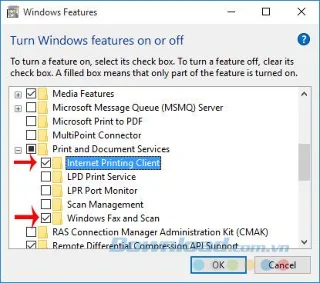
This feature allows you to perform printing, connecting to a Fax or Scan machine. If there is no need to use it is best to disable them by: Navigate to the Print and Document Services line , click the + symbol next to open more sub-items:
- Internet Printing Client: Allows printing in local or remote network via IPP protocol.
- Windows Fax and Scan: Support using the Fax and Scan devices that are connecting on the computer.
Then, uncheck the box here.

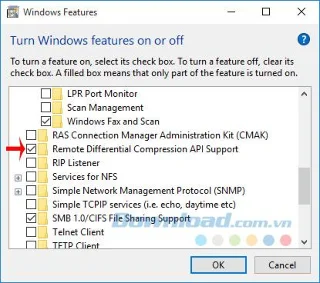
6. Remote Differential Compression API Support
This feature helps users to manage server systems remotely better, if you are a regular user is not related to best server disable go by: Put tick in the box Remote Differential Compression API Support go .

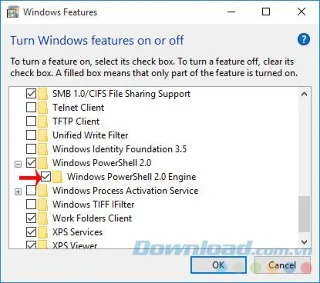
7. Windows PowerShell 2.0
PowerShell is a command line interpreter and scripting language on Windows. However, currently the latest version is P owerShell 5.0, so the commands from the old version no longer work on Windows 10. It is best to turn them off by: Navigate to the Windows PowerShell 2.0 line , click the sign icon + next to open a sub item, then uncheck the box in Windows PowerShell 2.0 Engine .

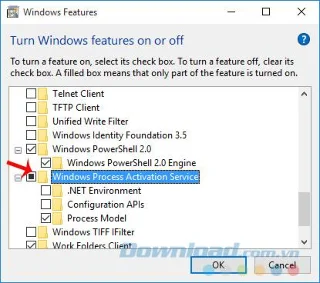
8. Windows Process Activation Service
Windows Process Activation Service is often used for application developers, if you are the best normal user, please disable it by: Navigate to the Windows Process Activation Service line , click the + symbol next to add a sub item, then uncheck the Process Model box .

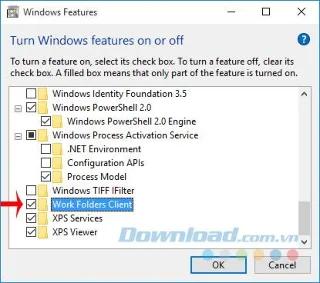
9. Work Folders Client
This feature allows syncing folders from a corporate network to your computer. If your computer is not related to work, it is best to turn it off by unchecking the box in the Work Folders Client.

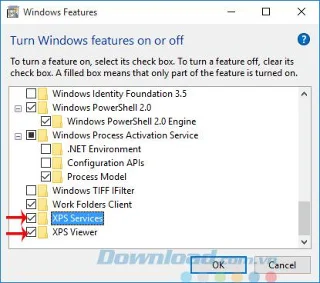
10. XPS Services and XPS Viewer
XPS is a format designed by Microsoft to replace the PDF format, allowing users to create, print and view XPS documents on a computer. If you do not use this format, it is best to turn it off by unchecking the boxes of XPS Services and XPS Viewer .

Check that you do not use any features, please turn them off, reduce the burden on the computer, help the computer run faster!
I wish you successful implementation!