In the previous article we showed you how to create a group chat on Skype , but in the process of using some people encountered the case of not receiving messages in Group Skype . So the reason is? And how to overcome this situation here?
In this article Download.com.vn will guide how to handle the error of not receiving messages in Group so that you can easily exchange and discuss with each other on Skype:
Method 1: Upgrade to the latest version of Skype
Cause: Due to some members of the group used the old version too.
Solution: Upgrade to the latest version. Link to download the corresponding Skype versions below:
Method 2: Customize in Skype
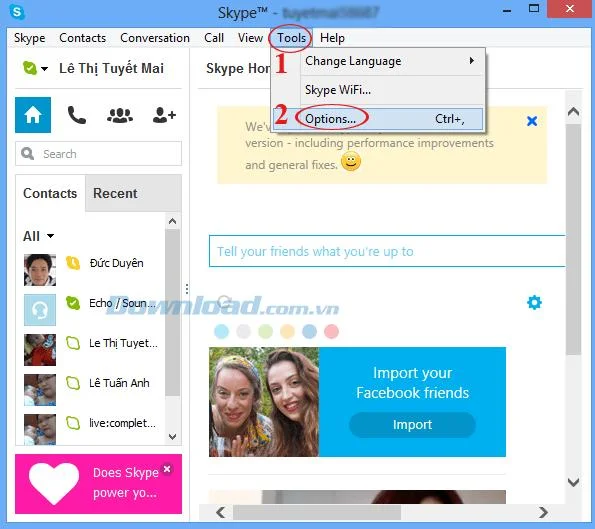
Step 1: Open Skype and log in to your account. On the main interface, click the Tools menu , select Options ... (or use Ctrl +, )
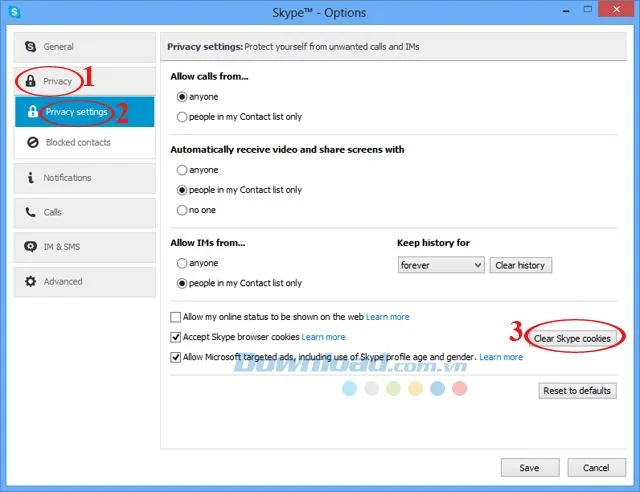
Step 2: Skype - Options window appears, click Privacy , then Privacy settings, then on the right side of the screen click Clear Skype cookie button to delete history, cookies ...

A message box appears asking if you want to delete cookies on Skype? Please select OK.

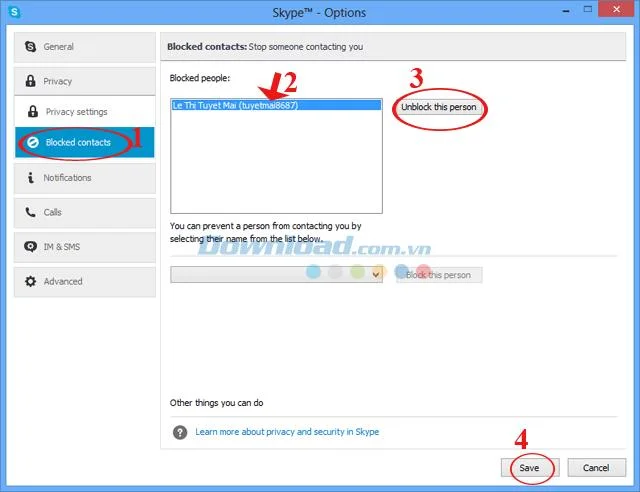
Step 3: Next, click on Blocked contacts to deselect the members. In the right column of the screen, select the member and then click the Unblock this person button . Then click Save to save the settings.

Step 4: Exit Skype and log in again.
So you have overcome the error of not receiving messages in the group chat already. Now, you are free to chat with your friends in the group without any obstacles. Moreover, you can also create group chats on Zalo , Viber , Yahoo Messenger to easily chat, chat with a group of friends.