Desk Decorating Ideas for a Spooky Office Cubicle
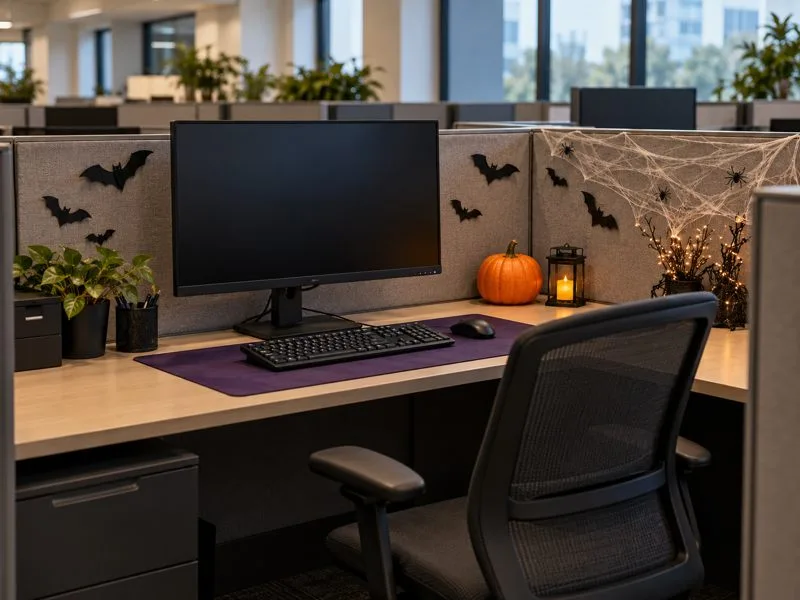
Create a spooky office cubicle with Halloween desk decor ideas that keep your workspace usable, tidy, and mindful of workplace safety.
If you want to learn more about web design and development, installing Internet Information Services (IIS) on your Windows 10 computer is a good way to do it. IIS is a free Windows feature that comes with Windows 10, so why not use it?
There are 3 ways to install and setup a website in IIS on Windows 10; using the graphical user interface (GUI), PowerShell or Windows CMD.
Install IIS using GUI
This is a simple method to set up a website in IIS. It can be ideal if you are new to PowerShell or Windows commands.
1. Start typing “turn on windows” in the Search bar. The Turn Windows features on or off utility will appear. Click on it.
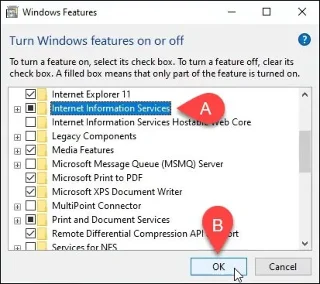
2. The Windows Features window will open. It may take a moment for other features to load. Once done, click the check box next to Internet Information Services , then click the OK button.
3. The installation will begin and may take a few minutes. Once complete, click the Close button.
4. To make sure IIS is installed and running, type IIS in the Search bar near the Start button. You should see Internet Information Services Manager as a result . Click on it to open it.
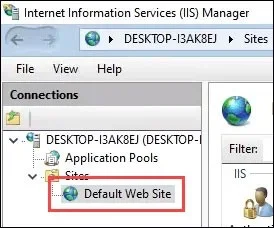
5. Once IIS Manager opens, look on the left side of the window under Connections. Expand the tree menu until you see Default Web Site . That is a placeholder website installed with IIS. Click on it to select it.
6. On the right side of IIS Manager , look at the Browse Website section . Click Browse *:80 (http) . The default website will open in the default web browser.
7. You will see a web page like this. Note that the address bar says localhost. That is the address to enter into the new web page.
Create your first website for IIS
Before we get into the other two methods of installing IIS, let’s look at where the files that make up your website are stored. This article will also create a very basic website. Once you learn how to do this, you’ll have the basics down pat for learning web design and development.
1. Once IIS is installed, open File Explorer . Navigate to C:\intepub\wwwroot. This is where the files that make up your website need to be stored. You'll see the default IIS website file, iisstart.html , and the image that appears on the page, iisstart.png. This is where you'll save your first website.
2. Open Notepad with admin rights . To save to wwwroot location , you must be an administrator.
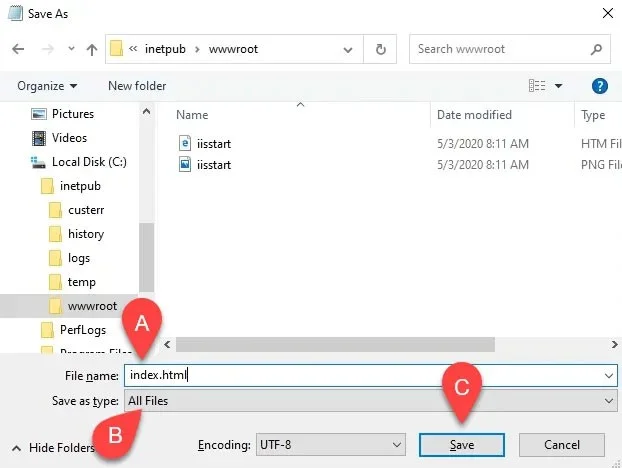
3. Save the file to the wwwroot location . Name it index.html and change Save as type: to All Files . Then click the Save button.
4. Now that it's saved as the correct filetype, let's add some content to it. Enter the following HTML code for a very basic web page and save it:
Hello World!
5. Go back to the web browser with the default IIS website. Click the Refresh button. You should now see your first web page.
Install IIS using Windows commands
You can shorten the IIS installation process to a command line. It can be done in Windows Command Prompt or using PowerShell.
1. Open Command Prompt with admin rights .
2. Enter the following command and press Enter:
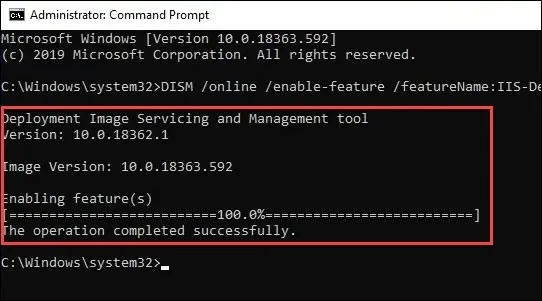
DISM /online /enable-feature /featureName:IIS-DefaultDocument /All3. You will see a progress bar appear. When it reaches 100.0% and you see the message “The operation completed successfully” , you can close Command Prompt. IIS has been installed.
4. Test to make sure you can open IIS Manager and that the installation worked, using steps 4 - 7 from the Installing IIS using the GUI section.
Install IIS using PowerShell
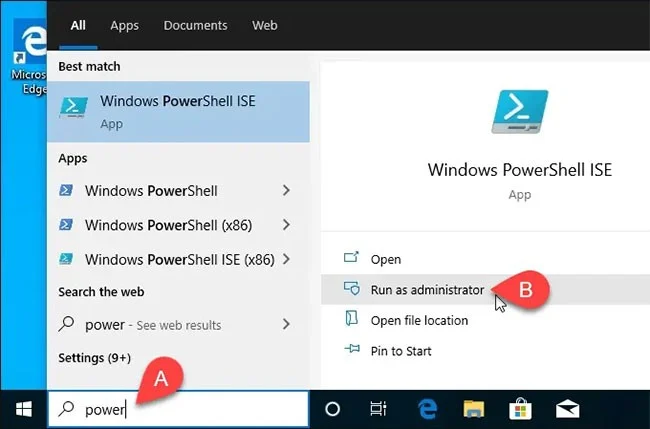
1. Run PowerShell ISE with admin rights.
2. Type the following cmdlet and run it:
Enable-WindowsOptionalFeature -Online -FeatureName IIS-WebServerRole -NoRestart3. You will see a progress bar start. Once complete, check to make sure IIS is installed and working.
This step is optional, but you can save it as a PowerShell script and then run it at any time. Play around with the script and add different parameters. In the end, you'll have an IIS setup script that sets everything up exactly the way you want it, ready to use anytime, with just one click.
Create a spooky office cubicle with Halloween desk decor ideas that keep your workspace usable, tidy, and mindful of workplace safety.
Plan a recognizable Halloween 2026 look with pop culture costumes inspired by Spider-Man, Supergirl, Toy Story 5, Moana, Mario, and Wednesday.
Sort leftover Halloween candy safely, share or repurpose sealed treats, and choose food use or compost for pumpkins based on their condition.
Compare workplace Halloween costume choices by respect, dress code, mobility, and safety—and learn when a subtle accessory or a policy check is the better option.
Find a couples costume that fits your style, budget, and comfort level, from Addams Family classics to original inside-joke duos.
Need a last-minute high school Halloween costume? Compare 10 easy closet-based ideas by prep time, comfort, school-day practicality, and simple safety checks.
Use a simple 2026 Halloween decorating timeline for indoor décor, outdoor displays, and fresh pumpkins, with practical adjustments for weather and events.
Mix five vivid, approachable Halloween cocktails with measured recipes, simple prep tips, and an alcohol-free option for your party guests.
Find 15 office-friendly Halloween costume ideas for 2026, with practical checks for dress codes, respectful themes, comfort, and workplace safety.
Plan a fun elementary school Halloween party with easy crafts, games, inclusive treats, costume tips, and a sample 75-minute classroom schedule.