Home
» PC Tips
»
How to Make Windows 11 Look Like Windows 10
How to Make Windows 11 Look Like Windows 10
Not everyone likes the new look of Windows 11. If you miss the familiar look of Windows 10 , you can restore the Start menu, taskbar, and other familiar elements with a few simple tweaks.
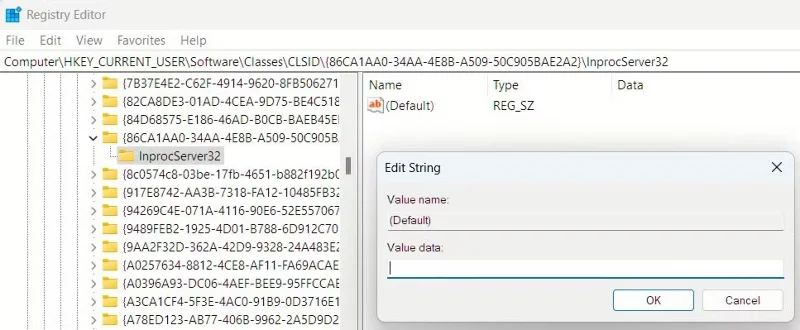
Windows 11’s new truncated context menu is annoying. While it’s more streamlined, you’ll constantly have to expand the menu to access options that aren’t visible in the default view. These extra clicks add up to a less efficient experience. So one of the first changes to make Windows 11 feel more like Windows 10 is to bring back the classic context menu.
To restore, first create a backup of the Registry. Then, follow these steps:
Press Win + R , type "regedit" and press Enter.
Navigate to HKEY_CURRENT_USER > Software > Classes > CLSID in the left sidebar.
Right click on CLSID , select New > Key and name it "{86CA1AA0-34AA-4E8B-A509-50C905BAE2A2}"
Inside this new key, create another key and name it "InprocServer32".
Double-click the Default entry and leave the value blank.
Click OK , close Registry Editor and restart your PC.
Restore classic context menu by tweaking Registry Editor.
Note : The example is using Windows 11 21H2, so some Registry Editor tweaks may not work if you are using a newer build.
2. Return to Windows 10 wallpaper
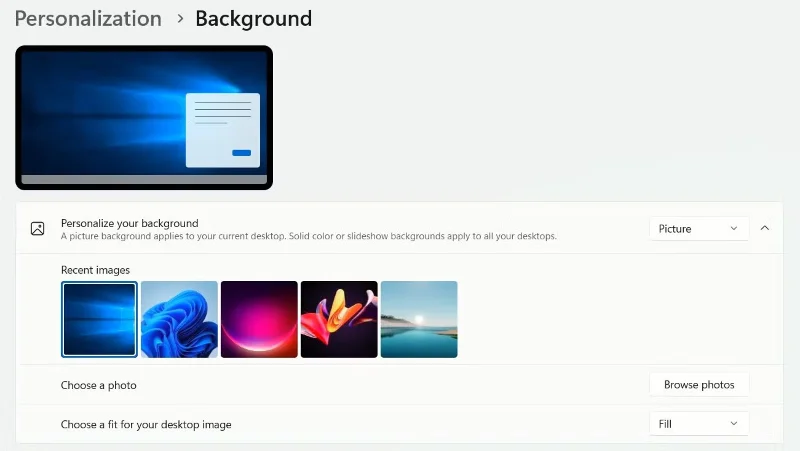
If you've never replaced the iconic glowing blue Windows 10 wallpaper, you might be surprised by Windows 11's new default wallpaper. While visually appealing, it takes away from the familiar Windows aesthetic. Luckily, you can quickly restore the classic Windows 10 wallpaper.
To bring back Windows 10 wallpaper on Windows 11, follow these steps:
Download high resolution Windows 10 wallpaper version from any reliable online source.
Right-click on the desktop and select Personalize .
Click Background > Browse photos to locate and select a downloaded Windows 10 wallpaper.
Switch to Windows 10 wallpaper on Windows 11.
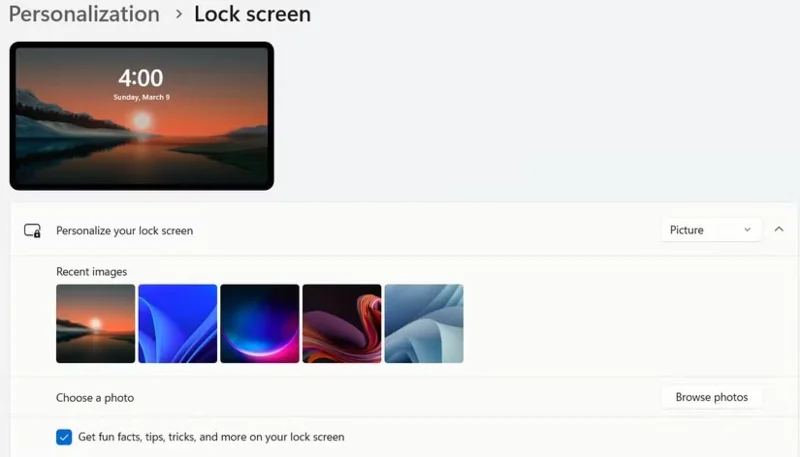
Additionally, you can customize the Lock Screen screensaver by navigating to Settings > Personalization > Lock Screen .
3. Restore File Explorer ribbon
Like the context menu, Microsoft has redesigned File Explorer in Windows 11. While the new streamlined toolbar gives it a cleaner look, it also does away with the classic, familiar ribbon with all the options available. If you prefer the old layout—without having to expand the menu—you can bring it back.
To bring back the classic ribbon in File Explorer, follow these steps:
Press Win + R , type “regedit” and press Enter.
Navigate to HKEY_LOCAL_MACHINE > SOFTWARE > Microsoft > Windows > CurrentVersion > Shell Extensions .
Select the Blocked key . If it doesn't exist, right-click on Shell Extensions , select New > Key and name it “Blocked”.
In the right pane, right-click, select New > String Value and name it “{e2bf9676-5f8f-435c-97eb-11607a5bedf7}”.
Close Registry Editor and restart your computer.
Switch to classic File Explorer ribbon in Windows 11.
4. Adjust taskbar alignment and remove unnecessary elements
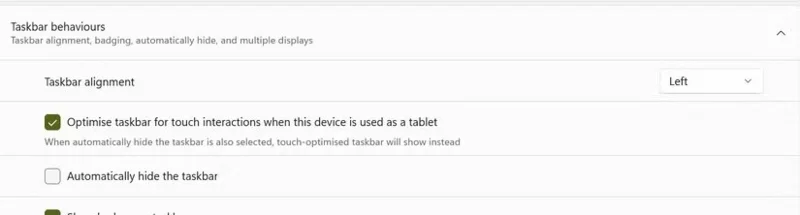
Another visual change in Windows 11 is that the taskbar is now centered, whereas in Windows 10 it was left-aligned. To move it back, right-click the taskbar, select Taskbar Settings , go to Taskbar Behaviors and select Left from the drop-down list.
Change taskbar alignment to the left in Windows Settings.
You can also disable unnecessary taskbar elements like Widgets by disabling them in settings.
Disable additional taskbar items in Windows settings.
5. Use the classic Task Manager instead
Microsoft has also refreshed Task Manager by moving the navigation menus to the left instead of the top. While the new design is cleaner and more modern, Windows 10’s layout is more compact and the menus are easier to navigate. If you prefer the classic Task Manager, there’s an easy way to open it in the old interface.
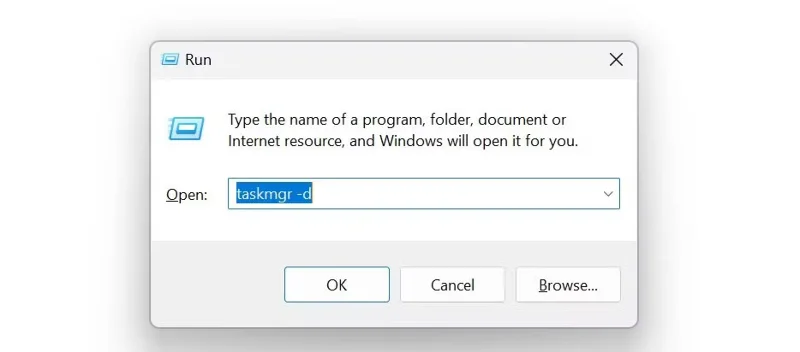
To open Task Manager in the old interface all the time, follow these steps:
Run the classic Task Manager from the Run utility.
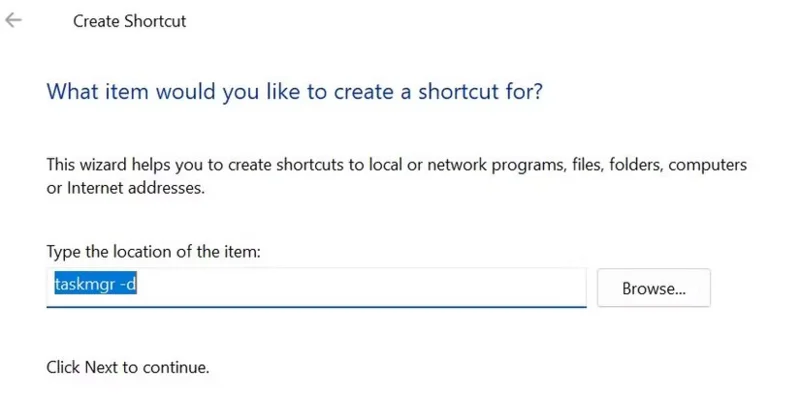
To avoid having to type this command multiple times, you can create a desktop shortcut:
Right-click on the desktop and select New > Shortcut .
Enter "taskmgr -d" in the location field and click Next.
Name the shortcut "Classic Task Manager" and click Finish .
Create desktop shortcut for Classic Task Manager on Windows.
6. Modify the Start menu
Windows has simplified the Start menu layout, and unlike the other tweaks on this list, there’s no quick Registry trick to restore the classic Windows 10-style menu. While some workarounds existed in earlier versions of Windows 11, they no longer work. This is one change you’ll likely need a third-party tool for.
OpenShell (downloadable from GitHub ) is a great free option. However, Start11 is recommended because it’s easy to use. It costs $9.99 per install, but you can try it for free.
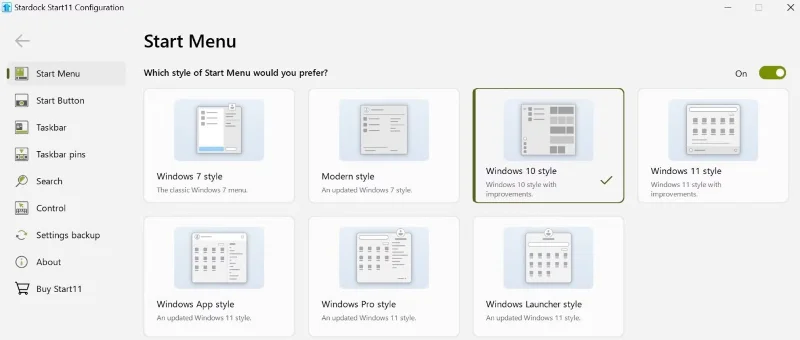
Then go to the Start Menu tab , select Left Aligned , select Windows 10 Style and close the app.
Change the Start menu style to Windows 10 style.
You can also customize further in the settings.
7. Turn off Microsoft Copilot
Windows 11 comes with Microsoft Copilot, an AI assistant designed to help with search, content creation, and task automation. However, it feels unnecessarily cluttered. Microsoft Copilot isn’t part of Windows 10 as a whole, although it’s there now. If you want a true Windows 10-like experience on Windows 11, you’ll have to disable Microsoft Copilot.
To turn off Microsoft Copilot, follow these steps:
Press Win + R , type "regedit" and press Enter.
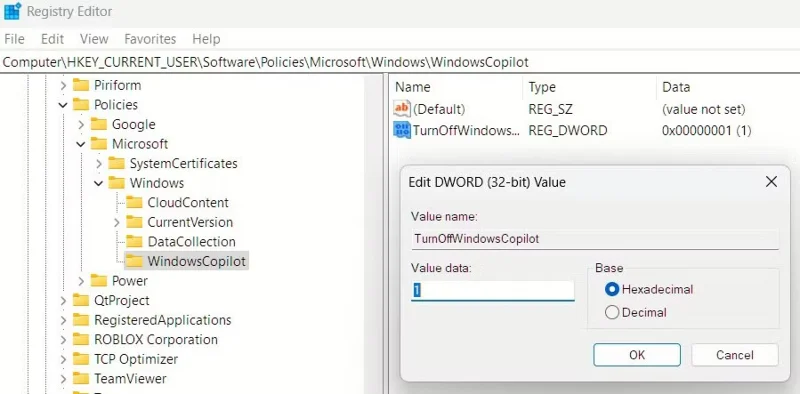
Navigate to HKEY_CURRENT_USER > Software > Policies > Microsoft > Windows .
Right-click on the Windows folder, select New > Key and name it "WindowsCopilot".
In the right pane, right-click, select New > DWORD (32-bit) Value and name it "TurnOffWindowsCopilot".
Double click on it, set the Value Data to 1 and click OK .
Restart your computer to apply the changes.
Turn off Microsoft Copilot in Windows 11.
8. Remove rounded corners for a sharper look
Windows 11 introduces rounded corners to app windows and UI elements, a subtle design change that gives the interface a modern look. The corner radius varies across different elements, but if you prefer the classic crisp design, you can turn off rounded corners for a Windows 10-like look.
To restore sharper corners, follow these steps:
Press Win + R , type "regedit" and press Enter.
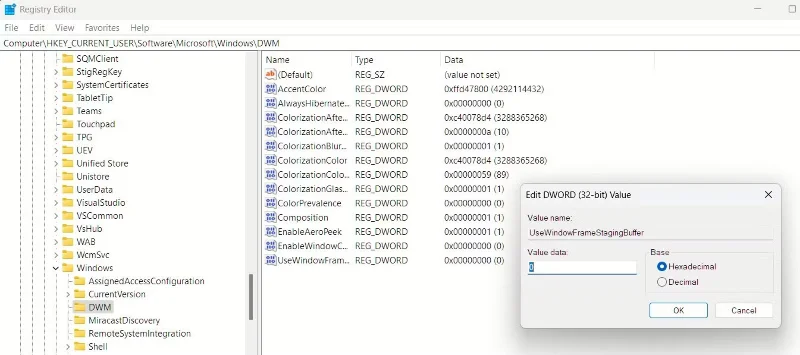
Navigate to HKEY_CURRENT_USER > Software > Microsoft > Windows > DWM .
Right-click the DWM key , select New > DWORD (32-bit) Value and name it "UseWindowFrameStagingBuffer".
Double-click this newly created DWORD, set the Value Data to 0 and click OK.
Restart your PC to apply the changes.
Disable rounded corners in Windows 11.
If you don’t like the new design, apply these changes for a more comfortable experience. If you don’t want to tweak the Registry manually, you can use third-party tools to make these changes much easier. However, sometimes the support for those tools isn’t the best, which is why many people prefer to rely on registry tweaks.