Home
» How to
»
Install and use PeaZip to compress and decompress files
Install and use PeaZip to compress and decompress files
Surely users are familiar with software to compress and decompress WinRAR or Winzip files . However, besides there are a number of other software also owns a lot of outstanding features, such as PeaZip.
PeaZip supports many of the most popular compression formats such as: 7Z, ARC, BZ2, GZ, PAQ, PEA, QUAD / BALZ, TAR, UPX, ZIP, ARC. With extremely fast compression and decompression speed, light capacity, quick and convenient installation. Please refer to the following article to know how to install and use PeaZip:
Instructions for installing PeaZip to compress and decompress data
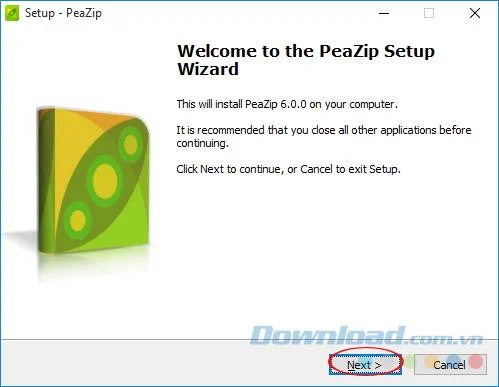
Step 1: Download PeaZip following the link above, and then double-click the installation file. Immediately after, the Setup - PeaZip window appears, click Next to move to the next step.
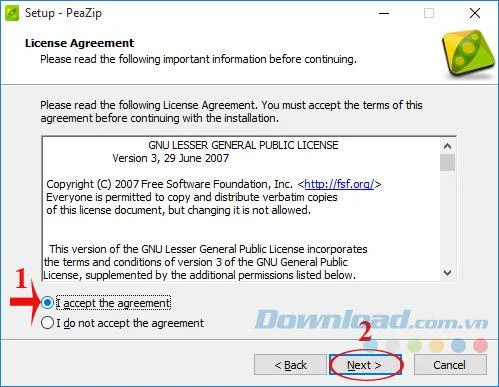
Step 2: After reading the terms of use issued by the publisher, if you agree, select the I accept the agreement box , and if not, click I do not accept the agreement. Then click Next to move to the next step.
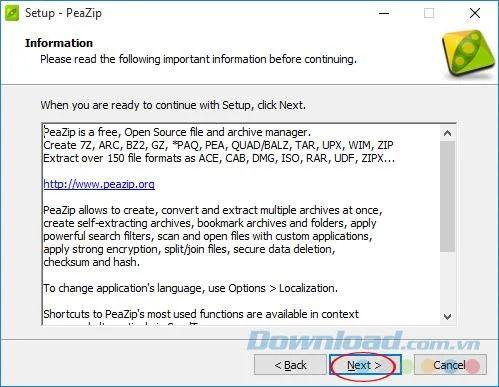
Step 3: Click Next to move to the next step.
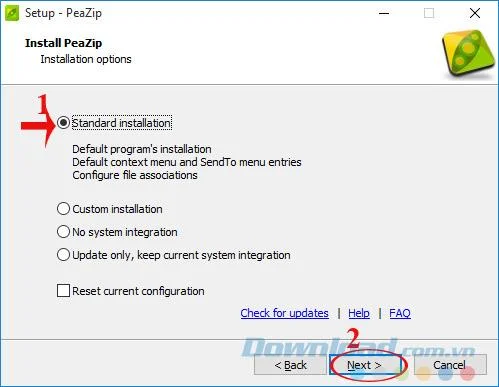
Step 4: Here, 4 settings options for you to choose:
Standard installation: Standard installation .
Custom installation: Custom installation .
No System integratio: No system integration.
Update only, keep current system integration: Only updated, but still compatible with the current system.
Depending on the needs of each person to choose accordingly, here we choose standard installation mode Standard installation. Then click on Next.
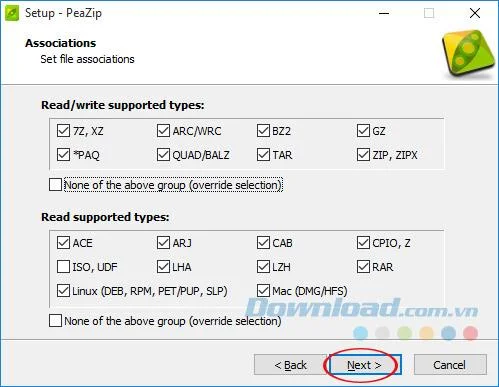
Step 5: Immediately appear the selection window of the supported PeaZip formats, preferably leave it alone, then click Next to move to the next step.
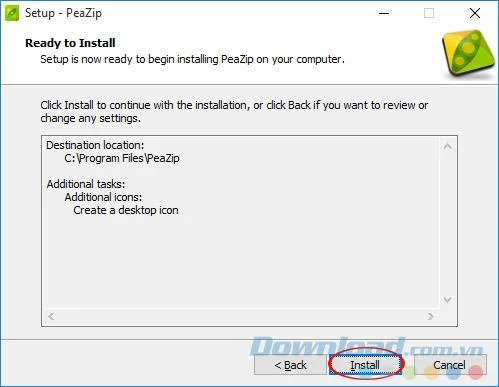
Step 6: After setup is complete all click the Install button to start installing PeaZip on the computer.
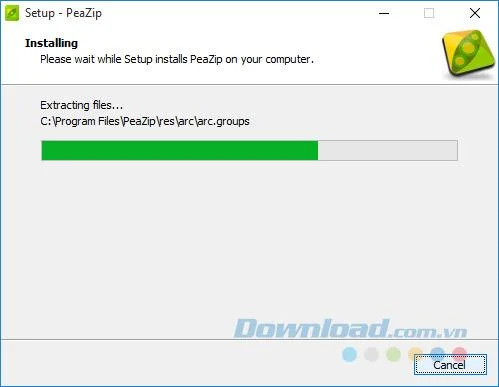
Step 7: Wait a while for the installation process to complete, whether this process is fast or slow depends on the configuration of your computer.
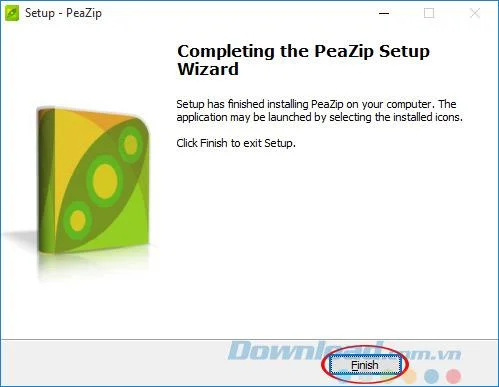
Step 8: Finally, click Finish to finish the installation of PeaZip.
So you have successfully installed PeaZip on the computer, now all the compressed files in the machine will immediately change the icon similar to the software icon. At the same time, integrated into the right-click menu for easier operation and use.
How to use PeaZip to compress and decompress data
1. Compress data with PeaZip
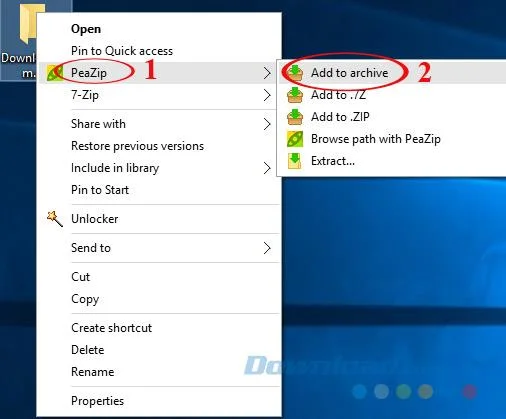
Step 1: Right-click the file you want to compress, then click PeaZip, select Add to archive ... to compress the file.
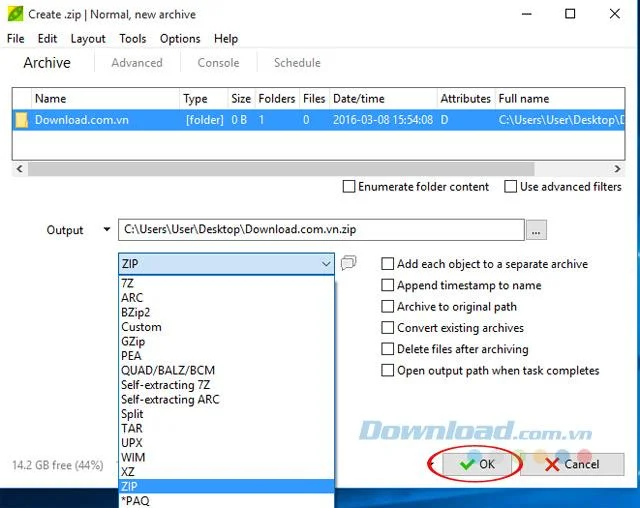
Step 2: Here, you can choose the archive file format: ZIP, 7ZIP, ARC, GZIP .... At the same time, select some of the following options:
Add each object to a separate archive: Add objects to a separate archive file.
Append timestamp to name: Assign Timestamp (add year, month, day, time) to name.
Archive to original path: Compress the file to the original path.
Convert existing archives: Convert the current compressed file format.
Delete files after archiving: Delete files after compression.
Open output path when task completes: Open the path to save the file after completion.
Then, click OK to complete the file compression process.
2. Extract data with PeaZip
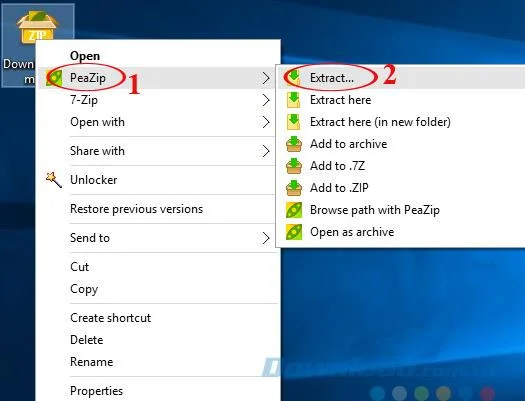
Step 1: Right-click the file you want to extract, then click PeaZip , select Extract ... to extract the file.
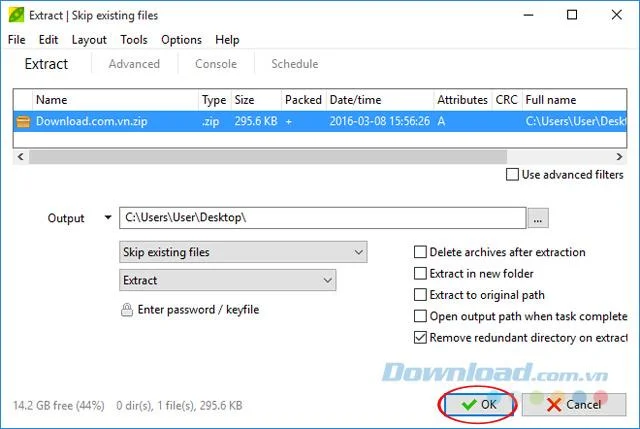
Step 2: The file extraction window appears that allows you to select the path to save the file after extracting and select some additional options:
Delete archives after extraction: Delete the file after extracting.
Extract in new folder: Extract to a new folder.
Extract to original path: Extract to the original path .
Open output path when task complete: Open the path to save the file after completion.
Remove redundant directory on extract: Remove the directory when unzipping.
Finally, click OK to extract the file.
Video installation guide PeaZip to compress and decompress files
So you have successfully compressed and decompressed this tool PeaZip already. Pretty simple, isn't it? Alternatively, you can use 7-Zip , WinZip to compress and decompress data.