The speakerphone has a deeper sound quality, better bass, so connecting the speaker to the TV helps to reproduce the vivid sound of the movies you love. So how to connect TV audio to speakers? Let's find out with WebTech360 through the following article!
>> Some common connection ports on stereo systems, speakers
>> Instructions on how to connect a simple amplifier with a TV
How to connect audio from TV to speaker via 3.5mm jack
There are many ways to output sound from the TV to the speaker, but most users often use the speaker connection to the TV via the 3.5mm jack. Output audio by Jack includes 3 steps as follows:
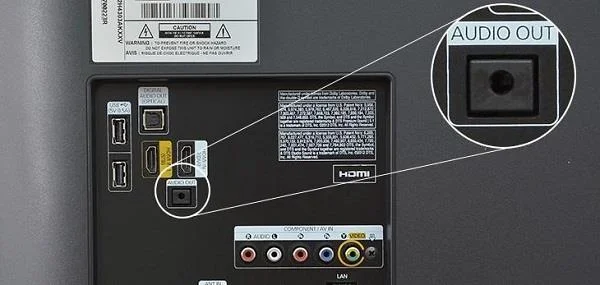
How to connect a speaker to a TV with a 3.5mm jack
- Step 1: Please plug the 3.5mm jack into the 3.5mm port of the TV (round hole, symbolized as AUDIO OUT).
- Step 2: Identify the speaker you are using. If you are using a USB speaker, the way to plug the speaker into the TV is to connect the USB cable of the speaker to the USB port on the TV to get power to the speaker. If it is a hall speaker, the 3.5mm jack is usually plugged directly into the Mixer table that is already connected to the power amplifier and speaker.
- Step 3: After connecting, you will be able to enjoy the fascinating sound. the most vivid.
Use white-red audio jack
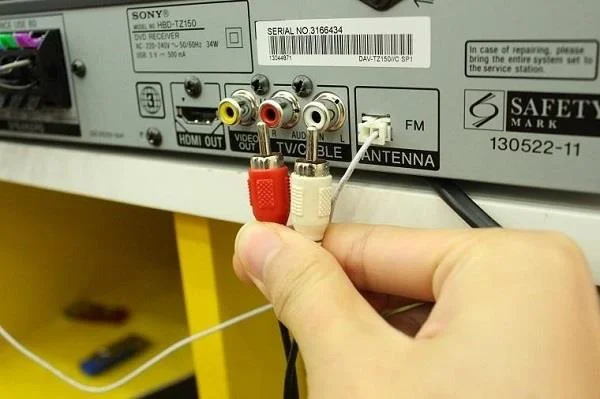
The white-red audio jack is a common connection port on older systems, you can easily see that there are two white and red sockets on the machine. On TV, there are usually two clusters of white-red jacks, one is the signal receiving port, used to connect to the player, and it is usually located in the cluster denoted AV in. The other can output audio, usually denoted AUDIO OUT.

How to connect the speaker to the TV by white-red Jack
Audio output via Optical port
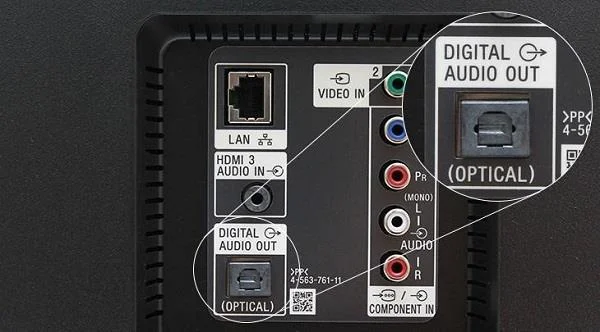
Optical port is quite popular audio output port on the market today, it uses digital signal cable or we often call optical cable.
On a quick look on the TV, you will see the port is shaped like a square hole and usually comes with the DIGITAL AUDIO OUT symbol. The advantage of connecting the speaker to the TV via Optical port is that the sound is transmitted with good quality, fast speed and its connection is gentle and simple.

Optical port is often used to connect the TV to the sound bar, or can connect to the sound system.
The steps to connect include:
Step 1: Connect the Optical cable to the DIGITAL AUDIO OUT (OPTICAL) port on the TV of each family.
Step 2: The other end of the cable is port to the speaker port.
However, nowadays, not all TV equipment or amps are integrated with Optical ports, so before you want to connect the TV and amiply via Optical port, you need to find out whether your TV model supports connection or not.
>> "Solve" the ports on the TV, do you really need multiple USB & HDMI ports
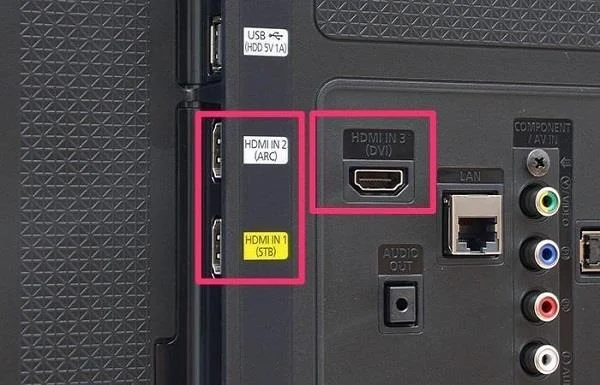
How to connect the TV to the speaker with an HDMI cable is quite simple. You just need to take 1 HDMI cable, one end plugs into the HDMI port on the TV, the other end plugs into the HDMI OUT device on the audio device on the TV. Then, you press the INPUT, SOUNCE or the button with an arrow icon to select the data input of the TV as the HDMI port that you have plugged in. The simple and quick connection of this HDMI cable allows the TV to output back audio to speakers, amplifiers or systems, ...
For normal TVs, the HDMI port only receives the signal and does not output the sound to the speakers. To output the sound to the speaker you must use a different port.
>> How to connect a laptop to a TV via HDMI
>> How to buy HDMI cable for TV?

How to connect speakers to a TV using HDMI port
Connect the speaker to the TV via Bluetooth
Connecting a TV to a bluetooth speaker is also one of the most popular ways to connect a TV, it is used similarly to a phone . But to connect the speaker to the TV via Blutooth, your TV must be modern, normal TVs will not have this feature.
>> Instructions on how to connect a phone to a TV via bluetooth to play music
Above are 5 ways to connect speakers to a television commonly used today, users can choose the most suitable and convenient connection methods to enjoy the most attractive sound world.