Would Europe Be Drawn into a Hypothetical U.S.-Israel-Iran Nuclear War? NATO Rules Explained

A guide to NATO Articles 4 and 5, UN self-defense rules, and why consultation does not mean automatic European entry into war.
There have been a number of recent rumors that AMD may be planning to exit the GPU market. The Red Team’s broader strategy may also include putting more resources into the CPU space to gain an advantage in the crowded market, with Apple’s new “M Max-Series” CPUs being listed as a potential competitor by AMD.
AMD is reportedly preparing to challenge Apple's dominance in the high-end laptop market with a powerful new line of mobile CPUs, codenamed Strix Halo, and now rumored to be launched as Ryzen AI Max. The new line will be positioned higher than AMD's mainstream Ryzen AI 9 chips and aimed at true mobile workstations, offering significantly more graphics power than any existing AMD mobile CPU.
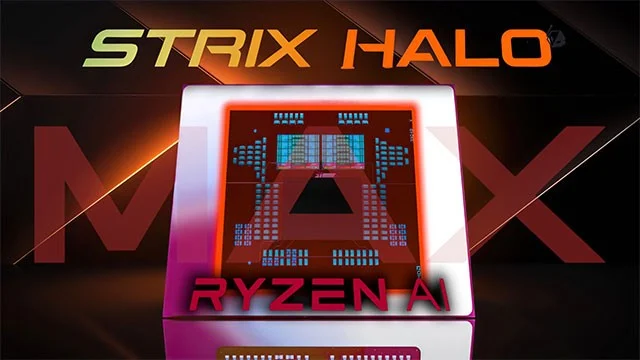
Leaked specs suggest that the Ryzen AI Max will feature a whopping 16 cores and 40 compute units (CUs) in the chip's embedded GPU, more than double that of AMD's current flagship mobile chip, the Radeon 890M. This is similar to Apple's strategy of boosting its integrated GPU for video editing and other demanding workloads. The Ryzen AI Max chip can also support up to 96GB of video memory (VRAM), double what Apple's Max CPU offers.
Ryzen CPUs are some of the best choices you can get in a laptop today, and the purpose of this improved iGPU is to make its chip more appealing to people who are considering something like a MacBook Pro but might not want a big, heavy laptop with a full-size dedicated GPU.
If the rumors are true, the Ryzen AI Max line is expected to include three configuration options, with 16-, 12-, and 8-core CPU versions. The iGPU offers 40 CUs for the top model and 32 CUs for the third model. This positions the Ryzen AI Max CPU as AMD’s “top of the line” product, directly competing with Apple’s M3 Max, which also has 16 cores and 40 CUs.
Of course, there's also the very important difference that Apple's chips are based on ARM architecture, while AMD's Ryzen chips are still x86. We'll have to see how power-hungry these chips are under real-world operating conditions.
A guide to NATO Articles 4 and 5, UN self-defense rules, and why consultation does not mean automatic European entry into war.
Assess claims about Iran in six steps, distinguishing uranium enrichment, weapons development and verified possession.
Understand nuclear decision authority in six steps, including US civilian control and the limits of public information about Israel.
A guide to official 2026 evidence on Hormuz shipping disruption, Iran-related claims, confirmed incidents, and what remains uncertain.
A source-based guide to nuclear escalation risks, UN Charter rules and NATO Article 5 in a strictly hypothetical Iran scenario.
Use five steps to prepare for an outage; nuclear and EMP scenarios are hypothetical, and official shelter instructions come first.
Use 5 defensive steps to verify a cyber disruption, protect household accounts, and avoid mistaking an outage for war.
Use these 5 steps to assess climate effects from a hypothetical Iran strike, compare model assumptions, and avoid unsupported predictions.
Explore six steps for reading research on climate, food and ecosystem recovery after a hypothetical nuclear conflict.
Build a practical fallout preparedness kit in six steps, with sealed food and water, a radio, medical supplies and shelter guidance.